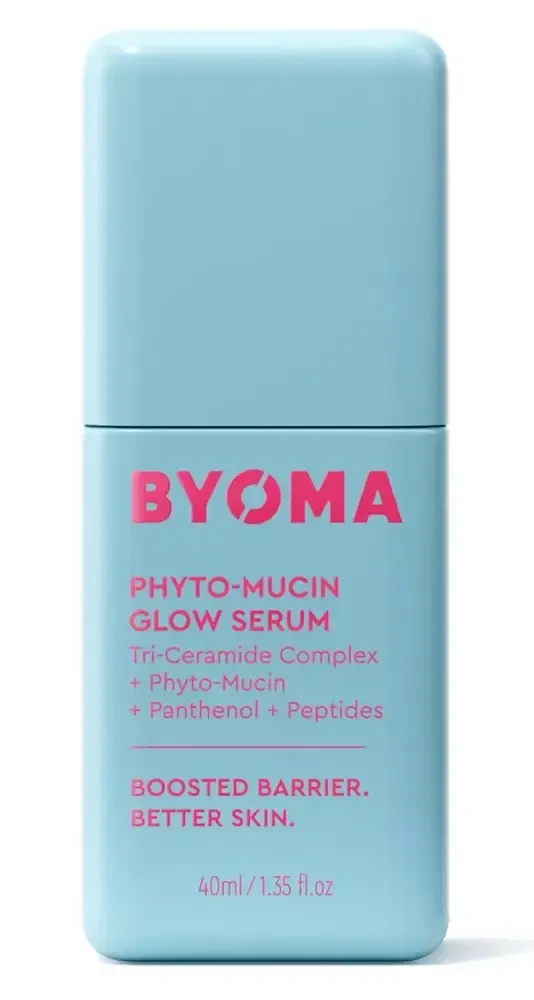
BYOMA Phyto Mucin Glow Serum by BYOMA
BYOMA

BYOMA Phyto Mucin Glow Serum

Serums

Safety score

Pregnancy-focused assessment

Low Risk79/100
Higher concernLower concern

One or more ingredients have a low-risk flag in MamaSkin's current assessment. Review the notes and your own circumstances.

Formula and assessment check

Ingredient safety review updated 9 December 2025. Product formulas can change, so compare the ingredients shown here with the packaging you have.

Report a formula mismatch

MamaSkin assessment · 9 December 2025

Is BYOMA Phyto Mucin Glow Serum suitable during pregnancy?

MamaSkin currently classifies BYOMA Phyto Mucin Glow Serum as Low risk, with a stored score of 79/100. This is a precautionary classification, not an unqualified pregnancy-safe recommendation. Read the ingredient context and any manual-review explanation below.

What does the ingredient evidence show?

The recorded formula includes 1 ingredient entry with a risk flag: Lactic Acid (Low risk). These are ingredient-level flags; they do not replace the stored product assessment or account for every formulation detail.

38 of 38 ingredient entries on this page have a recorded score, evidence summary and source text. That describes documentation coverage, not proof that the finished formula has been clinically tested during pregnancy.

Ingredient breakdown

See how the listed formula falls across MamaSkin's pregnancy-focused risk bands.

37

No known risks

1

Low risk

0

Medium risk

0

High risk

Ingredients

Ingredients with a higher risk flag appear first, followed by the rest of the formula.

Lactic Acid

Low Risk

Endogenous alpha-hydroxy acid and humectant; at modest cosmetic concentrations (≈5% and below, and generally <10%) topical lactic acid is considered compatible with pregnancy. Main risks are local irritation and increased photosensitivity rather than systemic toxicity or fetal effects.

Sources: MotherToBaby: Topical acne treatments in pregnancy and breastfeeding https://www.ncbi.nlm.nih.gov/books/NBK582985/
Water

No Known Risks

Water (Aqua) is the standard purified water used as a cosmetic solvent. It has no pregnancy-specific risk in normal topical use.

Sources: https://pubchem.ncbi.nlm.nih.gov/compound/Water, https://single-market-economy.ec.europa.eu/sectors/cosmetics/cosmetic-ingredient-database/cosing-glossary-ingredients_en

Glycerin

No Known Risks

Glycerin is a widely used humectant that supports hydration and the skin barrier, with a long safety record and no known pregnancy or breastfeeding concerns in topical cosmetic use.

Sources: CIR; EU/UK Cosmetics Regulation

Show all (38)

Butylene Glycol

No Known Risks

Solvent and humectant commonly used in leave-on products. Not associated with pregnancy-specific concerns at cosmetic exposure levels.

Sources: Cosmetic Ingredient Review (US); Scientific Committee on Consumer Safety (EU)

Methylpropanediol

No Known Risks

Solvent and humectant used to improve texture and ingredient delivery in topical cosmetic formulas. Reviewed cosmetic ingredient references do not identify a pregnancy- or breastfeeding-specific concern for normal topical use.

Sources: CIR cosmetic ingredient safety references for alkane diols; EU CosIng / cosmetics regulatory inventory

1,2-Hexanediol

No Known Risks

1,2-Hexanediol is commonly used as a solvent and preservative booster; topical exposure is low and it has no known pregnancy or breastfeeding concerns at cosmetic concentrations, though very sensitive skin may occasionally react.

Sources: CIR; EU/UK Cosmetics Regulation

Propanediol

No Known Risks

Solvent and humectant used to improve texture and ingredient solubility. Low systemic exposure expected from topical cosmetic use.

Sources: Cosmetic Ingredient Review (US); Scientific Committee on Consumer Safety (EU)

Glyceryl Polymethacrylate

No Known Risks

A high-molecular-weight moisturising and texture polymer. Cosmetic safety reviewers concluded that glyceryl polymethacrylate is safe in current cosmetic practices. Dermal absorption of the intact polymer is expected to be limited, and residual monomers should be controlled.

Sources: CIR: Final safety assessment of Glyceryl Polymethacrylate, June 2022; December 2025 Quick Reference Table https://cir-safety.org/sites/default/files/QRT-Update-Dec2025.pdf

Dioscorea Japonica Root Extract

No Known Risks

A Japanese-yam root extract used as a moisturising and skin-conditioning botanical. No pregnancy- or breastfeeding-specific hazard was identified for normal topical cosmetic exposure. Direct ingredient-specific pregnancy studies were not identified, so this assessment does not extend to oral supplements or medicinal use.

Sources: European Commission CosIng ingredient inventory; Cosmetic Ingredient Review botanical safety-assessment framework and relevant ingredient-family assessments. No ingredient-specific human pregnancy study of normal topical cosmetic use was identified.

Propylene Glycol

No Known Risks

Propylene glycol is a common solvent and humectant with a long history of use; it is not considered a pregnancy or breastfeeding concern in topical cosmetics, though some individuals may experience irritation in leave-on products.

Sources: CIR; EU/UK Cosmetics Regulation

Laminaria Japonica Extract

No Known Risks

A red or brown algae-derived ingredient used for skin conditioning, hydration or texture. Cosmetic safety reviewers concluded that Laminaria japonica extract and the assessed Chondrus crispus ingredients are safe in current practices of use and concentration. Seaweed allergy remains possible in a susceptible person.

Sources: CIR: Laminaria Japonica Extract final report, September 2019; Chondrus Crispus ingredients final report, September 2021; December 2025 Quick Reference Table https://cir-safety.org/sites/default/files/QRT-Update-Dec2025.pdf

Hibiscus Esculentus Fruit Extract

No Known Risks

A botanical extract or plant water used for conditioning, soothing or antioxidant support. Direct pregnancy studies of this exact cosmetic material were not identified, but no reproductive or developmental hazard was identified for normal topical exposure. Oral herbal or medicinal use is outside this classification.

Sources: European Commission CosIng; CIR botanical safety framework and relevant plant-family assessments; no ingredient-specific human pregnancy study of normal topical cosmetic use was identified.

Palmitoyl Tripeptide-1

No Known Risks

Synthetic peptide used as a skin-conditioning ingredient. Reviewed cosmetic safety sources indicate no known pregnancy- or breastfeeding-specific concern in normal topical cosmetic use. Available cosmetic safety assessments conclude this ingredient is safe in the present practices of use and concentration described for cosmetics.

Sources: CIR Expert Panel, Safety Assessment of Tripeptide-1, Hexapeptide-12, their metal salts and fatty acyl derivatives, and Palmitoyl Tetrapeptide-7 as used in cosmetics, final report, 2014

Corchorus Olitorius Leaf Extract

No Known Risks

corchorus olitorius leaf extract is a botanical-derived cosmetic conditioning ingredient. The reviewed identity is not a concentrated essential oil or an oral herbal preparation. Available cosmetic evidence and expected topical exposure did not identify a pregnancy-specific contraindication, although botanical irritation or allergy remains possible.

Sources: CIR ingredient-specific and botanical-family safety assessments; CIR Quick Reference Table https://www.cir-safety.org/supplementaldoc/quick-reference-table-december-2025; European Commission CosIng

Arginine

No Known Risks

Amino acid used as a humectant, skin-conditioning agent, and pH-adjusting support ingredient. Reviewed cosmetic safety sources support normal topical use, with no pregnancy- or breastfeeding-specific topical signal identified in the material reviewed.

Sources: CIR: Safety Assessment of α-Amino Acids as Used in Cosmetics; EU CosIng / cosmetics regulatory inventory

Panthenol

No Known Risks

Panthenol (pro-vitamin B5) is used for soothing and barrier support and is generally well tolerated, with no known pregnancy or breastfeeding concerns in topical cosmetic use.

Sources: CIR; EU/UK Cosmetics Regulation

Nelumbo Nucifera Root Extract

No Known Risks

nelumbo nucifera root extract is a botanical-derived cosmetic conditioning ingredient. The reviewed identity is not a concentrated essential oil or an oral herbal preparation. Available cosmetic evidence and expected topical exposure did not identify a pregnancy-specific contraindication, although botanical irritation or allergy remains possible.

Sources: CIR ingredient-specific and botanical-family safety assessments; CIR Quick Reference Table https://www.cir-safety.org/supplementaldoc/quick-reference-table-december-2025; European Commission CosIng

Hydroxyacetophenone

No Known Risks

Hydroxyacetophenone is used as an antioxidant and preservative-support ingredient; it is generally considered low concern in topical cosmetic use with no known pregnancy or breastfeeding risks at typical concentrations.

Sources: CIR; EU/UK Cosmetics Regulation

Polyglutamic Acid

No Known Risks

A high-molecular-weight glutamic-acid polymer used as a humectant and film former. Absorption of the intact polymer through skin is expected to be limited, and no pregnancy-specific concern was identified for normal topical cosmetic use. This is distinct from medicinal injectable or drug-delivery forms.

Sources: Peer-reviewed literature on poly-gamma-glutamic acid biomaterials and topical hydration; European Commission CosIng ingredient inventory.

Glycereth-25 PCA Isostearate

No Known Risks

glycereth-25 pca isostearate is a cosmetic emollient, ester, fatty alcohol or lipid-derived formulation aid. Relevant CIR family evidence supports normal cosmetic use with purity and irritation qualifications retained. No pregnancy-specific concern was identified for ordinary topical exposure.

Sources: CIR Safety Assessment of Alkyl Esters as Used in Cosmetics https://www.cir-safety.org/supplementaldoc/safety-assessment-alkyl-esters-used-cosmetics; European Commission CosIng ingredient inventory.

Hyaluronic Acid

No Known Risks

High-water-binding humectant used to support hydration at the skin surface. Reviewed cosmetic safety sources support normal topical use, with no pregnancy- or breastfeeding-specific topical signal identified in the material reviewed.

Sources: CIR: Safety Assessment of Hyaluronates as Used in Cosmetics; EU CosIng / cosmetics regulatory inventory

Hydrolyzed Hyaluronic Acid

No Known Risks

Humectant and skin-conditioning ingredient in the hyaluronate family. Reviewed cosmetic safety sources support current cosmetic use, with no pregnancy- or breastfeeding-specific topical concern identified in the material reviewed.

Sources: CIR: Safety Assessment of Hyaluronates as Used in Cosmetics; EU CosIng / cosmetics regulatory inventory

Sodium Hyaluronate

No Known Risks

Sodium hyaluronate (hyaluronic acid salt) is used for hydration and cushioning, with very low systemic absorption from topical use and no known pregnancy or breastfeeding concerns at cosmetic concentrations.

Sources: CIR; EU/UK Cosmetics Regulation

Ceramide NP

No Known Risks

Skin-identical barrier lipid used to support the stratum corneum and reduce dryness. Reviewed cosmetic safety sources support normal topical use, with no pregnancy- or breastfeeding-specific topical signal identified in the material reviewed.

Sources: CIR: Safety Assessment of Ceramides as Used in Cosmetics; EU CosIng / cosmetics regulatory inventory

Betaine

No Known Risks

Betaine is a humectant/osmolyte used to support hydration and reduce irritation potential in formulas; it is considered low concern with no known pregnancy or breastfeeding risks in topical cosmetic use.

Sources: CIR; EU/UK Cosmetics Regulation

Cholesterol

No Known Risks

Skin-conditioning lipid used in barrier-support formulas, often alongside ceramides and fatty acids. Normal topical cosmetic use has no known pregnancy- or breastfeeding-specific concern identified in reviewed cosmetic references.

Sources: CIR cosmetic ingredient safety references for cholesterol and related sterols; EU CosIng / cosmetics regulatory inventory

Carbomer

No Known Risks

Polymer thickener used to create gel textures. Large-molecule ingredient with negligible systemic absorption.

Sources: Cosmetic Ingredient Review (US); Scientific Committee on Consumer Safety (EU)

Caprylic/Capric Triglyceride

No Known Risks

Common emollient derived from fatty acids and glycerin. Used to soften skin and improve texture without pregnancy-specific concerns.

Sources: Cosmetic Ingredient Review (US); Scientific Committee on Consumer Safety (EU)

Phytosphingosine

No Known Risks

Skin-conditioning lipid used in barrier-support formulas, commonly alongside ceramides and cholesterol. Reviewed cosmetic ingredient references do not identify a pregnancy- or breastfeeding-specific concern for normal topical use.

Sources: CIR cosmetic ingredient safety references for sphingolipids/skin-conditioning lipids; EU CosIng / cosmetics regulatory inventory

Xanthan Gum

No Known Risks

Natural polysaccharide thickener used for stability and texture. Not associated with pregnancy-specific concerns.

Sources: European cosmetics regulatory framework

Stearic Acid

No Known Risks

Stearic acid is a fatty acid used to stabilise emulsions and improve texture; it is considered low concern in topical cosmetics with no known pregnancy or breastfeeding risks at typical concentrations.

Sources: CIR; EU/UK Cosmetics Regulation

Oleic Acid

No Known Risks

This naturally occurring fatty acid is used for emolliency, cleansing support or texture. The Cosmetic Ingredient Review concluded that assessed fatty acids are safe in current cosmetic use when formulated to be non-irritating and non-sensitizing; some can increase penetration of other formula ingredients.

Sources: CIR: Safety Assessment of Fatty Acids and Fatty Acid Salts as Used in Cosmetics https://cir-safety.org/supplementaldoc/safety-assessment-fatty-acids-fatty-acid-salts-used-cosmetic

Hydrogenated Lecithin

No Known Risks

Hydrogenated emulsifier used to support skin barrier feel. Not associated with pregnancy-specific concerns.

Sources: Cosmetic Ingredient Review (US)

Sodium Lactate

No Known Risks

Humectant and buffer that also forms part of the skin's natural moisturising factor. Reviewed cosmetic safety sources support topical cosmetic use; irritation and sun-sensitivity considerations relate more to formula context than to pregnancy-specific risk.

Sources: CIR: Safety Assessment of Alpha Hydroxy Acids as Used in Cosmetics; CIR: PCA and Its Salts as Used in Cosmetics; EU CosIng / cosmetics regulatory inventory

Sodium Polyacrylate

No Known Risks

Polymer used for texture and absorbency. Large-molecule ingredient with low systemic exposure.

Sources: Cosmetic Ingredient Review (US); Scientific Committee on Consumer Safety (EU)

Caprylyl Glycol

No Known Risks

Humectant and preservative booster used to support product stability. Low systemic exposure expected from topical cosmetic use.

Sources: Scientific Committee on Consumer Safety (EU); Cosmetic Ingredient Review (US)

Ethylhexylglycerin

No Known Risks

Preservative booster and skin-conditioning agent. Considered safe for cosmetic use with low systemic exposure when used as intended.

Sources: Scientific Committee on Consumer Safety (EU); Cosmetic Ingredient Review (US)

Caprylhydroxamic Acid

No Known Risks

A chelating ingredient commonly used to support cosmetic preservation. Cosmetic safety reviewers concluded that caprylhydroxamic acid is safe in current cosmetic use; sensitisation and enhanced penetration are formulation considerations, especially on damaged skin, but no pregnancy-specific contraindication is identified for normal topical use.

Sources: CIR: Safety Assessment of Caprylhydroxamic Acid https://www.cir-safety.org/supplementaldoc/safety-assessment-caprylhydroxamic-acid-used-cosmetics

Formulations can change without notice. For the most accurate result, compare this list with your packaging and scan the exact ingredient label in MamaSkin when you repurchase.

Questions about this assessment

Has every ingredient in BYOMA Phyto Mucin Glow Serum been assessed?

38 of 38 ingredient entries on this page have a recorded score, evidence summary and source text. That describes documentation coverage, not proof that the finished formula has been clinically tested during pregnancy.

Does this assessment apply to the BYOMA Phyto Mucin Glow Serum I have?

Only if the ingredient list on your packaging matches the recorded formula shown here. Formulas can differ by market and change over time. Compare the full list, not just the product name; report a mismatch if it differs.

Does this pregnancy assessment also establish breastfeeding suitability?

No. This page presents a pregnancy-focused product assessment. Do not infer a breastfeeding conclusion from its score or label; breastfeeding requires a separate assessment of the formula and how it is used.

How to use this assessment

The risk band is the primary conclusion. The score adds detail within that band and should not be used to compare products as if a one-point difference were clinically meaningful.

MamaSkin provides pregnancy-focused information, not medical advice. Your midwife, GP, pharmacist or dermatologist should take priority when your circumstances differ from typical cosmetic use.

Read the full methodology