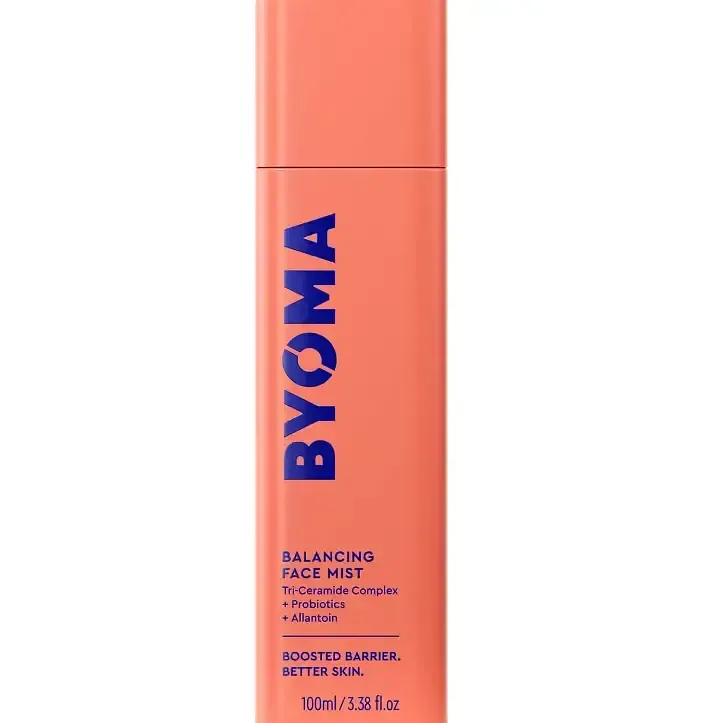
BYOMA
BYOMA Balancing Face Mist
Low risk79/100

Oils
Higher-risk ingredients are flagged in this formula. Discuss alternatives with your healthcare professional.
12 of 12 ingredients rated
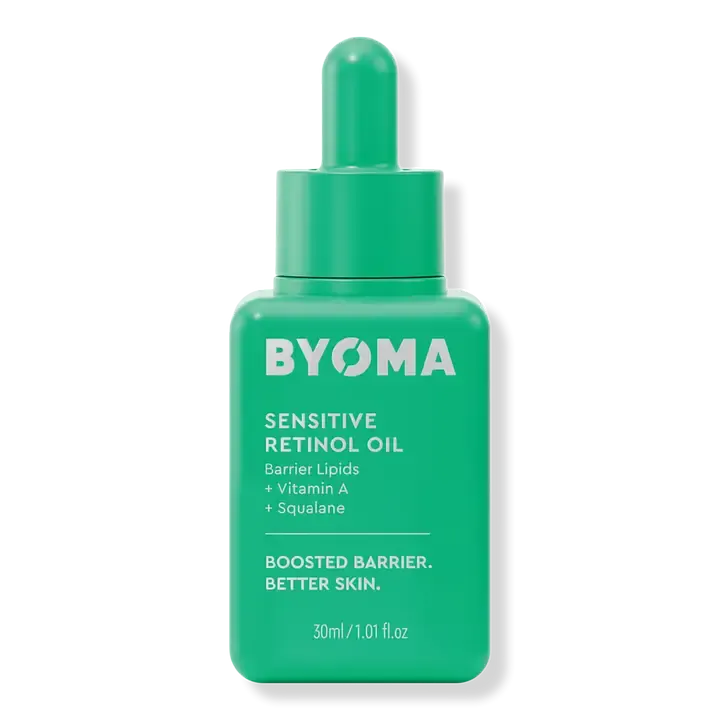
MamaSkin rates the recorded formula for BYOMA Sensitive Retinol Oil as High risk (26/100). This is not a pregnancy-safe recommendation. Discuss alternatives with a qualified healthcare professional.
The recorded formula includes 2 ingredient entries with risk flags: Hydroxypinacolone Retinoate (High risk), Daucus Carota Sativa Seed Oil (Low risk). These are ingredient-level flags; they do not replace the stored product assessment or account for every formulation detail.
12 of 12 ingredient entries on this page have a recorded score, evidence summary and source text. That describes documentation coverage, not proof that the finished formula has been clinically tested during pregnancy.
How we assess productsThe recorded formula, with evidence behind each rating. Unmatched ingredients are marked Not assessed in grey.
Vitamin A derivative. Systemic retinoids are known teratogens, and topical retinoids are avoided during pregnancy due to class-wide risk and limited safety margins. Avoid use during pregnancy regardless of formulation.
Sources: EMA: Updated measures for pregnancy prevention during retinoid use https://www.ema.europa.eu/en/news/updated-measures-pregnancy-prevention-during-retinoid-use; FDA: Pregnancy and Lactation Labeling Rule https://www.fda.gov/drugs/labeling-information-drug-products/questions-and-answers-pregnancy-and-lactation-labeling-rule
Carrot seed oil is a steam-distilled essential oil rather than a conventional triglyceride plant oil. Pregnancy-specific topical data are limited, and the main cosmetic concerns are essential-oil irritation, sensitisation, and variable composition. MamaSkin applies its precautionary Low Risk essential-oil policy.
Sources: CIR plant-oil review materials identify Daucus Carota Sativa Seed Oil as an essential oil obtained by steam distillation https://www.cir-safety.org/sites/default/files/116_draft_oils.pdf; European Commission CosIng ingredient inventory; IFRA fragrance-safety resources.
Plant-derived emollient oil used to soften skin and support formula texture. Reviewed cosmetic safety sources support current cosmetic use, with no pregnancy- or breastfeeding-specific topical concern identified in the material reviewed.
Sources: CIR: Safety Assessment of Soy-Derived Ingredients as Used in Cosmetics; EU CosIng / cosmetics regulatory inventory
Helianthus annuus (sunflower) seed oil is a common emollient rich in fatty acids and is generally well tolerated, with no known pregnancy or breastfeeding concerns in topical cosmetic use.
Sources: CIR; EU/UK Cosmetics Regulation
A solvent or preservative-support ingredient used to dissolve actives and stabilise a formula. No reproductive or pregnancy-specific signal was identified for the low concentrations used in finished topical cosmetics. Solvents can still increase local irritation or the delivery of other formula ingredients.
Sources: European Commission CosIng ingredient inventory; European Chemicals Agency substance information; published dermal and cosmetic-use data for dimethyl isosorbide, phenylpropanol and benzyl glycol.
Lightweight emollient ester used to improve slip and skin feel. Reviewed cosmetic ingredient references do not identify a pregnancy- or breastfeeding-specific concern for normal topical cosmetic use.
Sources: CIR cosmetic ingredient safety references for alkyl esters/emollient esters; EU CosIng / cosmetics regulatory inventory
Lightweight emollient used to support the skin barrier. Not associated with pregnancy-specific concerns at cosmetic exposure levels.
Sources: Cosmetic Ingredient Review (US); Scientific Committee on Consumer Safety (EU)
Common emollient derived from fatty acids and glycerin. Used to soften skin and improve texture without pregnancy-specific concerns.
Sources: Cosmetic Ingredient Review (US); Scientific Committee on Consumer Safety (EU)
A terpene alcohol used for skin conditioning and soothing. Cosmetic safety reviewers reaffirmed bisabolol as safe at current cosmetic concentrations, and reproductive and developmental testing did not identify adverse effects. Bisabolol can increase skin penetration, so formulators should consider the safety of other ingredients in the same product.
Sources: CIR: Final Report on the Safety Assessment of Bisabolol https://cir-reports.cir-safety.org/view-attachment/?id=6fcf160b-8e74-ec11-8943-0022482f06a6; CIR re-review material https://www.cir-safety.org/sites/default/files/bisabolol.pdf
A plant-derived fatty oil or butter used mainly as an emollient, conditioning ingredient or texture agent. Cosmetic safety reviewers concluded that the assessed plant-derived fatty acid oils are safe in current practices of use and concentration. This conclusion applies to cosmetic-grade fixed oils rather than similarly named volatile essential oils. Seed or food allergy may still matter for a susceptible person.
Sources: CIR: Safety Assessment of Plant-Derived Fatty Acid Oils as Used in Cosmetics https://cir-reports.cir-safety.org/view-attachment/?id=ad62ac6b-8e74-ec11-8943-0022482f06a6
Vitamin E antioxidant used to protect oils and support the skin barrier. Not associated with pregnancy-specific concerns at cosmetic exposure.
Sources: Cosmetic Ingredient Review (US); Scientific Committee on Consumer Safety (EU)
Magnolia bark extract may contain magnolol and honokiol. Developmental findings involve isolated honokiol delivered systemically at experimental doses and do not establish a hazard from the smaller, formulation-dependent exposure to a topical cosmetic extract.
Sources: PubMed: safety and toxicology review of magnolol and honokiol https://pubmed.ncbi.nlm.nih.gov/29925102/; PubMed: intravenous honokiol embryo-fetal study in rats https://pubmed.ncbi.nlm.nih.gov/26619782/; European Commission CosIng ingredient inventory.
Glycine Soja Oil, Helianthus Annuus Seed Oil, Daucus Carota Sativa Seed Oil, Dimethyl Isosorbide, Cetyl Ethylhexanoate, Squalane, Hydroxypinacolone Retinoate, Caprylic/Capric Triglyceride, Bisabolol, Camellia Oleifera Seed Oil, Tocopherol, Magnolia Officinalis Bark Extract
Ingredient ratings refreshed 1 October 2026. Formulas vary by market and can change. Always compare with your packaging.
The recorded formula includes 2 ingredient entries with risk flags: Hydroxypinacolone Retinoate (High risk), Daucus Carota Sativa Seed Oil (Low risk). These are ingredient-level flags; they do not replace the stored product assessment or account for every formulation detail. The product score is a stored assessment, not a clinical safety guarantee.
12 of 12 ingredient entries on this page have a recorded score, evidence summary and source text. That describes documentation coverage, not proof that the finished formula has been clinically tested during pregnancy.
Only if the ingredient list on your packaging matches the recorded formula shown here. Formulas can differ by market and change over time. Compare the full list, not just the product name; report a mismatch if it differs.
No. This page presents a pregnancy-focused product assessment. Do not infer a breastfeeding conclusion from its score or label; breastfeeding requires a separate assessment of the formula and how it is used.