Celimax
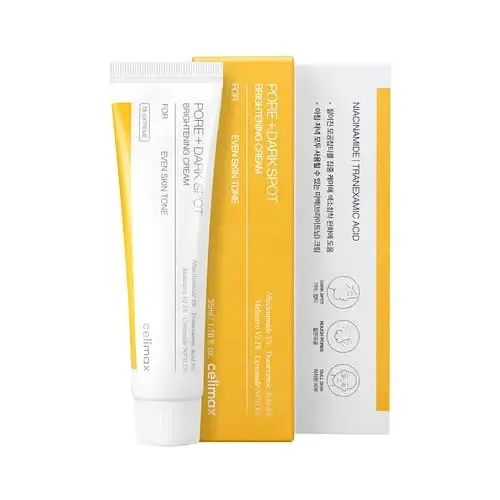
Celimax Pore + Dark Spot Brightening Cream
Low risk75/100

Face Cleansers
No higher-risk flags in the assessed ingredients. This is a screening result, not a guarantee of pregnancy safety.
29 of 29 ingredients rated
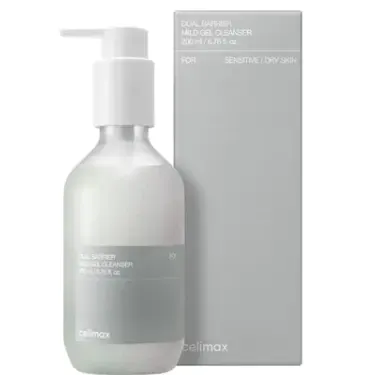
MamaSkin rates the recorded formula for Celimax Dual Barrier Mild Gel Cleanser as No known risks (99/100). This screening result is not a guarantee of safety for every pregnancy.
No higher-risk ingredient flags are shown in the assessed entries. Ingredients without a matched rating are marked Not assessed, not No known risks.
29 of 29 ingredient entries on this page have a recorded score, evidence summary and source text. That describes documentation coverage, not proof that the finished formula has been clinically tested during pregnancy.
How we assess productsThe recorded formula, with evidence behind each rating. Unmatched ingredients are marked Not assessed in grey.
Water (Aqua) is the standard purified water used as a cosmetic solvent. It has no pregnancy-specific risk in normal topical use.
Sources: https://pubchem.ncbi.nlm.nih.gov/compound/Water, https://single-market-economy.ec.europa.eu/sectors/cosmetics/cosmetic-ingredient-database/cosing-glossary-ingredients_en
A cleansing and foam-supporting surfactant made from coconut-derived fatty chains. Cosmetic safety reviewers concluded that alkyl betaines, including coco-betaine, are safe in current practices when formulated to be non-irritating. Surfactant-containing products may still sting eyes or irritated skin.
Sources: CIR: Quick Reference Table conclusion for Coco-Betaine and alkyl betaines https://www.cir-safety.org/sites/default/files/sq-fix_2.pdf
A mild amphoteric cleansing surfactant. Cosmetic safety reviewers concluded that disodium cocoamphodiacetate is safe as used; the original conclusion was reaffirmed on re-review, while the current group reassessment proposes non-sensitising formulation controls. Impurities may contribute to occasional irritation or allergy.
Sources: CIR: Final Report on Cocoamphoacetate and Related Ingredients, J Am Coll Toxicol 9(2):121-142, 1990; current CIR reassessment and original-report history https://cir-reports.cir-safety.org/view-attachment?id=650ade8c-833f-a428-bb22-fa7740c7229b
Glycerin is a widely used humectant that supports hydration and the skin barrier, with a long safety record and no known pregnancy or breastfeeding concerns in topical cosmetic use.
Sources: CIR; EU/UK Cosmetics Regulation
Sodium chloride is used to adjust viscosity and texture in formulations; topical cosmetic use is considered low concern with no known pregnancy or breastfeeding risks.
Sources: CIR; EU/UK Cosmetics Regulation
An amino-acid-derived surfactant or conditioning ingredient. Cosmetic safety reviewers concluded that amino acid alkyl amides are safe in current cosmetic practices when formulated to be non-irritating. Manufacturing and formulation should control nitrosamine formation where relevant.
Sources: CIR: Safety Assessment of Amino Acid Alkyl Amides as Used in Cosmetics https://www.cir-safety.org/supplementaldoc/safety-assessment-amino-acid-alkyl-amides-used-cosmetics-0
Film-forming polymer used for texture and wear. Large-molecule ingredient with low systemic absorption.
Sources: Cosmetic Ingredient Review (US); Scientific Committee on Consumer Safety (EU)
1,2-Hexanediol is commonly used as a solvent and preservative booster; topical exposure is low and it has no known pregnancy or breastfeeding concerns at cosmetic concentrations, though very sensitive skin may occasionally react.
Sources: CIR; EU/UK Cosmetics Regulation
Polyglycerin fatty-acid ester used as an emulsifier and solubilizer. Reviewed cosmetic safety references do not identify a pregnancy- or breastfeeding-specific concern for normal topical cosmetic use.
Sources: CIR cosmetic ingredient safety references for polyglyceryl fatty acid esters; EU CosIng / cosmetics regulatory inventory
A skin-identical barrier lipid used for skin and hair conditioning. Cosmetic safety reviewers concluded that Ceramide AS is safe in current cosmetic use, noting limited skin absorption and reassuring toxicity data. Cosmetic-grade material should not be sourced from bovine central nervous system tissue.
Sources: CIR: Safety Assessment of Ceramides https://www.cir-safety.org/supplementaldoc/safety-assessment-ceramides-used-cosmetics-0
Skin-identical barrier lipid used to support barrier function and reduce dryness. Reviewed cosmetic safety sources support normal topical use, with no pregnancy- or breastfeeding-specific topical signal identified in the material reviewed.
Sources: CIR: Safety Assessment of Ceramides as Used in Cosmetics; EU CosIng / cosmetics regulatory inventory
Skin-identical barrier lipid used to support barrier structure and reduce dryness. Reviewed cosmetic safety sources support normal topical use, with no pregnancy- or breastfeeding-specific topical signal identified in the material reviewed.
Sources: CIR: Safety Assessment of Ceramides as Used in Cosmetics; EU CosIng / cosmetics regulatory inventory
Skin-identical barrier lipid used to support the stratum corneum and reduce dryness. Reviewed cosmetic safety sources support normal topical use, with no pregnancy- or breastfeeding-specific topical signal identified in the material reviewed.
Sources: CIR: Safety Assessment of Ceramides as Used in Cosmetics; EU CosIng / cosmetics regulatory inventory
A skin-identical barrier lipid used for skin and hair conditioning. Cosmetic safety reviewers concluded that Ceramide NS is safe in current cosmetic use, noting limited skin absorption and reassuring toxicity data. Cosmetic-grade material should not be sourced from bovine central nervous system tissue.
Sources: CIR: Safety Assessment of Ceramides https://cir-safety.org/sites/default/files/cerami122014tent.pdf
Vitamin C antioxidant used to support brightness and photoprotection; functions as an antioxidant/pH adjuster in cosmetic formulas. No pregnancy-specific contraindications are identified for topical cosmetic use.
Sources: CIR (Ascorbic Acid); PubMed (NLM)
Skin-conditioning lipid used in barrier-support formulas, commonly alongside ceramides and cholesterol. Reviewed cosmetic ingredient references do not identify a pregnancy- or breastfeeding-specific concern for normal topical use.
Sources: CIR cosmetic ingredient safety references for sphingolipids/skin-conditioning lipids; EU CosIng / cosmetics regulatory inventory
myrothamnus flabellifolia leaf/stem extract is a defined non-essential-oil botanical, food-derived or algae cosmetic ingredient. The reviewed identity and expected low topical exposure did not identify a pregnancy-specific reproductive or developmental concern. This classification does not extend to oral medicinal use, concentrated essential oils or contaminated raw materials, and botanical sensitivity remains possible.
Sources: European Commission CosIng ingredient inventory; CIR botanical and algae safety-assessment framework and Quick Reference Table https://www.cir-safety.org/supplementaldoc/quick-reference-table-december-2025.
Hydrogenated emulsifier used to support skin barrier feel. Not associated with pregnancy-specific concerns.
Sources: Cosmetic Ingredient Review (US)
Fatty alcohol used as an emollient and thickener. Not the same as drying alcohols and not associated with pregnancy-specific concerns.
Sources: Cosmetic Ingredient Review (US); Scientific Committee on Consumer Safety (EU)
Stearic acid is a fatty acid used to stabilise emulsions and improve texture; it is considered low concern in topical cosmetics with no known pregnancy or breastfeeding risks at typical concentrations.
Sources: CIR; EU/UK Cosmetics Regulation
Solvent and humectant used to improve texture and ingredient solubility. Low systemic exposure expected from topical cosmetic use.
Sources: Cosmetic Ingredient Review (US); Scientific Committee on Consumer Safety (EU)
Natural polysaccharide thickener used for stability and texture. Not associated with pregnancy-specific concerns.
Sources: European cosmetics regulatory framework
Preservative booster and skin-conditioning agent. Considered safe for cosmetic use with low systemic exposure when used as intended.
Sources: Scientific Committee on Consumer Safety (EU); Cosmetic Ingredient Review (US)
Disodium EDTA is a chelating agent used to improve formula stability and performance; it is considered low concern in topical cosmetic use, with no known pregnancy or breastfeeding risks at typical concentrations.
Sources: CIR; EU/UK Cosmetics Regulation
Solvent and humectant used to improve texture and ingredient solubility in topical cosmetics. Reviewed cosmetic ingredient references do not identify a pregnancy- or breastfeeding-specific concern for normal topical use.
Sources: CIR cosmetic ingredient safety references for alkane diols/glycols; EU CosIng / cosmetics regulatory inventory
Skin-conditioning lipid used in barrier-support formulas, often alongside ceramides and fatty acids. Normal topical cosmetic use has no known pregnancy- or breastfeeding-specific concern identified in reviewed cosmetic references.
Sources: CIR cosmetic ingredient safety references for cholesterol and related sterols; EU CosIng / cosmetics regulatory inventory
pH adjuster used in small amounts to maintain product stability. Not associated with pregnancy-specific concerns.
Sources: Scientific Committee on Consumer Safety (EU); European cosmetics regulatory framework
Betaine is a humectant/osmolyte used to support hydration and reduce irritation potential in formulas; it is considered low concern with no known pregnancy or breastfeeding risks in topical cosmetic use.
Sources: CIR; EU/UK Cosmetics Regulation
Buffering and chelating ingredient used to control pH and formulation stability. Reviewed cosmetic safety sources support normal topical use, with no pregnancy- or breastfeeding-specific topical signal identified in the material reviewed.
Sources: CIR: Safety Assessment of Citric Acid, Inorganic Citrate Salts, and Alkyl Citrate Esters as Used in Cosmetics; EU CosIng / cosmetics regulatory inventory
Water, Coco-Betaine, Disodium Cocoamphodiacetate, Glycerin, Sodium Chloride, Potassium Cocoyl Glycinate, Acrylates Copolymer, 1,2-Hexanediol, Polyglyceryl-10 Laurate, Ceramide As, Ceramide AP, Ceramide EOP, Ceramide NP, Ceramide Ns, Ascorbic Acid, Phytosphingosine, Myrothamnus Flabellifolia Leaf/Stem Extract, Hydrogenated Lecithin, Cetearyl Alcohol, Stearic Acid, Propanediol, Xanthan Gum, Ethylhexylglycerin, Disodium EDTA, Hexylene Glycol, Cholesterol, Citric Acid, Betaine, Sodium Citrate
Ingredient ratings refreshed 1 October 2026. Formulas vary by market and can change. Always compare with your packaging.
No higher-risk ingredient flags are shown in the assessed entries. Ingredients without a matched rating are marked Not assessed, not No known risks. The product score is a stored assessment, not a clinical safety guarantee.
29 of 29 ingredient entries on this page have a recorded score, evidence summary and source text. That describes documentation coverage, not proof that the finished formula has been clinically tested during pregnancy.
Only if the ingredient list on your packaging matches the recorded formula shown here. Formulas can differ by market and change over time. Compare the full list, not just the product name; report a mismatch if it differs.
No. This page presents a pregnancy-focused product assessment. Do not infer a breastfeeding conclusion from its score or label; breastfeeding requires a separate assessment of the formula and how it is used.