CeraVe
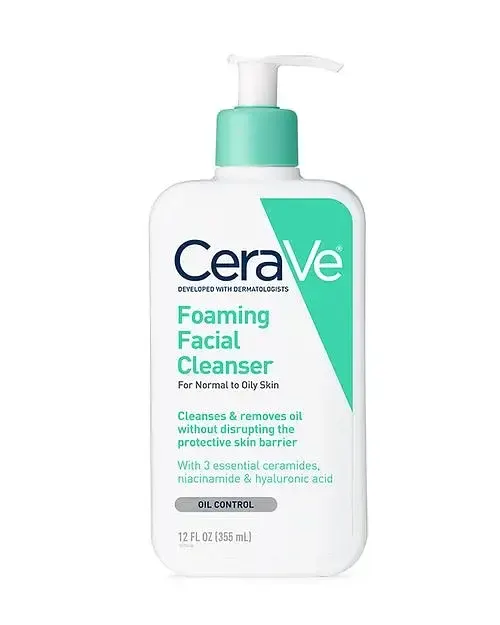
CeraVe Foaming Facial Cleanser
Medium risk53/100

Some ingredients carry a low-risk flag. Read the formulation context before deciding.
25 of 25 ingredients rated
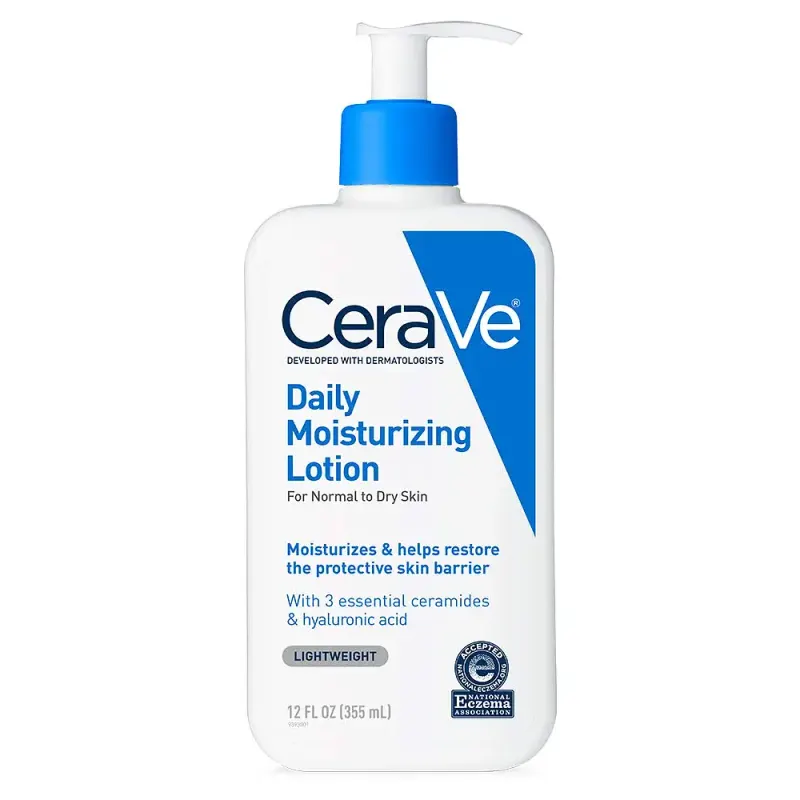
MamaSkin rates the recorded formula for CeraVe Daily Moisturizing Lotion Normal To Dry Skin as Low risk (75/100). Review the ingredient context and any manual-review explanation before deciding.
The recorded formula includes 2 ingredient entries with risk flags: Dimethicone (Low risk), Phenoxyethanol (Low risk). These are ingredient-level flags; they do not replace the stored product assessment or account for every formulation detail.
25 of 25 ingredient entries on this page have a recorded score, evidence summary and source text. That describes documentation coverage, not proof that the finished formula has been clinically tested during pregnancy.
How we assess productsThe recorded formula, with evidence behind each rating. Unmatched ingredients are marked Not assessed in grey.
Phenoxyethanol is a preservative permitted in EU cosmetics up to 1.0%. The SCCS concluded it is safe for cosmetic use at that level, including when considering higher cosmetic exposure scenarios in infants and young children. Main practical concern is irritation/stinging on very sensitive or compromised skin rather than a pregnancy- or breastfeeding-specific risk.
Sources: SCCS/1575/16: Phenoxyethanol opinion https://health.ec.europa.eu/publications/phenoxyethanol_en
Dimethicone is a silicone polymer used as a skin protectant and slip/conditioning agent. It is considered inert with minimal dermal absorption; the main practical issues are cosmetic (feel) and occasional irritation in very sensitive users. It is not a pregnancy-specific concern in topical cosmetic use.
Sources: CIR: Amended Safety Assessment of Dimethicone, Methicone, and Substituted-Methicone Polymers as Used in Cosmetics https://cir-safety.org/supplementaldoc/amended-safety-assessment-dimethicone-methicone-and-substituted-methicone-polymers-2
Water (Aqua) is the standard purified water used as a cosmetic solvent. It has no pregnancy-specific risk in normal topical use.
Sources: https://pubchem.ncbi.nlm.nih.gov/compound/Water, https://single-market-economy.ec.europa.eu/sectors/cosmetics/cosmetic-ingredient-database/cosing-glossary-ingredients_en
Glycerin is a widely used humectant that supports hydration and the skin barrier, with a long safety record and no known pregnancy or breastfeeding concerns in topical cosmetic use.
Sources: CIR; EU/UK Cosmetics Regulation
Common emollient derived from fatty acids and glycerin. Used to soften skin and improve texture without pregnancy-specific concerns.
Sources: Cosmetic Ingredient Review (US); Scientific Committee on Consumer Safety (EU)
Fatty alcohol used as an emollient and thickener. Not the same as drying alcohols and not associated with pregnancy-specific concerns.
Sources: Cosmetic Ingredient Review (US); Scientific Committee on Consumer Safety (EU)
Fatty alcohol used to improve texture and skin feel. Considered safe for cosmetic use without pregnancy-specific concerns.
Sources: Cosmetic Ingredient Review (US); Scientific Committee on Consumer Safety (EU)
Nonionic surfactant and solubiliser used to disperse oils and fragrance. Reviewed cosmetic safety sources support normal topical use, with no pregnancy- or breastfeeding-specific topical signal identified in the material reviewed.
Sources: CIR: Safety Assessment of Polysorbates as Used in Cosmetics; EU CosIng / cosmetics regulatory inventory
An ethoxylated fatty alcohol used as an emulsifier and surfactant. Cosmetic safety reviewers support use in properly formulated products, with cautions regarding damaged skin and control of ethylene oxide and 1,4-dioxane impurities. These are formulation and manufacturing considerations rather than a pregnancy-specific hazard.
Sources: CIR ingredient record and safety assessment: Ceteareth-20 https://cir-safety.org/ingredient/ceteareth-20
A quaternary ammonium conditioning and antistatic ingredient used mainly in hair products. Cosmetic safety reviewers concluded that behentrimonium methosulfate is safe in current practices when formulated to be non-irritating. Concentrated raw material can irritate, but no pregnancy-specific concern was identified for normal use of a finished cosmetic.
Sources: CIR: December 2025 Quick Reference Table, Behentrimonium Methosulfate conclusion, IJT 31(Suppl. 3), 2012 https://cir-safety.org/sites/default/files/QRT-Update-Dec2025.pdf
An ester of polyglycerin-3 and isostearic acid used as an emollient and emulsifier. Cosmetic safety reviewers assessed polyglyceryl fatty acid esters, including this ingredient, as safe in current cosmetic use when formulated to be non-irritating. No pregnancy-specific concern is identified for normal topical exposure.
Sources: CIR: Safety Assessment of Polyglyceryl Fatty Acid Esters https://www.cir-safety.org/sites/default/files/PGlyFE092016FR.pdf
An emulsifier and surfactant made from lauric and lactic-acid components. Cosmetic safety reviewers concluded that alkyl lactyl lactates, including sodium lauroyl lactylate, are safe in current practices when formulated to be non-irritating and non-sensitising. No pregnancy-specific concern was identified for normal cosmetic use.
Sources: CIR: Safety Assessment of Alkyl Lactyl Lactates as Used in Cosmetics https://www.cir-safety.org/sites/default/files/alkylL062019final.pdf
Preservative booster and skin-conditioning agent. Considered safe for cosmetic use with low systemic exposure when used as intended.
Sources: Scientific Committee on Consumer Safety (EU); Cosmetic Ingredient Review (US)
An inorganic phosphate salt used for buffering, oral care or formula structure. Cosmetic safety reviewers concluded that the assessed phosphates are safe in current practices when formulated to be non-irritating.
Sources: CIR: Phosphates conclusion, IJT 40(Suppl. 1), 2021; December 2025 Quick Reference Table https://cir-safety.org/sites/default/files/QRT-Update-Dec2025.pdf
Disodium EDTA is a chelating agent used to improve formula stability and performance; it is considered low concern in topical cosmetic use, with no known pregnancy or breastfeeding risks at typical concentrations.
Sources: CIR; EU/UK Cosmetics Regulation
A functional cosmetic ingredient used for preservation support, pH control, chelation, solvent action or formula stability. Concentrated material may irritate skin or eyes, but no pregnancy-specific reproductive or developmental hazard was identified for normal use in a compliant finished cosmetic.
Sources: European Commission CosIng ingredient inventory and applicable cosmetic restrictions; relevant CIR ingredient and functional-family safety assessments.
Skin-identical barrier lipid used to support the stratum corneum and reduce dryness. Reviewed cosmetic safety sources support normal topical use, with no pregnancy- or breastfeeding-specific topical signal identified in the material reviewed.
Sources: CIR: Safety Assessment of Ceramides as Used in Cosmetics; EU CosIng / cosmetics regulatory inventory
Skin-identical barrier lipid used to support barrier function and reduce dryness. Reviewed cosmetic safety sources support normal topical use, with no pregnancy- or breastfeeding-specific topical signal identified in the material reviewed.
Sources: CIR: Safety Assessment of Ceramides as Used in Cosmetics; EU CosIng / cosmetics regulatory inventory
Skin-conditioning lipid used in barrier-support formulas, commonly alongside ceramides and cholesterol. Reviewed cosmetic ingredient references do not identify a pregnancy- or breastfeeding-specific concern for normal topical use.
Sources: CIR cosmetic ingredient safety references for sphingolipids/skin-conditioning lipids; EU CosIng / cosmetics regulatory inventory
Skin-conditioning lipid used in barrier-support formulas, often alongside ceramides and fatty acids. Normal topical cosmetic use has no known pregnancy- or breastfeeding-specific concern identified in reviewed cosmetic references.
Sources: CIR cosmetic ingredient safety references for cholesterol and related sterols; EU CosIng / cosmetics regulatory inventory
Natural polysaccharide thickener used for stability and texture. Not associated with pregnancy-specific concerns.
Sources: European cosmetics regulatory framework
Polymer thickener used to create gel textures. Large-molecule ingredient with negligible systemic absorption.
Sources: Cosmetic Ingredient Review (US); Scientific Committee on Consumer Safety (EU)
Sodium hyaluronate (hyaluronic acid salt) is used for hydration and cushioning, with very low systemic absorption from topical use and no known pregnancy or breastfeeding concerns at cosmetic concentrations.
Sources: CIR; EU/UK Cosmetics Regulation
Vitamin E antioxidant used to protect oils and support the skin barrier. Not associated with pregnancy-specific concerns at cosmetic exposure.
Sources: Cosmetic Ingredient Review (US); Scientific Committee on Consumer Safety (EU)
Skin-identical barrier lipid used to support barrier structure and reduce dryness. Reviewed cosmetic safety sources support normal topical use, with no pregnancy- or breastfeeding-specific topical signal identified in the material reviewed.
Sources: CIR: Safety Assessment of Ceramides as Used in Cosmetics; EU CosIng / cosmetics regulatory inventory
Water, Glycerin, Caprylic/Capric Triglyceride, Cetearyl Alcohol, Cetyl Alcohol, Dimethicone, Phenoxyethanol, Polysorbate 20, Ceteareth-20, Behentrimonium Methosulfate, Polyglyceryl-3 Diisostearate, Sodium Lauroyl Lactylate, Ethylhexylglycerin, Potassium Phosphate, Disodium EDTA, Dipotassium Phosphate, Ceramide NP, Ceramide AP, Phytosphingosine, Cholesterol, Xanthan Gum, Carbomer, Sodium Hyaluronate, Tocopherol, Ceramide EOP
Ingredient ratings refreshed 1 October 2026. Formulas vary by market and can change. Always compare with your packaging.
The recorded formula includes 2 ingredient entries with risk flags: Dimethicone (Low risk), Phenoxyethanol (Low risk). These are ingredient-level flags; they do not replace the stored product assessment or account for every formulation detail. The product score is a stored assessment, not a clinical safety guarantee.
25 of 25 ingredient entries on this page have a recorded score, evidence summary and source text. That describes documentation coverage, not proof that the finished formula has been clinically tested during pregnancy.
Only if the ingredient list on your packaging matches the recorded formula shown here. Formulas can differ by market and change over time. Compare the full list, not just the product name; report a mismatch if it differs.
No. This page presents a pregnancy-focused product assessment. Do not infer a breastfeeding conclusion from its score or label; breastfeeding requires a separate assessment of the formula and how it is used.