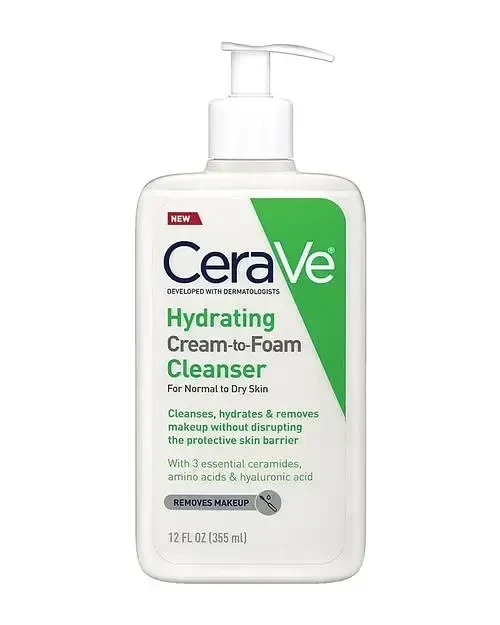
CeraVe Hydrating Cream-To-Foam Cleanser by CeraVe
CeraVe

CeraVe Hydrating Cream-To-Foam Cleanser

Face Cleanserscleansers

Safety score

Pregnancy-focused assessment

Low Risk75/100
Higher concernLower concern

One or more ingredients have a low-risk flag in MamaSkin's current assessment. Review the notes and your own circumstances.

Formula and assessment check

Ingredient safety review updated 23 November 2025. Product formulas can change, so compare the ingredients shown here with the packaging you have.

Report a formula mismatch

MamaSkin assessment · 23 November 2025

Is CeraVe Hydrating Cream-To-Foam Cleanser suitable during pregnancy?

MamaSkin currently classifies CeraVe Hydrating Cream-To-Foam Cleanser as Low risk, with a stored score of 75/100. This is a precautionary classification, not an unqualified pregnancy-safe recommendation. Read the ingredient context and any manual-review explanation below.

What does the ingredient evidence show?

The recorded formula includes 2 ingredient entries with risk flags: Salicylic Acid (Low risk), Phenoxyethanol (Low risk). These are ingredient-level flags; they do not replace the stored product assessment or account for every formulation detail.

60 of 60 ingredient entries on this page have a recorded score, evidence summary and source text. That describes documentation coverage, not proof that the finished formula has been clinically tested during pregnancy.

Ingredient breakdown

See how the listed formula falls across MamaSkin's pregnancy-focused risk bands.

58

No known risks

2

Low risk

0

Medium risk

0

High risk

Ingredients

Ingredients with a higher risk flag appear first, followed by the rest of the formula.

Phenoxyethanol

Low Risk

Phenoxyethanol is a preservative permitted in EU cosmetics up to 1.0%. The SCCS concluded it is safe for cosmetic use at that level, including when considering higher cosmetic exposure scenarios in infants and young children. Main practical concern is irritation/stinging on very sensitive or compromised skin rather than a pregnancy- or breastfeeding-specific risk.

Sources: SCCS/1575/16: Phenoxyethanol opinion https://health.ec.europa.eu/publications/phenoxyethanol_en
Salicylic Acid

Low Risk

Salicylic acid is a beta-hydroxy acid used for exfoliation and as a preservative. Exposure depends on concentration, product category, treated area, frequency, skin condition and inhalation or oral potential. Current SCCS assessments support specified cosmetic uses and restrictions; ordinary limited-area low-strength topical use is not equivalent to a professional peel, large-area leave-on treatment or oral salicylate exposure. MamaSkin retains Low Risk with those route and exposure qualifications.

Sources: SCCS/1646/22: Final Opinion on Salicylic Acid https://health.ec.europa.eu/latest-updates/sccs-final-opinion-salicylic-acid-2023-06-09_en; SCCS follow-up on children's exposure https://health.ec.europa.eu/publications/sccs-opinion-salicylic-acid-cas-no-69-72-7-ec-no-200-712-3-childrens-exposure_en

Water

No Known Risks

Water (Aqua) is the standard purified water used as a cosmetic solvent. It has no pregnancy-specific risk in normal topical use.

Sources: https://pubchem.ncbi.nlm.nih.gov/compound/Water, https://single-market-economy.ec.europa.eu/sectors/cosmetics/cosmetic-ingredient-database/cosing-glossary-ingredients_en

Show all (60)

Glycerin

No Known Risks

Glycerin is a widely used humectant that supports hydration and the skin barrier, with a long safety record and no known pregnancy or breastfeeding concerns in topical cosmetic use.

Sources: CIR; EU/UK Cosmetics Regulation

Sodium Methyl Cocoyl Taurate

No Known Risks

A mild anionic surfactant derived from fatty acids and methyltaurate, used mainly in cleansers and shampoos. Cosmetic safety reviewers concluded that the reviewed taurate surfactants, including sodium methyl cocoyl taurate, are safe in current cosmetic use when formulated to be non-irritating. No pregnancy-specific concern is identified for normal topical exposure.

Sources: CIR: Safety Assessment of Alkyl Taurate Amides and Taurate Salts https://cir-safety.org/sites/default/files/taurat122015FR.pdf

Coco-Betaine

No Known Risks

A cleansing and foam-supporting surfactant made from coconut-derived fatty chains. Cosmetic safety reviewers concluded that alkyl betaines, including coco-betaine, are safe in current practices when formulated to be non-irritating. Surfactant-containing products may still sting eyes or irritated skin.

Sources: CIR: Quick Reference Table conclusion for Coco-Betaine and alkyl betaines https://www.cir-safety.org/sites/default/files/sq-fix_2.pdf

Sodium Cocoyl Isethionate

No Known Risks

Sodium cocoyl isethionate is a cleansing surfactant. The Cosmetic Ingredient Review concluded that isethionate salts are safe in current cosmetic use when formulated to be non-irritating, and reviewed reproductive and developmental data did not identify a pregnancy-specific signal.

Sources: CIR: Amended Safety Assessment of Isethionate Salts as Used in Cosmetics https://cir-safety.org/supplementaldoc/amended-safety-assessment-isethionate-salts-used-cosmetics-0

Sodium Chloride

No Known Risks

Sodium chloride is used to adjust viscosity and texture in formulations; topical cosmetic use is considered low concern with no known pregnancy or breastfeeding risks.

Sources: CIR; EU/UK Cosmetics Regulation

PCA

No Known Risks

Pyrrolidone carboxylic acid, a natural-moisturising-factor component used as a humectant. Cosmetic safety reviewers concluded that PCA and its salts are safe in current practices, but they should not be used in formulations where N-nitroso compounds can form. No pregnancy-specific concern was identified for compliant topical use.

Sources: CIR: Safety Assessment of PCA and Its Salts as Used in Cosmetics https://www.cir-safety.org/supplementaldoc/safety-assessment-pca-2-pyrrolidone-5-carboxylic-acid-and-its-salts-used-cosmetics-0

PPG-5-Ceteth-20

No Known Risks

An ethoxylated fatty alcohol used as an emulsifier or surfactant. Cosmetic safety reviewers concluded that the assessed alkyl PEG/PPG ethers are safe in current practices when formulated to be non-irritating. Manufacturing should control ethylene oxide and 1,4-dioxane residues.

Sources: CIR: Alkyl PEG/PPG Ethers conclusions; December 2025 Quick Reference Table https://cir-safety.org/sites/default/files/QRT-Update-Dec2025.pdf

PEG-100 Stearate

No Known Risks

Emulsifier used to stabilize creams and lotions. Reviewed cosmetic safety sources support use of PEG stearates in cosmetics, with no pregnancy- or breastfeeding-specific concern identified for normal topical use.

Sources: CIR: Safety Assessment of PEG Stearates as Used in Cosmetics; EU CosIng / cosmetics regulatory inventory

PEG-150 Pentaerythrityl Tetrastearate

No Known Risks

An ethoxylated ester used as a thickener and emulsifier. Cosmetic safety reviewers concluded that PEG-150 pentaerythrityl tetrastearate is safe in current practices. Manufacturing should control ethylene oxide and 1,4-dioxane residues.

Sources: CIR: PEG Pentaerythrityl Esters final assessment, June 2014; December 2025 Quick Reference Table https://cir-safety.org/sites/default/files/QRT-Update-Dec2025.pdf

PEG-6 Caprylic/Capric Glycerides

No Known Risks

An ethoxylated glyceride used as a surfactant, solubiliser or emollient. Cosmetic safety reviewers concluded that PEG-6 caprylic/capric glycerides are safe in current practices when formulated to be non-irritating. Manufacturing should control ethylene oxide and 1,4-dioxane residues.

Sources: CIR: PEGylated oils and glycerides final assessment, December 2014; December 2025 Quick Reference Table https://cir-safety.org/sites/default/files/QRT-Update-Dec2025.pdf

PEG-30 Dipolyhydroxystearate

No Known Risks

A high-molecular-weight PEG-modified fatty ester used as an emulsifier and pigment dispersant. Absorption of the intact material is expected to be low. No pregnancy-specific hazard signal was identified for normal topical cosmetic use; cosmetic-grade manufacture should control ethylene oxide and 1,4-dioxane residues associated with ethoxylated ingredients.

Sources: European Commission CosIng ingredient inventory; CIR assessments of PEG fatty-acid esters and hydroxystearate-derived emulsifiers; FDA guidance and cosmetic manufacturing controls for ethoxylation impurities.

CI 77891

No Known Risks

Colour Index name for titanium dioxide. Used as a pigment and (in some products) a mineral UV filter. For typical topical use in creams, lotions and makeup, systemic absorption is expected to be very low. Most concerns discussed in the literature relate to ingestion (E171) or inhalation from fine powders/sprays, and to nanoparticle characterisation. For routine topical cosmetic use, it is generally considered acceptable in pregnancy and breastfeeding; if you prefer a cautious approach, avoid inhaling loose powders or sprays.

Sources: EFSA opinion on titanium dioxide (E171) ingestion context; SCCS cosmetic opinions (incl. inhalation/nano considerations); general dermatology guidance on mineral sunscreens in pregnancy.

Aspartic Acid

No Known Risks

This naturally occurring alpha-amino acid is used for humectancy and skin or hair conditioning. The Cosmetic Ingredient Review found alpha-amino acids safe in current cosmetic use; the low concentrations and limited dermal uptake are not expected to create a pregnancy- or breastfeeding-specific concern.

Sources: CIR: Safety Assessment of alpha-Amino Acids as Used in Cosmetics https://www.cir-safety.org/supplementaldoc/safety-assessment-%CE%B1-amino-acids-used-cosmetics

Ceramide NP

No Known Risks

Skin-identical barrier lipid used to support the stratum corneum and reduce dryness. Reviewed cosmetic safety sources support normal topical use, with no pregnancy- or breastfeeding-specific topical signal identified in the material reviewed.

Sources: CIR: Safety Assessment of Ceramides as Used in Cosmetics; EU CosIng / cosmetics regulatory inventory

Ceramide AP

No Known Risks

Skin-identical barrier lipid used to support barrier function and reduce dryness. Reviewed cosmetic safety sources support normal topical use, with no pregnancy- or breastfeeding-specific topical signal identified in the material reviewed.

Sources: CIR: Safety Assessment of Ceramides as Used in Cosmetics; EU CosIng / cosmetics regulatory inventory

Ceramide EOP

No Known Risks

Skin-identical barrier lipid used to support barrier structure and reduce dryness. Reviewed cosmetic safety sources support normal topical use, with no pregnancy- or breastfeeding-specific topical signal identified in the material reviewed.

Sources: CIR: Safety Assessment of Ceramides as Used in Cosmetics; EU CosIng / cosmetics regulatory inventory

Sorbitan Isostearate

No Known Risks

Emulsifier used to help oil and water phases remain mixed. Reviewed cosmetic safety sources support topical use in cosmetics; the main practical issue is irritation potential in some formulas rather than a pregnancy-specific concern.

Sources: CIR: Safety Assessment of Sorbitan Esters as Used in Cosmetics; EU CosIng / cosmetics regulatory inventory

Carbomer

No Known Risks

Polymer thickener used to create gel textures. Large-molecule ingredient with negligible systemic absorption.

Sources: Cosmetic Ingredient Review (US); Scientific Committee on Consumer Safety (EU)

Glycol Distearate

No Known Risks

A fatty-acid ester used for opacifying, emolliency and texture. Cosmetic safety reviewers concluded that glycol distearate is safe as used; available cosmetic exposure does not identify a pregnancy- or breastfeeding-specific concern.

Sources: CIR: Safety Assessment of Monoalkylglycol Dialkyl Acid Esters https://www.cir-safety.org/sites/default/files/glycol%20esters.pdf; CIR ingredient record: Glycol Distearate https://cir-safety.org/ingredient/glycol-distearate

Glyceryl Stearate

No Known Risks

Emulsifier and emollient used to stabilise creams and lotions. Not associated with pregnancy-specific concerns at cosmetic exposure.

Sources: Cosmetic Ingredient Review (US); Scientific Committee on Consumer Safety (EU)

Glyceryl Oleate

No Known Risks

A glycerol and oleic-acid ester used as an emulsifier and skin-conditioning ingredient. Cosmetic safety assessments and its well-characterized metabolic components support current cosmetic use without a pregnancy- or breastfeeding-specific concern from normal topical exposure.

Sources: CIR: Amended Safety Assessment of Monoglyceryl Monoesters https://www.cir-safety.org/sites/default/files/monoglyceryl%20monoesters.pdf; CIR ingredient record: Glyceryl Oleate https://cir-safety.org/ingredient/glyceryl-oleate

Glycine

No Known Risks

Amino acid used as a humectant and skin/hair-conditioning support ingredient. Reviewed cosmetic safety sources support normal topical use, with no pregnancy- or breastfeeding-specific topical signal identified.

Sources: CIR: Safety Assessment of alpha-Amino Acids as Used in Cosmetics; EU CosIng / cosmetics regulatory inventory

Trideceth-6

No Known Risks

An ethoxylated fatty alcohol used mainly as an emulsifier, surfactant or solubiliser. Cosmetic safety reviewers concluded that alkyl PEG/PPG ethers are safe in current practices when formulated to be non-irritating. Manufacturing controls should limit residual ethylene oxide and 1,4-dioxane.

Sources: CIR: Safety Assessment of Alkyl PEG/PPG Ethers as Used in Cosmetics https://cir-safety.org/supplementaldoc/safety-assessment-alkyl-peg/ppg-ethers-used-cosmetics

Cetearyl Alcohol

No Known Risks

Fatty alcohol used as an emollient and thickener. Not the same as drying alcohols and not associated with pregnancy-specific concerns.

Sources: Cosmetic Ingredient Review (US); Scientific Committee on Consumer Safety (EU)

Behentrimonium Methosulfate

No Known Risks

A quaternary ammonium conditioning and antistatic ingredient used mainly in hair products. Cosmetic safety reviewers concluded that behentrimonium methosulfate is safe in current practices when formulated to be non-irritating. Concentrated raw material can irritate, but no pregnancy-specific concern was identified for normal use of a finished cosmetic.

Sources: CIR: December 2025 Quick Reference Table, Behentrimonium Methosulfate conclusion, IJT 31(Suppl. 3), 2012 https://cir-safety.org/sites/default/files/QRT-Update-Dec2025.pdf

Threonine

No Known Risks

Amino acid used as a humectant and skin/hair-conditioning support ingredient. Reviewed cosmetic safety sources support normal topical use, with no pregnancy- or breastfeeding-specific topical signal identified.

Sources: CIR: Safety Assessment of alpha-Amino Acids as Used in Cosmetics; EU CosIng / cosmetics regulatory inventory

Sodium Hydroxide

No Known Risks

pH adjuster used in very small quantities to balance formulations. Not associated with pregnancy-specific concerns.

Sources: Scientific Committee on Consumer Safety (EU); European cosmetics regulatory framework

Sodium PCA

No Known Risks

Natural-moisturising-factor humectant that helps bind water in the stratum corneum. Reviewed cosmetic safety sources support normal topical use, with no pregnancy- or breastfeeding-specific topical signal identified in the material reviewed.

Sources: CIR: Safety Assessment of PCA and Its Salts as Used in Cosmetics; EU CosIng / cosmetics regulatory inventory

Sodium Lactate

No Known Risks

Humectant and buffer that also forms part of the skin's natural moisturising factor. Reviewed cosmetic safety sources support topical cosmetic use; irritation and sun-sensitivity considerations relate more to formula context than to pregnancy-specific risk.

Sources: CIR: Safety Assessment of Alpha Hydroxy Acids as Used in Cosmetics; CIR: PCA and Its Salts as Used in Cosmetics; EU CosIng / cosmetics regulatory inventory

Arginine

No Known Risks

Amino acid used as a humectant, skin-conditioning agent, and pH-adjusting support ingredient. Reviewed cosmetic safety sources support normal topical use, with no pregnancy- or breastfeeding-specific topical signal identified in the material reviewed.

Sources: CIR: Safety Assessment of α-Amino Acids as Used in Cosmetics; EU CosIng / cosmetics regulatory inventory

Sodium Lauroyl Lactylate

No Known Risks

An emulsifier and surfactant made from lauric and lactic-acid components. Cosmetic safety reviewers concluded that alkyl lactyl lactates, including sodium lauroyl lactylate, are safe in current practices when formulated to be non-irritating and non-sensitising. No pregnancy-specific concern was identified for normal cosmetic use.

Sources: CIR: Safety Assessment of Alkyl Lactyl Lactates as Used in Cosmetics https://www.cir-safety.org/sites/default/files/alkylL062019final.pdf

Serine

No Known Risks

Amino acid used as a humectant and skin/hair-conditioning support ingredient. Reviewed cosmetic safety sources support normal topical use, with no pregnancy- or breastfeeding-specific topical signal identified.

Sources: CIR: Safety Assessment of alpha-Amino Acids as Used in Cosmetics; EU CosIng / cosmetics regulatory inventory

Sodium Benzoate

No Known Risks

Preservative widely used in foods and cosmetics. Considered safe at regulated concentrations with low systemic exposure from topical use.

Sources: Scientific Committee on Consumer Safety (EU); European cosmetics regulatory framework

Valine

No Known Risks

This naturally occurring alpha-amino acid is used for humectancy and skin or hair conditioning. The Cosmetic Ingredient Review found alpha-amino acids safe in current cosmetic use; the low concentrations and limited dermal uptake are not expected to create a pregnancy- or breastfeeding-specific concern.

Sources: CIR: Safety Assessment of alpha-Amino Acids as Used in Cosmetics https://www.cir-safety.org/supplementaldoc/safety-assessment-%CE%B1-amino-acids-used-cosmetics

Sodium Hyaluronate

No Known Risks

Sodium hyaluronate (hyaluronic acid salt) is used for hydration and cushioning, with very low systemic absorption from topical use and no known pregnancy or breastfeeding concerns at cosmetic concentrations.

Sources: CIR; EU/UK Cosmetics Regulation

Proline

No Known Risks

Amino acid used as a humectant and skin/hair-conditioning support ingredient. Reviewed cosmetic safety sources support normal topical use, with no pregnancy- or breastfeeding-specific topical signal identified.

Sources: CIR: Safety Assessment of alpha-Amino Acids as Used in Cosmetics; EU CosIng / cosmetics regulatory inventory

Isoleucine

No Known Risks

This naturally occurring alpha-amino acid is used for humectancy and skin or hair conditioning. The Cosmetic Ingredient Review found alpha-amino acids safe in current cosmetic use; the low concentrations and limited dermal uptake are not expected to create a pregnancy- or breastfeeding-specific concern.

Sources: CIR: Safety Assessment of alpha-Amino Acids as Used in Cosmetics https://www.cir-safety.org/supplementaldoc/safety-assessment-%CE%B1-amino-acids-used-cosmetics

Cholesterol

No Known Risks

Skin-conditioning lipid used in barrier-support formulas, often alongside ceramides and fatty acids. Normal topical cosmetic use has no known pregnancy- or breastfeeding-specific concern identified in reviewed cosmetic references.

Sources: CIR cosmetic ingredient safety references for cholesterol and related sterols; EU CosIng / cosmetics regulatory inventory

Alanine

No Known Risks

Amino acid used as a humectant and skin/hair-conditioning support ingredient. Reviewed cosmetic safety sources support normal topical use, with no pregnancy- or breastfeeding-specific topical signal identified.

Sources: CIR: Safety Assessment of alpha-Amino Acids as Used in Cosmetics; EU CosIng / cosmetics regulatory inventory

Phenylalanine

No Known Risks

This naturally occurring alpha-amino acid is used for humectancy and skin or hair conditioning. The Cosmetic Ingredient Review found alpha-amino acids safe in current cosmetic use; the low concentrations and limited dermal uptake are not expected to create a pregnancy- or breastfeeding-specific concern.

Sources: CIR: Safety Assessment of alpha-Amino Acids as Used in Cosmetics https://www.cir-safety.org/supplementaldoc/safety-assessment-%CE%B1-amino-acids-used-cosmetics

Coconut Acid

No Known Risks

A coconut-derived fatty ingredient used for cleansing, emollience or formula texture. Cosmetic safety reviewers concluded that coconut acid, hydrogenated coco-glycerides and the supported coconut-derived group are safe as cosmetic ingredients. Coconut allergy may still matter for a susceptible person.

Sources: CIR: Safety Assessment of Cocos nucifera (Coconut)-Derived Ingredients; December 2025 Quick Reference Table https://cir-safety.org/sites/default/files/QRT-Update-Dec2025.pdf

Coco-Glucoside

No Known Risks

This glucose-derived nonionic surfactant or emulsifier is used in cleansers and emulsions. The Cosmetic Ingredient Review concluded that alkyl glucosides are safe in current cosmetic use when formulated to be non-irritating; sensitive skin can still react to surfactants.

Sources: CIR: Safety Assessment of Decyl Glucoside and Other Alkyl Glucosides as Used in Cosmetics https://cir-reports.cir-safety.org/view-attachment/?id=9810a771-8e74-ec11-8943-0022482f06a6

Chlorphenesin

No Known Risks

Preservative used to help protect formulas from microbial growth. Reviewed cosmetic safety sources support present cosmetic use; no pregnancy- or breastfeeding-specific topical concern was identified in the material reviewed, although some users may still notice local irritation or sensitivity.

Sources: CIR: Safety Assessment of Chlorphenesin as Used in Cosmetics; EU CosIng / cosmetics regulatory inventory

Disodium EDTA

No Known Risks

Disodium EDTA is a chelating agent used to improve formula stability and performance; it is considered low concern in topical cosmetic use, with no known pregnancy or breastfeeding risks at typical concentrations.

Sources: CIR; EU/UK Cosmetics Regulation

Hydroxyethyl Urea

No Known Risks

A humectant that helps skin and hair retain water. Cosmetic safety reviewers concluded that hydroxyethyl urea is safe in current cosmetic use when formulated to be non-irritating; reproductive and developmental data reviewed for the assessment did not identify a pregnancy-specific concern from normal topical exposure.

Sources: CIR: Safety Assessment of Hydroxyethyl Urea https://www.cir-safety.org/supplementaldoc/safety-assessment-hydroxyethyl-urea-used-cosmetics-0

Citric Acid

No Known Risks

pH adjuster used in small amounts to maintain product stability. Not associated with pregnancy-specific concerns.

Sources: Scientific Committee on Consumer Safety (EU); European cosmetics regulatory framework

Hydroxyethyl Acrylate/Sodium Acryloyldimethyl Taurate Copolymer

No Known Risks

Large polymer thickener, stabilizer and texture ingredient used in gels, creams and sunscreens. Systemic exposure from topical cosmetic use is expected to be low, with no pregnancy- or breastfeeding-specific concern identified in reviewed cosmetic references.

Sources: CIR cosmetic ingredient safety references for acrylates copolymers; EU CosIng / cosmetics regulatory inventory

Caprylyl Glycol

No Known Risks

Humectant and preservative booster used to support product stability. Low systemic exposure expected from topical cosmetic use.

Sources: Scientific Committee on Consumer Safety (EU); Cosmetic Ingredient Review (US)

Phytosphingosine

No Known Risks

Skin-conditioning lipid used in barrier-support formulas, commonly alongside ceramides and cholesterol. Reviewed cosmetic ingredient references do not identify a pregnancy- or breastfeeding-specific concern for normal topical use.

Sources: CIR cosmetic ingredient safety references for sphingolipids/skin-conditioning lipids; EU CosIng / cosmetics regulatory inventory

Xanthan Gum

No Known Risks

Natural polysaccharide thickener used for stability and texture. Not associated with pregnancy-specific concerns.

Sources: European cosmetics regulatory framework

Histidine

No Known Risks

This naturally occurring alpha-amino acid is used for humectancy and skin or hair conditioning. The Cosmetic Ingredient Review found alpha-amino acids safe in current cosmetic use; the low concentrations and limited dermal uptake are not expected to create a pregnancy- or breastfeeding-specific concern.

Sources: CIR: Safety Assessment of alpha-Amino Acids as Used in Cosmetics https://www.cir-safety.org/supplementaldoc/safety-assessment-%CE%B1-amino-acids-used-cosmetics

Acrylates/C10-30 Alkyl Acrylate Crosspolymer

No Known Risks

Polymer thickener and stabiliser used in creams and sunscreens. Low systemic exposure expected.

Sources: Cosmetic Ingredient Review (US); Scientific Committee on Consumer Safety (EU)

Polyquaternium-53

No Known Risks

A cationic conditioning and film-forming polymer. Cosmetic Ingredient Review assessments concluded that the named polyquaterniums are safe in current cosmetic practices, in some cases with the condition that formulations be non-irritating. Their large polymeric structures limit expected passage through intact skin. No pregnancy- or reproductive-toxicity signal was identified for normal topical cosmetic exposure.

Sources: CIR: December 2025 Quick Reference Table, conclusions for Polyquaternium-6, -22, -28, -32, -39, -47, -53, -61 and -73 https://cir-safety.org/sites/default/files/QRT-Update-Dec2025.pdf; CIR: Safety Assessment of Polyquaternium-22 and Polyquaternium-39 https://www.cir-safety.org/supplementaldoc/safety-assessment-polyquaternium-22-and-polyquaternium-39-used-cosmetics; CIR: Safety Assessment of Polyquaternium-6 https://www.cir-safety.org/supplementaldoc/safety-assessment-polyquaternium-6-used-cosmetics

Polyquaternium-39

No Known Risks

A cationic conditioning and film-forming polymer. Cosmetic Ingredient Review assessments concluded that the named polyquaterniums are safe in current cosmetic practices, in some cases with the condition that formulations be non-irritating. Their large polymeric structures limit expected passage through intact skin. No pregnancy- or reproductive-toxicity signal was identified for normal topical cosmetic exposure.

Sources: CIR: December 2025 Quick Reference Table, conclusions for Polyquaternium-6, -22, -28, -32, -39, -47, -53, -61 and -73 https://cir-safety.org/sites/default/files/QRT-Update-Dec2025.pdf; CIR: Safety Assessment of Polyquaternium-22 and Polyquaternium-39 https://www.cir-safety.org/supplementaldoc/safety-assessment-polyquaternium-22-and-polyquaternium-39-used-cosmetics; CIR: Safety Assessment of Polyquaternium-6 https://www.cir-safety.org/supplementaldoc/safety-assessment-polyquaternium-6-used-cosmetics

Polysorbate 60

No Known Risks

Nonionic emulsifier and solubilizer used to help oil and water phases mix. Reviewed cosmetic safety sources support normal topical use, with no pregnancy- or breastfeeding-specific topical signal identified.

Sources: CIR: Safety Assessment of Polysorbates as Used in Cosmetics; EU CosIng / cosmetics regulatory inventory

Ethylhexylglycerin

No Known Risks

Preservative booster and skin-conditioning agent. Considered safe for cosmetic use with low systemic exposure when used as intended.

Sources: Scientific Committee on Consumer Safety (EU); Cosmetic Ingredient Review (US)

Benzoic Acid

No Known Risks

Preservative acid used to help control microbial growth and support formula stability. Reviewed cosmetic safety sources support current cosmetic use, with no pregnancy- or breastfeeding-specific topical concern identified in the material reviewed; some users may still notice local irritation or stinging, especially on compromised skin.

Sources: CIR: Safety Assessment of Benzoic Acid and Sodium Benzoate as Used in Cosmetics; EU CosIng / cosmetics regulatory inventory

Formulations can change without notice. For the most accurate result, compare this list with your packaging and scan the exact ingredient label in MamaSkin when you repurchase.

Questions about this assessment

Has every ingredient in CeraVe Hydrating Cream-To-Foam Cleanser been assessed?

60 of 60 ingredient entries on this page have a recorded score, evidence summary and source text. That describes documentation coverage, not proof that the finished formula has been clinically tested during pregnancy.

Does this assessment apply to the CeraVe Hydrating Cream-To-Foam Cleanser I have?

Only if the ingredient list on your packaging matches the recorded formula shown here. Formulas can differ by market and change over time. Compare the full list, not just the product name; report a mismatch if it differs.

Does this pregnancy assessment also establish breastfeeding suitability?

No. This page presents a pregnancy-focused product assessment. Do not infer a breastfeeding conclusion from its score or label; breastfeeding requires a separate assessment of the formula and how it is used.

How to use this assessment

The risk band is the primary conclusion. The score adds detail within that band and should not be used to compare products as if a one-point difference were clinically meaningful.

MamaSkin provides pregnancy-focused information, not medical advice. Your midwife, GP, pharmacist or dermatologist should take priority when your circumstances differ from typical cosmetic use.

Read the full methodology