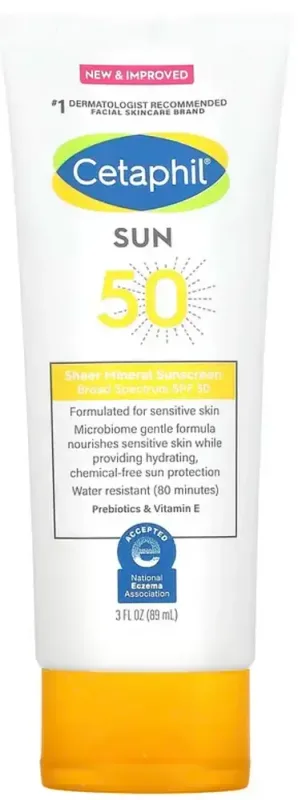
Cetaphil Sheer Mineral Sunscreen Lotion Broad Spectrum SPF 50 by Cetaphil
Cetaphil

Cetaphil Sheer Mineral Sunscreen Lotion Broad Spectrum SPF 50

Sunscreens

Safety score

Pregnancy-focused assessment

Low Risk74/100
Higher concernLower concern

One or more ingredients have a low-risk flag in MamaSkin's current assessment. Review the notes and your own circumstances.

Formula and assessment check

Ingredient safety review updated 15 February 2026. Product formulas can change, so compare the ingredients shown here with the packaging you have.

Report a formula mismatch

Ingredient breakdown

See how the listed formula falls across MamaSkin's pregnancy-focused risk bands.

35

No known risks

4

Low risk

0

Medium risk

0

High risk

Ingredients

Ingredients with a higher risk flag appear first, followed by the rest of the formula.

Phenoxyethanol

Low Risk

Phenoxyethanol is a preservative permitted in EU cosmetics up to 1.0%. The SCCS concluded it is safe for cosmetic use at that level, including when considering higher cosmetic exposure scenarios in infants and young children. Main practical concern is irritation/stinging on very sensitive or compromised skin rather than a pregnancy- or breastfeeding-specific risk.

Sources: EU SCCS; EU Cosmetics Regulation (Annex V preservative limit), SCCS Opinion on Phenoxyethanol (SCCS/1575/16, 2016)

Cetyl Dimethicone

Low Risk

Silicone derivative with negligible systemic absorption in topical cosmetic use; treated as low risk in pregnancy and breastfeeding.

Sources: PubMed, U.S. National Library of Medicine (NLM)

Dipotassium Glycyrrhizate

Low Risk

A purified glycyrrhizic-acid salt used as a soothing and skin-conditioning ingredient. Cosmetic safety reviewers concluded that dipotassium glycyrrhizate is safe in current cosmetic use and noted poor dermal absorption. MamaSkin nevertheless applies a cautious low-risk classification for consistency with the existing licorice family because high oral glycyrrhizin exposure has pregnancy-related concerns; this is not a topical contraindication.

Sources: CIR: Safety Assessment of Glycyrrhizic Acid and Derivatives https://cir-reports.cir-safety.org/view-attachment/?id=49a63435-8e74-ec11-8943-0022482f06a6

Show all (39)

Butyloctyl Salicylate

Low Risk

Butyloctyl salicylate is a salicylate ester that the CIR panel considered safe as used in cosmetics when formulated to be non-irritating. Available safety data support low dermal toxicity, and at typical cosmetic use levels the expected systemic salicylate exposure from topical application is far below oral salicylate exposure, which fits a low-risk classification.

Sources: CIR Amended Safety Assessment of Salicylic Acid and Salicylates (2019); Fiume et al., Int J Toxicol (2003).

Titanium Dioxide 9%

No Known Risks

Zinc Oxide 7%

No Known Risks

Water

No Known Risks

Isohexadecane

No Known Risks

Low-viscosity isoparaffin emollient used for slip and lightweight texture. Reviewed cosmetic safety sources support normal topical use, with no pregnancy- or breastfeeding-specific topical signal identified in the material reviewed.

Sources: CIR: Safety Assessment of Isoparaffins as Used in Cosmetics / CIR Quick Reference Table (Isohexadecane); EU CosIng / cosmetics regulatory inventory

Styrene/Acrylates Copolymer

No Known Risks

A high-molecular-weight acrylate polymer used for film formation, texture or suspension. Cosmetic safety reviewers concluded that the assessed acrylates copolymers are safe in current practices when formulated to be non-irritating. Finished-polymer absorption is expected to be limited, and residual monomers should be controlled during manufacture.

Sources: CIR: Safety Assessment of Acrylates Copolymers as Used in Cosmetics https://cir-safety.org/supplementaldoc/safety-assessment-acrylates-copolymers-used-cosmetics

Olive Oil Polyglyceryl-6 Esters

No Known Risks

Sorbitan Olivate

No Known Risks

Olive-derived sorbitan ester used as an emulsifier and skin-conditioning ingredient. Reviewed cosmetic safety references do not identify a pregnancy- or breastfeeding-specific concern for normal topical use.

Sources: CIR: Safety Assessment of Sorbitan Esters as Used in Cosmetics; EU CosIng / cosmetics regulatory inventory

Sodium Stearoyl Lactylate

No Known Risks

A fatty-acid lactylate used as an emulsifier and surfactant. Cosmetic safety reviewers concluded that sodium stearoyl lactylate is safe in current practices when formulated to be non-irritating and non-sensitising.

Sources: CIR: Lactylates conclusion, IJT 43(Suppl. 4), 2024; December 2025 Quick Reference Table https://cir-safety.org/sites/default/files/QRT-Update-Dec2025.pdf

Vp/Eicosene Copolymer

No Known Risks

A film-forming vinyl polymer used for water resistance and product hold. Cosmetic safety reviewers concluded that vinylpyrrolidone polymers, including VP/eicosene copolymer, are safe in current practices when residual monomers are appropriately controlled. Rare contact allergy has been reported with this ingredient family.

Sources: CIR: Safety Assessment of Vinylpyrrolidone Polymers as Used in Cosmetics https://www.cir-safety.org/sites/default/files/vinylp122018final.pdf

Cetearyl Alcohol

No Known Risks

Fatty alcohol used as an emollient and thickener. Not the same as drying alcohols and not associated with pregnancy-specific concerns.

Sources: Cosmetic Ingredient Review (US); Scientific Committee on Consumer Safety (EU)

Cetearyl Olivate

No Known Risks

Emollient ester/emulsifier used to improve skin feel and stabilise emulsions. Reviewed cosmetic safety sources support topical cosmetic use; the relevant practical caveat is formulation irritation potential rather than a pregnancy-specific concern.

Sources: CIR: Amended Safety Assessment of Alkyl Esters as Used in Cosmetics; CIR Quick Reference Table (Cetearyl Olivate); EU CosIng / cosmetics regulatory inventory

Cetyl Palmitate

No Known Risks

A waxy fatty-acid ester used as an emollient and texture agent. Cosmetic safety reviewers concluded that cetyl palmitate and the wider alkyl-ester group are safe in current practices of use; finished formulas should be non-irritating. No pregnancy-specific concern was identified for normal topical cosmetic exposure.

Sources: CIR: Safety Assessment of Alkyl Esters as Used in Cosmetics https://cir-reports.cir-safety.org/view-attachment/?id=b34bc38f-8e74-ec11-8943-0022482f06a6

Sorbitan Palmitate

No Known Risks

A sorbitol-derived surfactant or emulsifier used to blend oil and water phases. Cosmetic safety reviewers concluded that the named sorbitan esters are safe in current practices, with non-irritating formulation conditions where specified.

Sources: CIR: Sorbitan Sesquiisostearate, Sorbitan Palmitate and Sorbeth-30 Tetraoleate conclusions; December 2025 Quick Reference Table https://cir-safety.org/sites/default/files/QRT-Update-Dec2025.pdf

Dimethicone PEG-8 Laurate

No Known Risks

Ceramide NP

No Known Risks

Skin-identical barrier lipid used to support the stratum corneum and reduce dryness. Reviewed cosmetic safety sources support normal topical use, with no pregnancy- or breastfeeding-specific topical signal identified in the material reviewed.

Sources: CIR: Safety Assessment of Ceramides as Used in Cosmetics; EU CosIng / cosmetics regulatory inventory

Ceramide AP

No Known Risks

Skin-identical barrier lipid used to support barrier function and reduce dryness. Reviewed cosmetic safety sources support normal topical use, with no pregnancy- or breastfeeding-specific topical signal identified in the material reviewed.

Sources: CIR: Safety Assessment of Ceramides as Used in Cosmetics; EU CosIng / cosmetics regulatory inventory

Ceramide EOP

No Known Risks

Skin-identical barrier lipid used to support barrier structure and reduce dryness. Reviewed cosmetic safety sources support normal topical use, with no pregnancy- or breastfeeding-specific topical signal identified in the material reviewed.

Sources: CIR: Safety Assessment of Ceramides as Used in Cosmetics; EU CosIng / cosmetics regulatory inventory

Cholesterol

No Known Risks

Skin-conditioning lipid used in barrier-support formulas, often alongside ceramides and fatty acids. Normal topical cosmetic use has no known pregnancy- or breastfeeding-specific concern identified in reviewed cosmetic references.

Sources: CIR cosmetic ingredient safety references for cholesterol and related sterols; EU CosIng / cosmetics regulatory inventory

Phytosphingosine

No Known Risks

Skin-conditioning lipid used in barrier-support formulas, commonly alongside ceramides and cholesterol. Reviewed cosmetic ingredient references do not identify a pregnancy- or breastfeeding-specific concern for normal topical use.

Sources: CIR cosmetic ingredient safety references for sphingolipids/skin-conditioning lipids; EU CosIng / cosmetics regulatory inventory

Hydrolyzed Hyaluronic Acid

No Known Risks

Humectant and skin-conditioning ingredient in the hyaluronate family. Reviewed cosmetic safety sources support current cosmetic use, with no pregnancy- or breastfeeding-specific topical concern identified in the material reviewed.

Sources: CIR: Safety Assessment of Hyaluronates as Used in Cosmetics; EU CosIng / cosmetics regulatory inventory

Benzyl Alcohol

No Known Risks

Benzyl alcohol is used as a preservative and fragrance component in cosmetics; it is not a pregnancy-specific concern at typical topical exposure, but it can be irritating or sensitising for some individuals, particularly in leave-on products.

Sources: CIR; EU/UK Cosmetics Regulation; toxicology reviews

Bisabolol

No Known Risks

A terpene alcohol used for skin conditioning and soothing. Cosmetic safety reviewers reaffirmed bisabolol as safe at current cosmetic concentrations, and reproductive and developmental testing did not identify adverse effects. Bisabolol can increase skin penetration, so formulators should consider the safety of other ingredients in the same product.

Sources: CIR: Final Report on the Safety Assessment of Bisabolol https://cir-reports.cir-safety.org/view-attachment/?id=6fcf160b-8e74-ec11-8943-0022482f06a6; CIR re-review material https://www.cir-safety.org/sites/default/files/bisabolol.pdf

Propanediol

No Known Risks

Solvent and humectant used to improve texture and ingredient solubility. Low systemic exposure expected from topical cosmetic use.

Sources: Cosmetic Ingredient Review (US); Scientific Committee on Consumer Safety (EU)

Xanthan Gum

No Known Risks

Natural polysaccharide thickener used for stability and texture. Not associated with pregnancy-specific concerns.

Sources: European cosmetics regulatory framework

Aluminum Hydroxide

No Known Risks

Mineral opacifier, absorbent and pigment-coating ingredient used in makeup, sunscreens and skin care. Low systemic exposure is expected from normal topical cosmetic use, with no pregnancy- or breastfeeding-specific concern identified in reviewed cosmetic references.

Sources: CIR cosmetic ingredient safety references for alumina/aluminum hydroxide ingredients; EU CosIng / cosmetics regulatory inventory

Sodium Lauroyl Lactylate

No Known Risks

An emulsifier and surfactant made from lauric and lactic-acid components. Cosmetic safety reviewers concluded that alkyl lactyl lactates, including sodium lauroyl lactylate, are safe in current practices when formulated to be non-irritating and non-sensitising. No pregnancy-specific concern was identified for normal cosmetic use.

Sources: CIR: Safety Assessment of Alkyl Lactyl Lactates as Used in Cosmetics https://www.cir-safety.org/sites/default/files/alkylL062019final.pdf

Carbomer

No Known Risks

Polymer thickener used to create gel textures. Large-molecule ingredient with negligible systemic absorption.

Sources: Cosmetic Ingredient Review (US); Scientific Committee on Consumer Safety (EU)

Tocopheryl Acetate

No Known Risks

Tocopheryl acetate (vitamin E derivative) is used as an antioxidant and skin-conditioning ingredient; it is considered low concern in topical use with no known pregnancy or breastfeeding risks at cosmetic concentrations.

Sources: CIR; EU/UK Cosmetics Regulation

Disodium EDTA

No Known Risks

Disodium EDTA is a chelating agent used to improve formula stability and performance; it is considered low concern in topical cosmetic use, with no known pregnancy or breastfeeding risks at typical concentrations.

Sources: CIR; EU/UK Cosmetics Regulation

Stearic Acid

No Known Risks

Stearic acid is a fatty acid used to stabilise emulsions and improve texture; it is considered low concern in topical cosmetics with no known pregnancy or breastfeeding risks at typical concentrations.

Sources: CIR; EU/UK Cosmetics Regulation

Triethoxycaprylylsilane

No Known Risks

Silane coating and dispersion aid used on pigments and mineral particles. Reviewed cosmetic safety sources support normal topical use, with no pregnancy- or breastfeeding-specific topical signal identified in the material reviewed.

Sources: CIR: Safety Assessment of Alkoxyl Alkyl Silanes as Used in Cosmetics; EU CosIng / cosmetics regulatory inventory

Citric Acid

No Known Risks

pH adjuster used in small amounts to maintain product stability. Not associated with pregnancy-specific concerns.

Sources: Scientific Committee on Consumer Safety (EU); European cosmetics regulatory framework

Maltodextrin

No Known Risks

Polysaccharide carrier and bulking agent used for texture and delivery support. Reviewed cosmetic safety sources support normal topical use, with no pregnancy- or breastfeeding-specific topical signal identified in the material reviewed.

Sources: CIR: Safety Assessment of Polysaccharide Gums as Used in Cosmetics; EU CosIng / cosmetics regulatory inventory

Capryloyl Glycine

No Known Risks

An amino-acid-derived surfactant or conditioning ingredient. Cosmetic safety reviewers concluded that amino acid alkyl amides are safe in current cosmetic practices when formulated to be non-irritating. Manufacturing and formulation should control nitrosamine formation where relevant.

Sources: CIR: Safety Assessment of Amino Acid Alkyl Amides as Used in Cosmetics https://www.cir-safety.org/supplementaldoc/safety-assessment-amino-acid-alkyl-amides-used-cosmetics-0

Undecylenoyl Glycine

No Known Risks

Formulations can change without notice. For the most accurate result, compare this list with your packaging and scan the exact ingredient label in MamaSkin when you repurchase.

How to use this assessment

The risk band is the primary conclusion. The score adds detail within that band and should not be used to compare products as if a one-point difference were clinically meaningful.

MamaSkin provides pregnancy-focused information, not medical advice. Your midwife, GP, pharmacist or dermatologist should take priority when your circumstances differ from typical cosmetic use.

Read the full methodology