EltaMD
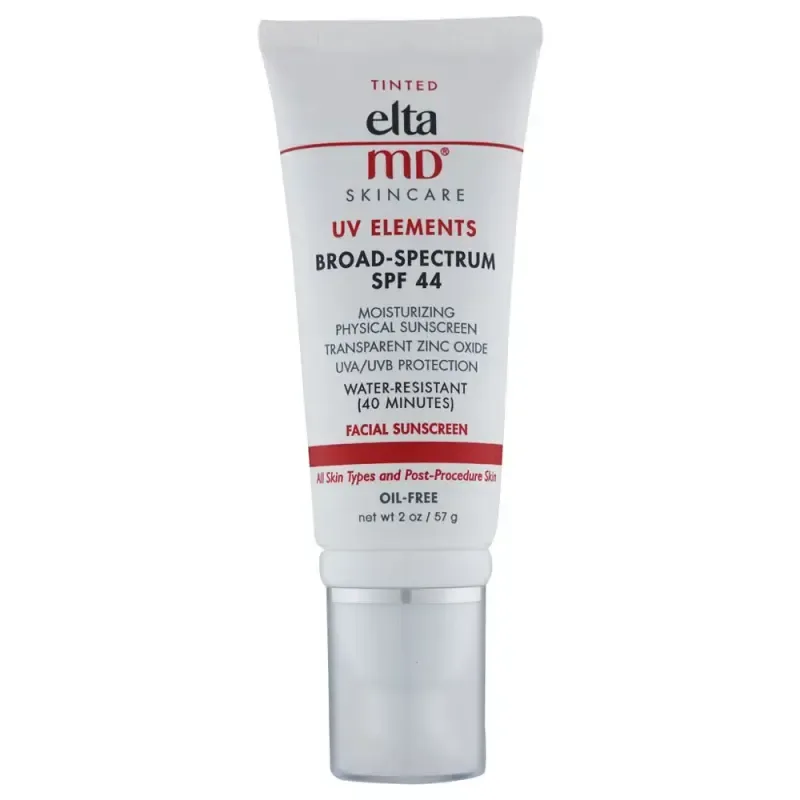
EltaMD UV Elements Broad-Spectrum SPF 44
Low risk72/100

Sunscreens
Some ingredients carry a low-risk flag. Read the formulation context before deciding.
16 of 16 ingredients rated
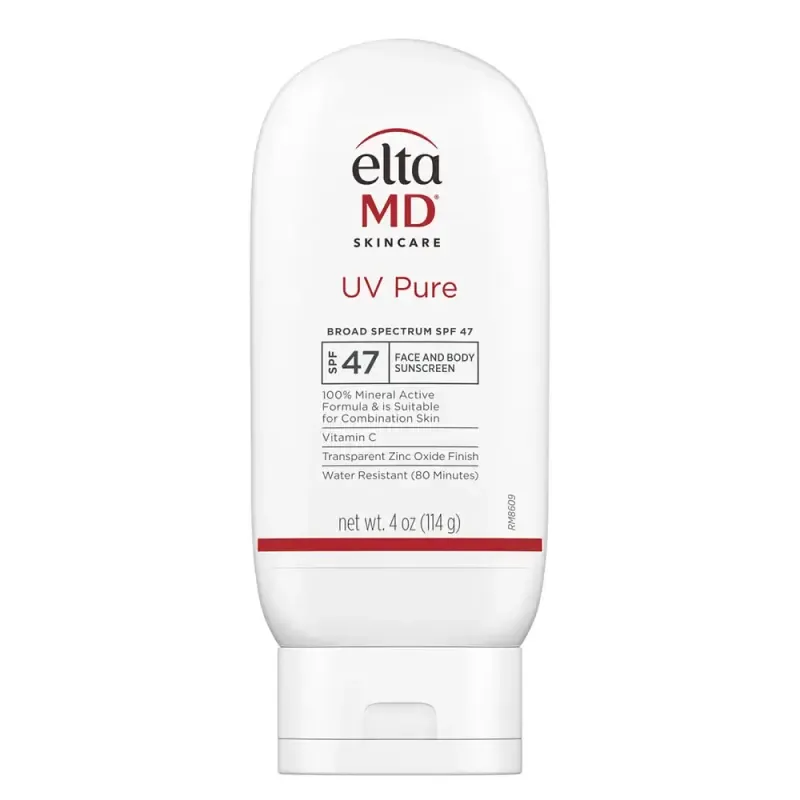
MamaSkin rates the recorded formula for EltaMD UV Pure Broad-Spectrum SPF 47 as Low risk (77/100). Review the ingredient context and any manual-review explanation before deciding.
The recorded formula includes 4 ingredient entries with risk flags: Dimethicone (Low risk), Lauryl PEG-9 Polydimethylsiloxyethyl Dimethicone (Low risk), Dimethicone/PEG-10/15 Crosspolymer (Low risk), plus others listed in the breakdown. These are ingredient-level flags; they do not replace the stored product assessment or account for every formulation detail.
16 of 16 ingredient entries on this page have a recorded score, evidence summary and source text. That describes documentation coverage, not proof that the finished formula has been clinically tested during pregnancy.
How we assess productsThe recorded formula, with evidence behind each rating. Unmatched ingredients are marked Not assessed in grey.
Dimethicone is a silicone polymer used as a skin protectant and slip/conditioning agent. It is considered inert with minimal dermal absorption; the main practical issues are cosmetic (feel) and occasional irritation in very sensitive users. It is not a pregnancy-specific concern in topical cosmetic use.
Sources: CIR: Amended Safety Assessment of Dimethicone, Methicone, and Substituted-Methicone Polymers as Used in Cosmetics https://cir-safety.org/supplementaldoc/amended-safety-assessment-dimethicone-methicone-and-substituted-methicone-polymers-2
A high-molecular-weight silicone polyether used for emulsification, texture and conditioning. Cosmetic safety reviewers concluded that this ingredient is safe in current cosmetic use, and absorption of the intact polymer is expected to be limited. MamaSkin classifies it as low risk for consistency with its established dimethicone-family policy and because cosmetic-grade manufacturing should control residual starting materials, not because of a known pregnancy-specific contraindication.
Sources: CIR: Lauryl PEG-9 Polydimethylsiloxyethyl Dimethicone conclusion in the December 2025 Quick Reference Table https://cir-safety.org/sites/default/files/QRT-Update-Dec2025.pdf
A high-molecular-weight silicone polyether used for emulsification, texture and film formation. Cosmetic safety reviewers concluded that dimethicone crosspolymers are safe in current cosmetic use, and absorption of the intact polymer is expected to be limited. MamaSkin classifies this ingredient as low risk for consistency with its established dimethicone-family policy and because cosmetic-grade manufacturing should control residual starting materials, not because of a known pregnancy-specific contraindication.
Sources: CIR: Safety Assessment of Dimethicone Crosspolymers as Used in Cosmetics https://www.cir-safety.org/sites/default/files/dimethcross_blue_092012.pdf; CIR: December 2025 Quick Reference Table https://cir-safety.org/sites/default/files/QRT-Update-Dec2025.pdf
This ingredient is a silicone polymer documented within CIR's broader dimethicone and substituted-methicone family assessment. CIR concluded the reviewed ingredients safe as used when formulated to be non-irritating to skin and eyes. This is family-level cosmetic evidence, not ingredient-specific human pregnancy evidence for every derivative. MamaSkin therefore retains Low Risk without claiming negligible absorption for this individual ingredient.
Sources: CIR: Dimethicone and substituted-methicone polymer assessment https://cir-safety.org/supplementaldoc/safety-assessment-dimethicone-methicone-and-substituted-methicone-polymers-used-cosm
Mineral ingredient used as a UV filter and skin protectant in many creams and mineral sunscreens. For typical topical use, systemic absorption is very low and it is generally considered acceptable in pregnancy and breastfeeding. If you prefer a cautious approach, avoid inhaling loose powders or spray formats.
Sources: General dermatology/obstetric guidance commonly lists mineral sunscreens (zinc oxide) as acceptable in pregnancy; exposure route considerations for powders/sprays.
Inorganic mineral pigment and, in some products, a mineral UV filter. For typical topical use in creams, lotions and makeup, systemic absorption is expected to be very low. Most concerns discussed in the literature relate to ingestion (food additive E171) or inhalation exposure from fine powders/sprays, and to specific nanoparticle characterisation. For routine topical cosmetic use, it is generally considered acceptable in pregnancy and breastfeeding; if you prefer a cautious approach, avoid inhaling loose powders or sprays.
Sources: EFSA opinion on titanium dioxide as food additive E171 (ingestion context); SCCS opinions on titanium dioxide in cosmetics (including inhalation/nano considerations); general dermatology guidance on mineral sunscreens in pregnancy.
Water (Aqua) is the standard purified water used as a cosmetic solvent. It has no pregnancy-specific risk in normal topical use.
Sources: https://pubchem.ncbi.nlm.nih.gov/compound/Water, https://single-market-economy.ec.europa.eu/sectors/cosmetics/cosmetic-ingredient-database/cosing-glossary-ingredients_en
Silicone emollient and solvent used to improve slip and spreadability. No known pregnancy- or breastfeeding-specific concern in normal topical cosmetic use based on reviewed cosmetic safety sources. Spray or aerosol formats may warrant extra caution because inhalation/local lung exposure concerns have been raised for those uses.
Sources: SCCS: Cyclopentasiloxane (D5) in cosmetic products; EU CosIng / cosmetics regulatory inventory
A cosmetic ester or glyceride used mainly for emollience, texture, dispersion or emulsification. The relevant fatty-acid, glyceryl, sorbitan, polyglyceryl and related ester safety assessments support use in current cosmetic practices. No pregnancy-specific hazard signal was identified for normal topical exposure; local irritation remains formulation-dependent.
Sources: CIR safety assessments of Fatty Acid Esters, Glyceryl Esters, Sorbitan Fatty Acid Esters, Polyglyceryl Fatty Acid Esters and Monoalkylglycol Dialkyl Acid Esters; CIR December 2025 Quick Reference Table https://cir-safety.org/sites/default/files/QRT-Update-Dec2025.pdf; European Commission CosIng ingredient inventory.
An insoluble aluminum oxide mineral used as an absorbent, abrasive, bulking agent and surface treatment. The Cosmetic Ingredient Review concluded that alumina is safe in current cosmetic use. Normal topical exposure does not identify a pregnancy-specific concern; avoid deliberately inhaling loose powders or airbrush products.
Sources: CIR: Safety Assessment of Alumina and Aluminum Hydroxide https://www.cir-safety.org/panelbook/safety-assessment-alumina-and-aluminum-hydroxide-used-cosmetics
Preservative widely used in foods and cosmetics. Considered safe at regulated concentrations with low systemic exposure from topical use.
Sources: Scientific Committee on Consumer Safety (EU); European cosmetics regulatory framework
Sodium chloride is used to adjust viscosity and texture in formulations; topical cosmetic use is considered low concern with no known pregnancy or breastfeeding risks.
Sources: CIR; EU/UK Cosmetics Regulation
Silane coating and dispersion aid used on pigments and mineral particles. Reviewed cosmetic safety sources support normal topical use, with no pregnancy- or breastfeeding-specific topical signal identified in the material reviewed.
Sources: CIR: Safety Assessment of Alkoxyl Alkyl Silanes as Used in Cosmetics; EU CosIng / cosmetics regulatory inventory
Dipropylene glycol is used as a solvent and carrier in cosmetics; topical exposure is low and it has no known pregnancy or breastfeeding concerns at cosmetic concentrations.
Sources: CIR; EU/UK Cosmetics Regulation
Oil-soluble vitamin C derivative used as an antioxidant and skin-conditioning ingredient. Reviewed cosmetic ingredient references do not identify a pregnancy- or breastfeeding-specific concern for normal topical cosmetic use.
Sources: CIR cosmetic ingredient safety references for ascorbic acid derivatives; EU CosIng / cosmetics regulatory inventory
Vitamin E antioxidant used to protect oils and support the skin barrier. Not associated with pregnancy-specific concerns at cosmetic exposure.
Sources: Cosmetic Ingredient Review (US); Scientific Committee on Consumer Safety (EU)
Zinc Oxide 10%, Titanium Dioxide 5.5%, Water, Cyclopentasiloxane, Dimethicone, Octyldodecyl Neopentanoate, Lauryl PEG-9 Polydimethylsiloxyethyl Dimethicone, Alumina, Dimethicone/PEG-10/15 Crosspolymer, Potassium Sorbate, Hydrogen Dimethicone, Sodium Chloride, Triethoxycaprylylsilane, Dipropylene Glycol, Ascorbyl Palmitate, Tocopherol
Ingredient ratings refreshed 1 October 2026. Formulas vary by market and can change. Always compare with your packaging.
The recorded formula includes 4 ingredient entries with risk flags: Dimethicone (Low risk), Lauryl PEG-9 Polydimethylsiloxyethyl Dimethicone (Low risk), Dimethicone/PEG-10/15 Crosspolymer (Low risk), plus others listed in the breakdown. These are ingredient-level flags; they do not replace the stored product assessment or account for every formulation detail. The product score is a stored assessment, not a clinical safety guarantee.
No. The score and risk band describe MamaSkin's pregnancy-focused ingredient screening of this recorded formula. They do not measure SPF, UVA protection, water resistance or whether you have applied enough sunscreen. Use the protection and application instructions on your exact packaging, and review the ingredient flags separately.
16 of 16 ingredient entries on this page have a recorded score, evidence summary and source text. That describes documentation coverage, not proof that the finished formula has been clinically tested during pregnancy.
Only if the ingredient list on your packaging matches the recorded formula shown here. Formulas can differ by market and change over time. Compare the full list, not just the product name; report a mismatch if it differs.
No. This page presents a pregnancy-focused product assessment. Do not infer a breastfeeding conclusion from its score or label; breastfeeding requires a separate assessment of the formula and how it is used.