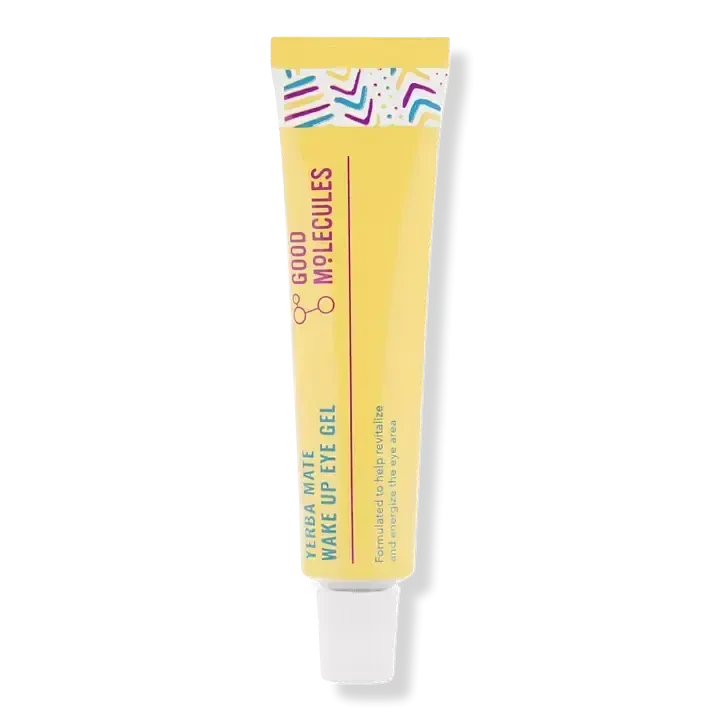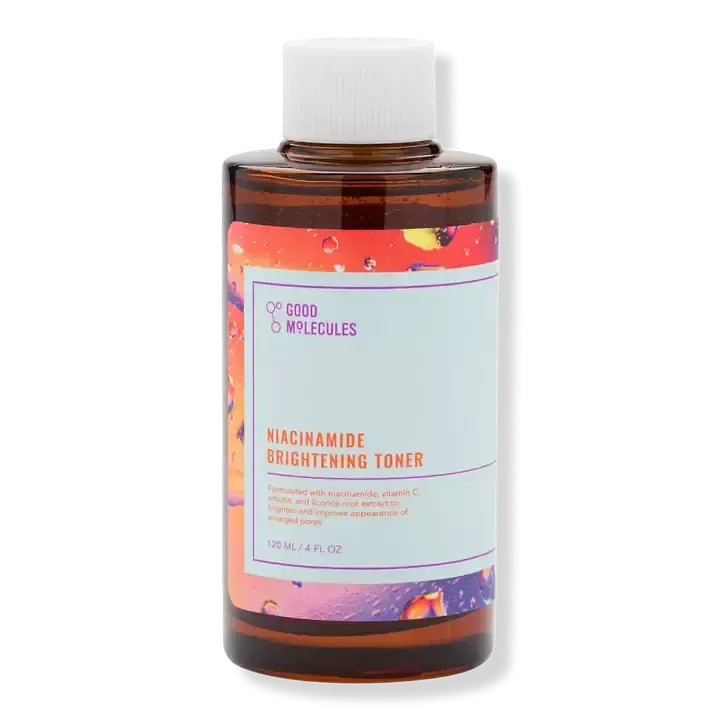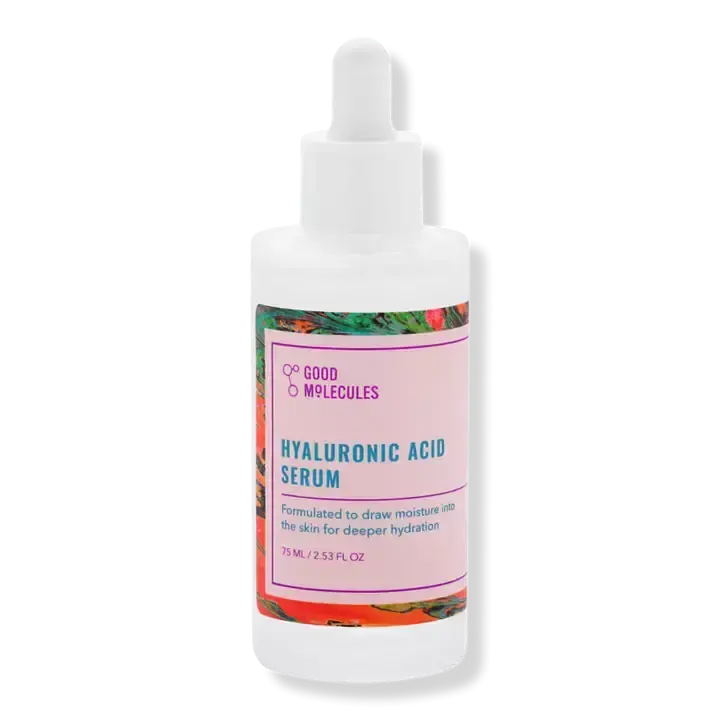
Good Molecules
Good Molecules Hyaluronic Acid Serum
No known risks99/100
Higher-risk ingredients are flagged in this formula. Discuss alternatives with your healthcare professional.
23 of 23 ingredients rated
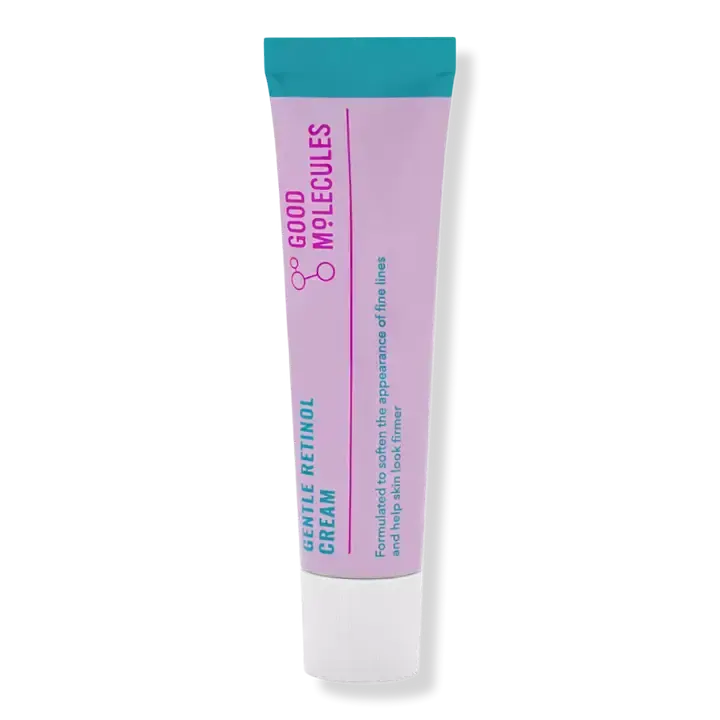
MamaSkin rates the recorded formula for Good Molecules Gentle Retinol Cream as High risk (24/100). This is not a pregnancy-safe recommendation. Discuss alternatives with a qualified healthcare professional.
The recorded formula includes 2 ingredient entries with risk flags: Retinol (High risk), Salix Alba Bark Extract (Low risk). These are ingredient-level flags; they do not replace the stored product assessment or account for every formulation detail.
23 of 23 ingredient entries on this page have a recorded score, evidence summary and source text. That describes documentation coverage, not proof that the finished formula has been clinically tested during pregnancy.
How we assess productsThe recorded formula, with evidence behind each rating. Unmatched ingredients are marked Not assessed in grey.
Vitamin A derivative. Systemic retinoids are known teratogens, and topical retinoids are avoided during pregnancy due to class-wide risk and limited safety margins. Avoid use during pregnancy regardless of formulation.
Sources: EMA: Updated measures for pregnancy prevention during retinoid use https://www.ema.europa.eu/en/news/updated-measures-pregnancy-prevention-during-retinoid-use; FDA: Pregnancy and Lactation Labeling Rule https://www.fda.gov/drugs/labeling-information-drug-products/questions-and-answers-pregnancy-and-lactation-labeling-rule
Willow bark is a salicin-containing botanical material. Its composition and delivered salicylate exposure vary by species, plant part, extraction method and concentration, so a cosmetic extract should not be treated as dose-equivalent to a stated concentration of salicylic acid. MamaSkin retains Low Risk as a conservative family policy for ordinary topical cosmetic use; this does not cover oral willow-bark medicines, concentrated preparations, large-area use or salicylate allergy.
Sources: EMA/HMPC: Salicis cortex assessment and monograph materials https://www.ema.europa.eu/en/medicines/herbal/salicis-cortex; CIR 2026 review materials for Salix alba-derived cosmetic ingredients https://www.cir-safety.org/panelbook/safety-assessment-salix-alba-willow-derived-ingredients-used-cosmetics
Water (Aqua) is the standard purified water used as a cosmetic solvent. It has no pregnancy-specific risk in normal topical use.
Sources: https://pubchem.ncbi.nlm.nih.gov/compound/Water, https://single-market-economy.ec.europa.eu/sectors/cosmetics/cosmetic-ingredient-database/cosing-glossary-ingredients_en
c13-16 isoparaffin is a volatile or emollient hydrocarbon used as a cosmetic solvent and texture aid. Dermal systemic exposure in normal use is expected to be limited, and no pregnancy-specific concern was identified. Use spray or solvent-rich products with normal ventilation.
Sources: CIR hydrocarbon and alkane-family cosmetic safety assessments; European Commission CosIng; CIR Quick Reference Table https://cir-safety.org/sites/default/files/QRT-Update-Dec2025.pdf
Glycerin is a widely used humectant that supports hydration and the skin barrier, with a long safety record and no known pregnancy or breastfeeding concerns in topical cosmetic use.
Sources: CIR; EU/UK Cosmetics Regulation
A fatty or dicarboxylic-acid ester used for light emollience, slip and formula texture. Cosmetic ester assessments support normal topical use when formulated to be non-irritating, and no pregnancy-specific concern was identified.
Sources: CIR assessments of alkyl esters and related cosmetic emollient esters; European Commission CosIng ingredient inventory for Diheptyl Succinate.
A fatty-acid ester used mainly for emollience, slip, cleansing or formula texture. Cosmetic safety reviewers concluded that these named esters are safe in current cosmetic practices, with non-irritating formulation conditions where specified.
Sources: CIR: Glycol Stearate, Ethylhexyl Olivate, Cetearyl Isononanoate, Heptyl Undecylenate, Isostearyl Neopentanoate and Octyldodecyl Myristate conclusions; December 2025 Quick Reference Table https://cir-safety.org/sites/default/files/QRT-Update-Dec2025.pdf
1,2-Hexanediol is commonly used as a solvent and preservative booster; topical exposure is low and it has no known pregnancy or breastfeeding concerns at cosmetic concentrations, though very sensitive skin may occasionally react.
Sources: CIR; EU/UK Cosmetics Regulation
Polymer thickener used to stabilise emulsions. Large-molecule ingredient with low systemic absorption.
Sources: Cosmetic Ingredient Review (US); Scientific Committee on Consumer Safety (EU)
A polyglycerin fatty-acid ester used as an emulsifier, dispersant or emollient. Cosmetic safety reviewers concluded that the assessed family of 274 polyglyceryl fatty acid esters is safe in current practices when formulated to be non-irritating. No pregnancy-specific concern was identified for normal topical cosmetic exposure.
Sources: CIR: Safety Assessment of Polyglyceryl Fatty Acid Esters as Used in Cosmetics https://www.cir-safety.org/supplementaldoc/safety-assessment-polyglyceryl-fatty-acid-esters-used-cosmetics-1
Solvent and humectant used to improve texture and ingredient solubility. Low systemic exposure expected from topical cosmetic use.
Sources: Cosmetic Ingredient Review (US); Scientific Committee on Consumer Safety (EU)
Grape seed-derived emollient oil used for skin conditioning. Normal topical cosmetic use has no known pregnancy- or breastfeeding-specific concern identified in reviewed cosmetic references.
Sources: CIR: Safety Assessment of Plant-Derived Fatty Acid Oils as Used in Cosmetics; EU CosIng / cosmetics regulatory inventory
Common emollient derived from fatty acids and glycerin. Used to soften skin and improve texture without pregnancy-specific concerns.
Sources: Cosmetic Ingredient Review (US); Scientific Committee on Consumer Safety (EU)
Bakuchiol is a plant-derived skincare ingredient used as a retinol alternative. Although it can show some retinol-like cosmetic effects, it is not a retinoid or vitamin A derivative. Human topical studies suggest good tolerability, and current literature does not identify a known pregnancy-specific risk signal for topical cosmetic use. Overall, it is generally considered a lower-concern alternative to retinoids in pregnancy, while recognising that direct pregnancy-specific studies remain limited.
Sources: PubMed (NLM): Chaudhuri & Bojanowski 2014 (PMID 24471735); Br J Dermatol bakuchiol vs retinol randomized trial (PMID 29947134); J Drugs Dermatol bakuchiol moisturizer trial in sensitive skin (PMID 33346506); J Drugs Dermatol systematic review of human topical bakuchiol trials (PMID 38564402); Contact Dermatitis case reports (PMIDs 30644106, 31423588); PMC review noting lack of pregnancy-specific studies (PMCID PMC10683784).
Vitamin E antioxidant used to protect oils and support the skin barrier. Not associated with pregnancy-specific concerns at cosmetic exposure.
Sources: Cosmetic Ingredient Review (US); Scientific Committee on Consumer Safety (EU)
A botanical extract, plant water or plant juice used for conditioning, soothing or antioxidant support. Direct pregnancy studies of this exact cosmetic material were not identified, but no reproductive or developmental hazard was identified for normal topical exposure. Oral herbal or medicinal use is outside this classification.
Sources: European Commission CosIng ingredient inventory; CIR botanical safety framework and relevant plant-derived ingredient assessments; no ingredient-specific human pregnancy study of normal topical cosmetic use was identified.
Solvent and humectant commonly used in leave-on products. Not associated with pregnancy-specific concerns at cosmetic exposure levels.
Sources: Cosmetic Ingredient Review (US); Scientific Committee on Consumer Safety (EU)
Allantoin is a soothing skin protectant commonly used to help reduce irritation and support comfort, with no known pregnancy or breastfeeding concerns in topical cosmetic use.
Sources: CIR; EU/UK Cosmetics Regulation
Helianthus annuus (sunflower) seed oil is a common emollient rich in fatty acids and is generally well tolerated, with no known pregnancy or breastfeeding concerns in topical cosmetic use.
Sources: CIR; EU/UK Cosmetics Regulation
A high-molecular-weight emollient polymer used for film formation and texture. The intact capryloyl glycerin/sebacic acid copolymer is expected to have limited dermal absorption, and no reproductive or pregnancy-specific signal was identified for normal cosmetic exposure.
Sources: European Commission CosIng ingredient inventory; published cosmetic ingredient and polymer safety information for capryloyl glycerin/sebacic acid copolymer.
Preservative booster and skin-conditioning agent. Considered safe for cosmetic use with low systemic exposure when used as intended.
Sources: Scientific Committee on Consumer Safety (EU); Cosmetic Ingredient Review (US)
Camellia sinensis (green tea) leaf extract is used as an antioxidant botanical; topical cosmetic use is considered low concern with no known pregnancy or breastfeeding risks, though rare sensitivities are possible.
Sources: CIR; EU/UK Cosmetics Regulation
Lilium candidum bulb extract is a cosmetic botanical preparation from the bulb, distinct from flower extract, flower water and cell-culture extract. Direct pregnancy or developmental safety studies for this exact topical extract were not identified. No pregnancy-specific hazard from normal cosmetic use is currently known, but evidence is limited and individual botanical sensitivity remains possible.
Sources: COSMILE Europe exact ingredient identity https://cosmileeurope.eu/fr/inci/ingredient/8283/lilium-candidum-bulb-extract/; European Commission CosIng database and its limits of interpretation https://single-market-economy.ec.europa.eu/sectors/cosmetics/cosmetic-ingredient-database_en
Water, C13-16 Isoparaffin, Glycerin, Diheptyl Succinate, Heptyl Undecylenate, 1,2-Hexanediol, Ammonium Acryloyldimethyltaurate/Vp Copolymer, Polyglyceryl-10 Oleate, Propanediol, Vitis Vinifera Seed Oil, Caprylic/Capric Triglyceride, Bakuchiol, Tocopherol, Acmella Oleracea Extract, Butylene Glycol, Retinol, Allantoin, Helianthus Annuus Seed Oil, Capryloyl Glycerin/Sebacic Acid Copolymer, Ethylhexylglycerin, Salix Alba Bark Extract, Camellia Sinensis Leaf Extract, Lilium Candidum Bulb Extract
Ingredient ratings refreshed 29 October 2026. Formulas vary by market and can change. Always compare with your packaging.
The recorded formula includes 2 ingredient entries with risk flags: Retinol (High risk), Salix Alba Bark Extract (Low risk). These are ingredient-level flags; they do not replace the stored product assessment or account for every formulation detail. The product score is a stored assessment, not a clinical safety guarantee.
23 of 23 ingredient entries on this page have a recorded score, evidence summary and source text. That describes documentation coverage, not proof that the finished formula has been clinically tested during pregnancy.
Only if the ingredient list on your packaging matches the recorded formula shown here. Formulas can differ by market and change over time. Compare the full list, not just the product name; report a mismatch if it differs.
No. This page presents a pregnancy-focused product assessment. Do not infer a breastfeeding conclusion from its score or label; breastfeeding requires a separate assessment of the formula and how it is used.