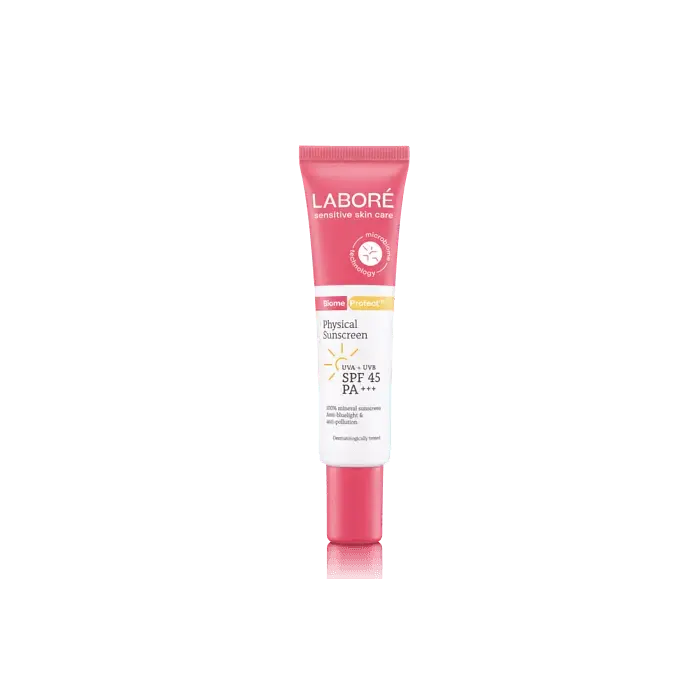
Labore Biomeprotect Physical Sunscreen SPF 45 by Labore
Labore

Labore Biomeprotect Physical Sunscreen SPF 45

Sunscreens

Safety score

Pregnancy-focused assessment

Low Risk74/100
Higher concernLower concern

One or more ingredients have a low-risk flag in MamaSkin's current assessment. Review the notes and your own circumstances.

Formula and assessment check

Ingredient safety review updated 15 February 2026. Product formulas can change, so compare the ingredients shown here with the packaging you have.

Report a formula mismatch

Ingredient breakdown

See how the listed formula falls across MamaSkin's pregnancy-focused risk bands.

28

No known risks

3

Low risk

0

Medium risk

0

High risk

Ingredients

Ingredients with a higher risk flag appear first, followed by the rest of the formula.

Phenoxyethanol

Low Risk

Phenoxyethanol is a preservative permitted in EU cosmetics up to 1.0%. The SCCS concluded it is safe for cosmetic use at that level, including when considering higher cosmetic exposure scenarios in infants and young children. Main practical concern is irritation/stinging on very sensitive or compromised skin rather than a pregnancy- or breastfeeding-specific risk.

Sources: SCCS/1575/16: Phenoxyethanol opinion https://health.ec.europa.eu/publications/phenoxyethanol_en
Dimethicone

Low Risk

Dimethicone is a silicone polymer used as a skin protectant and slip/conditioning agent. It is considered inert with minimal dermal absorption; the main practical issues are cosmetic (feel) and occasional irritation in very sensitive users. It is not a pregnancy-specific concern in topical cosmetic use.

Sources: CIR: Amended Safety Assessment of Dimethicone, Methicone, and Substituted-Methicone Polymers as Used in Cosmetics https://cir-safety.org/supplementaldoc/amended-safety-assessment-dimethicone-methicone-and-substituted-methicone-polymers-2

Butyloctyl Salicylate

Low Risk

Butyloctyl salicylate is a salicylate ester that the CIR panel considered safe as used in cosmetics when formulated to be non-irritating. Available safety data support low dermal toxicity, and at typical cosmetic use levels the expected systemic salicylate exposure from topical application is far below oral salicylate exposure, which fits a low-risk classification.

Sources: MotherToBaby: Topical acne treatments including salicylic acid https://www.ncbi.nlm.nih.gov/books/NBK582985/

Show all (31)

1,2-Hexanediol

No Known Risks

1,2-Hexanediol is commonly used as a solvent and preservative booster; topical exposure is low and it has no known pregnancy or breastfeeding concerns at cosmetic concentrations, though very sensitive skin may occasionally react.

Sources: CIR; EU/UK Cosmetics Regulation

Water

No Known Risks

Artemisia Capillaris Flower Extract

No Known Risks

Bifida Ferment Lysate

No Known Risks

A non-live bacterial fermentation lysate used for skin conditioning. It is not the same as applying live bacteria. Available cosmetic safety information and the nature of the processed material do not identify a pregnancy-specific concern for normal topical exposure.

Sources: CIR yeast and bacterial ferment strategy and safety assessments; European Commission CosIng ingredient inventory for Bifida Ferment Lysate.

Biosaccharide Gum-1

No Known Risks

Microbial polysaccharide used for film forming, soothing, and hydration support. Reviewed cosmetic safety sources support normal topical use, with no pregnancy- or breastfeeding-specific topical signal identified in the material reviewed.

Sources: CIR: Safety Assessment of Microbial Polysaccharide Gums as Used in Cosmetics; EU CosIng / cosmetics regulatory inventory

Bisabolol

No Known Risks

A terpene alcohol used for skin conditioning and soothing. Cosmetic safety reviewers reaffirmed bisabolol as safe at current cosmetic concentrations, and reproductive and developmental testing did not identify adverse effects. Bisabolol can increase skin penetration, so formulators should consider the safety of other ingredients in the same product.

Sources: CIR: Final Report on the Safety Assessment of Bisabolol https://cir-reports.cir-safety.org/view-attachment/?id=6fcf160b-8e74-ec11-8943-0022482f06a6; CIR re-review material https://www.cir-safety.org/sites/default/files/bisabolol.pdf

Caprylhydroxamic Acid

No Known Risks

A chelating ingredient commonly used to support cosmetic preservation. Cosmetic safety reviewers concluded that caprylhydroxamic acid is safe in current cosmetic use; sensitisation and enhanced penetration are formulation considerations, especially on damaged skin, but no pregnancy-specific contraindication is identified for normal topical use.

Sources: CIR: Safety Assessment of Caprylhydroxamic Acid https://www.cir-safety.org/supplementaldoc/safety-assessment-caprylhydroxamic-acid-used-cosmetics

Caprylyl Methicone

No Known Risks

Volatile/low-residue silicone emollient used to improve spreadability and sensory feel. Reviewed cosmetic safety sources support normal topical use, with no pregnancy- or breastfeeding-specific topical signal identified in the material reviewed.

Sources: CIR: Amended Safety Assessment of Dimethicone, Methicone, and Substituted-Methicone Polymers as Used in Cosmetics; EU CosIng / cosmetics regulatory inventory

Cetyl PEG/PPG-10/1 Dimethicone

No Known Risks

A silicone polyether used mainly as an emulsifier and conditioning ingredient. The Cosmetic Ingredient Review concluded that this ingredient is safe in current cosmetic use. Concentrated-material tests found limited transient irritation, while a finished cosmetic containing 15% was non-irritating in human patch testing; no pregnancy- or breastfeeding-specific concern is identified for normal topical use.

Sources: CIR: Safety Assessment of Polyoxyalkylene Siloxane Copolymers as Used in Cosmetics (Final Report 2014) https://cir-safety.org/sites/default/files/ROPSIL_122014%20_FAR.pdf

Citric Acid

No Known Risks

pH adjuster used in small amounts to maintain product stability. Not associated with pregnancy-specific concerns.

Sources: Scientific Committee on Consumer Safety (EU); European cosmetics regulatory framework

Cyclopentasiloxane

No Known Risks

Silicone emollient and solvent used to improve slip and spreadability. No known pregnancy- or breastfeeding-specific concern in normal topical cosmetic use based on reviewed cosmetic safety sources. Spray or aerosol formats may warrant extra caution because inhalation/local lung exposure concerns have been raised for those uses.

Sources: SCCS: Cyclopentasiloxane (D5) in cosmetic products; EU CosIng / cosmetics regulatory inventory

Disteardimonium Hectorite

No Known Risks

Mineral-derived organoclay thickener and suspension agent used in creams, makeup and sunscreens. It is expected to have low systemic exposure from topical use, with no pregnancy- or breastfeeding-specific concern identified in reviewed cosmetic references.

Sources: CIR cosmetic ingredient safety references for hectorite/quaternium hectorite ingredients; EU CosIng / cosmetics regulatory inventory

Hexyl Laurate

No Known Risks

A fatty-acid ester used mainly for emollience, slip and formula texture. Cosmetic safety reviewers concluded that the assessed alkyl esters are safe in current practices when formulated to be non-irritating. No pregnancy-specific concern was identified for normal topical cosmetic exposure.

Sources: CIR: Safety Assessment of Alkyl Esters as Used in Cosmetics https://cir-reports.cir-safety.org/view-attachment/?id=b34bc38f-8e74-ec11-8943-0022482f06a6

Mineral Salts

No Known Risks

Polyglyceryl-4 Isostearate

No Known Risks

A polyglycerin fatty-acid ester used as an emulsifier, dispersant or emollient. Cosmetic safety reviewers concluded that the assessed family of 274 polyglyceryl fatty acid esters is safe in current practices when formulated to be non-irritating. No pregnancy-specific concern was identified for normal topical cosmetic exposure.

Sources: CIR: Safety Assessment of Polyglyceryl Fatty Acid Esters as Used in Cosmetics https://www.cir-safety.org/supplementaldoc/safety-assessment-polyglyceryl-fatty-acid-esters-used-cosmetics-1

Polymethyl Methacrylate

No Known Risks

A large, pre-formed acrylic polymer used for texture, film formation and oil absorption. Cosmetic safety reviewers concluded that cosmetic-grade polymethyl methacrylate is safe in current cosmetic use, drawing on extensive safety information for comparable medical materials. Good manufacturing practice should minimize residual monomer.

Sources: CIR: Safety Assessment of Polymethyl Methacrylate and Related Polymers https://www.cir-safety.org/sites/default/files/115_final_pmma.pdf

Pongamol

No Known Risks

Propanediol

No Known Risks

Solvent and humectant used to improve texture and ingredient solubility. Low systemic exposure expected from topical cosmetic use.

Sources: Cosmetic Ingredient Review (US); Scientific Committee on Consumer Safety (EU)

Propylene Carbonate

No Known Risks

Solvent and viscosity-control ingredient used in cosmetic formulas, often with clay thickeners. Reviewed cosmetic ingredient references do not identify a pregnancy- or breastfeeding-specific concern for normal topical use.

Sources: CIR cosmetic ingredient safety references for carbonate solvents; EU CosIng / cosmetics regulatory inventory

Saccharide Isomerate

No Known Risks

Humectant saccharide complex used to improve surface hydration and reduce transepidermal water loss. Reviewed cosmetic safety sources support normal topical use, with no pregnancy- or breastfeeding-specific topical signal identified in the material reviewed.

Sources: CIR: Safety Assessment of Saccharide Humectants / Saccharide Isomerate, etc.; EU CosIng / cosmetics regulatory inventory

Silica

No Known Risks

Mineral absorbent and texture aid used to mattify and improve slip. Reviewed cosmetic safety sources support normal topical cosmetic use; this assessment does not cover deliberate inhalation of loose powder.

Sources: CIR: Safety Assessment of Silica and Silicates as Used in Cosmetics; EU CosIng / cosmetics regulatory inventory

Sodium Chloride

No Known Risks

Sodium chloride is used to adjust viscosity and texture in formulations; topical cosmetic use is considered low concern with no known pregnancy or breastfeeding risks.

Sources: CIR; EU/UK Cosmetics Regulation

Sodium Citrate

No Known Risks

Buffering and chelating ingredient used to control pH and formulation stability. Reviewed cosmetic safety sources support normal topical use, with no pregnancy- or breastfeeding-specific topical signal identified in the material reviewed.

Sources: CIR: Safety Assessment of Citric Acid, Inorganic Citrate Salts, and Alkyl Citrate Esters as Used in Cosmetics; EU CosIng / cosmetics regulatory inventory

Sorbitan Olivate

No Known Risks

Olive-derived sorbitan ester used as an emulsifier and skin-conditioning ingredient. Reviewed cosmetic safety references do not identify a pregnancy- or breastfeeding-specific concern for normal topical use.

Sources: CIR: Safety Assessment of Sorbitan Esters as Used in Cosmetics; EU CosIng / cosmetics regulatory inventory

Tetrasodium EDTA

No Known Risks

Chelating agent used to stabilise formulations; minimal dermal absorption and no known pregnancy or breastfeeding risks at typical cosmetic concentrations.

Sources: CIR; EU/UK Cosmetics Regulation

Titanium Dioxide

No Known Risks

Inorganic mineral pigment and, in some products, a mineral UV filter. For typical topical use in creams, lotions and makeup, systemic absorption is expected to be very low. Most concerns discussed in the literature relate to ingestion (food additive E171) or inhalation exposure from fine powders/sprays, and to specific nanoparticle characterisation. For routine topical cosmetic use, it is generally considered acceptable in pregnancy and breastfeeding; if you prefer a cautious approach, avoid inhaling loose powders or sprays.

Sources: EFSA opinion on titanium dioxide as food additive E171 (ingestion context); SCCS opinions on titanium dioxide in cosmetics (including inhalation/nano considerations); general dermatology guidance on mineral sunscreens in pregnancy.

Triethoxycaprylylsilane

No Known Risks

Silane coating and dispersion aid used on pigments and mineral particles. Reviewed cosmetic safety sources support normal topical use, with no pregnancy- or breastfeeding-specific topical signal identified in the material reviewed.

Sources: CIR: Safety Assessment of Alkoxyl Alkyl Silanes as Used in Cosmetics; EU CosIng / cosmetics regulatory inventory

Zinc Oxide

No Known Risks

Mineral ingredient used as a UV filter and skin protectant in many creams and mineral sunscreens. For typical topical use, systemic absorption is very low and it is generally considered acceptable in pregnancy and breastfeeding. If you prefer a cautious approach, avoid inhaling loose powders or spray formats.

Sources: General dermatology/obstetric guidance commonly lists mineral sunscreens (zinc oxide) as acceptable in pregnancy; exposure route considerations for powders/sprays.

Formulations can change without notice. For the most accurate result, compare this list with your packaging and scan the exact ingredient label in MamaSkin when you repurchase.

How to use this assessment

The risk band is the primary conclusion. The score adds detail within that band and should not be used to compare products as if a one-point difference were clinically meaningful.

MamaSkin provides pregnancy-focused information, not medical advice. Your midwife, GP, pharmacist or dermatologist should take priority when your circumstances differ from typical cosmetic use.

Read the full methodology