Mustela
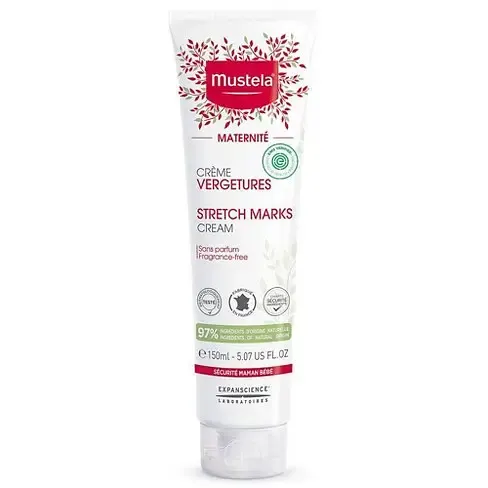
Mustela Stretch Marks Cream
Body Treatmentsbody care
Safety score
Pregnancy-focused assessment
No Known Risks99/100
Higher concernLower concern
No higher-risk ingredients were identified in MamaSkin's current assessment. Check the latest package before deciding.
Formula and assessment check
Ingredient safety review updated 24 November 2025. Product formulas can change, so compare the ingredients shown here with the packaging you have.
Report a formula mismatchIngredient breakdown
See how the listed formula falls across MamaSkin's pregnancy-focused risk bands.
25
No known risks
0
Low risk
0
Medium risk
0
High risk
Ingredients
Ingredients with a higher risk flag appear first, followed by the rest of the formula.
Coco-Caprylate/Caprate
No Known RisksCoconut-derived emollient ester used as a lightweight skin-conditioning ingredient. Reviewed cosmetic ingredient references do not identify a pregnancy- or breastfeeding-specific concern for normal topical use.
Sources: CIR cosmetic ingredient safety references for alkyl esters/emollient esters; EU CosIng / cosmetics regulatory inventory
Dicaprylyl Carbonate
No Known RisksLight emollient carbonate ester used to improve spreadability and reduce greasiness. Reviewed cosmetic safety sources support normal topical use, with no pregnancy- or breastfeeding-specific topical signal identified in the material reviewed.
Sources: CIR: Safety Assessment of Dialkyl Carbonates as Used in Cosmetics; EU CosIng / cosmetics regulatory inventory
Show all (25)
Glycerin
No Known RisksGlycerin is a widely used humectant that supports hydration and the skin barrier, with a long safety record and no known pregnancy or breastfeeding concerns in topical cosmetic use.
Sources: CIR; EU/UK Cosmetics Regulation
Butyrospermum Parkii Butter
No Known RisksButyrospermum parkii (shea) butter is an emollient/occlusive that supports the skin barrier; topical use is considered low concern with no known pregnancy or breastfeeding risks.
Sources: CIR; EU/UK Cosmetics Regulation
C10-18 Triglycerides
No Known RisksA mixture of medium- to long-chain triglycerides used as an emollient and texture agent. Cosmetic safety reviewers concluded that the assessed triglycerides are safe in current practices of use and concentration. No pregnancy-specific concern was identified for normal topical exposure.
Sources: CIR: December 2025 Quick Reference Table, C10-18 Triglycerides conclusion, IJT 41(Suppl. 3), 2022 https://cir-safety.org/sites/default/files/QRT-Update-Dec2025.pdf
Candelilla/Jojoba/Rice Bran Polyglyceryl-3 Esters
No Known Riskscandelilla/jojoba/rice bran polyglyceryl-3 esters is a cosmetic emollient, ester, fatty alcohol or lipid-derived formulation aid. Relevant CIR family evidence supports normal cosmetic use with purity and irritation qualifications retained. No pregnancy-specific concern was identified for ordinary topical exposure.
Sources: CIR Safety Assessment of Alkyl Esters as Used in Cosmetics https://www.cir-safety.org/supplementaldoc/safety-assessment-alkyl-esters-used-cosmetics; European Commission CosIng ingredient inventory.
Glyceryl Stearate
No Known RisksEmulsifier and emollient used to stabilise creams and lotions. Not associated with pregnancy-specific concerns at cosmetic exposure.
Sources: Cosmetic Ingredient Review (US); Scientific Committee on Consumer Safety (EU)
Cetearyl Alcohol
No Known RisksFatty alcohol used as an emollient and thickener. Not the same as drying alcohols and not associated with pregnancy-specific concerns.
Sources: Cosmetic Ingredient Review (US); Scientific Committee on Consumer Safety (EU)
Sodium Stearoyl Lactylate
No Known RisksA fatty-acid lactylate used as an emulsifier and surfactant. Cosmetic safety reviewers concluded that sodium stearoyl lactylate is safe in current practices when formulated to be non-irritating and non-sensitising.
Sources: CIR: Lactylates conclusion, IJT 43(Suppl. 4), 2024; December 2025 Quick Reference Table https://cir-safety.org/sites/default/files/QRT-Update-Dec2025.pdf
1,2-Hexanediol
No Known Risks1,2-Hexanediol is commonly used as a solvent and preservative booster; topical exposure is low and it has no known pregnancy or breastfeeding concerns at cosmetic concentrations, though very sensitive skin may occasionally react.
Sources: CIR; EU/UK Cosmetics Regulation
Persea Gratissima Oil
No Known RisksAvocado-derived emollient oil used for skin conditioning and barrier feel. Normal topical cosmetic use has no known pregnancy- or breastfeeding-specific concern identified in reviewed cosmetic references.
Sources: CIR: Safety Assessment of Plant-Derived Fatty Acid Oils as Used in Cosmetics; EU CosIng / cosmetics regulatory inventory
Polyacrylate Crosspolymer-6
No Known RisksLarge polymer thickener and stabilizer used in gels, serums and creams. Systemic exposure from topical cosmetic use is expected to be low, with no pregnancy- or breastfeeding-specific concern identified in reviewed cosmetic references.
Sources: CIR cosmetic ingredient safety references for acrylates/polyacrylate crosspolymers; EU CosIng / cosmetics regulatory inventory
Tocopherol
No Known RisksVitamin E antioxidant used to protect oils and support the skin barrier. Not associated with pregnancy-specific concerns at cosmetic exposure.
Sources: Cosmetic Ingredient Review (US); Scientific Committee on Consumer Safety (EU)
Caprylyl Glycol
No Known RisksHumectant and preservative booster used to support product stability. Low systemic exposure expected from topical cosmetic use.
Sources: Scientific Committee on Consumer Safety (EU); Cosmetic Ingredient Review (US)
Sodium Stearoyl Glutamate
No Known RisksAmino-acid-derived emulsifier and skin-conditioning support ingredient. Reviewed cosmetic ingredient references do not identify a pregnancy- or breastfeeding-specific concern for normal topical use.
Sources: CIR cosmetic ingredient safety references for amino acid alkyl amides/salts; EU CosIng / cosmetics regulatory inventory
Propanediol
No Known RisksSolvent and humectant used to improve texture and ingredient solubility. Low systemic exposure expected from topical cosmetic use.
Sources: Cosmetic Ingredient Review (US); Scientific Committee on Consumer Safety (EU)
Citric Acid
No Known RiskspH adjuster used in small amounts to maintain product stability. Not associated with pregnancy-specific concerns.
Sources: Scientific Committee on Consumer Safety (EU); European cosmetics regulatory framework
Hydrolyzed Avocado Protein
No Known RisksMaltodextrin
No Known RisksPolysaccharide carrier and bulking agent used for texture and delivery support. Reviewed cosmetic safety sources support normal topical use, with no pregnancy- or breastfeeding-specific topical signal identified in the material reviewed.
Sources: CIR: Safety Assessment of Polysaccharide Gums as Used in Cosmetics; EU CosIng / cosmetics regulatory inventory
Pentylene Glycol
No Known RisksHumectant and preservative booster. Considered safe for cosmetic use with low systemic exposure.
Sources: Cosmetic Ingredient Review (US); Scientific Committee on Consumer Safety (EU)
Sodium Hydroxide
No Known RiskspH adjuster used in very small quantities to balance formulations. Not associated with pregnancy-specific concerns.
Sources: Scientific Committee on Consumer Safety (EU); European cosmetics regulatory framework
Hamamelis Virginiana Leaf Extract
No Known RisksA witch-hazel leaf extract used as an astringent and skin-conditioning ingredient. Cosmetic safety reviewers concluded that the assessed Hamamelis virginiana-derived ingredients are safe when formulated to be non-irritating and non-sensitising.
Sources: CIR: Hamamelis virginiana-derived ingredients final assessment, June 2018; December 2025 Quick Reference Table https://cir-safety.org/sites/default/files/QRT-Update-Dec2025.pdf
Xanthan Gum
No Known RisksNatural polysaccharide thickener used for stability and texture. Not associated with pregnancy-specific concerns.
Sources: European cosmetics regulatory framework
Passiflora Edulis Fruit Extract
No Known Riskspassiflora edulis fruit extract is a botanical-derived cosmetic conditioning ingredient. The reviewed identity is not an essential oil or an oral herbal preparation. Available cosmetic evidence and expected topical exposure did not identify a pregnancy-specific contraindication, although botanical irritation or allergy remains possible.
Sources: CIR ingredient-specific and botanical-family safety assessments; CIR Quick Reference Table https://cir-safety.org/sites/default/files/QRT-Update-Dec2025.pdf; European Commission CosIng
Formulations can change without notice. For the most accurate result, compare this list with your packaging and scan the exact ingredient label in MamaSkin when you repurchase.
How to use this assessment
The risk band is the primary conclusion. The score adds detail within that band and should not be used to compare products as if a one-point difference were clinically meaningful.
MamaSkin provides pregnancy-focused information, not medical advice. Your midwife, GP, pharmacist or dermatologist should take priority when your circumstances differ from typical cosmetic use.