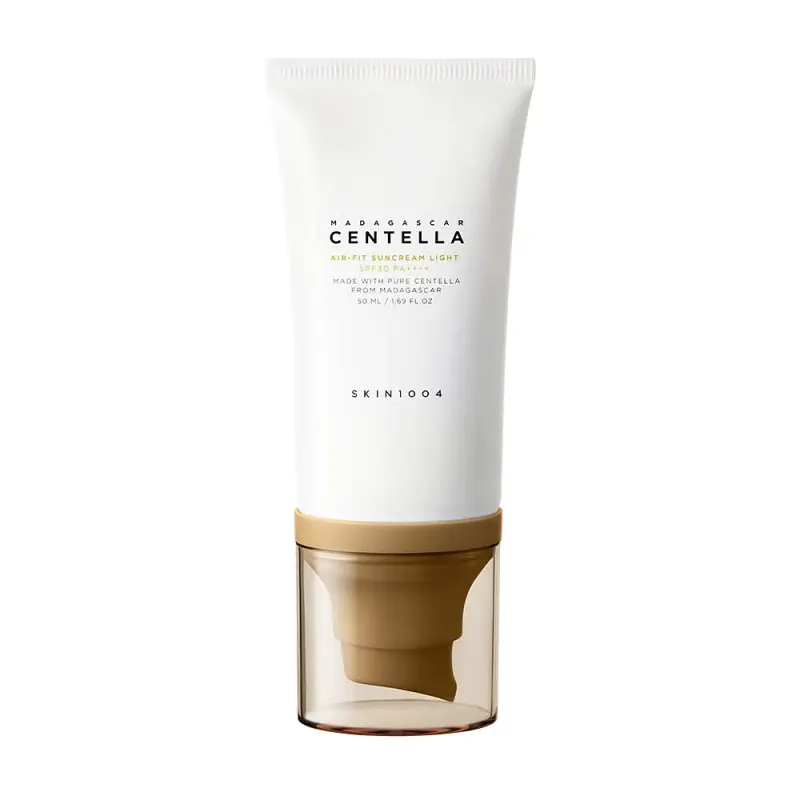
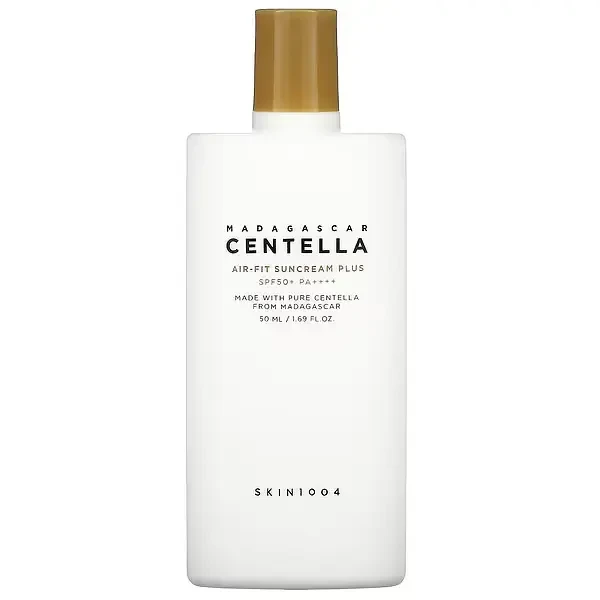
SKIN1004 Madagascar Centella Air-Fit Suncream Plus SPF50+ PA+++ by SKIN1004
SKIN1004

SKIN1004 Madagascar Centella Air-Fit Suncream Plus SPF50+ PA+++

Sunscreens

Safety score

Pregnancy-focused assessment

Low Risk74/100
Higher concernLower concern

One or more ingredients have a low-risk flag in MamaSkin's current assessment. Review the notes and your own circumstances.

Formula and assessment check

Ingredient safety review updated 22 January 2026. Product formulas can change, so compare the ingredients shown here with the packaging you have.

Report a formula mismatch

MamaSkin assessment · 22 January 2026

Is SKIN1004 Madagascar Centella Air-Fit Suncream Plus SPF50+ PA+++ suitable during pregnancy?

MamaSkin currently classifies SKIN1004 Madagascar Centella Air-Fit Suncream Plus SPF50+ PA+++ as Low risk, with a stored score of 74/100. This is a precautionary classification, not an unqualified pregnancy-safe recommendation. Read the ingredient context and any manual-review explanation below.

What does the ingredient evidence show?

The recorded formula includes 8 ingredient entries with risk flags: Butyloctyl Salicylate (Low risk), Coptis Chinensis Root Extract (Low risk), PEG-10 Dimethicone (Low risk), plus others listed in the breakdown. These are ingredient-level flags; they do not replace the stored product assessment or account for every formulation detail.

43 of 43 ingredient entries on this page have a recorded score, evidence summary and source text. That describes documentation coverage, not proof that the finished formula has been clinically tested during pregnancy.

Ingredient breakdown

See how the listed formula falls across MamaSkin's pregnancy-focused risk bands.

35

No known risks

8

Low risk

0

Medium risk

0

High risk

Ingredients

Ingredients with a higher risk flag appear first, followed by the rest of the formula.

Coptis Chinensis Root Extract

Low Risk

Coptis chinensis root is an alkaloid-bearing botanical and may contain berberine. Oral berberine is discouraged in pregnancy and lactation, but dermal delivery from a cosmetic root extract is unquantified and likely much lower. Low is consistent with live C. japonica root extract.

Sources: https://www.nccih.nih.gov/health/in-the-news-berberine, https://pubmed.ncbi.nlm.nih.gov/10552394/
PEG-10 Dimethicone

Low Risk

This ingredient is a silicone polymer documented within CIR's broader dimethicone and substituted-methicone family assessment. CIR concluded the reviewed ingredients safe as used when formulated to be non-irritating to skin and eyes. This is family-level cosmetic evidence, not ingredient-specific human pregnancy evidence for every derivative. MamaSkin therefore retains Low Risk without claiming negligible absorption for this individual ingredient.

Sources: CIR: Dimethicone and substituted-methicone polymer assessment https://cir-safety.org/supplementaldoc/safety-assessment-dimethicone-methicone-and-substituted-methicone-polymers-used-cosm

Dimethicone

Low Risk

Dimethicone is a silicone polymer used as a skin protectant and slip/conditioning agent. It is considered inert with minimal dermal absorption; the main practical issues are cosmetic (feel) and occasional irritation in very sensitive users. It is not a pregnancy-specific concern in topical cosmetic use.

Sources: CIR: Amended Safety Assessment of Dimethicone, Methicone, and Substituted-Methicone Polymers as Used in Cosmetics https://cir-safety.org/supplementaldoc/amended-safety-assessment-dimethicone-methicone-and-substituted-methicone-polymers-2

Show all (43)

Dimethicone Crosspolymer

Low Risk

This ingredient is a dimethicone crosspolymer covered by CIR's crosspolymer assessment. CIR concluded the reviewed crosspolymers safe as used in cosmetics. That conclusion is based on polymer chemistry and cosmetic-use safety data, not human pregnancy studies for every named crosspolymer. MamaSkin retains Low Risk; finished-product irritation remains formulation-dependent.

Sources: CIR: Safety assessment of dimethicone crosspolymers https://www.cir-safety.org/supplementaldoc/safety-assessment-dimethicone-crosspolymers-used-cosmetics

Dimethicone/Vinyl Dimethicone Crosspolymer

Low Risk

A crosslinked silicone elastomer used for texture and oil absorption. Cosmetic safety reviewers concluded that dimethicone crosspolymers are safe in current cosmetic use. MamaSkin classifies the exact polymer as low risk for consistency with the existing dimethicone-family policy and because manufacturing controls are needed for residual monomers, rather than because of a known pregnancy-specific contraindication.

Sources: CIR: Safety Assessment of Dimethicone Crosspolymers as Used in Cosmetics https://www.cir-safety.org/sites/default/files/dimethcross_blue_092012.pdf

Polygonum Cuspidatum Root Extract

Low Risk

Polygonum cuspidatum root extract, also called Japanese knotweed root extract, is a botanical source of resveratrol, polydatin and related polyphenols. Extract composition and cosmetic concentration vary, and normal topical exposure is expected to be much lower than high-dose oral supplementation. MamaSkin applies a precautionary Low Risk classification for consistency with its existing topical resveratrol policy, not because cosmetic use is a known pregnancy contraindication.

Sources: PubMed: Polygonum cuspidatum root contains resveratrol, polydatin and emodin https://pubmed.ncbi.nlm.nih.gov/23075087/; PubMed: Polygonum cuspidatum as a concentrated resveratrol source https://pubmed.ncbi.nlm.nih.gov/29403824/; PubMed: cautionary pregnancy findings from high-dose oral resveratrol in nonhuman primates https://pubmed.ncbi.nlm.nih.gov/24563374/; PubMed: topical resveratrol delivery and skin disposition https://pubmed.ncbi.nlm.nih.gov/28389713/; existing MamaSkin resveratrol policy.

Glycyrrhiza Glabra Root Extract

Low Risk

Pregnancy concerns around licorice are based mainly on high oral glycyrrhizin intake, which has been linked to shorter gestation and cortisol-related effects in offspring; by contrast, licorice root extracts have been assessed as safe as used in cosmetics, so routine topical skincare exposure fits a cautious low-risk classification.

Sources: CIR: Cosmetic safety assessment covering Glycyrrhiza glabra-derived ingredients https://cir-reports.cir-safety.org/view-attachment/?id=49a63435-8e74-ec11-8943-0022482f06a6

Butyloctyl Salicylate

Low Risk

Butyloctyl salicylate is a salicylate ester that the CIR panel considered safe as used in cosmetics when formulated to be non-irritating. Available safety data support low dermal toxicity, and at typical cosmetic use levels the expected systemic salicylate exposure from topical application is far below oral salicylate exposure, which fits a low-risk classification.

Sources: MotherToBaby: Topical acne treatments including salicylic acid https://www.ncbi.nlm.nih.gov/books/NBK582985/

Centella Asiatica Extract 35.8%

No Known Risks

Botanical skin-conditioning ingredient used in soothing and barrier-support formulas. Reviewed cosmetic safety sources support current cosmetic use when formulated to be non-sensitising, with no pregnancy- or breastfeeding-specific topical concern identified in the material reviewed.

Sources: CIR: Safety Assessment of Centella asiatica-derived Ingredients as Used in Cosmetics; EU CosIng / cosmetics regulatory inventory

Cyclopentasiloxane

No Known Risks

Silicone emollient and solvent used to improve slip and spreadability. No known pregnancy- or breastfeeding-specific concern in normal topical cosmetic use based on reviewed cosmetic safety sources. Spray or aerosol formats may warrant extra caution because inhalation/local lung exposure concerns have been raised for those uses.

Sources: SCCS: Cyclopentasiloxane (D5) in cosmetic products; EU CosIng / cosmetics regulatory inventory

Zinc Oxide

No Known Risks

Mineral ingredient used as a UV filter and skin protectant in many creams and mineral sunscreens. For typical topical use, systemic absorption is very low and it is generally considered acceptable in pregnancy and breastfeeding. If you prefer a cautious approach, avoid inhaling loose powders or spray formats.

Sources: General dermatology/obstetric guidance commonly lists mineral sunscreens (zinc oxide) as acceptable in pregnancy; exposure route considerations for powders/sprays.

Titanium Dioxide

No Known Risks

Inorganic mineral pigment and, in some products, a mineral UV filter. For typical topical use in creams, lotions and makeup, systemic absorption is expected to be very low. Most concerns discussed in the literature relate to ingestion (food additive E171) or inhalation exposure from fine powders/sprays, and to specific nanoparticle characterisation. For routine topical cosmetic use, it is generally considered acceptable in pregnancy and breastfeeding; if you prefer a cautious approach, avoid inhaling loose powders or sprays.

Sources: EFSA opinion on titanium dioxide as food additive E171 (ingestion context); SCCS opinions on titanium dioxide in cosmetics (including inhalation/nano considerations); general dermatology guidance on mineral sunscreens in pregnancy.

Propanediol

No Known Risks

Solvent and humectant used to improve texture and ingredient solubility. Low systemic exposure expected from topical cosmetic use.

Sources: Cosmetic Ingredient Review (US); Scientific Committee on Consumer Safety (EU)

Benzotriazolyl Dodecyl P-Cresol

No Known Risks

Benzotriazolyl dodecyl p-cresol is a formulation stabiliser and antioxidant used to protect cosmetic products from light-related degradation. It is not the particulate sunscreen filter bisoctrizole. No pregnancy-specific hazard was identified for normal topical cosmetic exposure.

Sources: European Commission CosIng ingredient inventory; ECHA substance information. No ingredient-specific human pregnancy study of topical cosmetic use was identified.

Niacinamide

No Known Risks

Niacinamide (vitamin B3) is widely used for barrier support and tone/texture benefits, and is generally considered safe in pregnancy and breastfeeding when used topically at cosmetic concentrations.

Sources: CIR; EU/UK Cosmetics Regulation

Disteardimonium Hectorite

No Known Risks

Mineral-derived organoclay thickener and suspension agent used in creams, makeup and sunscreens. It is expected to have low systemic exposure from topical use, with no pregnancy- or breastfeeding-specific concern identified in reviewed cosmetic references.

Sources: CIR cosmetic ingredient safety references for hectorite/quaternium hectorite ingredients; EU CosIng / cosmetics regulatory inventory

Butylene Glycol

No Known Risks

Solvent and humectant commonly used in leave-on products. Not associated with pregnancy-specific concerns at cosmetic exposure levels.

Sources: Cosmetic Ingredient Review (US); Scientific Committee on Consumer Safety (EU)

Magnesium Sulfate

No Known Risks

Inorganic salt used as a viscosity-control, bulking or stabilizing ingredient in cosmetics. Reviewed cosmetic ingredient references do not identify a pregnancy- or breastfeeding-specific concern for normal topical use.

Sources: CIR cosmetic ingredient safety references for inorganic salts; EU CosIng / cosmetics regulatory inventory

1,2-Hexanediol

No Known Risks

1,2-Hexanediol is commonly used as a solvent and preservative booster; topical exposure is low and it has no known pregnancy or breastfeeding concerns at cosmetic concentrations, though very sensitive skin may occasionally react.

Sources: CIR; EU/UK Cosmetics Regulation

Caprylic/Capric Glycerides

No Known Risks

A cosmetic ester or glyceride used mainly for emollience, texture, dispersion or emulsification. The relevant fatty-acid, glyceryl, sorbitan, polyglyceryl and related ester safety assessments support use in current cosmetic practices. No pregnancy-specific hazard signal was identified for normal topical exposure; local irritation remains formulation-dependent.

Sources: CIR safety assessments of Fatty Acid Esters, Glyceryl Esters, Sorbitan Fatty Acid Esters, Polyglyceryl Fatty Acid Esters and Monoalkylglycol Dialkyl Acid Esters; CIR December 2025 Quick Reference Table https://cir-safety.org/sites/default/files/QRT-Update-Dec2025.pdf; European Commission CosIng ingredient inventory.

Vp/Hexadecene Copolymer

No Known Risks

A vinylpyrrolidone copolymer used for film formation, hold and texture. Cosmetic safety reviewers concluded that VP/hexadecene copolymer is safe in current cosmetic practices. Dermal absorption of the intact high-molecular-weight polymer is expected to be limited.

Sources: CIR: Safety Assessment of Vinylpyrrolidone Polymers as Used in Cosmetics, IJT 43(Suppl. 4), 2024; December 2025 Quick Reference Table https://cir-safety.org/sites/default/files/QRT-Update-Dec2025.pdf

Polymethylsilsesquioxane

No Known Risks

A silicone resin used as a film former, texture enhancer and opacifying ingredient in makeup, sunscreen and skin care. The Cosmetic Ingredient Review concluded that polysilsesquioxanes including Polymethylsilsesquioxane are safe in current cosmetic use. Available evidence does not identify a pregnancy- or breastfeeding-specific concern for normal topical cosmetic exposure.

Sources: CIR: Safety Assessment of Polysilsesquioxanes as Used in Cosmetics (Final Report) https://cir-safety.org/sites/default/files/PLYSIL122017FR.pdf

Aluminum Hydroxide

No Known Risks

Mineral opacifier, absorbent and pigment-coating ingredient used in makeup, sunscreens and skin care. Low systemic exposure is expected from normal topical cosmetic use, with no pregnancy- or breastfeeding-specific concern identified in reviewed cosmetic references.

Sources: CIR cosmetic ingredient safety references for alumina/aluminum hydroxide ingredients; EU CosIng / cosmetics regulatory inventory

Stearic Acid

No Known Risks

Stearic acid is a fatty acid used to stabilise emulsions and improve texture; it is considered low concern in topical cosmetics with no known pregnancy or breastfeeding risks at typical concentrations.

Sources: CIR; EU/UK Cosmetics Regulation

Sorbitan Sesquioleate

No Known Risks

A sorbitan fatty-acid ester used as an emulsifier and surfactant. Cosmetic safety reviewers concluded that sorbitan esters are safe in current cosmetic practices of use. Sorbitan sesquioleate can occasionally cause contact allergy and has produced reactions in a small proportion of people investigated for dermatitis, so this classification does not mean that sensitive skin cannot react. No pregnancy-specific concern was identified for normal topical cosmetic exposure.

Sources: CIR: Final Report on the Safety Assessment of Sorbitan Fatty Acid Esters https://cir-reports.cir-safety.org/view-attachment?id=76b03823-8e74-ec11-8943-0022482f06a6

Triethoxycaprylylsilane

No Known Risks

Silane coating and dispersion aid used on pigments and mineral particles. Reviewed cosmetic safety sources support normal topical use, with no pregnancy- or breastfeeding-specific topical signal identified in the material reviewed.

Sources: CIR: Safety Assessment of Alkoxyl Alkyl Silanes as Used in Cosmetics; EU CosIng / cosmetics regulatory inventory

Dextrin

No Known Risks

Starch-derived polysaccharide used as a binder, film former and texture support ingredient. Reviewed cosmetic ingredient references do not identify a pregnancy- or breastfeeding-specific concern for normal topical use.

Sources: CIR cosmetic ingredient safety references for polysaccharides/starch-derived ingredients; EU CosIng / cosmetics regulatory inventory

Theobroma Cacao Extract

No Known Risks

A fruit, seed or food-plant extract used for skin conditioning and antioxidant support. No pregnancy-specific signal was identified for the low topical exposure expected from a finished cosmetic. Direct pregnancy studies are generally unavailable, and botanical allergy remains possible.

Sources: European Commission CosIng ingredient inventory; CIR botanical safety framework and relevant fruit-derived ingredient assessments; peer-reviewed cosmetic and phytochemical literature for the named plants.

Pelargonium Graveolens Flower Oil

No Known Risks

Geranium oil is used in cosmetics mainly as a fragrance botanical. Direct pregnancy-specific data are sparse, but no clear pregnancy-specific dermal harm signal has been established for routine diluted cosmetic use. This assessment does not cover concentrated essential-oil use, ingestion, or non-cosmetic therapeutic exposure. The more relevant practical issues are fragrance sensitisation and local irritation, so within this methodology it remains in no known risks.

Sources: Abu El Wafa et al., Optimization of oil yield of Pelargonium graveolens L'Hér in relation to its antimicrobial activity (Sci Rep, 2023); Bergman et al., Distinct metabolic pathways drive monoterpenoid biosynthesis in Pelargonium graveolens (Plant J, 2021); Hagvall et al., Cytochrome P450-mediated activation of the fragrance compound geraniol forms potent contact allergens (Toxicol Appl Pharmacol, 2008); Johansen et al., Fragrance contact allergy: a 4-year retrospective study (2010).

Water

No Known Risks

Water (Aqua) is the standard purified water used as a cosmetic solvent. It has no pregnancy-specific risk in normal topical use.

Sources: https://pubchem.ncbi.nlm.nih.gov/compound/Water, https://single-market-economy.ec.europa.eu/sectors/cosmetics/cosmetic-ingredient-database/cosing-glossary-ingredients_en

Citrus Aurantium Bergamia Fruit Oil

No Known Risks

Bergamot essential oil used mainly for fragrance. No pregnancy-specific hazard is established for normal topical cosmetic exposure. Expressed bergamot oil can be phototoxic unless furocoumarins are controlled, so sun-exposed use should follow the finished product directions and applicable fragrance standards.

Sources: CIR: Safety Assessment of Citrus-Derived Peel Oils as Used in Cosmetics; IFRA Standard for phototoxicity of bergamot oil

Betaine

No Known Risks

Betaine is a humectant/osmolyte used to support hydration and reduce irritation potential in formulas; it is considered low concern with no known pregnancy or breastfeeding risks in topical cosmetic use.

Sources: CIR; EU/UK Cosmetics Regulation

Scutellaria Baicalensis Root Extract

No Known Risks

A Chinese skullcap root extract used for skin conditioning and antioxidant effects. Cosmetic safety reviewers concluded that the root extract is safe in current practices of use and concentration; this conclusion does not extend to the generic whole-plant or sprout extracts, for which evidence was insufficient. No pregnancy-specific concern was identified for normal topical cosmetic exposure.

Sources: CIR: Safety Assessment of Scutellaria baicalensis-Derived Ingredients as Used in Cosmetics https://cir-reports.cir-safety.org/view-attachment/?id=12155820-bce2-80f8-bd06-353ba20e5877

Camellia Sinensis Leaf Extract

No Known Risks

Camellia sinensis (green tea) leaf extract is used as an antioxidant botanical; topical cosmetic use is considered low concern with no known pregnancy or breastfeeding risks, though rare sensitivities are possible.

Sources: CIR; EU/UK Cosmetics Regulation

Sodium Hyaluronate

No Known Risks

Sodium hyaluronate (hyaluronic acid salt) is used for hydration and cushioning, with very low systemic absorption from topical use and no known pregnancy or breastfeeding concerns at cosmetic concentrations.

Sources: CIR; EU/UK Cosmetics Regulation

Rosmarinus Officinalis Leaf Extract

No Known Risks

Plant extract used for antioxidant or soothing properties. Unlike essential oils, cosmetic extracts are not highly concentrated and are used at low levels. Safety concerns associated with essential oil use do not generally apply to cosmetic extracts.

Sources: General cosmetic safety references for botanical extracts and exposure route considerations; essential oil literature discusses concentrated volatile forms rather than dilute extracts.

Chamomilla Recutita Flower Extract

No Known Risks

A German chamomile flower extract used for skin conditioning and soothing. Cosmetic safety reviewers concluded that Chamomilla recutita flower-derived ingredients are safe in current cosmetic use when formulated to be non-sensitizing. Chamomile can cause contact allergy in susceptible people, particularly those sensitive to plants in the Asteraceae family, but no pregnancy-specific concern is identified for normal topical cosmetic exposure.

Sources: CIR: Safety Assessment of Chamomilla Recutita-Derived Ingredients as Used in Cosmetics https://cir-safety.org/supplementaldoc/safety-assessment-chamomilla-recutita-derived-ingredients-used-cosmetics-0

Rosa Damascena Flower Oil

No Known Risks

Rose flower oil is a concentrated fragrance botanical. At normal cosmetic topical use levels, there is no established pregnancy-specific concern. The more relevant issues are irritation and sensitisation from fragrance constituents, which this methodology does not treat as a pregnancy-specific risk.

Sources: General cosmetic fragrance-botanical safety references; exposure-route considerations for topical cosmetic use

Pentylene Glycol

No Known Risks

Humectant and preservative booster. Considered safe for cosmetic use with low systemic exposure.

Sources: Cosmetic Ingredient Review (US); Scientific Committee on Consumer Safety (EU)

Madecassoside

No Known Risks

A triterpene glycoside associated with Centella asiatica and used in soothing and skin-conditioning formulas. Pregnancy-specific evidence for isolated topical madecassoside is limited. Cosmetic safety reviewers considered Centella-derived ingredients acceptable at current cosmetic exposure but noted that madecassoside and related triterpenes may contribute to sensitisation, so products should be formulated to avoid sensitising concentrations. No pregnancy-specific topical contraindication was identified in the reviewed material.

Sources: CIR: Safety Assessment of Centella asiatica-Derived Ingredients as Used in Cosmetics https://cir-safety.org/supplementaldoc/safety-assessment-centella-asiatica-derived-ingredients-used-cosmetics-1

Citronellol

No Known Risks

A rose-like fragrance ingredient that occurs naturally in many essential oils and may also be manufactured. Its main cosmetic concern is contact allergy in susceptible users; no pregnancy-specific hazard is identified for normal topical cosmetic exposure.

Sources: European Commission: Fragrance allergens labelling https://single-market-economy.ec.europa.eu/sectors/cosmetics/cosmetic-products-specific-topics/fragrance-allergens-labelling_en; SCCS fragrance-allergen opinions

Geraniol

No Known Risks

A floral fragrance ingredient found in several essential oils and also used in manufactured form. It is a recognised contact allergen, but no pregnancy-specific hazard is identified for normal topical cosmetic exposure.

Sources: European Commission: Fragrance allergens labelling https://single-market-economy.ec.europa.eu/sectors/cosmetics/cosmetic-products-specific-topics/fragrance-allergens-labelling_en; SCCS fragrance-allergen opinions

Linalool

No Known Risks

Linalool is a common fragrance component used at low levels in cosmetics; it is not a pregnancy-specific concern in topical use, but it is a recognised fragrance allergen and may trigger irritation or sensitisation in some people, especially if the product oxidises over time.

Sources: EU/UK cosmetics (fragrance allergen labelling); IFRA; toxicology reviews

Formulations can change without notice. For the most accurate result, compare this list with your packaging and scan the exact ingredient label in MamaSkin when you repurchase.

Questions about this assessment

Has every ingredient in SKIN1004 Madagascar Centella Air-Fit Suncream Plus SPF50+ PA+++ been assessed?

43 of 43 ingredient entries on this page have a recorded score, evidence summary and source text. That describes documentation coverage, not proof that the finished formula has been clinically tested during pregnancy.

Does this assessment apply to the SKIN1004 Madagascar Centella Air-Fit Suncream Plus SPF50+ PA+++ I have?

Only if the ingredient list on your packaging matches the recorded formula shown here. Formulas can differ by market and change over time. Compare the full list, not just the product name; report a mismatch if it differs.

Does this pregnancy assessment also establish breastfeeding suitability?

No. This page presents a pregnancy-focused product assessment. Do not infer a breastfeeding conclusion from its score or label; breastfeeding requires a separate assessment of the formula and how it is used.

How to use this assessment

The risk band is the primary conclusion. The score adds detail within that band and should not be used to compare products as if a one-point difference were clinically meaningful.

MamaSkin provides pregnancy-focused information, not medical advice. Your midwife, GP, pharmacist or dermatologist should take priority when your circumstances differ from typical cosmetic use.

Read the full methodology