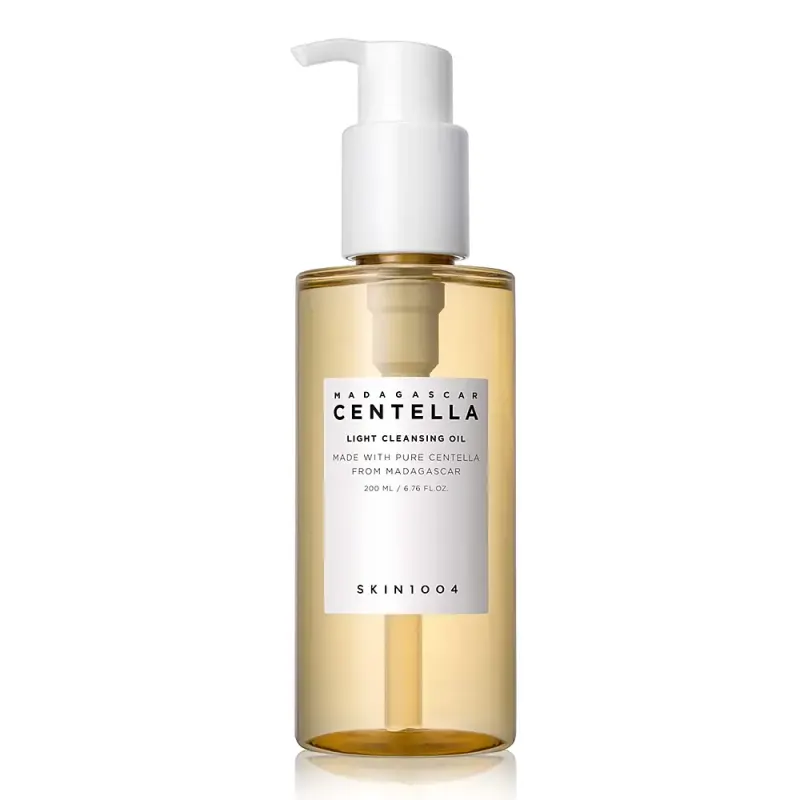
SKIN1004 Madagascar Centella Light Cleansing Oil by SKIN1004
SKIN1004

SKIN1004 Madagascar Centella Light Cleansing Oil

Makeup Removerscleansers

Safety score

Pregnancy-focused assessment

No Known Risks99/100
Higher concernLower concern

No higher-risk ingredients were identified in MamaSkin's current assessment. Check the latest package before deciding.

Ingredient safety review updated 24 November 2025.

Check the current formula in MamaSkin

Copy the product name, download MamaSkin and search it for free. You can also scan the ingredient label on the product you own.

Download MamaSkin on the App StoreGet MamaSkin on Google Play

Ingredient breakdown

See how the listed formula falls across MamaSkin's pregnancy-focused risk bands.

14

No known risks

0

Low risk

0

Medium risk

0

High risk

Ingredients

Ingredients with a higher risk flag appear first, followed by the rest of the formula.

Ethylhexyl Stearate

No Known Risks

A fatty-acid ester used as an emollient and spreading agent. Cosmetic safety reviewers included ethylhexyl stearate in the alkyl ester group and concluded that the group is safe in current practices when formulated to be non-irritating. No pregnancy-specific concern was identified for normal topical use.

Sources: CIR: Safety Assessment of Alkyl Esters as Used in Cosmetics https://cir-reports.cir-safety.org/view-attachment/?id=b34bc38f-8e74-ec11-8943-0022482f06a6
Cetyl Ethylhexanoate

No Known Risks

Lightweight emollient ester used to improve slip and skin feel. Reviewed cosmetic ingredient references do not identify a pregnancy- or breastfeeding-specific concern for normal topical cosmetic use.

Sources: CIR cosmetic ingredient safety references for alkyl esters/emollient esters; EU CosIng / cosmetics regulatory inventory

Sorbeth-30 Tetraoleate

No Known Risks
Show all (14)

Caprylic/Capric Triglyceride

No Known Risks

Common emollient derived from fatty acids and glycerin. Used to soften skin and improve texture without pregnancy-specific concerns.

Sources: Cosmetic Ingredient Review (US); Scientific Committee on Consumer Safety (EU)

Citrus Aurantium Bergamia Fruit Oil

No Known Risks

Bergamot essential oil used mainly for fragrance. No pregnancy-specific hazard is established for normal topical cosmetic exposure. Expressed bergamot oil can be phototoxic unless furocoumarins are controlled, so sun-exposed use should follow the finished product directions and applicable fragrance standards.

Sources: CIR: Safety Assessment of Citrus-Derived Peel Oils as Used in Cosmetics; IFRA Standard for phototoxicity of bergamot oil

Centella Asiatica Extract

No Known Risks

Botanical skin-conditioning ingredient used in soothing and barrier-support formulas. Reviewed cosmetic safety sources support current cosmetic use when formulated to be non-sensitising, with no pregnancy- or breastfeeding-specific topical concern identified in the material reviewed.

Sources: CIR: Safety Assessment of Centella asiatica-derived Ingredients as Used in Cosmetics; EU CosIng / cosmetics regulatory inventory

Simmondsia Chinensis Seed Oil

No Known Risks

Plant-derived emollient oil used to soften skin and improve formula feel. Reviewed cosmetic safety sources support current cosmetic use, with no pregnancy- or breastfeeding-specific topical concern identified in the material reviewed.

Sources: CIR: Final Report on the Safety Assessment of Simmondsia Chinensis (Jojoba) Seed Oil and related jojoba-derived ingredients; EU CosIng / cosmetics regulatory inventory

Olea Europaea Fruit Oil

No Known Risks

Olive-derived emollient oil used for skin conditioning and barrier feel. Normal topical cosmetic use has no known pregnancy- or breastfeeding-specific concern identified in reviewed cosmetic references.

Sources: CIR: Safety Assessment of Plant-Derived Fatty Acid Oils as Used in Cosmetics; EU CosIng / cosmetics regulatory inventory

Helianthus Annuus Seed Oil

No Known Risks

Helianthus annuus (sunflower) seed oil is a common emollient rich in fatty acids and is generally well tolerated, with no known pregnancy or breastfeeding concerns in topical cosmetic use.

Sources: CIR; EU/UK Cosmetics Regulation

Ethylhexylglycerin

No Known Risks

Preservative booster and skin-conditioning agent. Considered safe for cosmetic use with low systemic exposure when used as intended.

Sources: Scientific Committee on Consumer Safety (EU); Cosmetic Ingredient Review (US)

Pelargonium Graveolens Flower Oil

No Known Risks

Geranium oil is used in cosmetics mainly as a fragrance botanical. Direct pregnancy-specific data are sparse, but no clear pregnancy-specific dermal harm signal has been established for routine diluted cosmetic use. This assessment does not cover concentrated essential-oil use, ingestion, or non-cosmetic therapeutic exposure. The more relevant practical issues are fragrance sensitisation and local irritation, so within this methodology it remains in no known risks.

Sources: Abu El Wafa et al., Optimization of oil yield of Pelargonium graveolens L'Hér in relation to its antimicrobial activity (Sci Rep, 2023); Bergman et al., Distinct metabolic pathways drive monoterpenoid biosynthesis in Pelargonium graveolens (Plant J, 2021); Hagvall et al., Cytochrome P450-mediated activation of the fragrance compound geraniol forms potent contact allergens (Toxicol Appl Pharmacol, 2008); Johansen et al., Fragrance contact allergy: a 4-year retrospective study (2010).

Rosa Damascena Flower Oil

No Known Risks

Rose flower oil is a concentrated fragrance botanical. At normal cosmetic topical use levels, there is no established pregnancy-specific concern. The more relevant issues are irritation and sensitisation from fragrance constituents, which this methodology does not treat as a pregnancy-specific risk.

Sources: General cosmetic fragrance-botanical safety references; exposure-route considerations for topical cosmetic use

Limonene

No Known Risks

Limonene is a common fragrance component used at low levels in cosmetics; it is not a pregnancy-specific concern in topical use, but it is a recognised fragrance allergen and may trigger irritation or sensitisation in some people, especially if the product oxidises over time.

Sources: EU/UK cosmetics (fragrance allergen labelling); IFRA; toxicology reviews

Linalool

No Known Risks

Linalool is a common fragrance component used at low levels in cosmetics; it is not a pregnancy-specific concern in topical use, but it is a recognised fragrance allergen and may trigger irritation or sensitisation in some people, especially if the product oxidises over time.

Sources: EU/UK cosmetics (fragrance allergen labelling); IFRA; toxicology reviews

Formulations can change without notice. For the most accurate result, compare this list with your packaging and scan the exact ingredient label in MamaSkin when you repurchase.

How to use this assessment

The risk band is the primary conclusion. The score adds detail within that band and should not be used to compare products as if a one-point difference were clinically meaningful.

MamaSkin provides pregnancy-focused information, not medical advice. Your midwife, GP, pharmacist or dermatologist should take priority when your circumstances differ from typical cosmetic use.

Read the full methodology