SKIN1004
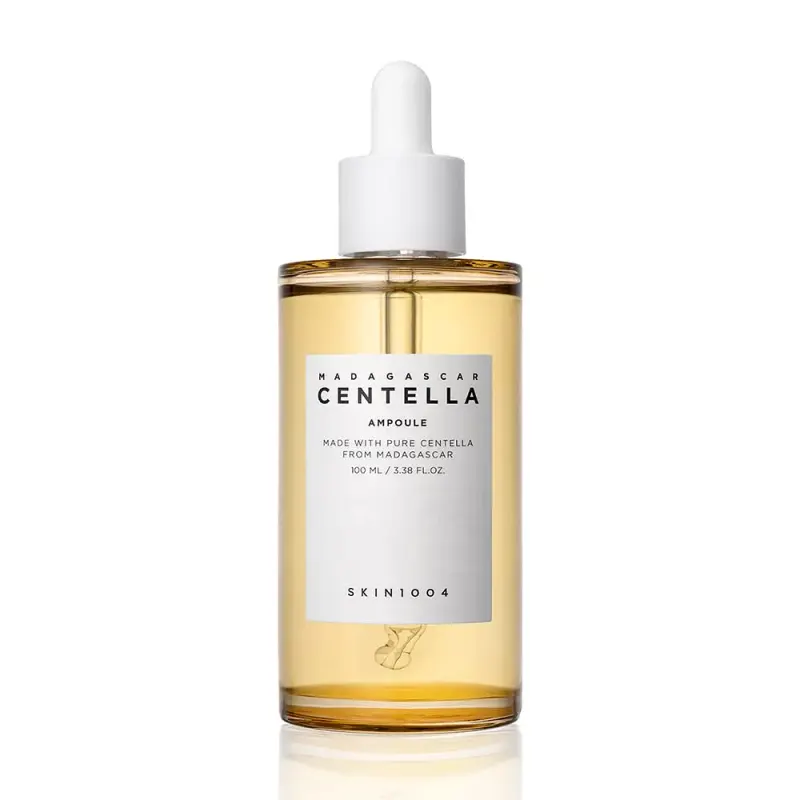
SKIN1004 Madagascar Centella Ampoule
No known risks99/100

Some ingredients carry a low-risk flag. Read the formulation context before deciding.
38 of 38 ingredients rated
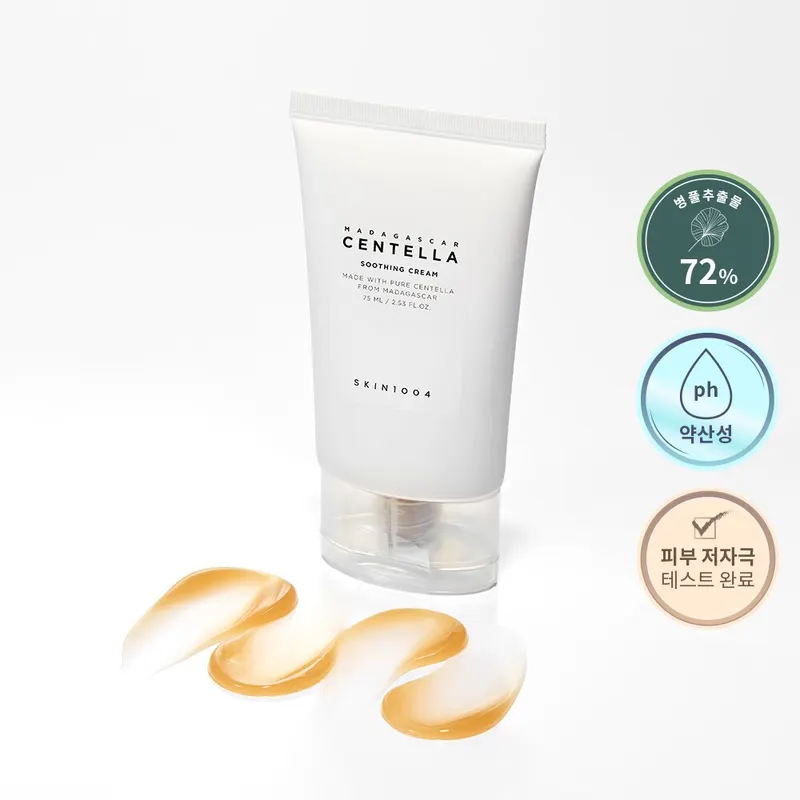
MamaSkin rates the recorded formula for SKIN1004 Madagascar Centella Soothing Cream as Low risk (75/100). Review the ingredient context and any manual-review explanation before deciding.
The recorded formula includes 5 ingredient entries with risk flags: Cyclomethicone (Low risk), C30-45 Alkyl Cetearyl Dimethicone Crosspolymer (Low risk), Dipotassium Glycyrrhizate (Low risk), plus others listed in the breakdown. These are ingredient-level flags; they do not replace the stored product assessment or account for every formulation detail.
38 of 38 ingredient entries on this page have a recorded score, evidence summary and source text. That describes documentation coverage, not proof that the finished formula has been clinically tested during pregnancy.
How we assess productsThe recorded formula, with evidence behind each rating. Unmatched ingredients are marked Not assessed in grey.
Synthetic lysine analogue used topically for melasma and hyperpigmentation; inhibits plasmin activity and downstream melanogenesis. Topical formulations (≈2–5%) show low systemic absorption and no reported teratogenic effects, but pregnancy-specific data remain limited. Many sources regard it as pregnancy-safe or acceptable, while some advise cautious use or deferral until after pregnancy due to limited evidence.
Sources: PubMed: Topical tranexamic acid dermatology literature https://pubmed.ncbi.nlm.nih.gov/?term=topical+tranexamic+acid+melasma+safety
A generic name for volatile cyclic siloxane mixtures used for slip and quick-drying texture. Cosmetic reviews have supported cyclomethicone use, but the generic label may encompass D4, D5 or related cyclic siloxanes with different reproductive, impurity and spray-route evidence. MamaSkin classifies the generic ingredient as low risk because its exact composition is not disclosed.
Sources: CIR: Cyclomethicone https://cir-safety.org/ingredient/cyclomethicone; European Commission SCCS: Opinion on Cyclopentasiloxane (D5) in Cosmetic Products https://health.ec.europa.eu/publications/decamethylcyclopentasiloxane-cyclopentasiloxane-d5-cosmetic-products_en; European Commission SCCP: Cyclomethicone D4 request https://ec.europa.eu/health/ph_risk/committees/04_sccp/docs/sccp_q_188.pdf
This ingredient is a dimethicone crosspolymer covered by CIR's crosspolymer assessment. CIR concluded the reviewed crosspolymers safe as used in cosmetics. That conclusion is based on polymer chemistry and cosmetic-use safety data, not human pregnancy studies for every named crosspolymer. MamaSkin retains Low Risk; finished-product irritation remains formulation-dependent.
Sources: CIR: Safety assessment of dimethicone crosspolymers https://www.cir-safety.org/supplementaldoc/safety-assessment-dimethicone-crosspolymers-used-cosmetics
A purified glycyrrhizic-acid salt used as a soothing and skin-conditioning ingredient. Cosmetic safety reviewers concluded that dipotassium glycyrrhizate is safe in current cosmetic use and noted poor dermal absorption. MamaSkin nevertheless applies a cautious low-risk classification for consistency with the existing licorice family because high oral glycyrrhizin exposure has pregnancy-related concerns; this is not a topical contraindication.
Sources: CIR: Safety Assessment of Glycyrrhizic Acid and Derivatives https://cir-reports.cir-safety.org/view-attachment/?id=49a63435-8e74-ec11-8943-0022482f06a6
Coptis chinensis root is an alkaloid-bearing botanical and may contain berberine. Oral berberine is discouraged in pregnancy and lactation, but dermal delivery from a cosmetic root extract is unquantified and likely much lower. Low is consistent with live C. japonica root extract.
Sources: https://www.nccih.nih.gov/health/in-the-news-berberine, https://pubmed.ncbi.nlm.nih.gov/10552394/
Botanical skin-conditioning ingredient used in soothing and barrier-support formulas. Reviewed cosmetic safety sources support current cosmetic use when formulated to be non-sensitising, with no pregnancy- or breastfeeding-specific topical concern identified in the material reviewed.
Sources: CIR: Safety Assessment of Centella asiatica-derived Ingredients as Used in Cosmetics; EU CosIng / cosmetics regulatory inventory
Glycerin is a widely used humectant that supports hydration and the skin barrier, with a long safety record and no known pregnancy or breastfeeding concerns in topical cosmetic use.
Sources: CIR; EU/UK Cosmetics Regulation
Solvent and humectant used to improve texture and ingredient solubility. Low systemic exposure expected from topical cosmetic use.
Sources: Cosmetic Ingredient Review (US); Scientific Committee on Consumer Safety (EU)
Dipropylene glycol is used as a solvent and carrier in cosmetics; topical exposure is low and it has no known pregnancy or breastfeeding concerns at cosmetic concentrations.
Sources: CIR; EU/UK Cosmetics Regulation
Water (Aqua) is the standard purified water used as a cosmetic solvent. It has no pregnancy-specific risk in normal topical use.
Sources: https://pubchem.ncbi.nlm.nih.gov/compound/Water, https://single-market-economy.ec.europa.eu/sectors/cosmetics/cosmetic-ingredient-database/cosing-glossary-ingredients_en
1,2-Hexanediol is commonly used as a solvent and preservative booster; topical exposure is low and it has no known pregnancy or breastfeeding concerns at cosmetic concentrations, though very sensitive skin may occasionally react.
Sources: CIR; EU/UK Cosmetics Regulation
Sugar-derived humectant used to help bind water and improve skin feel. Reviewed cosmetic ingredient references do not identify a pregnancy- or breastfeeding-specific concern for normal topical cosmetic use.
Sources: CIR: Safety Assessment of Monosaccharides, Disaccharides, and Related Ingredients as Used in Cosmetics; EU CosIng / cosmetics regulatory inventory
Volatile/low-residue silicone emollient used to improve spreadability and sensory feel. Reviewed cosmetic safety sources support normal topical use, with no pregnancy- or breastfeeding-specific topical signal identified in the material reviewed.
Sources: CIR: Amended Safety Assessment of Dimethicone, Methicone, and Substituted-Methicone Polymers as Used in Cosmetics; EU CosIng / cosmetics regulatory inventory
An ethoxylated fatty alcohol used as an emulsifier, surfactant or solubiliser. Cosmetic safety reviewers concluded that these named alkyl PEG ethers are safe in current practices when formulated to be non-irritating. Manufacturing controls should limit residual ethylene oxide and 1,4-dioxane.
Sources: CIR: Alkyl PEG/PPG Ethers conclusions, including C11-15 Pareth-7, C12-14 Pareth-12, Octyldodeceth-16 and Ceteareth-12; December 2025 Quick Reference Table https://cir-safety.org/sites/default/files/QRT-Update-Dec2025.pdf
Polymer thickener used to create gel textures. Large-molecule ingredient with negligible systemic absorption.
Sources: Cosmetic Ingredient Review (US); Scientific Committee on Consumer Safety (EU)
pH adjuster and buffer used to stabilise formulations. Reviewed cosmetic safety sources support normal topical use, with no pregnancy- or breastfeeding-specific topical signal identified in the material reviewed.
Sources: CIR: Safety Assessment of Tromethamine as Used in Cosmetics; EU CosIng / cosmetics regulatory inventory
Polymer thickener used to stabilise emulsions. Large-molecule ingredient with low systemic absorption.
Sources: Cosmetic Ingredient Review (US); Scientific Committee on Consumer Safety (EU)
Natural polysaccharide thickener used for stability and texture. Not associated with pregnancy-specific concerns.
Sources: European cosmetics regulatory framework
Mentha Piperita (Peppermint) Leaf Extract is a botanical-derived cosmetic conditioning ingredient. The reviewed identity is not a concentrated essential oil or an oral herbal preparation. Available cosmetic evidence and expected topical exposure did not identify a pregnancy-specific contraindication, although botanical irritation or allergy remains possible.
Sources: CIR ingredient-specific and botanical-family safety assessments; CIR Quick Reference Table https://www.cir-safety.org/supplementaldoc/quick-reference-table-december-2025; European Commission CosIng
zingiber officinale (ginger) root extract is a botanical-derived cosmetic conditioning ingredient. The reviewed identity is not an essential oil or an oral herbal preparation. Available cosmetic evidence and expected topical exposure did not identify a pregnancy-specific contraindication, although botanical irritation or allergy remains possible.
Sources: CIR ingredient-specific and botanical-family safety assessments; CIR Quick Reference Table https://cir-safety.org/sites/default/files/QRT-Update-Dec2025.pdf; European Commission CosIng
Solvent and humectant commonly used in leave-on products. Not associated with pregnancy-specific concerns at cosmetic exposure levels.
Sources: Cosmetic Ingredient Review (US); Scientific Committee on Consumer Safety (EU)
Preservative booster and skin-conditioning agent. Considered safe for cosmetic use with low systemic exposure when used as intended.
Sources: Scientific Committee on Consumer Safety (EU); Cosmetic Ingredient Review (US)
A fruit, seed or food-plant extract used for skin conditioning and antioxidant support. No pregnancy-specific signal was identified for the low topical exposure expected from a finished cosmetic. Direct pregnancy studies are generally unavailable, and botanical allergy remains possible.
Sources: European Commission CosIng ingredient inventory; CIR botanical safety framework and relevant fruit-derived ingredient assessments; peer-reviewed cosmetic and phytochemical literature for the named plants.
Starch-derived polysaccharide used as a binder, film former and texture support ingredient. Reviewed cosmetic ingredient references do not identify a pregnancy- or breastfeeding-specific concern for normal topical use.
Sources: CIR cosmetic ingredient safety references for polysaccharides/starch-derived ingredients; EU CosIng / cosmetics regulatory inventory
A filtered radish-root fermentation product used mainly for skin conditioning and formulation support. Cosmetic safety reviewers concluded that the reviewed radish-root-derived ingredients, including Leuconostoc/Radish Root Ferment Filtrate, are safe in current cosmetic use when formulated to be non-irritating. Testing at cosmetic-relevant concentrations did not identify irritation, sensitization, phototoxicity or ocular irritation concerns.
Sources: CIR: Safety Assessment of Radish Root-Derived Ingredients https://cir-safety.org/sites/default/files/FR_RadishRoot_062022.pdf
Microbial polysaccharide used for film forming, soothing, and hydration support. Reviewed cosmetic safety sources support normal topical use, with no pregnancy- or breastfeeding-specific topical signal identified in the material reviewed.
Sources: CIR: Safety Assessment of Microbial Polysaccharide Gums as Used in Cosmetics; EU CosIng / cosmetics regulatory inventory
Disodium EDTA is a chelating agent used to improve formula stability and performance; it is considered low concern in topical cosmetic use, with no known pregnancy or breastfeeding risks at typical concentrations.
Sources: CIR; EU/UK Cosmetics Regulation
Sodium hyaluronate (hyaluronic acid salt) is used for hydration and cushioning, with very low systemic absorption from topical use and no known pregnancy or breastfeeding concerns at cosmetic concentrations.
Sources: CIR; EU/UK Cosmetics Regulation
Film-forming polysaccharide used for soothing and hydration support. Reviewed cosmetic safety sources support normal topical use, with no pregnancy- or breastfeeding-specific topical signal identified in the material reviewed.
Sources: CIR: Safety Assessment of Microbial Polysaccharide Gums as Used in Cosmetics; EU CosIng / cosmetics regulatory inventory
Skin-identical barrier lipid used to support barrier structure and reduce dryness. Reviewed cosmetic safety sources support normal topical use, with no pregnancy- or breastfeeding-specific topical signal identified in the material reviewed.
Sources: CIR: Safety Assessment of Ceramides as Used in Cosmetics; EU CosIng / cosmetics regulatory inventory
A skin-identical barrier lipid used for skin and hair conditioning. Cosmetic safety reviewers concluded that Ceramide NS is safe in current cosmetic use, noting limited skin absorption and reassuring toxicity data. Cosmetic-grade material should not be sourced from bovine central nervous system tissue.
Sources: CIR: Safety Assessment of Ceramides https://cir-safety.org/sites/default/files/cerami122014tent.pdf
Skin-identical barrier lipid used to support the stratum corneum and reduce dryness. Reviewed cosmetic safety sources support normal topical use, with no pregnancy- or breastfeeding-specific topical signal identified in the material reviewed.
Sources: CIR: Safety Assessment of Ceramides as Used in Cosmetics; EU CosIng / cosmetics regulatory inventory
Skin-identical barrier lipid used to support barrier function and reduce dryness. Reviewed cosmetic safety sources support normal topical use, with no pregnancy- or breastfeeding-specific topical signal identified in the material reviewed.
Sources: CIR: Safety Assessment of Ceramides as Used in Cosmetics; EU CosIng / cosmetics regulatory inventory
Skin-conditioning lipid used in barrier-support formulas, commonly alongside ceramides and cholesterol. Reviewed cosmetic ingredient references do not identify a pregnancy- or breastfeeding-specific concern for normal topical use.
Sources: CIR cosmetic ingredient safety references for sphingolipids/skin-conditioning lipids; EU CosIng / cosmetics regulatory inventory
Hydrogenated emulsifier used to support skin barrier feel. Not associated with pregnancy-specific concerns.
Sources: Cosmetic Ingredient Review (US)
Fatty alcohol used as an emollient and thickener. Not the same as drying alcohols and not associated with pregnancy-specific concerns.
Sources: Cosmetic Ingredient Review (US); Scientific Committee on Consumer Safety (EU)
Stearic acid is a fatty acid used to stabilise emulsions and improve texture; it is considered low concern in topical cosmetics with no known pregnancy or breastfeeding risks at typical concentrations.
Sources: CIR; EU/UK Cosmetics Regulation
Skin-conditioning lipid used in barrier-support formulas, often alongside ceramides and fatty acids. Normal topical cosmetic use has no known pregnancy- or breastfeeding-specific concern identified in reviewed cosmetic references.
Sources: CIR cosmetic ingredient safety references for cholesterol and related sterols; EU CosIng / cosmetics regulatory inventory
Centella Asiatica Extract (72%), Glycerin, Propanediol, Dipropylene Glycol, Cyclomethicone, Water, 1,2-Hexanediol, Trehalose, Caprylyl Methicone, C12-14 Pareth-12, Carbomer, Tromethamine, Ammonium Acryloyldimethyltaurate/VP Copolymer, C30-45 Alkyl Cetearyl Dimethicone Crosspolymer, Xanthan Gum, Mentha Piperita (Peppermint) Leaf Extract, Zingiber Officinale (Ginger) Root Extract, Butylene Glycol, Ethylhexylglycerin, Dipotassium Glycyrrhizate, Tranexamic Acid, Coptis Chinensis Root Extract, Theobroma Cacao (Cocoa) Extract, Dextrin, Leuconostoc/Radish Root Ferment Filtrate, Biosaccharide Gum-1, Disodium EDTA, Sodium Hyaluronate, Beta-Glucan, Ceramide EOP, Ceramide NS, Ceramide NP, Ceramide AP, Phytosphingosine, Hydrogenated Lecithin, Cetearyl Alcohol, Stearic Acid, Cholesterol
Ingredient ratings refreshed 1 October 2026. Formulas vary by market and can change. Always compare with your packaging.
The recorded formula includes 5 ingredient entries with risk flags: Cyclomethicone (Low risk), C30-45 Alkyl Cetearyl Dimethicone Crosspolymer (Low risk), Dipotassium Glycyrrhizate (Low risk), plus others listed in the breakdown. These are ingredient-level flags; they do not replace the stored product assessment or account for every formulation detail. The product score is a stored assessment, not a clinical safety guarantee.
No. Tranexamic Acid is listed in this recorded topical cosmetic. Its ingredient entry and this product score do not assess oral medication, injections or the suitability of a prescribed treatment. Read the formula-specific rating here and discuss prescribed medicines separately with your healthcare professional.
38 of 38 ingredient entries on this page have a recorded score, evidence summary and source text. That describes documentation coverage, not proof that the finished formula has been clinically tested during pregnancy.
Only if the ingredient list on your packaging matches the recorded formula shown here. Formulas can differ by market and change over time. Compare the full list, not just the product name; report a mismatch if it differs.
No. This page presents a pregnancy-focused product assessment. Do not infer a breastfeeding conclusion from its score or label; breastfeeding requires a separate assessment of the formula and how it is used.