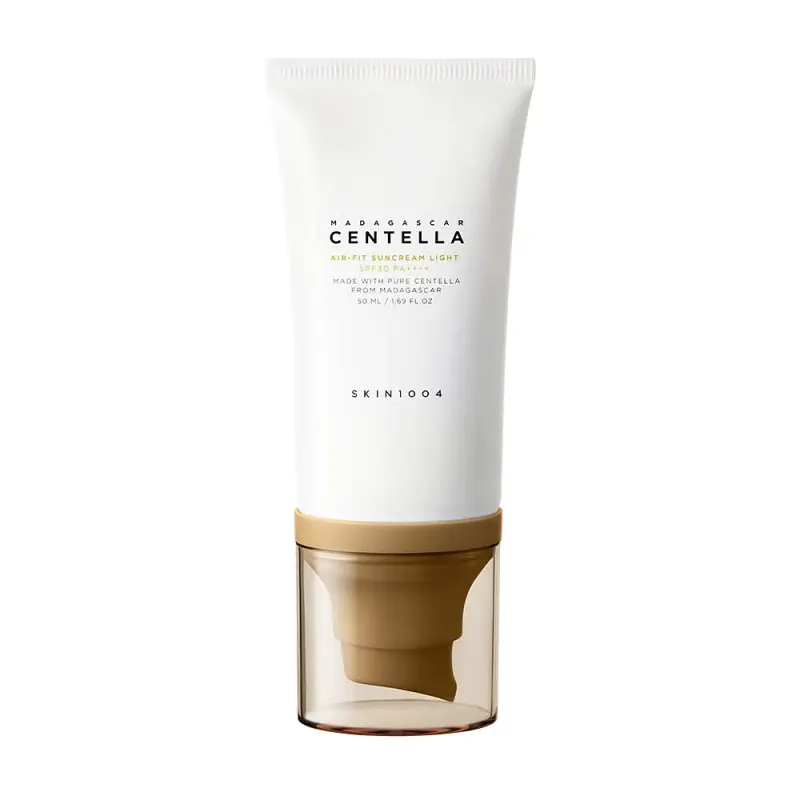
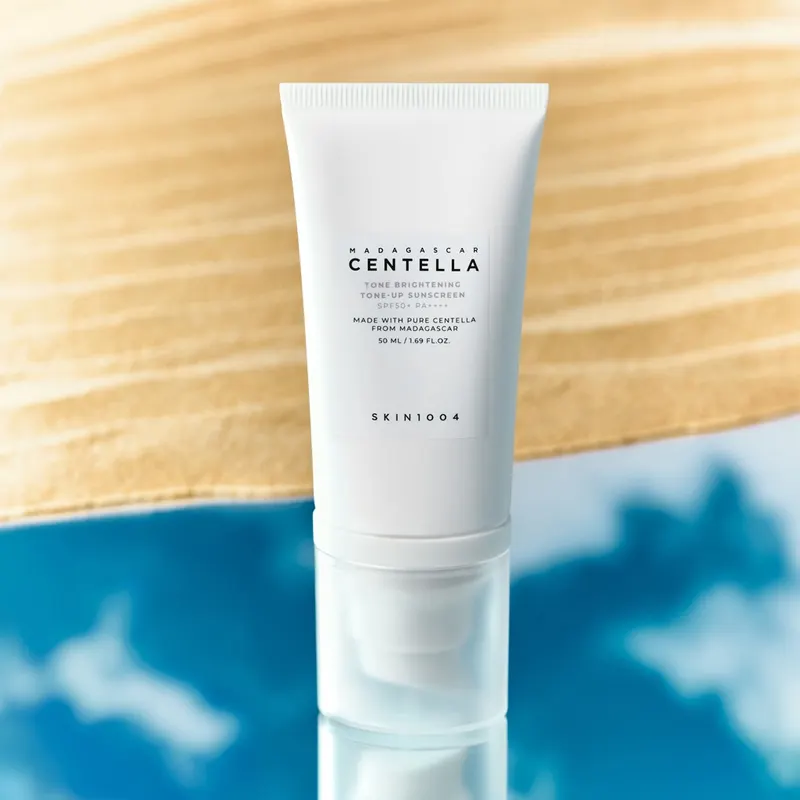
SKIN1004 Madagascar Centella Tone Brightening Tone-Up Sunscreen by SKIN1004
SKIN1004

SKIN1004 Madagascar Centella Tone Brightening Tone-Up Sunscreen

Sunscreens

Safety score

Pregnancy-focused assessment

Low Risk75/100
Higher concernLower concern

One or more ingredients have a low-risk flag in MamaSkin's current assessment. Review the notes and your own circumstances.

Formula and assessment check

Ingredient safety review updated 26 March 2026. Product formulas can change, so compare the ingredients shown here with the packaging you have.

Report a formula mismatch

Ingredient breakdown

See how the listed formula falls across MamaSkin's pregnancy-focused risk bands.

44

No known risks

2

Low risk

0

Medium risk

0

High risk

Ingredients

Ingredients with a higher risk flag appear first, followed by the rest of the formula.

Tranexamic Acid

Low Risk

Synthetic lysine analogue used topically for melasma and hyperpigmentation; inhibits plasmin activity and downstream melanogenesis. Topical formulations (≈2–5%) show low systemic absorption and no reported teratogenic effects, but pregnancy-specific data remain limited. Many sources regard it as pregnancy-safe or acceptable, while some advise cautious use or deferral until after pregnancy due to limited evidence.

Sources: PubMed: Topical tranexamic acid dermatology literature https://pubmed.ncbi.nlm.nih.gov/?term=topical+tranexamic+acid+melasma+safety
Dimethicone/Vinyl Dimethicone Crosspolymer

Low Risk

A crosslinked silicone elastomer used for texture and oil absorption. Cosmetic safety reviewers concluded that dimethicone crosspolymers are safe in current cosmetic use. MamaSkin classifies the exact polymer as low risk for consistency with the existing dimethicone-family policy and because manufacturing controls are needed for residual monomers, rather than because of a known pregnancy-specific contraindication.

Sources: CIR: Safety Assessment of Dimethicone Crosspolymers as Used in Cosmetics https://www.cir-safety.org/sites/default/files/dimethcross_blue_092012.pdf

Water

No Known Risks
Show all (46)

Dibutyl Adipate

No Known Risks

A diester used as an emollient, solvent and plasticizer. After reviewing additional dermal, reproductive, developmental and genotoxicity data, cosmetic safety reviewers concluded that dibutyl adipate is safe in current cosmetic use and concentration. No pregnancy-specific concern is identified for normal topical cosmetic exposure.

Sources: CIR: Amended Final Report of the Safety Assessment of Dibutyl Adipate https://cir-reports.cir-safety.org/view-attachment?id=f1624b41-8e74-ec11-8943-0022482f06a6

Titanium Dioxide

No Known Risks

Inorganic mineral pigment and, in some products, a mineral UV filter. For typical topical use in creams, lotions and makeup, systemic absorption is expected to be very low. Most concerns discussed in the literature relate to ingestion (food additive E171) or inhalation exposure from fine powders/sprays, and to specific nanoparticle characterisation. For routine topical cosmetic use, it is generally considered acceptable in pregnancy and breastfeeding; if you prefer a cautious approach, avoid inhaling loose powders or sprays.

Sources: EFSA opinion on titanium dioxide as food additive E171 (ingestion context); SCCS opinions on titanium dioxide in cosmetics (including inhalation/nano considerations); general dermatology guidance on mineral sunscreens in pregnancy.

Propanediol

No Known Risks

Solvent and humectant used to improve texture and ingredient solubility. Low systemic exposure expected from topical cosmetic use.

Sources: Cosmetic Ingredient Review (US); Scientific Committee on Consumer Safety (EU)

Caprylic/Capric Triglyceride

No Known Risks

Common emollient derived from fatty acids and glycerin. Used to soften skin and improve texture without pregnancy-specific concerns.

Sources: Cosmetic Ingredient Review (US); Scientific Committee on Consumer Safety (EU)

Centella Asiatica Extract (29,400ppm)

No Known Risks

Botanical skin-conditioning ingredient used in soothing and barrier-support formulas. Reviewed cosmetic safety sources support current cosmetic use when formulated to be non-sensitising, with no pregnancy- or breastfeeding-specific topical concern identified in the material reviewed.

Sources: CIR: Safety Assessment of Centella asiatica-derived Ingredients as Used in Cosmetics; EU CosIng / cosmetics regulatory inventory

C12-15 Alkyl Benzoate

No Known Risks

Alkyl benzoate emollient used in cosmetics; available cosmetic safety assessments do not indicate pregnancy-specific concerns with routine topical use.

Sources: CIR Safety Assessment of Alkyl Benzoates (2012); CIR alkyl benzoates dossier / C12-15 alkyl benzoate data.

Diethylamino Hydroxybenzoyl Hexyl Benzoate

No Known Risks

Modern UVA filter (often called Uvinul A+ or DHHB). Regulatory assessments have repeatedly evaluated this filter as safe in cosmetic products at concentrations up to 10%. The most recent SCCS advice focuses on controlling a manufacturing impurity (DnHexP) rather than on new toxicity of DHHB itself. Human biomonitoring data indicate low systemic exposure from normal sunscreen use, and current reviews do not identify specific reproductive or developmental toxicity signals at approved concentrations.

Sources: SCCP opinion referenced in Directive 2008/123/EC: concludes that Diethylamino Hydroxybenzoyl Hexyl Benzoate used at a maximum of 10% in cosmetic (including sunscreen) products does not pose a risk to the consumer. Regulatory summaries (e.g. CosLaw and CIRS Group updates, 2025) reviewing the SCCS DHHB opinion and reiterating that DHHB remains permitted up to 10% in EU cosmetics when impurity limits are respected.

Ethylhexyl Triazone

No Known Risks

UV filter used in sunscreens and day products to help absorb UVB radiation. Reviewed cosmetic safety and regulatory sources support current cosmetic use within applicable concentration limits, with no pregnancy- or breastfeeding-specific topical concern identified in the material reviewed.

Sources: EU CosIng Annex VI / UV filters; EU scientific opinion on Ethylhexyl Triazone (Uvinul T 150)

Niacinamide

No Known Risks

Niacinamide (vitamin B3) is widely used for barrier support and tone/texture benefits, and is generally considered safe in pregnancy and breastfeeding when used topically at cosmetic concentrations.

Sources: CIR; EU/UK Cosmetics Regulation

Caprylyl Methicone

No Known Risks

Volatile/low-residue silicone emollient used to improve spreadability and sensory feel. Reviewed cosmetic safety sources support normal topical use, with no pregnancy- or breastfeeding-specific topical signal identified in the material reviewed.

Sources: CIR: Amended Safety Assessment of Dimethicone, Methicone, and Substituted-Methicone Polymers as Used in Cosmetics; EU CosIng / cosmetics regulatory inventory

Diethylhexyl Butamido Triazone

No Known Risks

Organic UV filter used in sunscreens, also known as Iscotrizinol or Uvasorb HEB. Available cosmetic safety and regulatory sources support use within applicable concentration limits. No pregnancy- or breastfeeding-specific topical concern was identified in the sources reviewed.

Sources: EU CosIng Annex VI / UV filters; SCCS / European Commission cosmetic UV filter safety assessments; PubMed

1,2-Hexanediol

No Known Risks

1,2-Hexanediol is commonly used as a solvent and preservative booster; topical exposure is low and it has no known pregnancy or breastfeeding concerns at cosmetic concentrations, though very sensitive skin may occasionally react.

Sources: CIR; EU/UK Cosmetics Regulation

Pentylene Glycol

No Known Risks

Humectant and preservative booster. Considered safe for cosmetic use with low systemic exposure.

Sources: Cosmetic Ingredient Review (US); Scientific Committee on Consumer Safety (EU)

Corchorus Olitorius Leaf Extract

No Known Risks

corchorus olitorius leaf extract is a botanical-derived cosmetic conditioning ingredient. The reviewed identity is not a concentrated essential oil or an oral herbal preparation. Available cosmetic evidence and expected topical exposure did not identify a pregnancy-specific contraindication, although botanical irritation or allergy remains possible.

Sources: CIR ingredient-specific and botanical-family safety assessments; CIR Quick Reference Table https://www.cir-safety.org/supplementaldoc/quick-reference-table-december-2025; European Commission CosIng

Hordeum Vulgare Extract

No Known Risks

A botanical extract or plant water used for conditioning, soothing or antioxidant support. Direct pregnancy studies of this exact cosmetic material were not identified, but no reproductive or developmental hazard was identified for normal topical exposure. Oral herbal or medicinal use is outside this classification.

Sources: European Commission CosIng; CIR botanical safety framework and relevant plant-family assessments; no ingredient-specific human pregnancy study of normal topical cosmetic use was identified.

Nymphaea Alba Flower Extract

No Known Risks

A botanical extract, juice or water used primarily for skin conditioning, moisturising, soothing or antioxidant support. Direct pregnancy studies of the named cosmetic material were not identified. No reproductive or developmental hazard was identified for normal topical exposure to a compliant finished cosmetic; oral herbal or medicinal use is outside this classification.

Sources: European Commission CosIng ingredient inventory; Cosmetic Ingredient Review botanical safety-assessment framework and relevant plant-family assessments. No ingredient-specific human pregnancy study of normal topical cosmetic use was identified.

Sodium Hyaluronate

No Known Risks

Sodium hyaluronate (hyaluronic acid salt) is used for hydration and cushioning, with very low systemic absorption from topical use and no known pregnancy or breastfeeding concerns at cosmetic concentrations.

Sources: CIR; EU/UK Cosmetics Regulation

Coco-Caprylate/Caprate

No Known Risks

Coconut-derived emollient ester used as a lightweight skin-conditioning ingredient. Reviewed cosmetic ingredient references do not identify a pregnancy- or breastfeeding-specific concern for normal topical use.

Sources: CIR cosmetic ingredient safety references for alkyl esters/emollient esters; EU CosIng / cosmetics regulatory inventory

Glycerin

No Known Risks

Glycerin is a widely used humectant that supports hydration and the skin barrier, with a long safety record and no known pregnancy or breastfeeding concerns in topical cosmetic use.

Sources: CIR; EU/UK Cosmetics Regulation

Polyhydroxystearic Acid

No Known Risks

Polymeric dispersing agent used to keep pigments and mineral filters evenly suspended. Low systemic exposure is expected from topical cosmetic use, with no pregnancy- or breastfeeding-specific concern identified.

Sources: CIR cosmetic ingredient safety references for polymeric fatty acid derivatives; EU CosIng / cosmetics regulatory inventory

VP/Eicosene Copolymer

No Known Risks

A film-forming vinyl polymer used for water resistance and product hold. Cosmetic safety reviewers concluded that vinylpyrrolidone polymers, including VP/eicosene copolymer, are safe in current practices when residual monomers are appropriately controlled. Rare contact allergy has been reported with this ingredient family.

Sources: CIR: Safety Assessment of Vinylpyrrolidone Polymers as Used in Cosmetics https://www.cir-safety.org/sites/default/files/vinylp122018final.pdf

Dimethiconol

No Known Risks

A high-molecular-weight silicone polymer used for film forming, smoothing and skin or hair conditioning. The Cosmetic Ingredient Review concluded that Dimethiconol and its assessed derivatives are safe in current cosmetic use. Its polymeric nature limits skin penetration, and available evidence does not identify a pregnancy- or breastfeeding-specific concern for normal topical exposure.

Sources: CIR: Safety Assessment of Dimethiconol and its Esters and Reaction Products; International Journal of Toxicology 36(Suppl. 3):31-50 (2017) https://cir-safety.org/ingredient/dimethiconol

Trisiloxane

No Known Risks

A small siloxane used as a spreading and wetting agent. Available cosmetic silicone assessments do not identify a pregnancy-specific concern for normal dermal exposure. Volatile or spray products should be used with ordinary ventilation.

Sources: CIR: safety assessments of dimethicone, methicone and substituted methicone polymers; European Commission CosIng ingredient inventory for Trisiloxane.

Stearic Acid

No Known Risks

Stearic acid is a fatty acid used to stabilise emulsions and improve texture; it is considered low concern in topical cosmetics with no known pregnancy or breastfeeding risks at typical concentrations.

Sources: CIR; EU/UK Cosmetics Regulation

Alumina

No Known Risks

An insoluble aluminum oxide mineral used as an absorbent, abrasive, bulking agent and surface treatment. The Cosmetic Ingredient Review concluded that alumina is safe in current cosmetic use. Normal topical exposure does not identify a pregnancy-specific concern; avoid deliberately inhaling loose powders or airbrush products.

Sources: CIR: Safety Assessment of Alumina and Aluminum Hydroxide https://www.cir-safety.org/panelbook/safety-assessment-alumina-and-aluminum-hydroxide-used-cosmetics

Sodium Polyacryloyldimethyl Taurate

No Known Risks

A high-molecular-weight polymer used to thicken and stabilise formulas. Cosmetic safety reviewers assessed acryloyldimethyltaurate polymers and concluded that they are safe in current cosmetic practices. Absorption of the finished polymer is expected to be limited, with residual monomers controlled during manufacture.

Sources: CIR: Safety Assessment of Acryloyldimethyltaurate Polymers as Used in Cosmetics https://www.cir-safety.org/panelbook/safety-assessment-acryloyldimethyltaurate-polymers-used-cosmetics-1

Polyacrylate Crosspolymer-6

No Known Risks

Large polymer thickener and stabilizer used in gels, serums and creams. Systemic exposure from topical cosmetic use is expected to be low, with no pregnancy- or breastfeeding-specific concern identified in reviewed cosmetic references.

Sources: CIR cosmetic ingredient safety references for acrylates/polyacrylate crosspolymers; EU CosIng / cosmetics regulatory inventory

Hydroxypropyl Methylcellulose Stearoxy Ether

No Known Risks

hydroxypropyl methylcellulose stearoxy ether is a high-molecular-weight cosmetic polymer or film former. Dermal absorption is expected to be limited when manufactured with appropriate residual-monomer and impurity controls. Relevant CIR polymer assessments did not identify a pregnancy-specific concern for normal topical use; airborne powder or spray droplets should not be inhaled.

Sources: CIR Amended Safety Assessment of Acrylates Copolymers https://cir-safety.org/ingredient/acrylates-copolymer; CIR vinylpyrrolidone-polymer assessment.

Dicaprylyl Carbonate

No Known Risks

Light emollient carbonate ester used to improve spreadability and reduce greasiness. Reviewed cosmetic safety sources support normal topical use, with no pregnancy- or breastfeeding-specific topical signal identified in the material reviewed.

Sources: CIR: Safety Assessment of Dialkyl Carbonates as Used in Cosmetics; EU CosIng / cosmetics regulatory inventory

Ethylhexylglycerin

No Known Risks

Preservative booster and skin-conditioning agent. Considered safe for cosmetic use with low systemic exposure when used as intended.

Sources: Scientific Committee on Consumer Safety (EU); Cosmetic Ingredient Review (US)

Xanthan Gum

No Known Risks

Natural polysaccharide thickener used for stability and texture. Not associated with pregnancy-specific concerns.

Sources: European cosmetics regulatory framework

Triethoxycaprylylsilane

No Known Risks

Silane coating and dispersion aid used on pigments and mineral particles. Reviewed cosmetic safety sources support normal topical use, with no pregnancy- or breastfeeding-specific topical signal identified in the material reviewed.

Sources: CIR: Safety Assessment of Alkoxyl Alkyl Silanes as Used in Cosmetics; EU CosIng / cosmetics regulatory inventory

Adenosine

No Known Risks

Skin-conditioning ingredient commonly used in leave-on skincare. Reviewed cosmetic safety sources support normal topical use, with no pregnancy- or breastfeeding-specific topical signal identified in the material reviewed.

Sources: CIR: Safety Assessment of Adenosine Ingredients as Used in Cosmetics; EU CosIng / cosmetics regulatory inventory

Sodium Polyacrylate

No Known Risks

Polymer used for texture and absorbency. Large-molecule ingredient with low systemic exposure.

Sources: Cosmetic Ingredient Review (US); Scientific Committee on Consumer Safety (EU)

Madecassoside

No Known Risks

A triterpene glycoside associated with Centella asiatica and used in soothing and skin-conditioning formulas. Pregnancy-specific evidence for isolated topical madecassoside is limited. Cosmetic safety reviewers considered Centella-derived ingredients acceptable at current cosmetic exposure but noted that madecassoside and related triterpenes may contribute to sensitisation, so products should be formulated to avoid sensitising concentrations. No pregnancy-specific topical contraindication was identified in the reviewed material.

Sources: CIR: Safety Assessment of Centella asiatica-Derived Ingredients as Used in Cosmetics https://cir-safety.org/supplementaldoc/safety-assessment-centella-asiatica-derived-ingredients-used-cosmetics-1

PVM/MA Copolymer

No Known Risks

A high-molecular-weight film-forming copolymer used in hair, oral-care and skin products. Cosmetic safety reviewers concluded that PVM/MA copolymer is safe in current practices of use and concentration. Absorption of the intact polymer is expected to be limited.

Sources: CIR: Safety Assessment of PVM/MA Copolymer and Its Esters, IJT 30(Suppl. 2), 2011; December 2025 Quick Reference Table https://cir-safety.org/sites/default/files/QRT-Update-Dec2025.pdf

Polyether-1

No Known Risks

A high-molecular-weight polymer used for film formation, texture, stabilisation or conditioning. Meaningful dermal absorption of the intact polymer is expected to be limited, and no reproductive or developmental concern was identified for normal topical cosmetic use.

Sources: European Commission CosIng ingredient inventory; CIR cosmetic-polymer safety framework and relevant polymer-family assessments.

T-Butyl Alcohol

No Known Risks

A volatile solvent and denaturant used in small amounts in cosmetics. Cosmetic safety reviewers concluded that t-butyl alcohol is safe in current practices of use and concentration; their assessment included reproductive and developmental data and found a large exposure margin at cosmetic use levels. It may irritate eyes or skin in concentrated form.

Sources: CIR: Amended Safety Assessment of t-Butyl Alcohol as Used in Cosmetics https://cir-safety.org/sites/default/files/FAR_t-ButylAlcohol_092024.pdf

Dipropylene Glycol

No Known Risks

Dipropylene glycol is used as a solvent and carrier in cosmetics; topical exposure is low and it has no known pregnancy or breastfeeding concerns at cosmetic concentrations.

Sources: CIR; EU/UK Cosmetics Regulation

Sodium Palmitoyl Proline

No Known Risks

sodium palmitoyl proline is a cosmetic emollient, ester, fatty alcohol or lipid-derived formulation aid. Relevant CIR family evidence supports normal cosmetic use with purity and irritation qualifications retained. No pregnancy-specific concern was identified for ordinary topical exposure.

Sources: CIR Safety Assessment of Alkyl Esters as Used in Cosmetics https://www.cir-safety.org/supplementaldoc/safety-assessment-alkyl-esters-used-cosmetics; European Commission CosIng ingredient inventory.

Butylene Glycol

No Known Risks

Solvent and humectant commonly used in leave-on products. Not associated with pregnancy-specific concerns at cosmetic exposure levels.

Sources: Cosmetic Ingredient Review (US); Scientific Committee on Consumer Safety (EU)

Iron Oxide Yellow

No Known Risks

A mineral-derived colourant, absorbent or texture ingredient. Purity and avoiding respirable exposure from loose powders or sprays are the practical formulation considerations. Dermal absorption is expected to be limited, and no reproductive or developmental hazard was identified for normal non-inhaled topical cosmetic use.

Sources: European Commission CosIng ingredient inventory and cosmetic purity requirements; CIR safety assessments of mineral-derived ingredients, silicates and cosmetic colourants.

Iron Oxide Red

No Known Risks

An exact label variant for red, yellow or black iron oxide pigments. These insoluble mineral colours have very low expected absorption through intact skin. FDA permits iron oxides in cosmetics subject to identity, purity and use requirements. No pregnancy-specific concern was identified for normal topical cosmetic exposure; loose powder should not be deliberately inhaled.

Sources: FDA: Color Additives Permitted for Use in Cosmetics, Iron Oxides under 21 CFR 73.2250 https://www.fda.gov/cosmetics/cosmetic-ingredient-names/color-additives-permitted-use-cosmetics; FDA Color Additive regulatory inventory.

Formulations can change without notice. For the most accurate result, compare this list with your packaging and scan the exact ingredient label in MamaSkin when you repurchase.

How to use this assessment

The risk band is the primary conclusion. The score adds detail within that band and should not be used to compare products as if a one-point difference were clinically meaningful.

MamaSkin provides pregnancy-focused information, not medical advice. Your midwife, GP, pharmacist or dermatologist should take priority when your circumstances differ from typical cosmetic use.

Read the full methodology