Vichy
Vichy Minéral 89 Hyaluronic Acid Booster
No known risks99/100

Deodorants
Some ingredients carry a low-risk flag. Read the formulation context before deciding.
8 of 9 ingredients rated1 not assessed
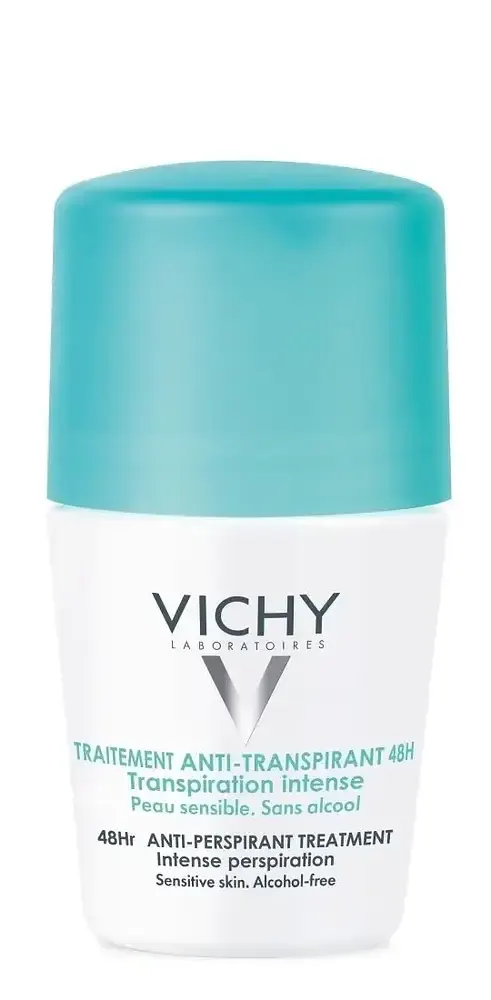
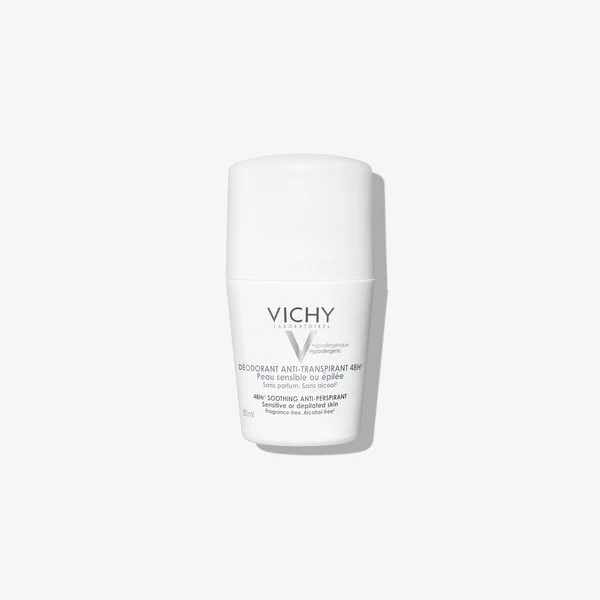
MamaSkin rates the recorded formula for Vichy Sensitive Skin 48hr RollOn AntiPerspirant Deodorant as Low risk (79/100). Review the ingredient context and any manual-review explanation before deciding.
The recorded formula includes 1 ingredient entry with a risk flag: DIMETHICONE (Low risk). These are ingredient-level flags; they do not replace the stored product assessment or account for every formulation detail.
8 of 9 ingredient entries on this page have a recorded score, evidence summary and source text. 1 entry does not have all of those fields. Unmatched or unrated entries are marked Not assessed in grey; missing evidence does not establish safety.
How we assess productsThe recorded formula, with evidence behind each rating. Unmatched ingredients are marked Not assessed in grey.
Dimethicone is a silicone polymer used as a skin protectant and slip/conditioning agent. It is considered inert with minimal dermal absorption; the main practical issues are cosmetic (feel) and occasional irritation in very sensitive users. It is not a pregnancy-specific concern in topical cosmetic use.
Sources: CIR: Amended Safety Assessment of Dimethicone, Methicone, and Substituted-Methicone Polymers as Used in Cosmetics https://cir-safety.org/supplementaldoc/amended-safety-assessment-dimethicone-methicone-and-substituted-methicone-polymers-2
No matched ingredient rating is available yet. Not assessed does not mean safe or unsafe.
Water (Aqua) is the standard purified water used as a cosmetic solvent. It has no pregnancy-specific risk in normal topical use.
Sources: https://pubchem.ncbi.nlm.nih.gov/compound/Water, https://single-market-economy.ec.europa.eu/sectors/cosmetics/cosmetic-ingredient-database/cosing-glossary-ingredients_en
aluminum chlorohydrate is an aluminium antiperspirant ingredient. SCCS concluded that aluminium compounds are safe at the maximum cosmetic-use levels it assessed, with particle-size conditions for sprays. No pregnancy-specific concern was identified for compliant topical use. This classification does not cover nano forms; avoid inhaling airborne product.
Sources: SCCS Opinion on the Safety of Aluminium in Cosmetic Products - Submission IV SCCS/1662/23 https://health.ec.europa.eu/publications/safety-aluminium-cosmetic-products-submission-iv_en
A cosmetic functional ingredient used for conditioning, texture or formula support. Available cosmetic-use information did not identify a reproductive or developmental hazard from normal topical exposure.
Sources: European Commission CosIng ingredient inventory; relevant CIR cosmetic safety assessments and peer-reviewed cosmetic-use literature.
Fatty alcohol used as an emollient and thickener. Not the same as drying alcohols and not associated with pregnancy-specific concerns.
Sources: Cosmetic Ingredient Review (US); Scientific Committee on Consumer Safety (EU)
Ceteareth-33 is an ethoxylated fatty-alcohol emulsifier. CIR lists this exact ingredient as safe in current cosmetic use when formulated to be non-irritating. Direct human pregnancy studies of this exact ingredient were not identified; the rating applies to normal topical cosmetic use.
Sources: https://cir-safety.org/sites/default/files/QRT-Update-Dec2025.pdf
Iodopropynyl Butylcarbamate is a preservative used at low concentrations. Cosmetic safety reviewers support use subject to concentration, age and product-type restrictions, including avoiding uses that may be inhaled. These restrictions primarily address local toxicity and route of exposure; no pregnancy-specific hazard was identified for normal dermal use of a compliant finished cosmetic.
Sources: CIR: Safety Assessment of Iodopropynyl Butylcarbamate https://www.cir-safety.org/sites/default/files/butylcarbamate_rr.pdf; EU Cosmetics Regulation Annex V preservative restrictions; European Commission CosIng ingredient inventory.
sodium palmitoyl proline is a cosmetic emollient, ester, fatty alcohol or lipid-derived formulation aid. Relevant CIR family evidence supports normal cosmetic use with purity and irritation qualifications retained. No pregnancy-specific concern was identified for ordinary topical exposure.
Sources: CIR Safety Assessment of Alkyl Esters as Used in Cosmetics https://www.cir-safety.org/supplementaldoc/safety-assessment-alkyl-esters-used-cosmetics; European Commission CosIng ingredient inventory.
AQUA / WATER, ALUMINUM CHLOROHYDRATE, PPG-15 STEARYL ETHER, CETEARYL ALCOHOL, CETEARETH-33, DIMETHICONE, IODOPROPYNYL BUTYLCARBAMATE, NYMPHAEA ALBA EXTRACT / NYMPHAEA ALBA FLOWER EXTRACT, SODIUM PALMITOYL PROLINE
Ingredient ratings refreshed 1 October 2026. Formulas vary by market and can change. Always compare with your packaging.
The recorded formula includes 1 ingredient entry with a risk flag: DIMETHICONE (Low risk). These are ingredient-level flags; they do not replace the stored product assessment or account for every formulation detail. Incomplete ingredient documentation does not establish safety; see the coverage answer and grey entries below.
8 of 9 ingredient entries on this page have a recorded score, evidence summary and source text. 1 entry does not have all of those fields. Unmatched or unrated entries are marked Not assessed in grey; missing evidence does not establish safety.
Only if the ingredient list on your packaging matches the recorded formula shown here. Formulas can differ by market and change over time. Compare the full list, not just the product name; report a mismatch if it differs.
No. This page presents a pregnancy-focused product assessment. Do not infer a breastfeeding conclusion from its score or label; breastfeeding requires a separate assessment of the formula and how it is used.