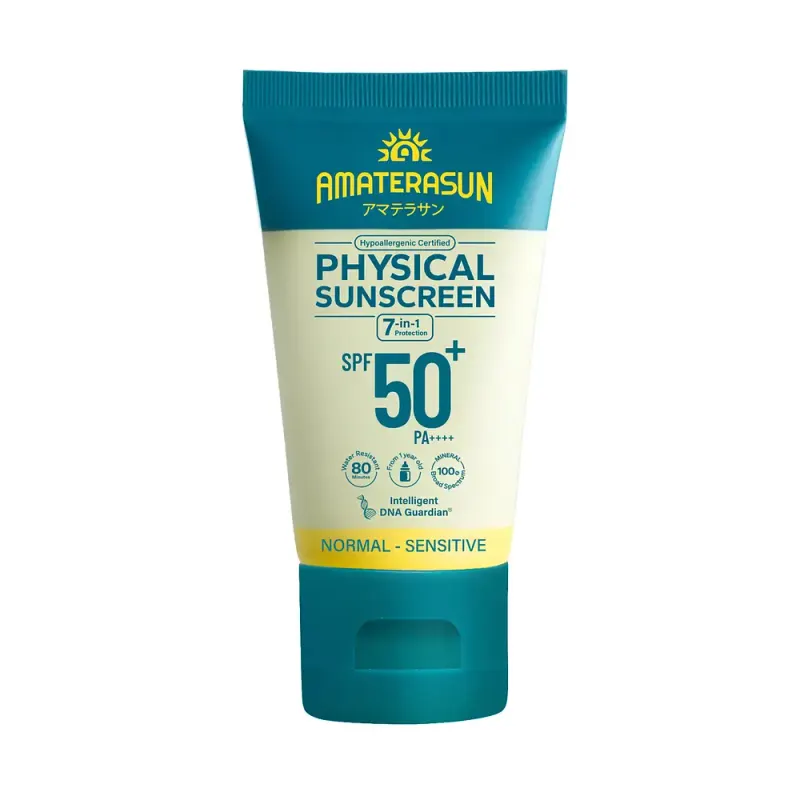
Amaterasun Physical Sunscreen SPF 50+ by Amaterasun
Amaterasun

Amaterasun Physical Sunscreen SPF 50+

Sunscreens

Safety score

Pregnancy-focused assessment

Low Risk77/100
Higher concernLower concern

One or more ingredients have a low-risk flag in MamaSkin's current assessment. Review the notes and your own circumstances.

Formula and assessment check

Ingredient safety review updated 15 February 2026. Product formulas can change, so compare the ingredients shown here with the packaging you have.

Report a formula mismatch

Ingredient breakdown

See how the listed formula falls across MamaSkin's pregnancy-focused risk bands.

28

No known risks

6

Low risk

0

Medium risk

0

High risk

Ingredients

Ingredients with a higher risk flag appear first, followed by the rest of the formula.

Cyclohexasiloxane

Low Risk

A volatile cyclic silicone also known as D6, used for slip and quick-drying texture. Normal topical exposure is expected to be limited, but exact-ingredient pregnancy evidence is limited and cyclic siloxanes have route-specific toxicology and regulatory considerations. MamaSkin therefore classifies it as low risk rather than a pregnancy contraindication.

Sources: CIR: Safety Assessment of Cyclomethicone https://cir-safety.org/ingredient/cyclomethicone; ECHA: Octamethylcyclotetrasiloxane, Decamethylcyclopentasiloxane and Dodecamethylcyclohexasiloxane restriction https://echa.europa.eu/hot-topics/siloxanes
Trimethylsiloxysilicate

Low Risk

A silicone resin used as a film former in long-wear makeup, sunscreen and hair products. Cosmetic safety reviewers concluded it is safe in current use when the finished product is not irritating or sensitizing to the respiratory tract. MamaSkin classifies it as low risk because the qualification depends on formulation and inhalation route rather than a known pregnancy-specific hazard from normal topical use.

Sources: CIR: Safety Assessment of Silylates and Surface-Modified Siloxysilicates; International Journal of Toxicology 32(Suppl. 1):5-24 (2013) https://cir-safety.org/ingredient/trimethylsiloxysilicate

Dimethicone

Low Risk

Dimethicone is a silicone polymer used as a skin protectant and slip/conditioning agent. It is considered inert with minimal dermal absorption; the main practical issues are cosmetic (feel) and occasional irritation in very sensitive users. It is not a pregnancy-specific concern in topical cosmetic use.

Sources: CIR: Amended Safety Assessment of Dimethicone, Methicone, and Substituted-Methicone Polymers as Used in Cosmetics https://cir-safety.org/supplementaldoc/amended-safety-assessment-dimethicone-methicone-and-substituted-methicone-polymers-2

Show all (34)

Dipotassium Glycyrrhizate

Low Risk

A purified glycyrrhizic-acid salt used as a soothing and skin-conditioning ingredient. Cosmetic safety reviewers concluded that dipotassium glycyrrhizate is safe in current cosmetic use and noted poor dermal absorption. MamaSkin nevertheless applies a cautious low-risk classification for consistency with the existing licorice family because high oral glycyrrhizin exposure has pregnancy-related concerns; this is not a topical contraindication.

Sources: CIR: Safety Assessment of Glycyrrhizic Acid and Derivatives https://cir-reports.cir-safety.org/view-attachment/?id=49a63435-8e74-ec11-8943-0022482f06a6

Ethyl Ferulate

Low Risk

Ethyl ferulate is an ester of ferulic acid used as an antioxidant/skin-protecting ingredient (often in photoprotection-support formulas). Available cosmetic literature describes it mainly as a topical antioxidant with low systemic concern at typical use; the main practical issue is potential irritation in sensitive skin at higher concentrations or in alcohol-heavy formulas. It is not a typical pregnancy-specific concern in topical cosmetic use.

Sources: Nazaré et al.: Topical ethyl ferulate formulation study https://pmc.ncbi.nlm.nih.gov/articles/PMC6271385/

Butyloctyl Salicylate

Low Risk

Butyloctyl salicylate is a salicylate ester that the CIR panel considered safe as used in cosmetics when formulated to be non-irritating. Available safety data support low dermal toxicity, and at typical cosmetic use levels the expected systemic salicylate exposure from topical application is far below oral salicylate exposure, which fits a low-risk classification.

Sources: MotherToBaby: Topical acne treatments including salicylic acid https://www.ncbi.nlm.nih.gov/books/NBK582985/

Water

No Known Risks

Zinc Oxide

No Known Risks

Mineral ingredient used as a UV filter and skin protectant in many creams and mineral sunscreens. For typical topical use, systemic absorption is very low and it is generally considered acceptable in pregnancy and breastfeeding. If you prefer a cautious approach, avoid inhaling loose powders or spray formats.

Sources: General dermatology/obstetric guidance commonly lists mineral sunscreens (zinc oxide) as acceptable in pregnancy; exposure route considerations for powders/sprays.

Propanediol

No Known Risks

Solvent and humectant used to improve texture and ingredient solubility. Low systemic exposure expected from topical cosmetic use.

Sources: Cosmetic Ingredient Review (US); Scientific Committee on Consumer Safety (EU)

Dicaprylyl Carbonate

No Known Risks

Light emollient carbonate ester used to improve spreadability and reduce greasiness. Reviewed cosmetic safety sources support normal topical use, with no pregnancy- or breastfeeding-specific topical signal identified in the material reviewed.

Sources: CIR: Safety Assessment of Dialkyl Carbonates as Used in Cosmetics; EU CosIng / cosmetics regulatory inventory

Propylheptyl Caprylate

No Known Risks

A fatty-acid ester used mainly for emollience, slip and formula texture. Cosmetic safety reviewers concluded that the assessed alkyl esters are safe in current practices when formulated to be non-irritating. No pregnancy-specific concern was identified for normal topical cosmetic exposure.

Sources: CIR: Safety Assessment of Alkyl Esters as Used in Cosmetics https://cir-reports.cir-safety.org/view-attachment/?id=b34bc38f-8e74-ec11-8943-0022482f06a6

Disiloxane

No Known Risks

Disiloxane is a volatile silicone used as a solvent and texture aid. No reproductive or developmental hazard signal relevant to normal topical cosmetic exposure was identified in the reviewed cosmetic and substance information. Volatility and flammability are product-handling considerations rather than pregnancy-specific hazards.

Sources: European Commission CosIng ingredient inventory; ECHA substance information for disiloxane; CIR silicone ingredient safety assessments for related cosmetic-use materials. No ingredient-specific topical pregnancy studies were identified.

Pentylene Glycol

No Known Risks

Humectant and preservative booster. Considered safe for cosmetic use with low systemic exposure.

Sources: Cosmetic Ingredient Review (US); Scientific Committee on Consumer Safety (EU)

Lauryl Polyglyceryl-3 Polydimethylsiloxyethyl Dimethicone

No Known Risks

A high-molecular-weight silicone surfactant used for emulsification, dispersion and texture. Related alkoxy polysiloxanes have limited dermal absorption and are supported for cosmetic use. No reproductive or developmental concern was identified for normal topical exposure.

Sources: CIR: Safety Assessment of Polyoxyalkylene Siloxane Copolymers, Alkyl-Polyoxyalkylene Siloxane Copolymers, and Related Ingredients https://www.cir-safety.org/supplementaldoc/safety-assessment-polyoxyalkylene-siloxane-copolymers-alkyl-polyoxyalkylene-siloxa-0

1,2-Hexanediol

No Known Risks

1,2-Hexanediol is commonly used as a solvent and preservative booster; topical exposure is low and it has no known pregnancy or breastfeeding concerns at cosmetic concentrations, though very sensitive skin may occasionally react.

Sources: CIR; EU/UK Cosmetics Regulation

Disteardimonium Hectorite

No Known Risks

Mineral-derived organoclay thickener and suspension agent used in creams, makeup and sunscreens. It is expected to have low systemic exposure from topical use, with no pregnancy- or breastfeeding-specific concern identified in reviewed cosmetic references.

Sources: CIR cosmetic ingredient safety references for hectorite/quaternium hectorite ingredients; EU CosIng / cosmetics regulatory inventory

Magnesium Sulfate

No Known Risks

Inorganic salt used as a viscosity-control, bulking or stabilizing ingredient in cosmetics. Reviewed cosmetic ingredient references do not identify a pregnancy- or breastfeeding-specific concern for normal topical use.

Sources: CIR cosmetic ingredient safety references for inorganic salts; EU CosIng / cosmetics regulatory inventory

Polyglyceryl-2 Dipolyhydroxystearate

No Known Risks

A polyglycerin fatty-acid ester used as an emulsifier, dispersant or emollient. Cosmetic safety reviewers concluded that the assessed family of 274 polyglyceryl fatty acid esters is safe in current practices when formulated to be non-irritating. No pregnancy-specific concern was identified for normal topical cosmetic exposure.

Sources: CIR: Safety Assessment of Polyglyceryl Fatty Acid Esters as Used in Cosmetics https://www.cir-safety.org/supplementaldoc/safety-assessment-polyglyceryl-fatty-acid-esters-used-cosmetics-1

Isododecane

No Known Risks

Volatile emollient/solvent used for slip, quick-dry texture and makeup wear. Reviewed cosmetic ingredient references support normal topical use, with no pregnancy- or breastfeeding-specific topical concern identified.

Sources: CIR: Safety Assessment of Isoparaffins as Used in Cosmetics; EU CosIng / cosmetics regulatory inventory

Triethoxycaprylylsilane

No Known Risks

Silane coating and dispersion aid used on pigments and mineral particles. Reviewed cosmetic safety sources support normal topical use, with no pregnancy- or breastfeeding-specific topical signal identified in the material reviewed.

Sources: CIR: Safety Assessment of Alkoxyl Alkyl Silanes as Used in Cosmetics; EU CosIng / cosmetics regulatory inventory

Acrylates/Polytrimethylsiloxymethacrylate Copolymer

No Known Risks

A high-molecular-weight polymer used for film formation, texture, stabilisation or conditioning. Meaningful dermal absorption of the intact polymer is expected to be limited, and no reproductive or developmental concern was identified for normal topical cosmetic use.

Sources: European Commission CosIng ingredient inventory; CIR cosmetic-polymer safety framework and relevant polymer-family assessments.

Polyhydroxystearic Acid

No Known Risks

Polymeric dispersing agent used to keep pigments and mineral filters evenly suspended. Low systemic exposure is expected from topical cosmetic use, with no pregnancy- or breastfeeding-specific concern identified.

Sources: CIR cosmetic ingredient safety references for polymeric fatty acid derivatives; EU CosIng / cosmetics regulatory inventory

Hydroxyacetophenone

No Known Risks

Hydroxyacetophenone is used as an antioxidant and preservative-support ingredient; it is generally considered low concern in topical cosmetic use with no known pregnancy or breastfeeding risks at typical concentrations.

Sources: CIR; EU/UK Cosmetics Regulation

Polyglyceryl-4 Diisostearate/Polyhydroxystearate/Sebacate

No Known Risks

A polyglycerin fatty-acid ester blend used as an emulsifier and pigment dispersant. Cosmetic safety reviewers concluded that polyglyceryl fatty acid esters are safe in current practices when formulated to be non-irritating.

Sources: CIR: Safety Assessment of Polyglyceryl Fatty Acid Esters as Used in Cosmetics, IJT 42(Suppl. 2), 2023; CIR December 2025 Quick Reference Table https://cir-safety.org/sites/default/files/QRT-Update-Dec2025.pdf

Lecithin

No Known Risks

Emulsifier and skin-conditioning ingredient composed of phospholipids. Not associated with pregnancy-specific concerns.

Sources: Cosmetic Ingredient Review (US)

Ethylhexyl Palmitate

No Known Risks

Lightweight emollient ester used to soften skin and improve glide. Reviewed cosmetic safety sources support normal topical use, with no pregnancy- or breastfeeding-specific topical signal identified in the material reviewed.

Sources: CIR: Amended Safety Assessment of Alkyl Esters as Used in Cosmetics; EU CosIng / cosmetics regulatory inventory

Isostearic Acid

No Known Risks

This naturally occurring fatty acid is used for emolliency, cleansing support or texture. The Cosmetic Ingredient Review concluded that assessed fatty acids are safe in current cosmetic use when formulated to be non-irritating and non-sensitizing; some can increase penetration of other formula ingredients.

Sources: CIR: Safety Assessment of Fatty Acids and Fatty Acid Salts as Used in Cosmetics https://cir-safety.org/supplementaldoc/safety-assessment-fatty-acids-fatty-acid-salts-used-cosmetic

Isopropyl Myristate

No Known Risks

This emollient ester improves slip and skin feel. Cosmetic Ingredient Review assessments support use in current cosmetic concentrations when formulated to be non-irritating; topical use is not identified as a pregnancy- or breastfeeding-specific concern. Some alkyl esters can increase penetration of other formula ingredients.

Sources: CIR: Safety Assessment of Alkyl Esters as Used in Cosmetics https://cir-safety.org/supplementaldoc/safety-assessment-alkyl-esters-used-cosmetics

Polyglyceryl-3 Polyricinoleate

No Known Risks

An ester of polyglycerin-3 and ricinoleic acid used as an emollient and emulsifier. Cosmetic safety reviewers assessed polyglyceryl fatty acid esters, including this ingredient, as safe in current cosmetic use when formulated to be non-irritating. No pregnancy-specific concern is identified for normal topical exposure.

Sources: CIR: Safety Assessment of Polyglyceryl Fatty Acid Esters https://www.cir-safety.org/sites/default/files/PGlyFE092016FR.pdf

Houttuynia Cordata Extract

No Known Risks

A heartleaf extract used for skin conditioning and soothing. No pregnancy- or breastfeeding-specific hazard was identified for normal topical cosmetic exposure. Direct ingredient-specific pregnancy studies were not identified, so this assessment does not extend to oral supplements or medicinal use.

Sources: European Commission CosIng ingredient inventory; Cosmetic Ingredient Review botanical safety-assessment framework and relevant ingredient-family assessments. No ingredient-specific human pregnancy study of normal topical cosmetic use was identified.

Helianthus Annuus Seed Oil

No Known Risks

Helianthus annuus (sunflower) seed oil is a common emollient rich in fatty acids and is generally well tolerated, with no known pregnancy or breastfeeding concerns in topical cosmetic use.

Sources: CIR; EU/UK Cosmetics Regulation

Tocopherol

No Known Risks

Vitamin E antioxidant used to protect oils and support the skin barrier. Not associated with pregnancy-specific concerns at cosmetic exposure.

Sources: Cosmetic Ingredient Review (US); Scientific Committee on Consumer Safety (EU)

Rosmarinus Officinalis Leaf Extract

No Known Risks

Plant extract used for antioxidant or soothing properties. Unlike essential oils, cosmetic extracts are not highly concentrated and are used at low levels. Safety concerns associated with essential oil use do not generally apply to cosmetic extracts.

Sources: General cosmetic safety references for botanical extracts and exposure route considerations; essential oil literature discusses concentrated volatile forms rather than dilute extracts.

Butylene Glycol

No Known Risks

Solvent and humectant commonly used in leave-on products. Not associated with pregnancy-specific concerns at cosmetic exposure levels.

Sources: Cosmetic Ingredient Review (US); Scientific Committee on Consumer Safety (EU)

Formulations can change without notice. For the most accurate result, compare this list with your packaging and scan the exact ingredient label in MamaSkin when you repurchase.

How to use this assessment

The risk band is the primary conclusion. The score adds detail within that band and should not be used to compare products as if a one-point difference were clinically meaningful.

MamaSkin provides pregnancy-focused information, not medical advice. Your midwife, GP, pharmacist or dermatologist should take priority when your circumstances differ from typical cosmetic use.

Read the full methodology