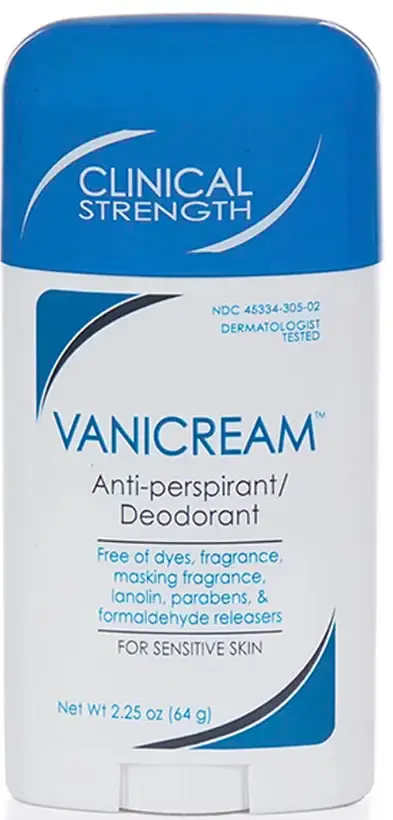
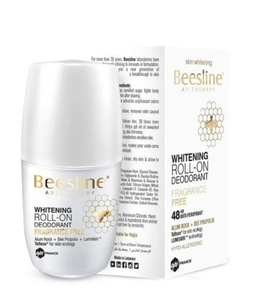
Beesline Whitening Roll-On Deodorant Fragrance-Free by Beesline
Beesline

Beesline Whitening Roll-On Deodorant Fragrance-Free

Deodorantbody care

Safety score

Pregnancy-focused assessment

Low Risk79/100
Higher concernLower concern

One or more ingredients have a low-risk flag in MamaSkin's current assessment. Review the notes and your own circumstances.

Formula and assessment check

Ingredient safety review updated 28 January 2026. Product formulas can change, so compare the ingredients shown here with the packaging you have.

Report a formula mismatch

Ingredient breakdown

See how the listed formula falls across MamaSkin's pregnancy-focused risk bands.

22

No known risks

1

Low risk

0

Medium risk

0

High risk

Ingredients

Ingredients with a higher risk flag appear first, followed by the rest of the formula.

LACTIC ACID

Low Risk

Endogenous alpha-hydroxy acid and humectant; at modest cosmetic concentrations (≈5% and below, and generally <10%) topical lactic acid is considered compatible with pregnancy. Main risks are local irritation and increased photosensitivity rather than systemic toxicity or fetal effects.

Sources: MotherToBaby: Topical acne treatments in pregnancy and breastfeeding https://www.ncbi.nlm.nih.gov/books/NBK582985/
AQUA

No Known Risks

POTASSIUM ALUM

No Known Risks
Show all (23)

GLYCERYL STEARATE

No Known Risks

Emulsifier and emollient used to stabilise creams and lotions. Not associated with pregnancy-specific concerns at cosmetic exposure.

Sources: Cosmetic Ingredient Review (US); Scientific Committee on Consumer Safety (EU)

CETYL ALCOHOL

No Known Risks

Fatty alcohol used to improve texture and skin feel. Considered safe for cosmetic use without pregnancy-specific concerns.

Sources: Cosmetic Ingredient Review (US); Scientific Committee on Consumer Safety (EU)

CAPRYLIC/CAPRIC TRIGLYCERIDE

No Known Risks

Common emollient derived from fatty acids and glycerin. Used to soften skin and improve texture without pregnancy-specific concerns.

Sources: Cosmetic Ingredient Review (US); Scientific Committee on Consumer Safety (EU)

DIACETYL BOLDINE

No Known Risks

PROPANEDIOL

No Known Risks

Solvent and humectant used to improve texture and ingredient solubility. Low systemic exposure expected from topical cosmetic use.

Sources: Cosmetic Ingredient Review (US); Scientific Committee on Consumer Safety (EU)

WATER

No Known Risks

RHAMNOSE

No Known Risks

A sugar or carbohydrate-derived conditioner used for hydration and texture. No reproductive or developmental concern was identified for normal topical exposure.

Sources: European Commission CosIng; biochemical and cosmetic literature on saccharides.

GLUCOSE

No Known Risks

Simple sugar used as a humectant and skin-conditioning support ingredient. Reviewed cosmetic ingredient references do not identify a pregnancy- or breastfeeding-specific concern for normal topical cosmetic use.

Sources: CIR: Safety Assessment of Monosaccharides, Disaccharides, and Related Ingredients as Used in Cosmetics; EU CosIng / cosmetics regulatory inventory

GLUCURONIC ACID

No Known Risks

glucuronic acid is a sugar-derived humectant, polysaccharide or gum used for hydration and texture. Relevant cosmetic assessments and low expected dermal absorption did not identify a pregnancy-specific concern for normal topical use. Cosmetic-grade purity and ordinary sensitivity precautions remain applicable.

Sources: CIR saccharide-humectant and polysaccharide ingredient assessments; CIR Quick Reference Table https://www.cir-safety.org/supplementaldoc/quick-reference-table-december-2025.

TRITICUM VULGARE (WHEAT) GERM OIL

No Known Risks

Triticum Vulgare (Wheat Germ) Oil is a fixed plant oil used mainly as an emollient. CIR's plant-derived oil assessment supports cosmetic use, with refining, oxidation control and possible residual allergenic proteins remaining relevant. No pregnancy-specific concern was identified for normal topical exposure; this does not extend to concentrated essential oils or ingestion.

Sources: CIR Safety Assessment of Plant-Derived Fatty Acid Oils https://cir-safety.org/sites/default/files/118_final_oils_web.pdf; European Commission CosIng

SODIUM LACTATE

No Known Risks

Humectant and buffer that also forms part of the skin's natural moisturising factor. Reviewed cosmetic safety sources support topical cosmetic use; irritation and sun-sensitivity considerations relate more to formula context than to pregnancy-specific risk.

Sources: CIR: Safety Assessment of Alpha Hydroxy Acids as Used in Cosmetics; CIR: PCA and Its Salts as Used in Cosmetics; EU CosIng / cosmetics regulatory inventory

CETEARETH-12

No Known Risks

An ethoxylated fatty alcohol used as an emulsifier, surfactant or solubiliser. Cosmetic safety reviewers concluded that these named alkyl PEG ethers are safe in current practices when formulated to be non-irritating. Manufacturing controls should limit residual ethylene oxide and 1,4-dioxane.

Sources: CIR: Alkyl PEG/PPG Ethers conclusions, including C11-15 Pareth-7, C12-14 Pareth-12, Octyldodeceth-16 and Ceteareth-12; December 2025 Quick Reference Table https://cir-safety.org/sites/default/files/QRT-Update-Dec2025.pdf

CETEARETH-20

No Known Risks

An ethoxylated fatty alcohol used as an emulsifier and surfactant. Cosmetic safety reviewers support use in properly formulated products, with cautions regarding damaged skin and control of ethylene oxide and 1,4-dioxane impurities. These are formulation and manufacturing considerations rather than a pregnancy-specific hazard.

Sources: CIR ingredient record and safety assessment: Ceteareth-20 https://cir-safety.org/ingredient/ceteareth-20

ALOE BARBADENSIS (ALOE VERA) EXTRACT

No Known Risks

PEG-40 HYDROGENATED CASTOR OIL

No Known Risks

Solubilizer and emulsifier used to disperse oils and fragrance components in cosmetic formulas. Reviewed cosmetic safety sources support normal topical use, with no pregnancy- or breastfeeding-specific concern identified.

Sources: CIR cosmetic ingredient safety references for PEG castor oil derivatives; EU CosIng / cosmetics regulatory inventory

CARUM PETROSELINUM (PARSLEY) EXTRACT

No Known Risks

OLEA EUROPAEA (OLIVE) LEAF EXTRACT

No Known Risks

PROPOLIS

No Known Risks

POTASSIUM SORBATE

No Known Risks

Preservative widely used in foods and cosmetics. Considered safe at regulated concentrations with low systemic exposure from topical use.

Sources: Scientific Committee on Consumer Safety (EU); European cosmetics regulatory framework

SODIUM BENZOATE

No Known Risks

Preservative widely used in foods and cosmetics. Considered safe at regulated concentrations with low systemic exposure from topical use.

Sources: Scientific Committee on Consumer Safety (EU); European cosmetics regulatory framework

Formulations can change without notice. For the most accurate result, compare this list with your packaging and scan the exact ingredient label in MamaSkin when you repurchase.

How to use this assessment

The risk band is the primary conclusion. The score adds detail within that band and should not be used to compare products as if a one-point difference were clinically meaningful.

MamaSkin provides pregnancy-focused information, not medical advice. Your midwife, GP, pharmacist or dermatologist should take priority when your circumstances differ from typical cosmetic use.

Read the full methodology