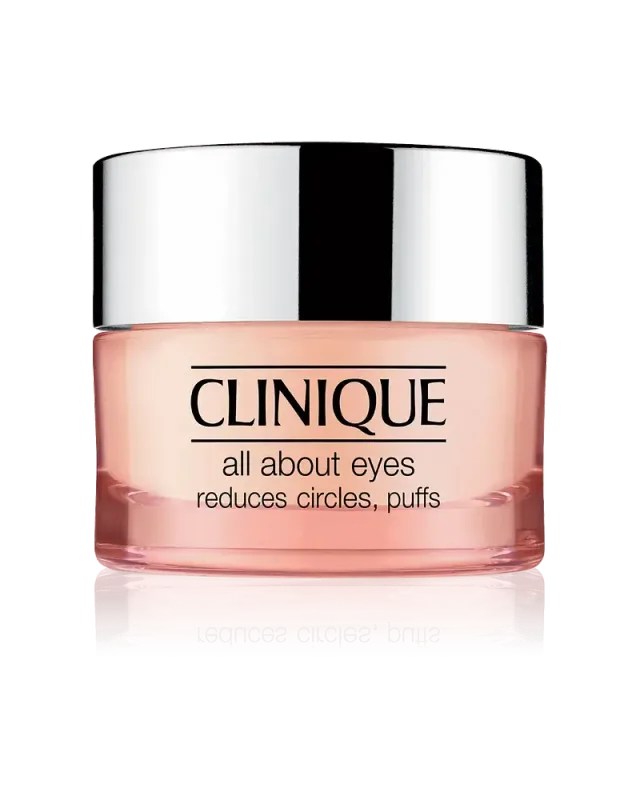
Clinique All About Eyes by Clinique
Clinique

Clinique All About Eyes

Eye Moisturizersmoisturisers

Safety score

Pregnancy-focused assessment

Low Risk74/100
Higher concernLower concern

One or more ingredients have a low-risk flag in MamaSkin's current assessment. Review the notes and your own circumstances.

Formula and assessment check

Ingredient safety review updated 15 February 2026. Product formulas can change, so compare the ingredients shown here with the packaging you have.

Report a formula mismatch

Ingredient breakdown

See how the listed formula falls across MamaSkin's pregnancy-focused risk bands.

29

No known risks

4

Low risk

0

Medium risk

0

High risk

Ingredients

Ingredients with a higher risk flag appear first, followed by the rest of the formula.

Phenoxyethanol

Low Risk

Phenoxyethanol is a preservative permitted in EU cosmetics up to 1.0%. The SCCS concluded it is safe for cosmetic use at that level, including when considering higher cosmetic exposure scenarios in infants and young children. Main practical concern is irritation/stinging on very sensitive or compromised skin rather than a pregnancy- or breastfeeding-specific risk.

Sources: EU SCCS; EU Cosmetics Regulation (Annex V preservative limit), SCCS Opinion on Phenoxyethanol (SCCS/1575/16, 2016)

Polysilicone-11

Low Risk

A crosslinked silicone elastomer used as a film former and texture ingredient. Cosmetic safety reviewers concluded that Polysilicone-11 is safe in current cosmetic use. MamaSkin classifies it as low risk for consistency with the existing silicone-polymer policy and because cosmetic-grade manufacturing should control residual starting materials, rather than because of a known pregnancy-specific contraindication.

Sources: CIR: Safety Assessment of Polysilicone-11 as Used in Cosmetics https://www.cir-safety.org/supplementaldoc/safety-assessment-polysilicone-11-used-cosmetics

Dimethicone

Low Risk

Dimethicone is a silicone polymer used as a skin protectant and slip/conditioning agent. It is considered inert with minimal dermal absorption; the main practical issues are cosmetic (feel) and occasional irritation in very sensitive users. It is not a pregnancy-specific concern in topical cosmetic use.

Sources: CIR: Safety Assessment of Dimethicone, Methicone, and related ingredients as used in cosmetics (Methicones report; 2019/2022 update); EU CosIng entry for Dimethicone.

Show all (33)

PEG/PPG-18/18 Dimethicone

Low Risk

Silicone derivative with negligible systemic absorption in topical cosmetic use; treated as low risk in pregnancy and breastfeeding.

Sources: PubMed, U.S. National Library of Medicine (NLM)

Cyclopentasiloxane

No Known Risks

Silicone emollient and solvent used to improve slip and spreadability. No known pregnancy- or breastfeeding-specific concern in normal topical cosmetic use based on reviewed cosmetic safety sources. Spray or aerosol formats may warrant extra caution because inhalation/local lung exposure concerns have been raised for those uses.

Sources: SCCS: Cyclopentasiloxane (D5) in cosmetic products; EU CosIng / cosmetics regulatory inventory

Water

No Known Risks

Isostearyl Palmitate

No Known Risks

Polyethylene

No Known Risks

Inert polymer used as a film former, thickener or texture ingredient in cosmetics. Normal topical use is expected to have low systemic exposure, with no pregnancy- or breastfeeding-specific concern identified in reviewed cosmetic references.

Sources: CIR cosmetic ingredient safety references for polyethylene and related polymers; EU CosIng / cosmetics regulatory inventory

Butylene Glycol

No Known Risks

Solvent and humectant commonly used in leave-on products. Not associated with pregnancy-specific concerns at cosmetic exposure levels.

Sources: Cosmetic Ingredient Review (US); Scientific Committee on Consumer Safety (EU)

Ethylene/Acrylic Acid Copolymer

No Known Risks

Morus Bombycis Root Extract

No Known Risks

Caffeine

No Known Risks

Methylxanthine used in cosmetics (e.g., de-puffing/firming and antioxidant support). No pregnancy-specific contraindications are identified for topical cosmetic use.

Sources: CIR (Methylxanthines); PubMed (NLM)

Phytosphingosine

No Known Risks

Skin-conditioning lipid used in barrier-support formulas, commonly alongside ceramides and cholesterol. Reviewed cosmetic ingredient references do not identify a pregnancy- or breastfeeding-specific concern for normal topical use.

Sources: CIR cosmetic ingredient safety references for sphingolipids/skin-conditioning lipids; EU CosIng / cosmetics regulatory inventory

Triticum Vulgare Bran Extract

No Known Risks

Scutellaria Baicalensis Root Extract

No Known Risks

A Chinese skullcap root extract used for skin conditioning and antioxidant effects. Cosmetic safety reviewers concluded that the root extract is safe in current practices of use and concentration; this conclusion does not extend to the generic whole-plant or sprout extracts, for which evidence was insufficient. No pregnancy-specific concern was identified for normal topical cosmetic exposure.

Sources: CIR: Safety Assessment of Scutellaria baicalensis-Derived Ingredients as Used in Cosmetics https://cir-reports.cir-safety.org/view-attachment/?id=12155820-bce2-80f8-bd06-353ba20e5877

Lactis Proteinum

No Known Risks

Olea Europaea Fruit Extract

No Known Risks

Camellia Sinensis Leaf Extract

No Known Risks

Camellia sinensis (green tea) leaf extract is used as an antioxidant botanical; topical cosmetic use is considered low concern with no known pregnancy or breastfeeding risks, though rare sensitivities are possible.

Sources: CIR; EU/UK Cosmetics Regulation

Cholesterol

No Known Risks

Skin-conditioning lipid used in barrier-support formulas, often alongside ceramides and fatty acids. Normal topical cosmetic use has no known pregnancy- or breastfeeding-specific concern identified in reviewed cosmetic references.

Sources: CIR cosmetic ingredient safety references for cholesterol and related sterols; EU CosIng / cosmetics regulatory inventory

Linoleic Acid

No Known Risks

This naturally occurring fatty acid is used for emolliency, cleansing support or texture. The Cosmetic Ingredient Review concluded that assessed fatty acids are safe in current cosmetic use when formulated to be non-irritating and non-sensitizing; some can increase penetration of other formula ingredients.

Sources: CIR: Safety Assessment of Fatty Acids and Fatty Acid Salts as Used in Cosmetics https://cir-safety.org/supplementaldoc/safety-assessment-fatty-acids-fatty-acid-salts-used-cosmetic

Tocopheryl Acetate

No Known Risks

Tocopheryl acetate (vitamin E derivative) is used as an antioxidant and skin-conditioning ingredient; it is considered low concern in topical use with no known pregnancy or breastfeeding risks at cosmetic concentrations.

Sources: CIR; EU/UK Cosmetics Regulation

Magnesium Ascorbyl Phosphate

No Known Risks

A stable vitamin C derivative used for antioxidant and skin-conditioning effects. Cosmetic safety reviewers concluded that magnesium ascorbyl phosphate is safe in current practices of use and concentration.

Sources: CIR: Ascorbyl ingredients conclusion, IJT 24(Suppl. 2), 2005; December 2025 Quick Reference Table https://cir-safety.org/sites/default/files/QRT-Update-Dec2025.pdf

Pyridoxine Dipalmitate

No Known Risks

Sucrose

No Known Risks

This sugar or sugar alcohol is used as a humectant and skin-conditioning ingredient. Cosmetic Ingredient Review assessments support these saccharides in current cosmetic use, with no pregnancy- or breastfeeding-specific concern identified for normal topical exposure.

Sources: CIR: Safety Assessment of Monosaccharides Disaccharides and Related Ingredients as Used in Cosmetics https://cir-safety.org/supplementaldoc/safety-assessment-monosaccharides-disaccharides-and-related-ingredients-used-cosmeti

Glycerin

No Known Risks

Glycerin is a widely used humectant that supports hydration and the skin barrier, with a long safety record and no known pregnancy or breastfeeding concerns in topical cosmetic use.

Sources: CIR; EU/UK Cosmetics Regulation

Glyceryl Laurate

No Known Risks

A glycerin fatty-acid ester used as an emollient and emulsifier. Cosmetic safety reviewers concluded that glyceryl monoesters, including glyceryl laurate, are safe in current practices of use and concentration. No pregnancy-specific concern was identified for normal topical use.

Sources: CIR: December 2025 Quick Reference Table, Glyceryl Monoesters conclusion, IJT 39(Suppl. 3), 2020 https://cir-safety.org/sites/default/files/QRT-Update-Dec2025.pdf

Petrolatum

No Known Risks

Highly refined petrolatum (petroleum jelly) is a skin protectant/occlusive with minimal dermal penetration; safety depends on refining/PAH impurity controls and cosmetic/medical grades meet established standards.

Sources: USP White Petrolatum monograph (2021); Petry et al., Food and Chemical Toxicology (2017); PubMed (dermatology review)

Cetyl PEG/PPG-10/1 Dimethicone

No Known Risks

A silicone polyether used mainly as an emulsifier and conditioning ingredient. The Cosmetic Ingredient Review concluded that this ingredient is safe in current cosmetic use. Concentrated-material tests found limited transient irritation, while a finished cosmetic containing 15% was non-irritating in human patch testing; no pregnancy- or breastfeeding-specific concern is identified for normal topical use.

Sources: CIR: Safety Assessment of Polyoxyalkylene Siloxane Copolymers as Used in Cosmetics (Final Report 2014) https://cir-safety.org/sites/default/files/ROPSIL_122014%20_FAR.pdf

Propylene Carbonate

No Known Risks

Solvent and viscosity-control ingredient used in cosmetic formulas, often with clay thickeners. Reviewed cosmetic ingredient references do not identify a pregnancy- or breastfeeding-specific concern for normal topical use.

Sources: CIR cosmetic ingredient safety references for carbonate solvents; EU CosIng / cosmetics regulatory inventory

Sodium Chloride

No Known Risks

Sodium chloride is used to adjust viscosity and texture in formulations; topical cosmetic use is considered low concern with no known pregnancy or breastfeeding risks.

Sources: CIR; EU/UK Cosmetics Regulation

Quaternium-90 Bentonite

No Known Risks

Disodium EDTA

No Known Risks

Disodium EDTA is a chelating agent used to improve formula stability and performance; it is considered low concern in topical cosmetic use, with no known pregnancy or breastfeeding risks at typical concentrations.

Sources: CIR; EU/UK Cosmetics Regulation

Iron Oxides

No Known Risks

Pigment family used to provide red, yellow and black colour in makeup and tinted skincare. Insoluble mineral pigments with very low dermal absorption in typical topical use. Generally considered acceptable in pregnancy and breastfeeding. If you prefer a cautious approach, avoid inhaling loose powders or sprays.

Sources: General cosmetic ingredient safety references for insoluble mineral pigments; exposure route considerations for powders/sprays.

Formulations can change without notice. For the most accurate result, compare this list with your packaging and scan the exact ingredient label in MamaSkin when you repurchase.

How to use this assessment

The risk band is the primary conclusion. The score adds detail within that band and should not be used to compare products as if a one-point difference were clinically meaningful.

MamaSkin provides pregnancy-focused information, not medical advice. Your midwife, GP, pharmacist or dermatologist should take priority when your circumstances differ from typical cosmetic use.

Read the full methodology