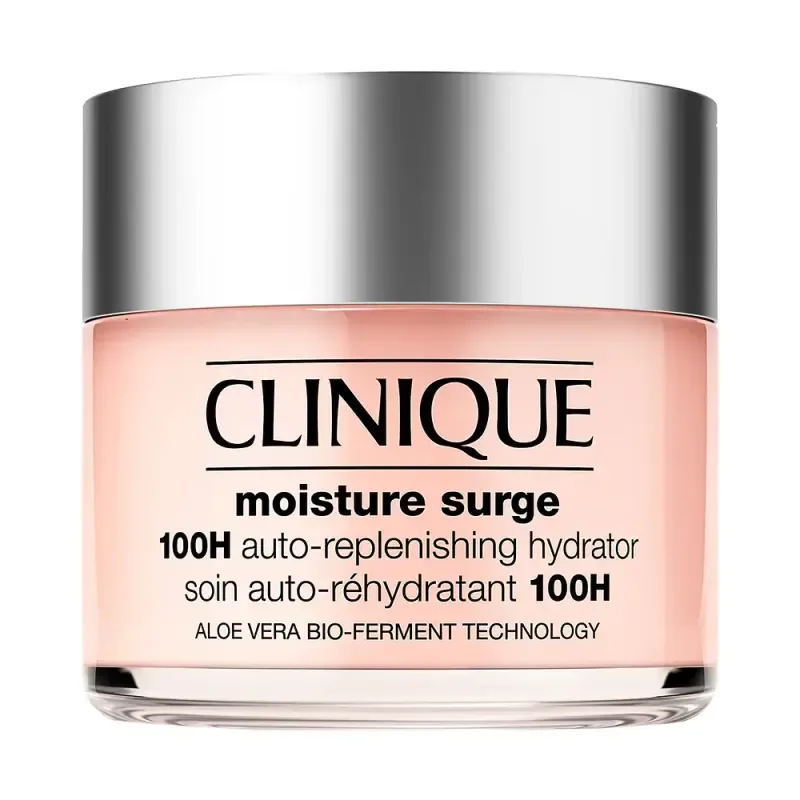
Clinique Moisture Surge™ 100-Hour Auto-Replenishing Hydrator by Clinique
Clinique

Clinique Moisture Surge™ 100-Hour Auto-Replenishing Hydrator

General Moisturizersmoisturisers

Safety score

Pregnancy-focused assessment

Medium Risk58/100
Higher concernLower concern

This formula contains an ingredient that needs extra caution in MamaSkin's pregnancy-focused assessment.

Formula and assessment check

Ingredient safety review updated 15 February 2026. Product formulas can change, so compare the ingredients shown here with the packaging you have.

Report a formula mismatch

Ingredient breakdown

See how the listed formula falls across MamaSkin's pregnancy-focused risk bands.

40

No known risks

2

Low risk

1

Medium risk

0

High risk

Ingredients

Ingredients with a higher risk flag appear first, followed by the rest of the formula.

BHT

Medium Risk

BHT (butylated hydroxytoluene) is a lipophilic antioxidant used to protect oils from oxidation. Animal studies at high (primarily oral) doses show liver enzyme induction and related biochemical changes; endocrine-screening lines of evidence have also been evaluated in regulatory reviews. Pregnancy-specific human outcome data for topical cosmetic exposure are limited; the key signal is systemic toxicology at higher exposures and uncertainty for pregnancy-specific outcomes.

Sources: EU SCCS Opinion on BHT (SCCS/1636/21; sccs_o_257.pdf, 2021); CIR: Safety Assessment of BHT as used in cosmetics.

Phenoxyethanol

Low Risk

Phenoxyethanol is a preservative permitted in EU cosmetics up to 1.0%. The SCCS concluded it is safe for cosmetic use at that level, including when considering higher cosmetic exposure scenarios in infants and young children. Main practical concern is irritation/stinging on very sensitive or compromised skin rather than a pregnancy- or breastfeeding-specific risk.

Sources: EU SCCS; EU Cosmetics Regulation (Annex V preservative limit), SCCS Opinion on Phenoxyethanol (SCCS/1575/16, 2016)

Dimethicone

Low Risk

Dimethicone is a silicone polymer used as a skin protectant and slip/conditioning agent. It is considered inert with minimal dermal absorption; the main practical issues are cosmetic (feel) and occasional irritation in very sensitive users. It is not a pregnancy-specific concern in topical cosmetic use.

Sources: CIR: Safety Assessment of Dimethicone, Methicone, and related ingredients as used in cosmetics (Methicones report; 2019/2022 update); EU CosIng entry for Dimethicone.

Show all (43)

Water

No Known Risks

Butylene Glycol

No Known Risks

Solvent and humectant commonly used in leave-on products. Not associated with pregnancy-specific concerns at cosmetic exposure levels.

Sources: Cosmetic Ingredient Review (US); Scientific Committee on Consumer Safety (EU)

Glycerin

No Known Risks

Glycerin is a widely used humectant that supports hydration and the skin barrier, with a long safety record and no known pregnancy or breastfeeding concerns in topical cosmetic use.

Sources: CIR; EU/UK Cosmetics Regulation

Trisiloxane

No Known Risks

A small siloxane used as a spreading and wetting agent. Available cosmetic silicone assessments do not identify a pregnancy-specific concern for normal dermal exposure. Volatile or spray products should be used with ordinary ventilation.

Sources: CIR: safety assessments of dimethicone, methicone and substituted methicone polymers; European Commission CosIng ingredient inventory for Trisiloxane.

Trehalose

No Known Risks

Sugar-derived humectant used to help bind water and improve skin feel. Reviewed cosmetic ingredient references do not identify a pregnancy- or breastfeeding-specific concern for normal topical cosmetic use.

Sources: CIR: Safety Assessment of Monosaccharides, Disaccharides, and Related Ingredients as Used in Cosmetics; EU CosIng / cosmetics regulatory inventory

Sucrose

No Known Risks

This sugar or sugar alcohol is used as a humectant and skin-conditioning ingredient. Cosmetic Ingredient Review assessments support these saccharides in current cosmetic use, with no pregnancy- or breastfeeding-specific concern identified for normal topical exposure.

Sources: CIR: Safety Assessment of Monosaccharides Disaccharides and Related Ingredients as Used in Cosmetics https://cir-safety.org/supplementaldoc/safety-assessment-monosaccharides-disaccharides-and-related-ingredients-used-cosmeti

Ammonium Acryloyldimethyltaurate/Vp Copolymer

No Known Risks

Polymer thickener used to stabilise emulsions. Large-molecule ingredient with low systemic absorption.

Sources: Cosmetic Ingredient Review (US); Scientific Committee on Consumer Safety (EU)

Hydroxyethyl Urea

No Known Risks

A humectant that helps skin and hair retain water. Cosmetic safety reviewers concluded that hydroxyethyl urea is safe in current cosmetic use when formulated to be non-irritating; reproductive and developmental data reviewed for the assessment did not identify a pregnancy-specific concern from normal topical exposure.

Sources: CIR: Safety Assessment of Hydroxyethyl Urea https://www.cir-safety.org/supplementaldoc/safety-assessment-hydroxyethyl-urea-used-cosmetics-0

Camellia Sinensis Leaf Extract

No Known Risks

Camellia sinensis (green tea) leaf extract is used as an antioxidant botanical; topical cosmetic use is considered low concern with no known pregnancy or breastfeeding risks, though rare sensitivities are possible.

Sources: CIR; EU/UK Cosmetics Regulation

Silybum Marianum Extract

No Known Risks

Betula Alba Bark Extract

No Known Risks

Saccharomyces Lysate Extract

No Known Risks

Aloe Barbadensis Leaf Water

No Known Risks

Aloe Barbadensis Leaf Extract

No Known Risks

Botanical skin-conditioning ingredient used in soothing and hydrating formulas. Reviewed cosmetic safety sources support current cosmetic use provided anthraquinone levels do not exceed the limits addressed in the safety assessment; no pregnancy- or breastfeeding-specific topical concern was identified in the material reviewed.

Sources: CIR: Safety Assessment of Aloe-derived Ingredients as Used in Cosmetics; EU CosIng / cosmetics regulatory inventory

Thermus Thermophillus Ferment

No Known Risks

Caffeine

No Known Risks

Methylxanthine used in cosmetics (e.g., de-puffing/firming and antioxidant support). No pregnancy-specific contraindications are identified for topical cosmetic use.

Sources: CIR (Methylxanthines); PubMed (NLM)

Sorbitol

No Known Risks

Sugar alcohol humectant used to help maintain water content at the skin surface. Reviewed cosmetic safety sources support normal topical use, with no pregnancy- or breastfeeding-specific topical signal identified in the material reviewed.

Sources: CIR: Safety Assessment of Mannitol, Sorbitol, and Xylitol as Used in Cosmetics; EU CosIng / cosmetics regulatory inventory

Palmitoyl Hexapeptide-12

No Known Risks

Synthetic palmitoylated peptide used in topical cosmetic anti-aging and skin-conditioning formulas. Reviewed topical peptide literature lists palmitoyl hexapeptide-12 among topically used matricin-style peptides and does not identify a pregnancy- or breastfeeding-specific concern for normal topical cosmetic use.

Sources: Schagen SK. Topical Peptide Treatments with Effective Anti-Aging Results. Cosmetics. 2017;4(2):16. doi:10.3390/cosmetics4020016; CIR Expert Panel safety assessment of tripeptide-1, hexapeptide-12 and related derivatives.

Sodium Hyaluronate

No Known Risks

Sodium hyaluronate (hyaluronic acid salt) is used for hydration and cushioning, with very low systemic absorption from topical use and no known pregnancy or breastfeeding concerns at cosmetic concentrations.

Sources: CIR; EU/UK Cosmetics Regulation

Caprylyl Glycol

No Known Risks

Humectant and preservative booster used to support product stability. Low systemic exposure expected from topical cosmetic use.

Sources: Scientific Committee on Consumer Safety (EU); Cosmetic Ingredient Review (US)

Oleth-10

No Known Risks

Sodium Polyaspartate

No Known Risks

Aloe Barbadensis Leaf Polysaccharides

No Known Risks

Lactobacillus Ferment Lysate

No Known Risks

A lysate produced from Lactobacillus fermentation and used for skin conditioning. Cosmetic safety reviewers concluded that Lactobacillus ferment lysate is safe in current practices of use and concentration.

Sources: CIR: Lactobacillus Ferment Lysate final safety assessment, September 2025; December 2025 Quick Reference Table https://cir-safety.org/sites/default/files/QRT-Update-Dec2025.pdf

Saccharide Isomerate

No Known Risks

Humectant saccharide complex used to improve surface hydration and reduce transepidermal water loss. Reviewed cosmetic safety sources support normal topical use, with no pregnancy- or breastfeeding-specific topical signal identified in the material reviewed.

Sources: CIR: Safety Assessment of Saccharide Humectants / Saccharide Isomerate, etc.; EU CosIng / cosmetics regulatory inventory

Hydrogenated Lecithin

No Known Risks

Hydrogenated emulsifier used to support skin barrier feel. Not associated with pregnancy-specific concerns.

Sources: Cosmetic Ingredient Review (US)

Tocopheryl Acetate

No Known Risks

Tocopheryl acetate (vitamin E derivative) is used as an antioxidant and skin-conditioning ingredient; it is considered low concern in topical use with no known pregnancy or breastfeeding risks at cosmetic concentrations.

Sources: CIR; EU/UK Cosmetics Regulation

Acrylates/C10-30 Alkyl Acrylate Crosspolymer

No Known Risks

Polymer thickener and stabiliser used in creams and sunscreens. Low systemic exposure expected.

Sources: Cosmetic Ingredient Review (US); Scientific Committee on Consumer Safety (EU)

Glyceryl Polymethacrylate

No Known Risks

A high-molecular-weight moisturising and texture polymer. Cosmetic safety reviewers concluded that glyceryl polymethacrylate is safe in current cosmetic practices. Dermal absorption of the intact polymer is expected to be limited, and residual monomers should be controlled.

Sources: CIR: Final safety assessment of Glyceryl Polymethacrylate, June 2022; December 2025 Quick Reference Table https://cir-safety.org/sites/default/files/QRT-Update-Dec2025.pdf

Tromethamine

No Known Risks

pH adjuster and buffer used to stabilise formulations. Reviewed cosmetic safety sources support normal topical use, with no pregnancy- or breastfeeding-specific topical signal identified in the material reviewed.

Sources: CIR: Safety Assessment of Tromethamine as Used in Cosmetics; EU CosIng / cosmetics regulatory inventory

PEG-8

No Known Risks

A small polyethylene glycol used as a humectant and solvent. Cosmetic safety reviewers concluded that PEG-8 is safe at current cosmetic concentrations, but PEG ingredients should not be used on damaged skin and manufacturing impurities must be controlled. No pregnancy-specific concern was identified for compliant topical use.

Sources: CIR: Final Report on the Safety Assessment of Polyethylene Glycols https://cir-reports.cir-safety.org/view-attachment/?id=0ca16b53-8e74-ec11-8943-0022482f06a6

Hexylene Glycol

No Known Risks

Solvent and humectant used to improve texture and ingredient solubility in topical cosmetics. Reviewed cosmetic ingredient references do not identify a pregnancy- or breastfeeding-specific concern for normal topical use.

Sources: CIR cosmetic ingredient safety references for alkane diols/glycols; EU CosIng / cosmetics regulatory inventory

Magnesium Ascorbyl Phosphate

No Known Risks

A stable vitamin C derivative used for antioxidant and skin-conditioning effects. Cosmetic safety reviewers concluded that magnesium ascorbyl phosphate is safe in current practices of use and concentration.

Sources: CIR: Ascorbyl ingredients conclusion, IJT 24(Suppl. 2), 2005; December 2025 Quick Reference Table https://cir-safety.org/sites/default/files/QRT-Update-Dec2025.pdf

Citric Acid

No Known Risks

pH adjuster used in small amounts to maintain product stability. Not associated with pregnancy-specific concerns.

Sources: Scientific Committee on Consumer Safety (EU); European cosmetics regulatory framework

Disodium EDTA

No Known Risks

Disodium EDTA is a chelating agent used to improve formula stability and performance; it is considered low concern in topical cosmetic use, with no known pregnancy or breastfeeding risks at typical concentrations.

Sources: CIR; EU/UK Cosmetics Regulation

Sodium Citrate

No Known Risks

Buffering and chelating ingredient used to control pH and formulation stability. Reviewed cosmetic safety sources support normal topical use, with no pregnancy- or breastfeeding-specific topical signal identified in the material reviewed.

Sources: CIR: Safety Assessment of Citric Acid, Inorganic Citrate Salts, and Alkyl Citrate Esters as Used in Cosmetics; EU CosIng / cosmetics regulatory inventory

Potassium Sorbate

No Known Risks

Preservative widely used in foods and cosmetics. Considered safe at regulated concentrations with low systemic exposure from topical use.

Sources: Scientific Committee on Consumer Safety (EU); European cosmetics regulatory framework

Sodium Benzoate

No Known Risks

Preservative widely used in foods and cosmetics. Considered safe at regulated concentrations with low systemic exposure from topical use.

Sources: Scientific Committee on Consumer Safety (EU); European cosmetics regulatory framework

CI 14700

No Known Risks

A Colour Index or lake name for a regulated cosmetic colour additive. Permitted product areas differ by colour, and certified colours must meet applicable identity and purity specifications. No pregnancy-specific concern was identified for compliant topical cosmetic use.

Sources: FDA: Regulatory Status of Color Additives https://hfpappexternal.fda.gov/scripts/fdcc/index.cfm?set=ColorAdditives; FDA: Color Additives Permitted for Use in Cosmetics https://www.fda.gov/cosmetics/cosmetic-ingredient-names/color-additives-permitted-use-cosmetics; 21 CFR Parts 73, 74 and 82.

CI 19140

No Known Risks

Also known as FD&C Yellow No. 5 or tartrazine, this certified colour additive is used in cosmetics and other regulated products. FDA permits its use in cosmetics, including the eye area, when identity, purity, certification and use requirements are met. Rare allergy-like reactions can occur, but no pregnancy-specific concern is identified for normal use in a compliant finished cosmetic.

Sources: FDA: Regulatory Status of FD&C Yellow No. 5 / C.I. 19140 https://www.hfpappexternal.fda.gov/scripts/fdcc/index.cfm?id=FDCYellow5&set=ColorAdditives; FDA: Color Additives and Cosmetics Fact Sheet https://www.fda.gov/industry/color-additives/color-additives-and-cosmetics-fact-sheet

Formulations can change without notice. For the most accurate result, compare this list with your packaging and scan the exact ingredient label in MamaSkin when you repurchase.

How to use this assessment

The risk band is the primary conclusion. The score adds detail within that band and should not be used to compare products as if a one-point difference were clinically meaningful.

MamaSkin provides pregnancy-focused information, not medical advice. Your midwife, GP, pharmacist or dermatologist should take priority when your circumstances differ from typical cosmetic use.

Read the full methodology