COSRX
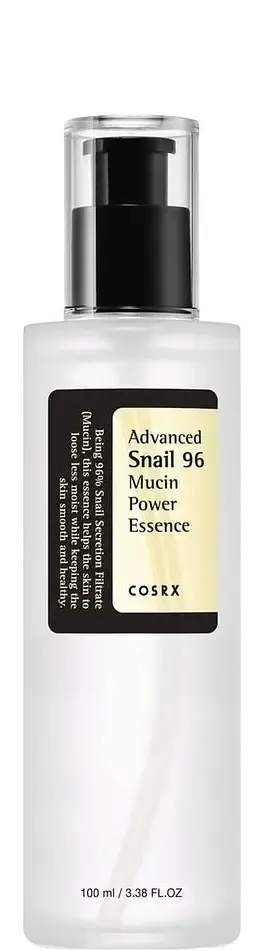
COSRX Advanced Snail 96 Mucin Power Essence
Low risk75/100

Sheet Masks
Some ingredients carry a low-risk flag. Read the formulation context before deciding.
19 of 19 ingredients rated
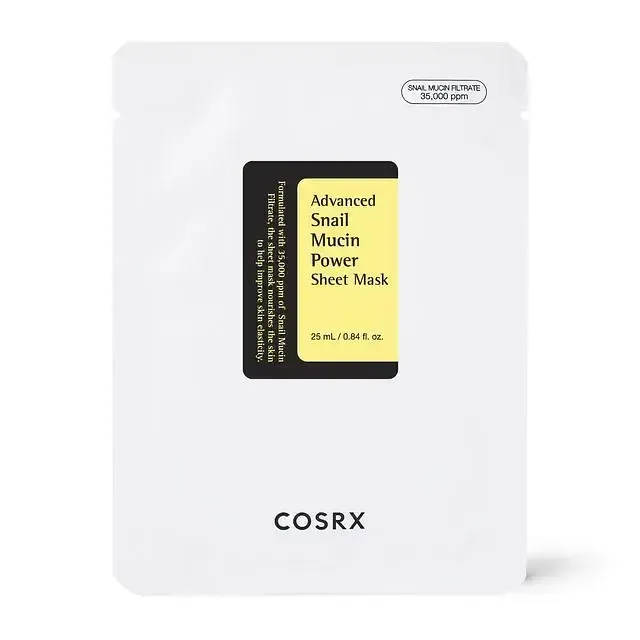
MamaSkin rates the recorded formula for COSRX Advanced Snail Mucin Power Sheet Mask as Low risk (78/100). Review the ingredient context and any manual-review explanation before deciding.
Manual review 2026-07-13: The recorded formula was manually reviewed. This formula contains Dipotassium Glycyrrhizate, Melaleuca Alternifolia Leaf Oil, classified as low risk under MamaSkin's pregnancy-screening policy. This is a cautious classification, not a known pregnancy contraindication; see the highlighted ingredient entry for its rationale and sources.
19 of 19 ingredient entries on this page have a recorded score, evidence summary and source text. That describes documentation coverage, not proof that the finished formula has been clinically tested during pregnancy.
How we assess productsThe recorded formula, with evidence behind each rating. Unmatched ingredients are marked Not assessed in grey.
A purified glycyrrhizic-acid salt used as a soothing and skin-conditioning ingredient. Cosmetic safety reviewers concluded that dipotassium glycyrrhizate is safe in current cosmetic use and noted poor dermal absorption. MamaSkin nevertheless applies a cautious low-risk classification for consistency with the existing licorice family because high oral glycyrrhizin exposure has pregnancy-related concerns; this is not a topical contraindication.
Sources: CIR: Safety Assessment of Glycyrrhizic Acid and Derivatives https://cir-reports.cir-safety.org/view-attachment/?id=49a63435-8e74-ec11-8943-0022482f06a6
An exact label variant for tea tree essential oil. The SCCS concluded that tea tree oil is safe only in specific defended adult dermal product types and concentrations, excluded aerosolised and sprayable formats, and identified it as a moderate skin sensitiser. MamaSkin therefore classifies it as low risk because safety is formulation- and route-dependent, not because it is a pregnancy contraindication.
Sources: SCCS/1681/25: Scientific Opinion on Tea Tree Oil, final 30 October 2025 https://health.ec.europa.eu/publications/sccs-scientific-opinion-tea-tree-oil-casec-no-68647-73-4-285-377-1_en
Water (Aqua) is the standard purified water used as a cosmetic solvent. It has no pregnancy-specific risk in normal topical use.
Sources: https://pubchem.ncbi.nlm.nih.gov/compound/Water, https://single-market-economy.ec.europa.eu/sectors/cosmetics/cosmetic-ingredient-database/cosing-glossary-ingredients_en
Solvent and humectant commonly used in leave-on products. Not associated with pregnancy-specific concerns at cosmetic exposure levels.
Sources: Cosmetic Ingredient Review (US); Scientific Committee on Consumer Safety (EU)
Glycerin is a widely used humectant that supports hydration and the skin barrier, with a long safety record and no known pregnancy or breastfeeding concerns in topical cosmetic use.
Sources: CIR; EU/UK Cosmetics Regulation
An animal-derived protein, peptide or secretion filtrate used for hydration and skin conditioning. These large components are expected to have low systemic absorption through intact skin. No pregnancy-specific hazard signal was identified for normal topical cosmetic use. Cosmetic-grade materials should be processed to control microorganisms, infectious agents and source-derived impurities, and protein allergy remains possible.
Sources: CIR: Safety Assessment of Skin and Connective Tissue-Derived Proteins and Peptides https://www.cir-safety.org/sites/default/files/tsupep092017final.pdf; European Commission CosIng ingredient inventory; peer-reviewed cosmetic literature on snail secretion filtrate.
1,2-Hexanediol is commonly used as a solvent and preservative booster; topical exposure is low and it has no known pregnancy or breastfeeding concerns at cosmetic concentrations, though very sensitive skin may occasionally react.
Sources: CIR; EU/UK Cosmetics Regulation
Panthenol (pro-vitamin B5) is used for soothing and barrier support and is generally well tolerated, with no known pregnancy or breastfeeding concerns in topical cosmetic use.
Sources: CIR; EU/UK Cosmetics Regulation
Hydroxyacetophenone is used as an antioxidant and preservative-support ingredient; it is generally considered low concern in topical cosmetic use with no known pregnancy or breastfeeding risks at typical concentrations.
Sources: CIR; EU/UK Cosmetics Regulation
Solvent and humectant used to improve texture and ingredient solubility in topical cosmetics. Reviewed cosmetic ingredient references do not identify a pregnancy- or breastfeeding-specific concern for normal topical use.
Sources: CIR cosmetic ingredient safety references for alkane diols/glycols; EU CosIng / cosmetics regulatory inventory
Natural polysaccharide thickener used for stability and texture. Not associated with pregnancy-specific concerns.
Sources: European cosmetics regulatory framework
Dipropylene glycol is used as a solvent and carrier in cosmetics; topical exposure is low and it has no known pregnancy or breastfeeding concerns at cosmetic concentrations.
Sources: CIR; EU/UK Cosmetics Regulation
Polymer used for texture and absorbency. Large-molecule ingredient with low systemic exposure.
Sources: Cosmetic Ingredient Review (US); Scientific Committee on Consumer Safety (EU)
Allantoin is a soothing skin protectant commonly used to help reduce irritation and support comfort, with no known pregnancy or breastfeeding concerns in topical cosmetic use.
Sources: CIR; EU/UK Cosmetics Regulation
Cellulose-derived thickener used to build viscosity and improve texture. Reviewed cosmetic safety sources support normal topical use, with no pregnancy- or breastfeeding-specific topical signal identified in the material reviewed.
Sources: CIR Quick Reference Table / ingredient status (Hydroxyethylcellulose, Final Report 03/2009); EU CosIng / cosmetics regulatory inventory
Sodium hyaluronate (hyaluronic acid salt) is used for hydration and cushioning, with very low systemic absorption from topical use and no known pregnancy or breastfeeding concerns at cosmetic concentrations.
Sources: CIR; EU/UK Cosmetics Regulation
Disodium EDTA is a chelating agent used to improve formula stability and performance; it is considered low concern in topical cosmetic use, with no known pregnancy or breastfeeding risks at typical concentrations.
Sources: CIR; EU/UK Cosmetics Regulation
Polyglycerin fatty-acid ester used as an emulsifier and solubilizer. Reviewed cosmetic safety references do not identify a pregnancy- or breastfeeding-specific concern for normal topical cosmetic use.
Sources: CIR cosmetic ingredient safety references for polyglyceryl fatty acid esters; EU CosIng / cosmetics regulatory inventory
A polyglycerin fatty-acid ester used as an emulsifier, dispersant or emollient. Cosmetic safety reviewers concluded that the assessed family of 274 polyglyceryl fatty acid esters is safe in current practices when formulated to be non-irritating. No pregnancy-specific concern was identified for normal topical cosmetic exposure.
Sources: CIR: Safety Assessment of Polyglyceryl Fatty Acid Esters as Used in Cosmetics https://www.cir-safety.org/supplementaldoc/safety-assessment-polyglyceryl-fatty-acid-esters-used-cosmetics-1
Water, Butylene Glycol, Glycerin, Snail Secretion Filtrate, 1,2-Hexanediol, Panthenol, Hydroxyacetophenone, Hexylene Glycol, Xanthan Gum, Dipropylene Glycol, Sodium Polyacrylate, Allantoin, Hydroxyethylcellulose, Sodium Hyaluronate, Disodium EDTA, Dipotassium Glycyrrhizate, Melaleuca Alternifolia Leaf Oil, Polyglyceryl-10 Laurate, Polyglyceryl-10 Myristate
Ingredient ratings refreshed 1 October 2026. Formulas vary by market and can change. Always compare with your packaging.
Manual review 2026-07-13: The recorded formula was manually reviewed. This formula contains Dipotassium Glycyrrhizate, Melaleuca Alternifolia Leaf Oil, classified as low risk under MamaSkin's pregnancy-screening policy. This is a cautious classification, not a known pregnancy contraindication; see the highlighted ingredient entry for its rationale and sources. The product score is a stored assessment, not a clinical safety guarantee.
No. The recorded formula lists a licorice-derived cosmetic ingredient, not an oral licorice product. Different ingredients and routes of exposure should not be treated as interchangeable. Use the exact ingredient's rating and evidence below, together with any manual-review note; this score does not assess teas, supplements or other licorice formulas.
19 of 19 ingredient entries on this page have a recorded score, evidence summary and source text. That describes documentation coverage, not proof that the finished formula has been clinically tested during pregnancy.
Only if the ingredient list on your packaging matches the recorded formula shown here. Formulas can differ by market and change over time. Compare the full list, not just the product name; report a mismatch if it differs.
No. This page presents a pregnancy-focused product assessment. Do not infer a breastfeeding conclusion from its score or label; breastfeeding requires a separate assessment of the formula and how it is used.