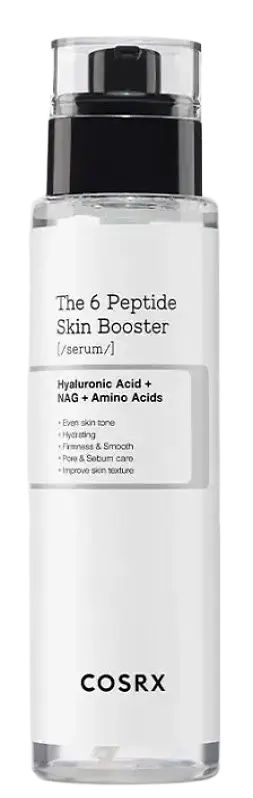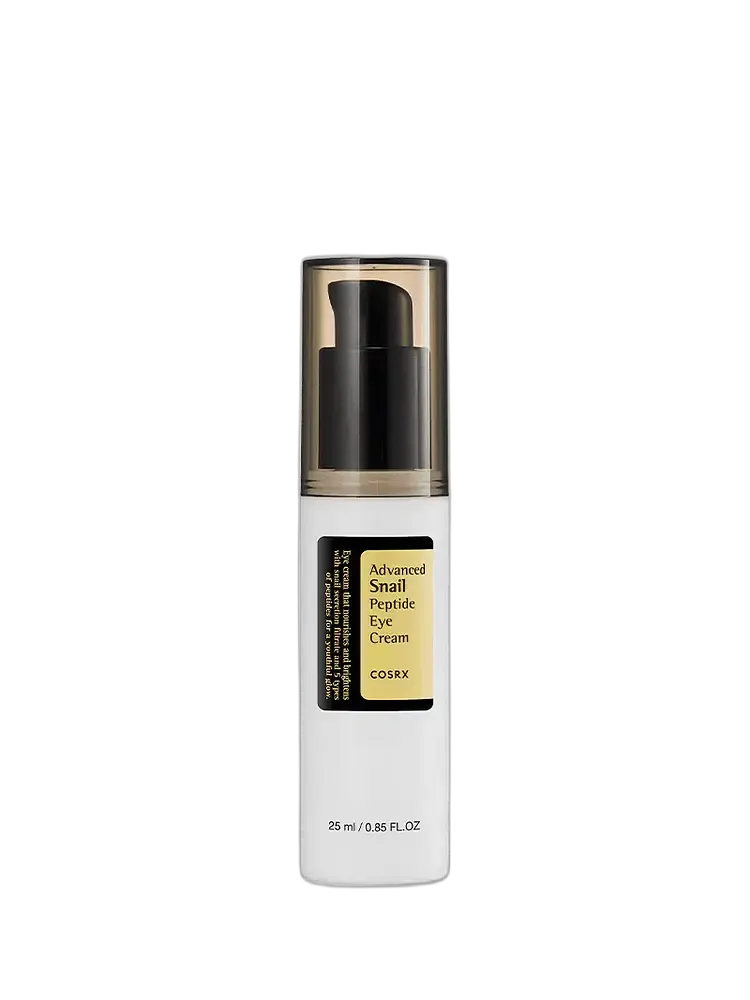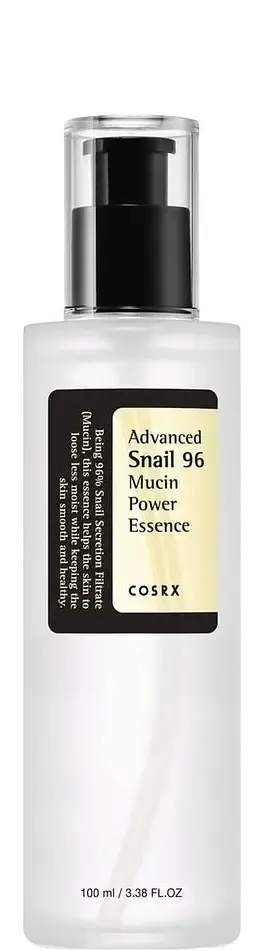
COSRX
COSRX Advanced Snail 96 Mucin Power Essence
Low risk75/100

Sunscreens
This formula needs extra consideration during pregnancy. Review the flagged ingredients with your healthcare professional.
44 of 45 ingredients rated1 not assessed
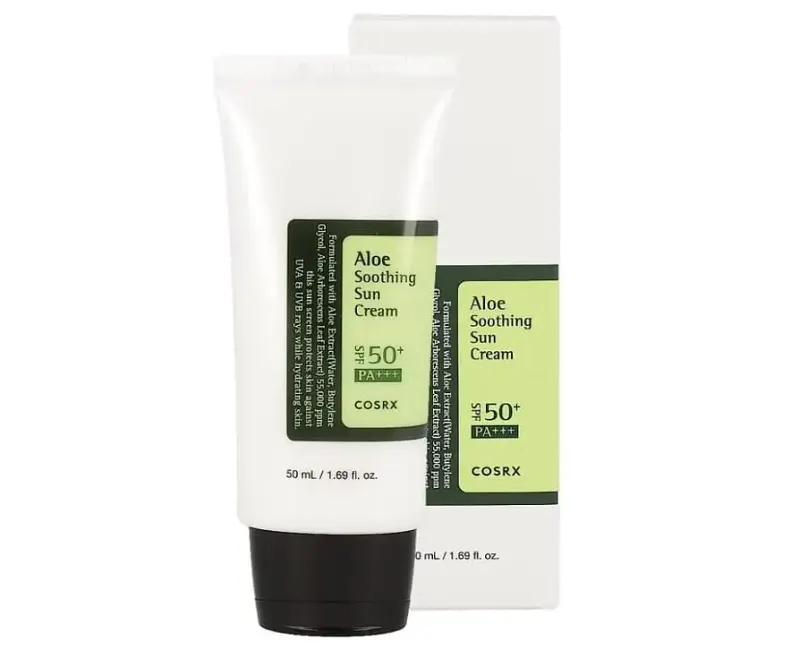
MamaSkin rates the recorded formula for COSRX Aloe Soothing Sun Cream SPF 50 PA+++ as Medium risk (53/100). Discuss the flagged ingredients with a qualified healthcare professional before using this formula during pregnancy.
The recorded formula includes 9 ingredient entries with risk flags: Ethylhexyl Methoxycinnamate (Medium risk), Benzyl Salicylate (Medium risk), Phenylbenzimidazole Sulfonic Acid (Low risk), plus others listed in the breakdown. These are ingredient-level flags; they do not replace the stored product assessment or account for every formulation detail.
44 of 45 ingredient entries on this page have a recorded score, evidence summary and source text. 1 entry does not have all of those fields. Unmatched or unrated entries are marked Not assessed in grey; missing evidence does not establish safety.
How we assess productsThe recorded formula, with evidence behind each rating. Unmatched ingredients are marked Not assessed in grey.
Ethylhexyl methoxycinnamate (EHMC) is a UV-B filter (also called octinoxate/octyl methoxycinnamate). SCCS characterised EHMC as endocrine-active (oestrogenic activity and weak anti-androgenic activity in vitro and in vivo) and reviewed genotoxicity/reproductive toxicity datasets in its re-evaluation. Pregnancy-specific human outcome data for topical exposure are limited; the medium-risk signal is endocrine activity plus systemic exposure uncertainty with frequent, large-area use.
Sources: SCCS/1671/24: Ethylhexyl methoxycinnamate https://health.ec.europa.eu/publications/sccs-opinion-ethylhexyl-methoxycinnamate-ehmc-cas-no-5466-77-383834-59-7-ec-no-226-775-7629-661-9_en
Benzyl salicylate is a fragrance ingredient that is also evaluated for potential endocrine activity and sensitisation. SCCS notes some indications for endocrine mode of action, and fragrance allergens are relevant for contact allergy risk; pregnancy-specific human outcome data for topical exposure are limited. The medium-risk signal is endocrine-related uncertainty and sensitisation potential rather than a defined pregnancy-specific toxicity dataset.
Sources: SCCS/1656/23: Benzyl salicylate https://health.ec.europa.eu/publications/benzyl-salicylate-cas-no-118-58-1-ec-no-204-262-9_en
Phenylbenzimidazole sulfonic acid (ensulizole/PBSA) is a water-soluble UV-B filter used in sunscreens and UV-protective skincare. Key consumer-relevant risks are local irritation and photoreactivity/photosensitisation potential in a small subset of users; systemic toxicity signals are generally low in the cosmetic context. It is not a typical pregnancy-specific concern at topical cosmetic use levels; overall risk is mainly local sensitivity.
Sources: TGA: Sunscreen review including phenylbenzimidazole sulfonic acid https://www.tga.gov.au/resources/publication/corporate-reports/safety-review-seven-active-sunscreen-ingredients
Triethanolamine (TEA) is an alkanolamine used as a pH adjuster and surfactant in cosmetics. The main practical concerns are skin/eye irritation at higher concentrations and the potential formation of nitrosamines if formulated with nitrosating agents (a formulation/impurity-control issue). It is not a typical pregnancy-specific concern at cosmetic use levels; overall risk is primarily local irritation/sensitisation in susceptible users.
Sources: CIR: Triethanolamine ingredient safety information https://www.cir-safety.org/ingredient/triethanolamine
Umbrella term for an undisclosed fragrance blend. It’s not usually a pregnancy-specific concern at normal cosmetic use levels, but the exact components and concentrations aren’t fully disclosed on the label, so we score it more conservatively. If you prefer maximum transparency (or you’re sensitive to fragrance compounds), choose fragrance-free/unscented products.
Sources: SCCS: Fragrance allergens in cosmetic products https://health.ec.europa.eu/latest-updates/sccs-new-opinion-fragrance-allergens-cosmetic-products-2012-07-31_en
Phenoxyethanol is a preservative permitted in EU cosmetics up to 1.0%. The SCCS concluded it is safe for cosmetic use at that level, including when considering higher cosmetic exposure scenarios in infants and young children. Main practical concern is irritation/stinging on very sensitive or compromised skin rather than a pregnancy- or breastfeeding-specific risk.
Sources: SCCS/1575/16: Phenoxyethanol opinion https://health.ec.europa.eu/publications/phenoxyethanol_en
Dimethicone is a silicone polymer used as a skin protectant and slip/conditioning agent. It is considered inert with minimal dermal absorption; the main practical issues are cosmetic (feel) and occasional irritation in very sensitive users. It is not a pregnancy-specific concern in topical cosmetic use.
Sources: CIR: Amended Safety Assessment of Dimethicone, Methicone, and Substituted-Methicone Polymers as Used in Cosmetics https://cir-safety.org/supplementaldoc/amended-safety-assessment-dimethicone-methicone-and-substituted-methicone-polymers-2
A crosslinked silicone elastomer used for texture and oil absorption. Cosmetic safety reviewers concluded that dimethicone crosspolymers are safe in current cosmetic use. MamaSkin classifies the exact polymer as low risk for consistency with the existing dimethicone-family policy and because manufacturing controls are needed for residual monomers, rather than because of a known pregnancy-specific contraindication.
Sources: CIR: Safety Assessment of Dimethicone Crosspolymers as Used in Cosmetics https://www.cir-safety.org/sites/default/files/dimethcross_blue_092012.pdf
A purified glycyrrhizic-acid salt used as a soothing and skin-conditioning ingredient. Cosmetic safety reviewers concluded that dipotassium glycyrrhizate is safe in current cosmetic use and noted poor dermal absorption. MamaSkin nevertheless applies a cautious low-risk classification for consistency with the existing licorice family because high oral glycyrrhizin exposure has pregnancy-related concerns; this is not a topical contraindication.
Sources: CIR: Safety Assessment of Glycyrrhizic Acid and Derivatives https://cir-reports.cir-safety.org/view-attachment/?id=49a63435-8e74-ec11-8943-0022482f06a6
No matched ingredient rating is available yet. Not assessed does not mean safe or unsafe.
Water (Aqua) is the standard purified water used as a cosmetic solvent. It has no pregnancy-specific risk in normal topical use.
Sources: https://pubchem.ncbi.nlm.nih.gov/compound/Water, https://single-market-economy.ec.europa.eu/sectors/cosmetics/cosmetic-ingredient-database/cosing-glossary-ingredients_en
Glycerin is a widely used humectant that supports hydration and the skin barrier, with a long safety record and no known pregnancy or breastfeeding concerns in topical cosmetic use.
Sources: CIR; EU/UK Cosmetics Regulation
Propylene glycol is a common solvent and humectant with a long history of use; it is not considered a pregnancy or breastfeeding concern in topical cosmetics, though some individuals may experience irritation in leave-on products.
Sources: CIR; EU/UK Cosmetics Regulation
Silicone emollient and solvent used to improve slip and spreadability. No known pregnancy- or breastfeeding-specific concern in normal topical cosmetic use based on reviewed cosmetic safety sources. Spray or aerosol formats may warrant extra caution because inhalation/local lung exposure concerns have been raised for those uses.
Sources: SCCS: Cyclopentasiloxane (D5) in cosmetic products; EU CosIng / cosmetics regulatory inventory
Modern broad-spectrum UV filter (often known as Tinosorb S). It has a high molecular weight and is formulated to remain mainly in the outer skin layers, with very low systemic absorption at cosmetic use levels. EU regulatory assessments and independent risk–benefit reviews have evaluated this filter as safe up to 10% in sunscreens, with no specific reproductive or developmental toxicity signals identified in animals or humans at permitted concentrations.
Sources: European Union Cosmetic Products Regulation (Annex VI): Bis-Ethylhexyloxyphenol Methoxyphenyl Triazine listed as an approved UV filter up to 10% in cosmetic products. Mikkelsen SH et al. “Survey and health assessment of UV filters” – Danish EPA, 2015: includes Bis-Ethylhexyloxyphenol Methoxyphenyl Triazine and notes low systemic exposure at approved use levels.
Light emollient carbonate ester used to improve spreadability and reduce greasiness. Reviewed cosmetic safety sources support normal topical use, with no pregnancy- or breastfeeding-specific topical signal identified in the material reviewed.
Sources: CIR: Safety Assessment of Dialkyl Carbonates as Used in Cosmetics; EU CosIng / cosmetics regulatory inventory
Organic UVB filter used in sunscreens, also known as Amiloxate. Available cosmetic safety sources describe low dermal toxicity and no pregnancy-specific topical concern was identified in the sources reviewed. This is assessed separately from Ethylhexyl Methoxycinnamate/Octinoxate.
Sources: EU CosIng Annex VI / UV filters; SCC Opinion on Isopentyl-p-Methoxycinnamate; PubMed
An alkyl phosphate surfactant and emulsifier used to stabilise creams, sunscreens and makeup. Cosmetic safety reviewers concluded that the assessed alkyl phosphates, including potassium cetyl phosphate, are safe in current practices of use and concentration when formulated to be non-irritating. Dermal penetration is expected to be limited, and no pregnancy-specific concern is identified for normal topical cosmetic exposure.
Sources: CIR: Safety Assessment of Alkyl Phosphates https://www.cir-safety.org/sites/default/files/alkyl%20phosphates_0.pdf
Volatile solvent used in some toners, sprays, and lightweight formulas. Reviewed cosmetic safety sources support current cosmetic use, with no pregnancy- or breastfeeding-specific topical concern identified in the material reviewed; the main practical issue is dryness, stinging, or barrier disruption in some users.
Sources: CIR: Safety Assessment of SD Alcohol 40, Benzyl Alcohol, and Denatured Alcohol in Cosmetic Products; EU CosIng / cosmetics regulatory inventory
Solvent and humectant commonly used in leave-on products. Not associated with pregnancy-specific concerns at cosmetic exposure levels.
Sources: Cosmetic Ingredient Review (US); Scientific Committee on Consumer Safety (EU)
Emulsifier and emollient used to stabilise creams and lotions. Not associated with pregnancy-specific concerns at cosmetic exposure.
Sources: Cosmetic Ingredient Review (US); Scientific Committee on Consumer Safety (EU)
Inorganic mineral pigment and, in some products, a mineral UV filter. For typical topical use in creams, lotions and makeup, systemic absorption is expected to be very low. Most concerns discussed in the literature relate to ingestion (food additive E171) or inhalation exposure from fine powders/sprays, and to specific nanoparticle characterisation. For routine topical cosmetic use, it is generally considered acceptable in pregnancy and breastfeeding; if you prefer a cautious approach, avoid inhaling loose powders or sprays.
Sources: EFSA opinion on titanium dioxide as food additive E171 (ingestion context); SCCS opinions on titanium dioxide in cosmetics (including inhalation/nano considerations); general dermatology guidance on mineral sunscreens in pregnancy.
A long-chain fatty alcohol or fatty-alcohol blend used as an emollient, emulsifier or thickener. Cosmetic safety assessments of long-chain fatty alcohols support use in current cosmetic practices; systemic absorption and reproductive exposure from normal topical use are expected to be low.
Sources: CIR: Safety Assessment of Fatty Alcohols as Used in Cosmetics; CIR December 2025 Quick Reference Table https://cir-safety.org/sites/default/files/QRT-Update-Dec2025.pdf
A large, pre-formed acrylic polymer used for texture, film formation and oil absorption. Cosmetic safety reviewers concluded that cosmetic-grade polymethyl methacrylate is safe in current cosmetic use, drawing on extensive safety information for comparable medical materials. Good manufacturing practice should minimize residual monomer.
Sources: CIR: Safety Assessment of Polymethyl Methacrylate and Related Polymers https://www.cir-safety.org/sites/default/files/115_final_pmma.pdf
Fatty alcohol used as an emollient and thickener. Not the same as drying alcohols and not associated with pregnancy-specific concerns.
Sources: Cosmetic Ingredient Review (US); Scientific Committee on Consumer Safety (EU)
Emulsifier used to stabilize creams and lotions. Reviewed cosmetic safety sources support use of PEG stearates in cosmetics, with no pregnancy- or breastfeeding-specific concern identified for normal topical use.
Sources: CIR: Safety Assessment of PEG Stearates as Used in Cosmetics; EU CosIng / cosmetics regulatory inventory
Mineral absorbent and texture aid used to mattify and improve slip. Reviewed cosmetic safety sources support normal topical cosmetic use; this assessment does not cover deliberate inhalation of loose powder.
Sources: CIR: Safety Assessment of Silica and Silicates as Used in Cosmetics; EU CosIng / cosmetics regulatory inventory
pH adjuster used in very small quantities to balance formulations. Not associated with pregnancy-specific concerns.
Sources: Scientific Committee on Consumer Safety (EU); European cosmetics regulatory framework
A sugar-derived surfactant and emulsifier. Cosmetic safety reviewers concluded that alkyl glucosides, including C12-20 alkyl glucoside, are safe in current practices when formulated to be non-irritating.
Sources: CIR: Alkyl Glucosides conclusion, IJT 32(Suppl. 3), 2013; December 2025 Quick Reference Table https://cir-safety.org/sites/default/files/QRT-Update-Dec2025.pdf
Mineral opacifier, absorbent and pigment-coating ingredient used in makeup, sunscreens and skin care. Low systemic exposure is expected from normal topical cosmetic use, with no pregnancy- or breastfeeding-specific concern identified in reviewed cosmetic references.
Sources: CIR cosmetic ingredient safety references for alumina/aluminum hydroxide ingredients; EU CosIng / cosmetics regulatory inventory
Stearic acid is a fatty acid used to stabilise emulsions and improve texture; it is considered low concern in topical cosmetics with no known pregnancy or breastfeeding risks at typical concentrations.
Sources: CIR; EU/UK Cosmetics Regulation
Humectant and preservative booster used to support product stability. Low systemic exposure expected from topical cosmetic use.
Sources: Scientific Committee on Consumer Safety (EU); Cosmetic Ingredient Review (US)
Polymer thickener and stabiliser used in creams and sunscreens. Low systemic exposure expected.
Sources: Cosmetic Ingredient Review (US); Scientific Committee on Consumer Safety (EU)
Polymer thickener used to create gel textures. Large-molecule ingredient with negligible systemic absorption.
Sources: Cosmetic Ingredient Review (US); Scientific Committee on Consumer Safety (EU)
Natural polysaccharide thickener used for stability and texture. Not associated with pregnancy-specific concerns.
Sources: European cosmetics regulatory framework
Limonene is a common fragrance component used at low levels in cosmetics; it is not a pregnancy-specific concern in topical use, but it is a recognised fragrance allergen and may trigger irritation or sensitisation in some people, especially if the product oxidises over time.
Sources: EU/UK cosmetics (fragrance allergen labelling); IFRA; toxicology reviews
Tocopheryl acetate (vitamin E derivative) is used as an antioxidant and skin-conditioning ingredient; it is considered low concern in topical use with no known pregnancy or breastfeeding risks at cosmetic concentrations.
Sources: CIR; EU/UK Cosmetics Regulation
Disodium EDTA is a chelating agent used to improve formula stability and performance; it is considered low concern in topical cosmetic use, with no known pregnancy or breastfeeding risks at typical concentrations.
Sources: CIR; EU/UK Cosmetics Regulation
A synthetic floral fragrance ingredient. Its main consumer-relevant concern is skin sensitisation in susceptible users; no pregnancy-specific hazard is identified for normal topical cosmetic exposure.
Sources: European Commission: Fragrance allergens labelling https://single-market-economy.ec.europa.eu/sectors/cosmetics/cosmetic-products-specific-topics/fragrance-allergens-labelling_en; SCCS fragrance-allergen opinions
Linalool is a common fragrance component used at low levels in cosmetics; it is not a pregnancy-specific concern in topical use, but it is a recognised fragrance allergen and may trigger irritation or sensitisation in some people, especially if the product oxidises over time.
Sources: EU/UK cosmetics (fragrance allergen labelling); IFRA; toxicology reviews
A floral fragrance ingredient found in several essential oils and also used in manufactured form. It is a recognised contact allergen, but no pregnancy-specific hazard is identified for normal topical cosmetic exposure.
Sources: European Commission: Fragrance allergens labelling https://single-market-economy.ec.europa.eu/sectors/cosmetics/cosmetic-products-specific-topics/fragrance-allergens-labelling_en; SCCS fragrance-allergen opinions
Benzyl alcohol is used as a preservative and fragrance component in cosmetics; it is not a pregnancy-specific concern at typical topical exposure, but it can be irritating or sensitising for some individuals, particularly in leave-on products.
Sources: CIR; EU/UK Cosmetics Regulation; toxicology reviews
A rose-like fragrance ingredient that occurs naturally in many essential oils and may also be manufactured. Its main cosmetic concern is contact allergy in susceptible users; no pregnancy-specific hazard is identified for normal topical cosmetic exposure.
Sources: European Commission: Fragrance allergens labelling https://single-market-economy.ec.europa.eu/sectors/cosmetics/cosmetic-products-specific-topics/fragrance-allergens-labelling_en; SCCS fragrance-allergen opinions
A fragrance ingredient, solvent and fixative that also occurs naturally in some essential oils. It is a labelled fragrance allergen and may irritate or sensitise susceptible users, but no pregnancy-specific concern is identified for normal topical cosmetic exposure.
Sources: European Commission: Fragrance allergens labelling https://single-market-economy.ec.europa.eu/sectors/cosmetics/cosmetic-products-specific-topics/fragrance-allergens-labelling_en; SCCS fragrance-allergen opinions
A lemon-scented mixture of the aldehydes geranial and neral used in fragrance. Citral is a recognised skin sensitiser, but current cosmetic concerns relate to allergy and concentration rather than a pregnancy-specific hazard from normal topical use.
Sources: European Commission: Fragrance allergens labelling https://single-market-economy.ec.europa.eu/sectors/cosmetics/cosmetic-products-specific-topics/fragrance-allergens-labelling_en; SCCS fragrance-allergen opinions
Water, Ethylhexyl Methoxycinnamate, Glycerin, Propylene Glycol, Cyclopentasiloxane, Phenylbenzimidazole Sulfonic Acid, Bis-Ethylhexyloxyphenol Methoxyphenyl Triazine, Dicaprylyl Carbonate, Isoamyl P-Methoxycinnamate, Potassium Cetyl Phosphate, Alcohol, Dimethicone, Butylene Glycol, Glyceryl Stearate, Titanium Dioxide, C14-22 Alcohols, Polymethyl Methacrylate, Cetearyl Alcohol, PEG-100 Stearate, Triethanolamine, Silica, Sodium Hydroxide, Dimethicone/Vinyl Dimethicone Crosspolymer, C12-20 Alkyl Glucoside, Aluminum Hydroxide, Stearic Acid, Parfum, Caprylyl Glycol, Phenoxyethanol, Acrylates/C10-30 Alkyl Acrylate Crosspolymer, Aloe Arborescens Leaf Extract, Dipotassium Glycyrrhizate, Carbomer, Xanthan Gum, Limonene, Tocopheryl Acetate, Disodium EDTA, Hexyl Cinnamal, Linalool, Benzyl Salicylate, Geraniol, Benzyl Alcohol, Citronellol, Benzyl Benzoate, Citral
Ingredient ratings refreshed 1 October 2026. Formulas vary by market and can change. Always compare with your packaging.
The recorded formula includes 9 ingredient entries with risk flags: Ethylhexyl Methoxycinnamate (Medium risk), Benzyl Salicylate (Medium risk), Phenylbenzimidazole Sulfonic Acid (Low risk), plus others listed in the breakdown. These are ingredient-level flags; they do not replace the stored product assessment or account for every formulation detail. Incomplete ingredient documentation does not establish safety; see the coverage answer and grey entries below.
No. The score and risk band describe MamaSkin's pregnancy-focused ingredient screening of this recorded formula. They do not measure SPF, UVA protection, water resistance or whether you have applied enough sunscreen. Use the protection and application instructions on your exact packaging, and review the ingredient flags separately.
44 of 45 ingredient entries on this page have a recorded score, evidence summary and source text. 1 entry does not have all of those fields. Unmatched or unrated entries are marked Not assessed in grey; missing evidence does not establish safety.
Only if the ingredient list on your packaging matches the recorded formula shown here. Formulas can differ by market and change over time. Compare the full list, not just the product name; report a mismatch if it differs.
No. This page presents a pregnancy-focused product assessment. Do not infer a breastfeeding conclusion from its score or label; breastfeeding requires a separate assessment of the formula and how it is used.