COSRX
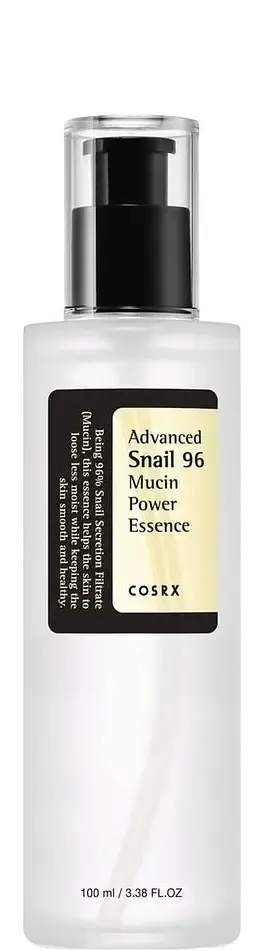
COSRX Advanced Snail 96 Mucin Power Essence
Low risk75/100

Some ingredients carry a low-risk flag. Read the formulation context before deciding.
23 of 23 ingredients rated
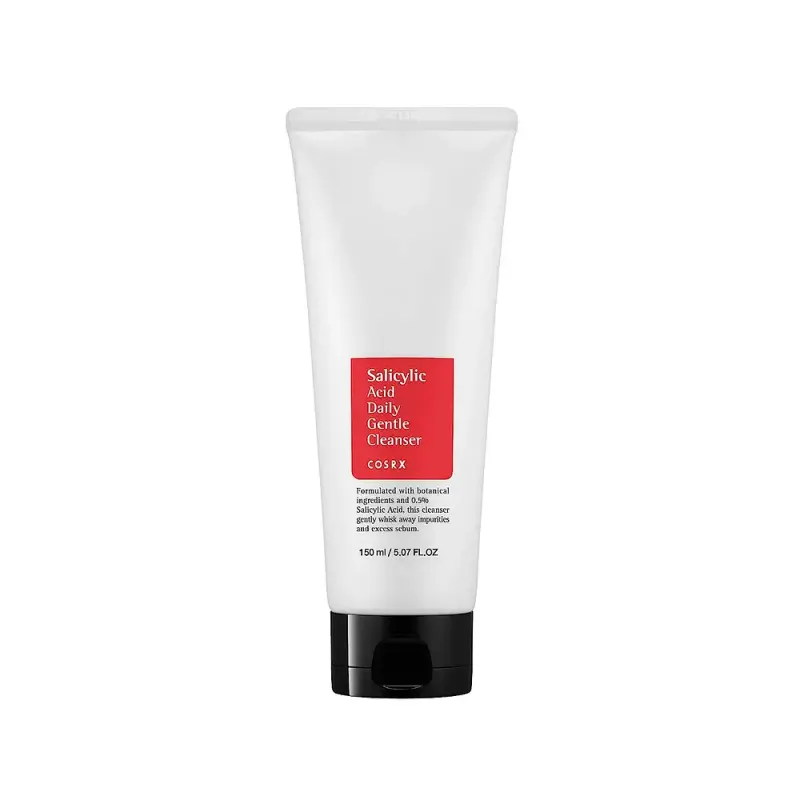
MamaSkin rates the recorded formula for COSRX Salicylic Acid Daily Gentle Cleanser as Low risk (79/100). Review the ingredient context and any manual-review explanation before deciding.
The recorded formula includes 3 ingredient entries with risk flags: Ethyl Hexanediol (Low risk), Salicylic Acid (Low risk), Melaleuca Alternifolia Leaf Oil (Low risk). These are ingredient-level flags; they do not replace the stored product assessment or account for every formulation detail.
23 of 23 ingredient entries on this page have a recorded score, evidence summary and source text. That describes documentation coverage, not proof that the finished formula has been clinically tested during pregnancy.
How we assess productsThe recorded formula, with evidence behind each rating. Unmatched ingredients are marked Not assessed in grey.
Ethyl Hexanediol is an aliphatic alcohol used mainly as a cosmetic solvent. It can be absorbed through skin. Animal studies reported developmental effects after high oral and dermal doses, but those effects occurred at doses that also caused substantial maternal toxicity. CIR concluded that the ingredient is safe as cosmetically used and later reaffirmed that conclusion. MamaSkin nevertheless classifies it as low risk under its precautionary pregnancy-screening policy; this is not a known human pregnancy contraindication at normal cosmetic exposure.
Sources: CIR: Final Report on the Safety Assessment of Ethyl Hexanediol https://cir-reports.cir-safety.org/view-attachment/?id=acd818db-8d74-ec11-8943-0022482f06a6; CIR: Annual Review of Cosmetic Ingredient Safety Assessments 2007-2010 https://journals.sagepub.com/doi/10.1177/1091581811412618; Australian TGA: Final decisions on Ethyl Hexanediol, June 2017 https://www.tga.gov.au/sites/default/files/scheduling-delegates-final-decisions-june-2017.pdf
Salicylic acid is a beta-hydroxy acid (BHA) used for acne, exfoliation and preservation. Common over-the-counter acne strengths are 0.5-2%, including 0.5%, 1% and 2%; the FDA lists this acne-treatment range. Pregnancy guidance distinguishes these topical products from oral salicylates and strong peels. MotherToBaby reports that ACOG allows over-the-counter topical salicylic acid during pregnancy when needed. Only a small amount of topical acne treatment usually reaches the bloodstream through intact skin; exposure can increase with damaged skin, frequent use or treatment of large areas. Direct salicylic-acid-specific pregnancy data remain limited. MamaSkin's Low Risk rating is a dose-and-use precaution, not evidence that ordinary low-strength skincare causes fetal harm or a recommendation to avoid every BHA product. Use as directed on limited areas of intact skin. Discuss strengths above 2%, chemical peels, wart/corn removers, large-area treatment or use under occlusion with your clinician before use during pregnancy. The American Academy of Dermatology specifically advises discussing and limiting higher-strength salicylic acid above 2%. Percentage alone does not establish safety: formulation, area, frequency and skin condition also matter. General cosmetic-use limits are not pregnancy-specific safety thresholds.
Sources: https://mothertobaby.org/fact-sheets/topical-acne-treatments-pregnancy/; https://www.aad.org/public/everyday-care/skin-care-secrets/routine/pregnancy-skin-care; https://www.accessdata.fda.gov/drugsatfda_docs/omuf/monographs/OTC%20Monograph_M006-Topical%20Acne%20drug%20products%20for%20OTC%20Human%20Use%2011.23.2021.pdf; https://health.ec.europa.eu/publications/salicylic-acid-cas-no-69-72-7-ec-no-200-712-3_en; https://www.ncbi.nlm.nih.gov/books/NBK500675/
An exact label variant for tea tree essential oil. The SCCS concluded that tea tree oil is safe only in specific defended adult dermal product types and concentrations, excluded aerosolised and sprayable formats, and identified it as a moderate skin sensitiser. MamaSkin therefore classifies it as low risk because safety is formulation- and route-dependent, not because it is a pregnancy contraindication.
Sources: SCCS/1681/25: Scientific Opinion on Tea Tree Oil, final 30 October 2025 https://health.ec.europa.eu/publications/sccs-scientific-opinion-tea-tree-oil-casec-no-68647-73-4-285-377-1_en
Water (Aqua) is the standard purified water used as a cosmetic solvent. It has no pregnancy-specific risk in normal topical use.
Sources: https://pubchem.ncbi.nlm.nih.gov/compound/Water, https://single-market-economy.ec.europa.eu/sectors/cosmetics/cosmetic-ingredient-database/cosing-glossary-ingredients_en
This naturally occurring fatty acid is used for emolliency, cleansing support or texture. The Cosmetic Ingredient Review concluded that assessed fatty acids are safe in current cosmetic use when formulated to be non-irritating and non-sensitizing; some can increase penetration of other formula ingredients.
Sources: CIR: Safety Assessment of Fatty Acids and Fatty Acid Salts as Used in Cosmetics https://cir-safety.org/supplementaldoc/safety-assessment-fatty-acids-fatty-acid-salts-used-cosmetic
Sodium chloride is used to adjust viscosity and texture in formulations; topical cosmetic use is considered low concern with no known pregnancy or breastfeeding risks.
Sources: CIR; EU/UK Cosmetics Regulation
Mild amphoteric surfactant used in cleansers and shampoos to boost foam and reduce harshness. Reviewed cosmetic safety sources support present cosmetic use, with no pregnancy- or breastfeeding-specific topical signal identified; the main practical caveat is irritation or allergy in some users, sometimes linked to sensitising impurities.
Sources: CIR: Safety Assessment of Cocamidopropyl Betaine and Related Amidopropyl Betaines as Used in Cosmetics; EU CosIng / cosmetics regulatory inventory
CIR concludes Citrus limon fruit oil is safe in described cosmetic practices only when formulated non-irritating/non-sensitizing and, for leave-on products, at no more than 15 ppm 5-MOP. That phototoxicity condition is not a pregnancy-specific hazard; no fetal harm is established for normal compliant topical use.
Sources: https://cir-safety.org/sites/default/files/QRT-Update-Dec2025.pdf
A mild anionic surfactant derived from fatty acids and methyltaurate, used mainly in cleansers and shampoos. Cosmetic safety reviewers concluded that the reviewed taurate surfactants, including sodium methyl cocoyl taurate, are safe in current cosmetic use when formulated to be non-irritating. No pregnancy-specific concern is identified for normal topical exposure.
Sources: CIR: Safety Assessment of Alkyl Taurate Amides and Taurate Salts https://cir-safety.org/sites/default/files/taurat122015FR.pdf
Preservative booster and skin-conditioning agent. Considered safe for cosmetic use with low systemic exposure when used as intended.
Sources: Scientific Committee on Consumer Safety (EU); Cosmetic Ingredient Review (US)
Stearic acid is a fatty acid used to stabilise emulsions and improve texture; it is considered low concern in topical cosmetics with no known pregnancy or breastfeeding risks at typical concentrations.
Sources: CIR; EU/UK Cosmetics Regulation
A PEG-modified castor-oil ingredient used to solubilize and emulsify oils in cosmetic formulas. Cosmetic safety reviewers concluded that PEGylated oils, including PEG-60 Hydrogenated Castor Oil, are safe in current cosmetic use when formulated to be non-irritating. Manufacturing should control residual ethylene oxide and 1,4-dioxane.
Sources: CIR: Safety Assessment of PEGylated Oils, cited in the CIR Quick Reference Table https://www.cir-safety.org/sites/default/files/sq-fix_2.pdf
Nonionic emulsifier and solubilizer used to disperse oils in cosmetic formulas. Reviewed cosmetic safety sources support normal topical use, with no pregnancy- or breastfeeding-specific topical signal identified.
Sources: CIR: Safety Assessment of Polysorbates as Used in Cosmetics; EU CosIng / cosmetics regulatory inventory
Humectant and preservative booster used to support product stability. Low systemic exposure expected from topical cosmetic use.
Sources: Scientific Committee on Consumer Safety (EU); Cosmetic Ingredient Review (US)
Glycerin is a widely used humectant that supports hydration and the skin barrier, with a long safety record and no known pregnancy or breastfeeding concerns in topical cosmetic use.
Sources: CIR; EU/UK Cosmetics Regulation
A strongly alkaline raw material used mainly in small amounts to adjust pH or during soap manufacture. Concentrated potassium hydroxide is corrosive, but that raw-material hazard is not representative of a correctly formulated finished cosmetic. Cosmetic safety reviewers concluded that inorganic hydroxides are safe in current cosmetic uses when products are formulated to be non-irritating, with special handling conditions for depilatories and hair straighteners. No pregnancy-specific concern is identified for normal use of a compliant finished product.
Sources: CIR: Safety Assessment of Inorganic Hydroxides as Used in Cosmetics https://www.cir-safety.org/supplementaldoc/safety-assessment-inorganic-hydroxides-used-cosmetics-0
This naturally occurring fatty acid is used for emolliency, cleansing support or texture. The Cosmetic Ingredient Review concluded that assessed fatty acids are safe in current cosmetic use when formulated to be non-irritating and non-sensitizing; some can increase penetration of other formula ingredients.
Sources: CIR: Safety Assessment of Fatty Acids and Fatty Acid Salts as Used in Cosmetics https://cir-safety.org/supplementaldoc/safety-assessment-fatty-acids-fatty-acid-salts-used-cosmetic
Solvent and humectant commonly used in leave-on products. Not associated with pregnancy-specific concerns at cosmetic exposure levels.
Sources: Cosmetic Ingredient Review (US); Scientific Committee on Consumer Safety (EU)
White willow bark water is the aqueous portion of a steam distillate, rather than a concentrated bark extract. Distillation separates it from the nonvolatile salicin-rich fraction used in willow medicines, although trace aromatic constituents may remain. No pregnancy-specific concern is identified for ordinary unfortified cosmetic use on intact skin, where systemic exposure is expected to be limited. This conclusion does not apply to oral willow medicines or added salicylates.
1,2-Hexanediol is commonly used as a solvent and preservative booster; topical exposure is low and it has no known pregnancy or breastfeeding concerns at cosmetic concentrations, though very sensitive skin may occasionally react.
Sources: CIR; EU/UK Cosmetics Regulation
Disodium EDTA is a chelating agent used to improve formula stability and performance; it is considered low concern in topical cosmetic use, with no known pregnancy or breastfeeding risks at typical concentrations.
Sources: CIR; EU/UK Cosmetics Regulation
A fatty-acid ester used for opacifying, emolliency and texture. Cosmetic safety reviewers concluded that glycol distearate is safe as used; available cosmetic exposure does not identify a pregnancy- or breastfeeding-specific concern.
Sources: CIR: Safety Assessment of Monoalkylglycol Dialkyl Acid Esters https://www.cir-safety.org/sites/default/files/glycol%20esters.pdf; CIR ingredient record: Glycol Distearate https://cir-safety.org/ingredient/glycol-distearate
pH adjuster used in small amounts to maintain product stability. Not associated with pregnancy-specific concerns.
Sources: Scientific Committee on Consumer Safety (EU); European cosmetics regulatory framework
Water, Myristic Acid, Sodium Chloride, Ethyl Hexanediol, Cocamidopropyl Betaine, Citrus Limon Fruit Oil, Sodium Methyl Cocoyl Taurate, Ethylhexylglycerin, Stearic Acid, PEG-60 Hydrogenated Castor Oil, Polysorbate 80, Caprylyl Glycol, Glycerin, Potassium Hydroxide, Salicylic Acid, Lauric Acid, Butylene Glycol, Salix Alba Bark Water, 1,2-Hexanediol, Disodium EDTA, Glycol Distearate, Melaleuca Alternifolia Leaf Oil, Citric Acid
Ingredient ratings refreshed 15 October 2026. Formulas vary by market and can change. Always compare with your packaging.
The recorded formula includes 3 ingredient entries with risk flags: Ethyl Hexanediol (Low risk), Salicylic Acid (Low risk), Melaleuca Alternifolia Leaf Oil (Low risk). These are ingredient-level flags; they do not replace the stored product assessment or account for every formulation detail. The product score is a stored assessment, not a clinical safety guarantee.
23 of 23 ingredient entries on this page have a recorded score, evidence summary and source text. That describes documentation coverage, not proof that the finished formula has been clinically tested during pregnancy.
Only if the ingredient list on your packaging matches the recorded formula shown here. Formulas can differ by market and change over time. Compare the full list, not just the product name; report a mismatch if it differs.
No. This page presents a pregnancy-focused product assessment. Do not infer a breastfeeding conclusion from its score or label; breastfeeding requires a separate assessment of the formula and how it is used.