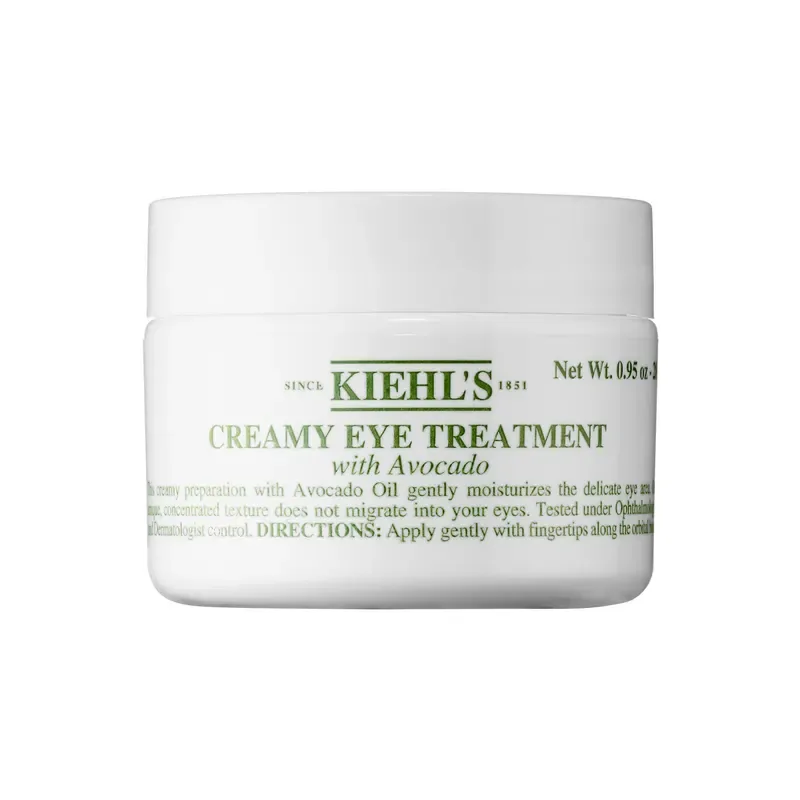
Kiehl's Creamy Eye Treatment with Avocado by Kiehl's
Kiehl's

Kiehl's Creamy Eye Treatment with Avocado

Facial TreatmentsSkin Care

Safety score

Pregnancy-focused assessment

Low Risk76/100
Higher concernLower concern

One or more ingredients have a low-risk flag in MamaSkin's current assessment. Review the notes and your own circumstances.

Formula and assessment check

Ingredient safety review updated 19 May 2026. Product formulas can change, so compare the ingredients shown here with the packaging you have.

Report a formula mismatch

Ingredient breakdown

See how the listed formula falls across MamaSkin's pregnancy-focused risk bands.

25

No known risks

1

Low risk

0

Medium risk

0

High risk

Ingredients

Ingredients with a higher risk flag appear first, followed by the rest of the formula.

PHENOXYETHANOL

Low Risk

Phenoxyethanol is a preservative permitted in EU cosmetics up to 1.0%. The SCCS concluded it is safe for cosmetic use at that level, including when considering higher cosmetic exposure scenarios in infants and young children. Main practical concern is irritation/stinging on very sensitive or compromised skin rather than a pregnancy- or breastfeeding-specific risk.

Sources: EU SCCS; EU Cosmetics Regulation (Annex V preservative limit), SCCS Opinion on Phenoxyethanol (SCCS/1575/16, 2016)

AQUA / WATER

No Known Risks

BUTYROSPERMUM PARKII BUTTER / SHEA BUTTER

No Known Risks
Show all (26)

BUTYLENE GLYCOL

No Known Risks

Solvent and humectant commonly used in leave-on products. Not associated with pregnancy-specific concerns at cosmetic exposure levels.

Sources: Cosmetic Ingredient Review (US); Scientific Committee on Consumer Safety (EU)

TRIDECYL STEARATE

No Known Risks

PEG-30 DIPOLYHYDROXYSTEARATE

No Known Risks

A high-molecular-weight PEG-modified fatty ester used as an emulsifier and pigment dispersant. Absorption of the intact material is expected to be low. No pregnancy-specific hazard signal was identified for normal topical cosmetic use; cosmetic-grade manufacture should control ethylene oxide and 1,4-dioxane residues associated with ethoxylated ingredients.

Sources: European Commission CosIng ingredient inventory; CIR assessments of PEG fatty-acid esters and hydroxystearate-derived emulsifiers; FDA guidance and cosmetic manufacturing controls for ethoxylation impurities.

ISODECYL SALICYLATE

No Known Risks

TRIDECYL TRIMELLITATE

No Known Risks

A high-molecular-weight ester used as an emollient and film-forming texture agent. Cosmetic safety reviewers concluded that trialkyl trimellitates, including tridecyl trimellitate, are safe in current practices when formulated to be non-irritating. Dermal absorption is expected to be limited.

Sources: CIR: Safety Assessment of Trialkyl Trimellitates as Used in Cosmetics https://www.cir-safety.org/sites/default/files/trimel062015TR.pdf

PERSEA GRATISSIMA OIL / AVOCADO OIL

No Known Risks

ISOCETYL STEAROYL STEARATE

No Known Risks

PROPYLENE GLYCOL

No Known Risks

Propylene glycol is a common solvent and humectant with a long history of use; it is not considered a pregnancy or breastfeeding concern in topical cosmetics, though some individuals may experience irritation in leave-on products.

Sources: CIR; EU/UK Cosmetics Regulation

DIPENTAERYTHRITYL HEXACAPRYLATE/HEXACAPRATE

No Known Risks

SORBITAN SESQUIOLEATE

No Known Risks

A sorbitan fatty-acid ester used as an emulsifier and surfactant. Cosmetic safety reviewers concluded that sorbitan esters are safe in current cosmetic practices of use. Sorbitan sesquioleate can occasionally cause contact allergy and has produced reactions in a small proportion of people investigated for dermatitis, so this classification does not mean that sensitive skin cannot react. No pregnancy-specific concern was identified for normal topical cosmetic exposure.

Sources: CIR: Final Report on the Safety Assessment of Sorbitan Fatty Acid Esters https://cir-reports.cir-safety.org/view-attachment?id=76b03823-8e74-ec11-8943-0022482f06a6

MAGNESIUM SULFATE

No Known Risks

Inorganic salt used as a viscosity-control, bulking or stabilizing ingredient in cosmetics. Reviewed cosmetic ingredient references do not identify a pregnancy- or breastfeeding-specific concern for normal topical use.

Sources: CIR cosmetic ingredient safety references for inorganic salts; EU CosIng / cosmetics regulatory inventory

HYDROGENATED CASTOR OIL

No Known Risks

A solid wax-like derivative made by hydrogenating castor oil and used to thicken, stabilise or condition cosmetic formulas. Cosmetic safety reviewers included hydrogenated castor oil in the castor-oil ingredient family and concluded that these ingredients are safe in current cosmetic practices of use and concentration. No pregnancy-specific concern was identified for normal topical cosmetic exposure.

Sources: CIR: Final Safety Assessment of Ricinus communis (Castor) Seed Oil, Hydrogenated Castor Oil and Related Ingredients https://www.cir-safety.org/sites/default/files/Castor%20Oil.pdf; CIR ingredient record https://www.cir-safety.org/ingredient/hydrogenated-castor-oil

SODIUM PCA

No Known Risks

Natural-moisturising-factor humectant that helps bind water in the stratum corneum. Reviewed cosmetic safety sources support normal topical use, with no pregnancy- or breastfeeding-specific topical signal identified in the material reviewed.

Sources: CIR: Safety Assessment of PCA and Its Salts as Used in Cosmetics; EU CosIng / cosmetics regulatory inventory

CHLORPHENESIN

No Known Risks

Preservative used to help protect formulas from microbial growth. Reviewed cosmetic safety sources support present cosmetic use; no pregnancy- or breastfeeding-specific topical concern was identified in the material reviewed, although some users may still notice local irritation or sensitivity.

Sources: CIR: Safety Assessment of Chlorphenesin as Used in Cosmetics; EU CosIng / cosmetics regulatory inventory

HYDROGENATED JOJOBA OIL

No Known Risks

A plant-derived oil or hydrogenated wax used mainly as an emollient and skin-conditioning ingredient. Cosmetic safety reviewers concluded that these named sea buckthorn, tea seed, jojoba and grape seed ingredients are safe in current practices of use and concentration. Plant allergy remains possible.

Sources: CIR: Hippophae Rhamnoides Oil, Camellia Sinensis Seed Oil, Hydrogenated Jojoba Oil and Vitis Vinifera (Grape) Seed Oil conclusions; December 2025 Quick Reference Table https://cir-safety.org/sites/default/files/QRT-Update-Dec2025.pdf

P-ANISIC ACID

No Known Risks

An aromatic acid used for fragrance, pH adjustment and preservative support. No pregnancy-specific concern was identified for the low topical exposure expected from a compliant finished cosmetic. Local irritation remains possible.

Sources: European Commission CosIng ingredient inventory; European Chemicals Agency substance information for p-anisic acid.

TOCOPHERYL ACETATE

No Known Risks

Tocopheryl acetate (vitamin E derivative) is used as an antioxidant and skin-conditioning ingredient; it is considered low concern in topical use with no known pregnancy or breastfeeding risks at cosmetic concentrations.

Sources: CIR; EU/UK Cosmetics Regulation

ISOPROPYL PALMITATE

No Known Risks

This emollient ester improves slip and skin feel. Cosmetic Ingredient Review assessments support use in current cosmetic concentrations when formulated to be non-irritating; topical use is not identified as a pregnancy- or breastfeeding-specific concern. Some alkyl esters can increase penetration of other formula ingredients.

Sources: CIR: Safety Assessment of Alkyl Esters as Used in Cosmetics https://cir-safety.org/supplementaldoc/safety-assessment-alkyl-esters-used-cosmetics

DISODIUM EDTA

No Known Risks

Disodium EDTA is a chelating agent used to improve formula stability and performance; it is considered low concern in topical cosmetic use, with no known pregnancy or breastfeeding risks at typical concentrations.

Sources: CIR; EU/UK Cosmetics Regulation

COPPER PCA

No Known Risks

HELIANTHUS ANNUUS SEED OIL / SUNFLOWER SEED OIL

No Known Risks

CI 40800 / BETA-CAROTENE

No Known Risks

CITRIC ACID

No Known Risks

pH adjuster used in small amounts to maintain product stability. Not associated with pregnancy-specific concerns.

Sources: Scientific Committee on Consumer Safety (EU); European cosmetics regulatory framework

Formulations can change without notice. For the most accurate result, compare this list with your packaging and scan the exact ingredient label in MamaSkin when you repurchase.

How to use this assessment

The risk band is the primary conclusion. The score adds detail within that band and should not be used to compare products as if a one-point difference were clinically meaningful.

MamaSkin provides pregnancy-focused information, not medical advice. Your midwife, GP, pharmacist or dermatologist should take priority when your circumstances differ from typical cosmetic use.

Read the full methodology