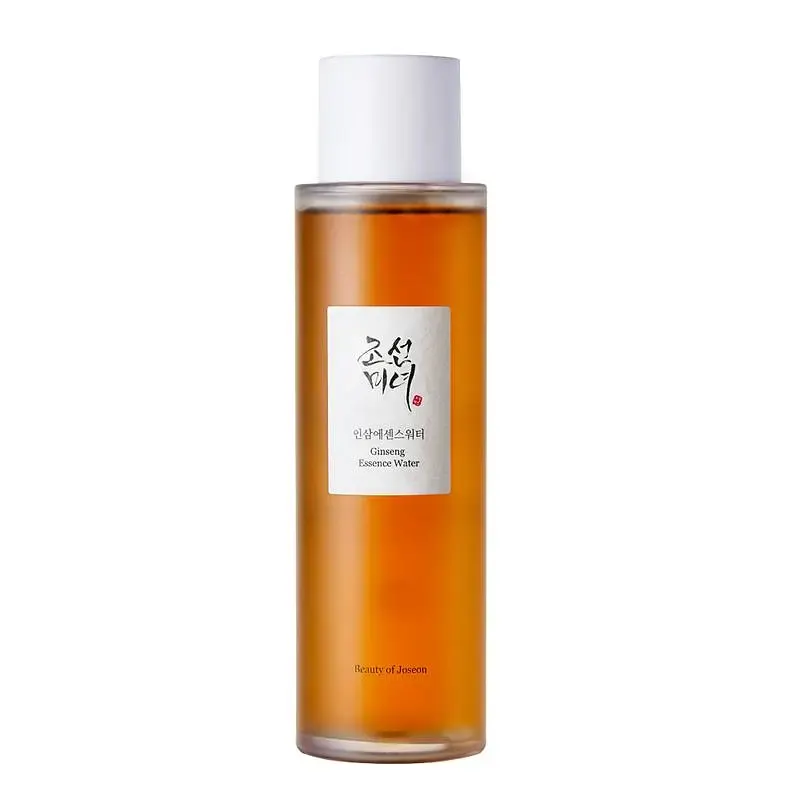
Beauty of Joseon
Beauty of Joseon Ginseng Essence Water
Low risk79/100
Essences
No higher-risk flags in the assessed ingredients. This is a screening result, not a guarantee of pregnancy safety.
7 of 7 ingredients rated
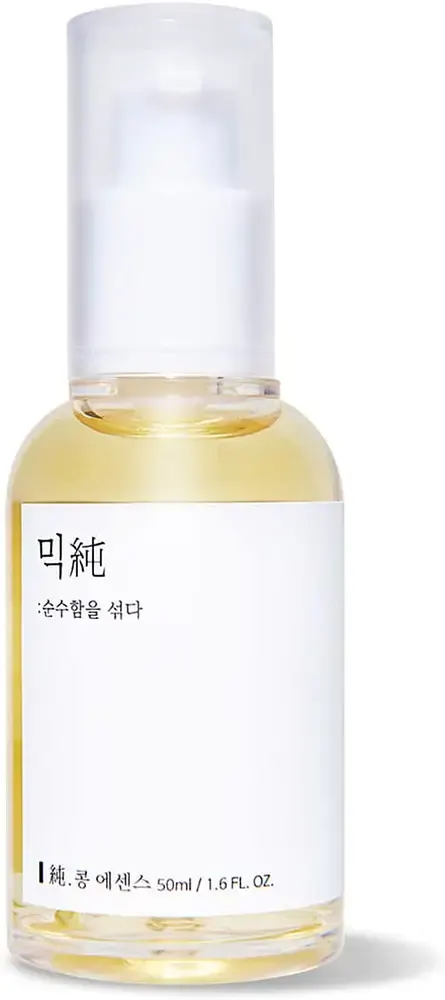
MamaSkin rates the recorded formula for Mixsoon Bean Essence as No known risks (99/100). This screening result is not a guarantee of safety for every pregnancy.
No higher-risk ingredient flags are shown in the assessed entries. Ingredients without a matched rating are marked Not assessed, not No known risks.
7 of 7 ingredient entries on this page have a recorded score, evidence summary and source text. That describes documentation coverage, not proof that the finished formula has been clinically tested during pregnancy.
How we assess productsThe recorded formula, with evidence behind each rating. Unmatched ingredients are marked Not assessed in grey.
Water (Aqua) is the standard purified water used as a cosmetic solvent. It has no pregnancy-specific risk in normal topical use.
Sources: https://pubchem.ncbi.nlm.nih.gov/compound/Water, https://single-market-economy.ec.europa.eu/sectors/cosmetics/cosmetic-ingredient-database/cosing-glossary-ingredients_en
Solvent and humectant used to improve texture and ingredient solubility. Low systemic exposure expected from topical cosmetic use.
Sources: Cosmetic Ingredient Review (US); Scientific Committee on Consumer Safety (EU)
Glycerin is a widely used humectant that supports hydration and the skin barrier, with a long safety record and no known pregnancy or breastfeeding concerns in topical cosmetic use.
Sources: CIR; EU/UK Cosmetics Regulation
A processed bacterial ferment or lysate used for skin conditioning. It is not equivalent to applying an unspecified live culture. Available cosmetic-use information does not identify a pregnancy-specific concern for normal topical exposure.
Sources: CIR bacterial and yeast ferment strategy and safety assessments; European Commission CosIng ingredient inventory.
A fermentation-derived cosmetic ingredient used for skin conditioning, moisturising or formula support. Composition varies with organism, substrate and manufacturing controls. No pregnancy-specific hazard was identified for normal topical cosmetic exposure, and this classification does not cover ingestion.
Sources: CIR materials on yeast-derived cosmetic ingredients and fermentation products; European Commission CosIng ingredient inventory; supplier-independent cosmetic microbiology and fermentation literature.
saccharomyces/barley seed ferment filtrate is a fermentation-derived or microbial lysate cosmetic conditioning material. The assessment applies to the defined non-live cosmetic ingredient rather than live organisms or oral supplements. No pregnancy-specific concern was identified for normal topical use; formulation purity and sensitivity remain relevant.
Sources: CIR assessments of microbial polysaccharides, fermentation-derived and lysate cosmetic ingredients; CIR Quick Reference Table https://www.cir-safety.org/supplementaldoc/quick-reference-table-december-2025
lactobacillus/pear juice ferment filtrate is a non-live fermentation-derived or microbial-lysate cosmetic ingredient. CIR assessments of Lactobacillus and yeast-derived cosmetic materials support use under current formulation practices. No pregnancy-specific concern was identified for normal topical use; this does not assess live organisms or oral supplements.
Sources: CIR Safety Assessment of Lactobacillus Ferment Ingredients https://cir-safety.org/supplementaldoc/safety-assessment-lactobacillus-ferment-ingredients-used-cosmetics; CIR yeast-derived ingredient assessment.
Water, Propanediol, Glycerin, Lactobacillus/Soybean Ferment Extract, Lactobacillus/Punica Granatum Fruit Ferment Extract, Saccharomyces/Barley Seed Ferment Filtrate, Lactobacillus/Pear Juice Ferment Filtrate
Ingredient ratings refreshed 1 October 2026. Formulas vary by market and can change. Always compare with your packaging.
No higher-risk ingredient flags are shown in the assessed entries. Ingredients without a matched rating are marked Not assessed, not No known risks. The product score is a stored assessment, not a clinical safety guarantee.
7 of 7 ingredient entries on this page have a recorded score, evidence summary and source text. That describes documentation coverage, not proof that the finished formula has been clinically tested during pregnancy.
Only if the ingredient list on your packaging matches the recorded formula shown here. Formulas can differ by market and change over time. Compare the full list, not just the product name; report a mismatch if it differs.
No. This page presents a pregnancy-focused product assessment. Do not infer a breastfeeding conclusion from its score or label; breastfeeding requires a separate assessment of the formula and how it is used.