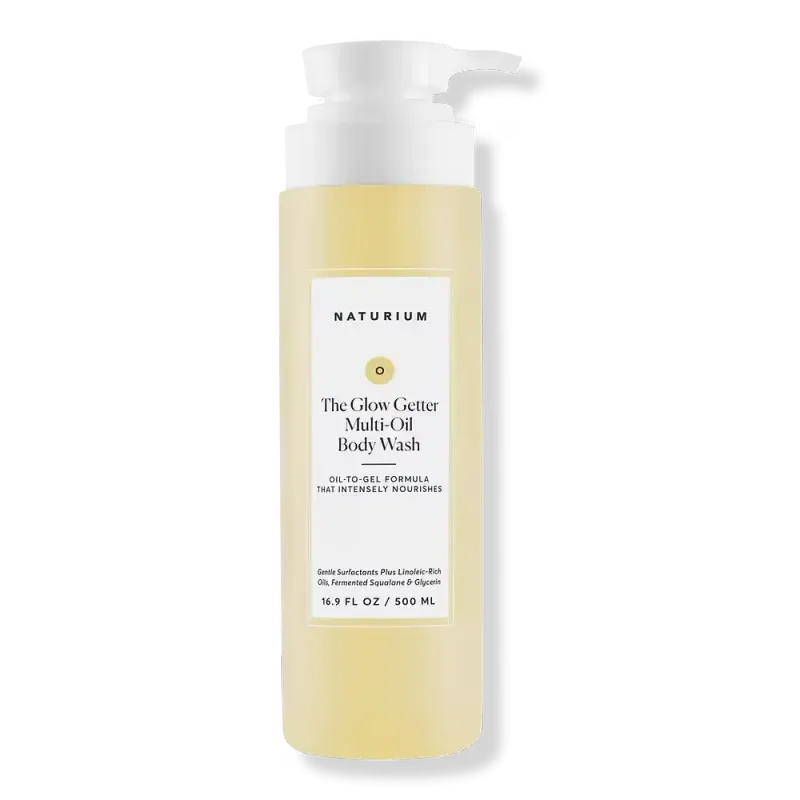
Naturium The Glow Getter Multi-Oil Body Wash by Naturium
Naturium

Naturium The Glow Getter Multi-Oil Body Wash

Body Washescleansers

Safety score

Pregnancy-focused assessment

Low Risk76/100
Higher concernLower concern

One or more ingredients have a low-risk flag in MamaSkin's current assessment. Review the notes and your own circumstances.

Formula and assessment check

Ingredient safety review updated 24 November 2025. Product formulas can change, so compare the ingredients shown here with the packaging you have.

Report a formula mismatch

Ingredient breakdown

See how the listed formula falls across MamaSkin's pregnancy-focused risk bands.

21

No known risks

1

Low risk

0

Medium risk

0

High risk

Ingredients

Ingredients with a higher risk flag appear first, followed by the rest of the formula.

Phenoxyethanol

Low Risk

Phenoxyethanol is a preservative permitted in EU cosmetics up to 1.0%. The SCCS concluded it is safe for cosmetic use at that level, including when considering higher cosmetic exposure scenarios in infants and young children. Main practical concern is irritation/stinging on very sensitive or compromised skin rather than a pregnancy- or breastfeeding-specific risk.

Sources: EU SCCS; EU Cosmetics Regulation (Annex V preservative limit), SCCS Opinion on Phenoxyethanol (SCCS/1575/16, 2016)

Glycerin

No Known Risks

Glycerin is a widely used humectant that supports hydration and the skin barrier, with a long safety record and no known pregnancy or breastfeeding concerns in topical cosmetic use.

Sources: CIR; EU/UK Cosmetics Regulation

Water

No Known Risks
Show all (22)

Cocamidopropyl Betaine

No Known Risks

Mild amphoteric surfactant used in cleansers and shampoos to boost foam and reduce harshness. Reviewed cosmetic safety sources support present cosmetic use, with no pregnancy- or breastfeeding-specific topical signal identified; the main practical caveat is irritation or allergy in some users, sometimes linked to sensitising impurities.

Sources: CIR: Safety Assessment of Cocamidopropyl Betaine and Related Amidopropyl Betaines as Used in Cosmetics; EU CosIng / cosmetics regulatory inventory

Disodium Cocoamphodiacetate

No Known Risks

A mild amphoteric cleansing surfactant. Cosmetic safety reviewers concluded that disodium cocoamphodiacetate is safe as used; the original conclusion was reaffirmed on re-review, while the current group reassessment proposes non-sensitising formulation controls. Impurities may contribute to occasional irritation or allergy.

Sources: CIR: Final Report on Cocoamphoacetate and Related Ingredients, J Am Coll Toxicol 9(2):121-142, 1990; current CIR reassessment and original-report history https://cir-reports.cir-safety.org/view-attachment?id=650ade8c-833f-a428-bb22-fa7740c7229b

Hippophae Rhamnoides Fruit/Seed Oil

No Known Risks

Rosa Canina Fruit Oil

No Known Risks

A plant-derived fatty oil or butter used mainly as an emollient, conditioning ingredient or texture agent. Cosmetic safety reviewers concluded that the assessed plant-derived fatty acid oils are safe in current practices of use and concentration. This conclusion applies to cosmetic-grade fixed oils rather than similarly named volatile essential oils. Seed or food allergy may still matter for a susceptible person.

Sources: CIR: Safety Assessment of Plant-Derived Fatty Acid Oils as Used in Cosmetics https://cir-reports.cir-safety.org/view-attachment/?id=ad62ac6b-8e74-ec11-8943-0022482f06a6

Simmondsia Chinensis Seed Oil

No Known Risks

Plant-derived emollient oil used to soften skin and improve formula feel. Reviewed cosmetic safety sources support current cosmetic use, with no pregnancy- or breastfeeding-specific topical concern identified in the material reviewed.

Sources: CIR: Final Report on the Safety Assessment of Simmondsia Chinensis (Jojoba) Seed Oil and related jojoba-derived ingredients; EU CosIng / cosmetics regulatory inventory

Squalane

No Known Risks

Lightweight emollient used to support the skin barrier. Not associated with pregnancy-specific concerns at cosmetic exposure levels.

Sources: Cosmetic Ingredient Review (US); Scientific Committee on Consumer Safety (EU)

Pyrus Malus Fruit Extract

No Known Risks

An apple fruit extract used mainly for skin conditioning. Cosmetic safety reviewers concluded that Pyrus malus fruit extract and the other supported apple-derived ingredients are safe in current cosmetic practices of use and concentration. The conclusion does not extend to several separately identified root, stem, callus or oil ingredients for which evidence was insufficient. No pregnancy-specific concern was identified for normal topical use of the fruit extract.

Sources: CIR: Safety Assessment of Apple-Derived Ingredients as Used in Cosmetics https://cir-reports.cir-safety.org/view-attachment/?id=6376dcde-b1aa-f075-b67c-6f6773d065ce

Polyquaternium-10

No Known Risks

A large cationic cellulose polymer used to condition hair and improve product texture. Cosmetic safety reviewers concluded that Polyquaternium-10 is safe in current cosmetic use; human testing did not indicate irritation or sensitization at reviewed concentrations. No pregnancy-specific concern is identified for normal topical exposure.

Sources: CIR: Safety Assessment of Polyquaternium-10, cited in the CIR Quick Reference Table https://www.cir-safety.org/sites/default/files/safe-092017posted122017.pdf

Maltodextrin

No Known Risks

Polysaccharide carrier and bulking agent used for texture and delivery support. Reviewed cosmetic safety sources support normal topical use, with no pregnancy- or breastfeeding-specific topical signal identified in the material reviewed.

Sources: CIR: Safety Assessment of Polysaccharide Gums as Used in Cosmetics; EU CosIng / cosmetics regulatory inventory

Sorbitan Oleate Decylglucoside Crosspolymer

No Known Risks

Cocos Nucifera Fruit Extract

No Known Risks

A coconut fruit extract used mainly for skin conditioning. Cosmetic safety reviewers concluded that the supported Cocos nucifera-derived ingredients, including fruit extract, are safe in current practices of use and concentration. This conclusion is ingredient-specific and does not cover coconut shell powder, for which evidence was insufficient.

Sources: CIR: Safety Assessment of Cocos nucifera (Coconut)-Derived Ingredients as Used in Cosmetics https://www.cir-safety.org/sites/default/files/cocosn032021FR.pdf

Vanilla Planifolia Fruit Extract

No Known Risks

A vanilla fruit extract used mainly for skin conditioning and fragrance. Cosmetic safety reviewers concluded that Vanilla planifolia-derived ingredients are safe in current practices when formulated to be non-sensitising. Botanical or fragrance sensitivity remains possible.

Sources: CIR: Vanilla planifolia-derived ingredients conclusion, IJT 44(Suppl. 2), 2025; December 2025 Quick Reference Table https://cir-safety.org/sites/default/files/QRT-Update-Dec2025.pdf

Gardenia Jasminoides Fruit Extract

No Known Risks

Eugenia Caryophyllus Flower Extract

No Known Risks

Prunus Armeniaca Fruit Extract

No Known Risks

Prunus Persica Fruit Extract

No Known Risks

A peach-fruit extract used for skin conditioning. No pregnancy- or breastfeeding-specific hazard was identified for normal topical cosmetic exposure. Direct ingredient-specific pregnancy studies were not identified, so this assessment does not extend to oral supplements or medicinal use.

Sources: European Commission CosIng ingredient inventory; Cosmetic Ingredient Review botanical safety-assessment framework and relevant ingredient-family assessments. No ingredient-specific human pregnancy study of normal topical cosmetic use was identified.

Citric Acid

No Known Risks

pH adjuster used in small amounts to maintain product stability. Not associated with pregnancy-specific concerns.

Sources: Scientific Committee on Consumer Safety (EU); European cosmetics regulatory framework

Ethylhexylglycerin

No Known Risks

Preservative booster and skin-conditioning agent. Considered safe for cosmetic use with low systemic exposure when used as intended.

Sources: Scientific Committee on Consumer Safety (EU); Cosmetic Ingredient Review (US)

Tetrasodium Glutamate Diacetate

No Known Risks

Chelating agent used to bind trace metals and improve formula stability. CIR concluded it is safe as used in cosmetics; normal topical use is not associated with a pregnancy- or breastfeeding-specific topical signal in the material reviewed.

Sources: CIR: Safety Assessment of Tetrasodium Glutamate Diacetate and Beta-Alanine Diacetic Acid as Used in Cosmetics; EU CosIng / cosmetics regulatory inventory

Formulations can change without notice. For the most accurate result, compare this list with your packaging and scan the exact ingredient label in MamaSkin when you repurchase.

How to use this assessment

The risk band is the primary conclusion. The score adds detail within that band and should not be used to compare products as if a one-point difference were clinically meaningful.

MamaSkin provides pregnancy-focused information, not medical advice. Your midwife, GP, pharmacist or dermatologist should take priority when your circumstances differ from typical cosmetic use.

Read the full methodology