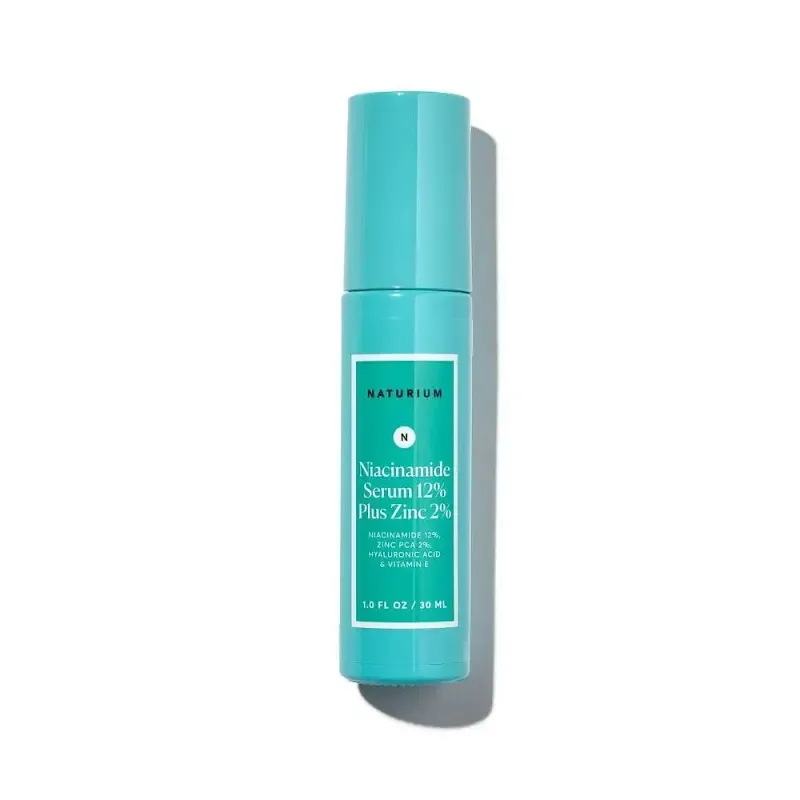
Naturium Niacinamide Serum 12% Plus Zinc 2% by Naturium
Naturium

Naturium Niacinamide Serum 12% Plus Zinc 2%

Serums

Safety score

Pregnancy-focused assessment

Low Risk75/100
Higher concernLower concern

One or more ingredients have a low-risk flag in MamaSkin's current assessment. Review the notes and your own circumstances.

Formula and assessment check

Ingredient safety review updated 23 November 2025. Product formulas can change, so compare the ingredients shown here with the packaging you have.

Report a formula mismatch

Ingredient breakdown

See how the listed formula falls across MamaSkin's pregnancy-focused risk bands.

14

No known risks

2

Low risk

0

Medium risk

0

High risk

Ingredients

Ingredients with a higher risk flag appear first, followed by the rest of the formula.

Phenoxyethanol

Low Risk

Phenoxyethanol is a preservative permitted in EU cosmetics up to 1.0%. The SCCS concluded it is safe for cosmetic use at that level, including when considering higher cosmetic exposure scenarios in infants and young children. Main practical concern is irritation/stinging on very sensitive or compromised skin rather than a pregnancy- or breastfeeding-specific risk.

Sources: EU SCCS; EU Cosmetics Regulation (Annex V preservative limit), SCCS Opinion on Phenoxyethanol (SCCS/1575/16, 2016)

Dimethicone

Low Risk

Dimethicone is a silicone polymer used as a skin protectant and slip/conditioning agent. It is considered inert with minimal dermal absorption; the main practical issues are cosmetic (feel) and occasional irritation in very sensitive users. It is not a pregnancy-specific concern in topical cosmetic use.

Sources: CIR: Safety Assessment of Dimethicone, Methicone, and related ingredients as used in cosmetics (Methicones report; 2019/2022 update); EU CosIng entry for Dimethicone.

Water

No Known Risks
Show all (16)

Niacinamide

No Known Risks

Niacinamide (vitamin B3) is widely used for barrier support and tone/texture benefits, and is generally considered safe in pregnancy and breastfeeding when used topically at cosmetic concentrations.

Sources: CIR; EU/UK Cosmetics Regulation

Propanediol

No Known Risks

Solvent and humectant used to improve texture and ingredient solubility. Low systemic exposure expected from topical cosmetic use.

Sources: Cosmetic Ingredient Review (US); Scientific Committee on Consumer Safety (EU)

Glycerin

No Known Risks

Glycerin is a widely used humectant that supports hydration and the skin barrier, with a long safety record and no known pregnancy or breastfeeding concerns in topical cosmetic use.

Sources: CIR; EU/UK Cosmetics Regulation

Zinc PCA

No Known Risks

A zinc salt of pyrrolidone carboxylic acid used for skin conditioning, oil-control and antimicrobial support. Cosmetic safety reviewers concluded that the assessed zinc salts are safe in current cosmetic practices of use and concentration when formulated to be non-irritating. Zinc is an essential nutrient, but this entry assesses the low topical exposure from a finished cosmetic rather than supplements or medicinal doses. No pregnancy-specific topical concern was identified.

Sources: CIR: Safety Assessment of Zinc Salts as Used in Cosmetics https://www.cir-safety.org/supplementaldoc/safety-assessment-zinc-salts-used-cosmetics-1; CIR 146th Expert Panel Meeting final report record https://www.cir-safety.org/meeting/146th-cir-expert-panel-meeting

Polyacrylate Crosspolymer-11

No Known Risks

Sodium Hyaluronate

No Known Risks

Sodium hyaluronate (hyaluronic acid salt) is used for hydration and cushioning, with very low systemic absorption from topical use and no known pregnancy or breastfeeding concerns at cosmetic concentrations.

Sources: CIR; EU/UK Cosmetics Regulation

Caprylyl Glycol

No Known Risks

Humectant and preservative booster used to support product stability. Low systemic exposure expected from topical cosmetic use.

Sources: Scientific Committee on Consumer Safety (EU); Cosmetic Ingredient Review (US)

Xanthan Gum

No Known Risks

Natural polysaccharide thickener used for stability and texture. Not associated with pregnancy-specific concerns.

Sources: European cosmetics regulatory framework

Potassium Sorbate

No Known Risks

Preservative widely used in foods and cosmetics. Considered safe at regulated concentrations with low systemic exposure from topical use.

Sources: Scientific Committee on Consumer Safety (EU); European cosmetics regulatory framework

Glyceryl Polyacrylate

No Known Risks

A high-molecular-weight polymer used for hydration and formula texture. Cosmetic safety reviewers concluded that glyceryl polyacrylate is safe in current practices. Absorption of the intact polymer is expected to be limited, and residual monomers should be controlled.

Sources: CIR: Glyceryl Polyacrylate final assessment, June 2022; December 2025 Quick Reference Table https://cir-safety.org/sites/default/files/QRT-Update-Dec2025.pdf

Tocopheryl Acetate

No Known Risks

Tocopheryl acetate (vitamin E derivative) is used as an antioxidant and skin-conditioning ingredient; it is considered low concern in topical use with no known pregnancy or breastfeeding risks at cosmetic concentrations.

Sources: CIR; EU/UK Cosmetics Regulation

Hexylene Glycol

No Known Risks

Solvent and humectant used to improve texture and ingredient solubility in topical cosmetics. Reviewed cosmetic ingredient references do not identify a pregnancy- or breastfeeding-specific concern for normal topical use.

Sources: CIR cosmetic ingredient safety references for alkane diols/glycols; EU CosIng / cosmetics regulatory inventory

Citric Acid

No Known Risks

pH adjuster used in small amounts to maintain product stability. Not associated with pregnancy-specific concerns.

Sources: Scientific Committee on Consumer Safety (EU); European cosmetics regulatory framework

Formulations can change without notice. For the most accurate result, compare this list with your packaging and scan the exact ingredient label in MamaSkin when you repurchase.

How to use this assessment

The risk band is the primary conclusion. The score adds detail within that band and should not be used to compare products as if a one-point difference were clinically meaningful.

MamaSkin provides pregnancy-focused information, not medical advice. Your midwife, GP, pharmacist or dermatologist should take priority when your circumstances differ from typical cosmetic use.

Read the full methodology