Palmer's
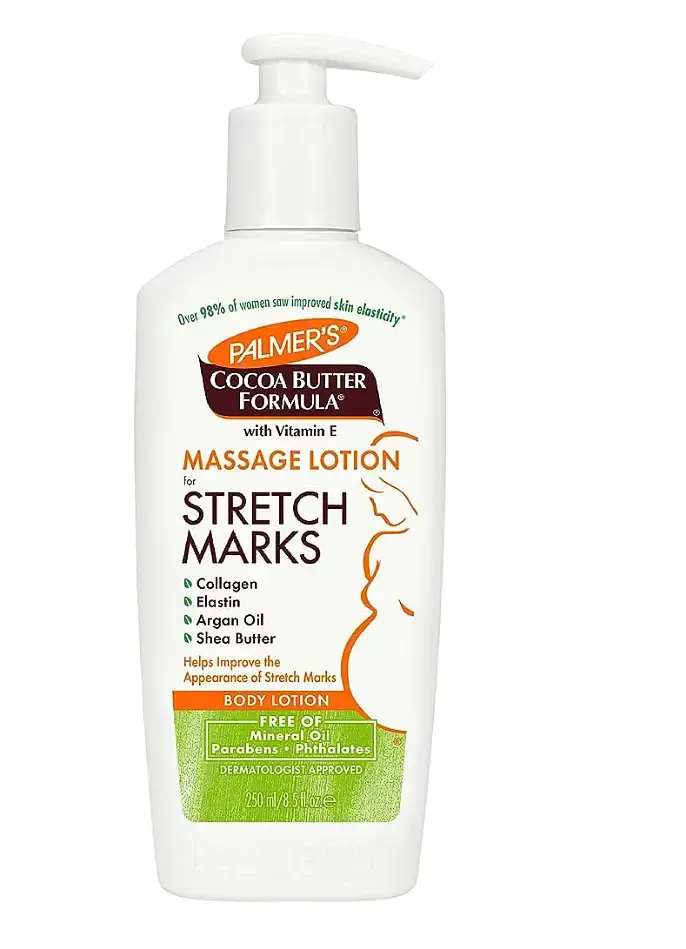
Palmer's Cocoa Butter Massage Lotion for Pregnancy Stretch Marks
Low risk75/100

Body Care
Some ingredients carry a low-risk flag. Read the formulation context before deciding.
15 of 16 ingredients rated1 not assessed
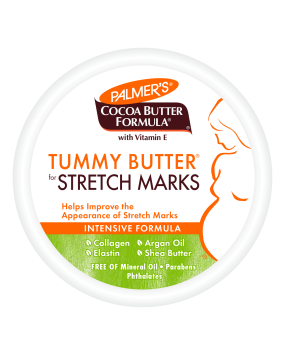
MamaSkin rates the recorded formula for Palmer's Tummy Butter for Stretch Marks as Low risk (75/100). Review the ingredient context and any manual-review explanation before deciding.
The recorded formula includes 2 ingredient entries with risk flags: Dimethicone (Low risk), Fragrance (Parfum) (Low risk). These are ingredient-level flags; they do not replace the stored product assessment or account for every formulation detail.
15 of 16 ingredient entries on this page have a recorded score, evidence summary and source text. 1 entry does not have all of those fields. Unmatched or unrated entries are marked Not assessed in grey; missing evidence does not establish safety.
How we assess productsThe recorded formula, with evidence behind each rating. Unmatched ingredients are marked Not assessed in grey.
An exact label variant for an undisclosed fragrance blend. Fragrance is not usually a pregnancy-specific concern at normal cosmetic levels, but the precise components and concentrations are not fully disclosed, so MamaSkin scores the umbrella term conservatively. People sensitive to fragrance may prefer fragrance-free products.
Sources: European Commission: Fragrance allergens labelling https://single-market-economy.ec.europa.eu/sectors/cosmetics/cosmetic-products-specific-topics/fragrance-allergens-labelling_en; IFRA Standards
Dimethicone is a silicone polymer used as a skin protectant and slip/conditioning agent. It is considered inert with minimal dermal absorption; the main practical issues are cosmetic (feel) and occasional irritation in very sensitive users. It is not a pregnancy-specific concern in topical cosmetic use.
Sources: CIR: Amended Safety Assessment of Dimethicone, Methicone, and Substituted-Methicone Polymers as Used in Cosmetics https://cir-safety.org/supplementaldoc/amended-safety-assessment-dimethicone-methicone-and-substituted-methicone-polymers-2
No matched ingredient rating is available yet. Not assessed does not mean safe or unsafe.
A fruit, seed or food-plant extract used for skin conditioning and antioxidant support. No pregnancy-specific signal was identified for the low topical exposure expected from a finished cosmetic. Direct pregnancy studies are generally unavailable, and botanical allergy remains possible.
Sources: European Commission CosIng ingredient inventory; CIR botanical safety framework and relevant fruit-derived ingredient assessments; peer-reviewed cosmetic and phytochemical literature for the named plants.
A plant-derived fatty oil or butter used mainly as an emollient, conditioning ingredient or texture agent. Cosmetic safety reviewers concluded that the assessed plant-derived fatty acid oils are safe in current practices of use and concentration. This conclusion applies to cosmetic-grade fixed oils rather than similarly named volatile essential oils. Seed or food allergy may still matter for a susceptible person.
Sources: CIR: Safety Assessment of Plant-Derived Fatty Acid Oils as Used in Cosmetics https://cir-reports.cir-safety.org/view-attachment/?id=ad62ac6b-8e74-ec11-8943-0022482f06a6
Highly refined mineral wax used to thicken and stabilise formulas. Cosmetic-grade microcrystalline wax has minimal skin absorption and no known pregnancy-specific concerns in topical use as intended. Concerns raised online typically relate to unrefined mineral oil impurities or dietary exposure, not cosmetic-grade topical use.
Sources: Cosmetic Ingredient Review (CIR) ingredient dossier for Microcrystalline Wax + CIR wax safety assessment materials. ; Petry et al. (2017) dermal penetration review (includes mineral oils/waxes). ; BfR, Highly refined mineral oils in cosmetics (context on refined mineral oil fractions/waxes in cosmetics) (2018).
A plant-derived fixed oil, butter or oil extract used as an emollient. Concerns focus on oxidation, irritation and source allergy; no pregnancy-specific hazard was identified for normal topical exposure.
Sources: CIR Safety Assessment of Plant-Derived Fatty Acid Oils; European Commission CosIng.
Prunus Amygdalus Dulcis (Sweet Almond) Oil is a label variant for sweet almond-derived emollient oil used for skin conditioning and barrier feel. Normal topical cosmetic use has no known pregnancy- or breastfeeding-specific concern; users with almond or nut sensitivities should follow personal tolerance.
Sources: CIR: Safety Assessment of Plant-Derived Fatty Acid Oils as Used in Cosmetics; EU CosIng / cosmetics regulatory inventory
Plant-derived emollient widely used to moisturise skin. Long history of cosmetic use without pregnancy-specific safety concerns.
Sources: Cosmetic Ingredient Review (US); dermatology consensus
Vitamin E antioxidant used to protect oils and support the skin barrier. Not associated with pregnancy-specific concerns at cosmetic exposure.
Sources: Cosmetic Ingredient Review (US); Scientific Committee on Consumer Safety (EU)
Tocopheryl acetate (vitamin E derivative) is used as an antioxidant and skin-conditioning ingredient; it is considered low concern in topical use with no known pregnancy or breastfeeding risks at cosmetic concentrations.
Sources: CIR; EU/UK Cosmetics Regulation
cocoyl hydrolyzed collagen is a protein-, enzyme- or hydrolysate-derived cosmetic conditioning ingredient. Expected systemic exposure from normal topical use is low, and relevant family evidence did not identify a pregnancy-specific concern. Protein allergy and inhalation of loose enzyme or protein powder remain separate considerations.
Sources: CIR Safety Assessment of Animal- and Plant-Derived Amino Acids and Hydrolyzed Proteins https://cir-safety.org/panelbook/safety-assessment-animal-and-plant-derived-amino-acids-and-hydrolyzed-proteins-used-cosmet; European Commission CosIng ingredient inventory.
Argan oil is a plant-derived emollient oil used for skin and hair conditioning. Normal topical cosmetic use has no known pregnancy- or breastfeeding-specific concern; users with plant/nut sensitivities should follow personal tolerance.
Sources: CIR: Safety Assessment of Plant-Derived Fatty Acid Oils as Used in Cosmetics; EU CosIng / cosmetics regulatory inventory
Botanical skin-conditioning ingredient used in soothing and barrier-support formulas. Reviewed cosmetic safety sources support current cosmetic use when formulated to be non-sensitising, with no pregnancy- or breastfeeding-specific topical concern identified in the material reviewed.
Sources: CIR: Safety Assessment of Centella asiatica-derived Ingredients as Used in Cosmetics; EU CosIng / cosmetics regulatory inventory
A plant-derived fatty oil or butter used mainly as an emollient, conditioning ingredient or texture agent. Cosmetic safety reviewers concluded that the assessed plant-derived fatty acid oils are safe in current practices of use and concentration. This conclusion applies to cosmetic-grade fixed oils rather than similarly named volatile essential oils. Seed or food allergy may still matter for a susceptible person.
Sources: CIR: Safety Assessment of Plant-Derived Fatty Acid Oils as Used in Cosmetics https://cir-reports.cir-safety.org/view-attachment/?id=ad62ac6b-8e74-ec11-8943-0022482f06a6
xanthophylls is a cosmetic formulation or conditioning ingredient. Available identity, use and related safety evidence did not identify a pregnancy-specific concern for normal topical cosmetic exposure. This classification does not remove ordinary irritation or sensitivity precautions.
Sources: CIR ingredient and related-family assessments; European Commission CosIng; ECHA substance information where applicable
Theobroma Cacao (Cocoa) Extract, Helianthus Annuus (Sunflower) Seed Oil, Microcrystalline Wax (Cera Microcristallina), Theobroma Cacao (Cocoa) Seed Butter, Prunus Amygdalus Dulcis (Sweet Almond) Oil, Dimethicone, Butyrospermum Parkii (Shea) Butter, Tocopherol (Natural Vitamin E), Tocopheryl Acetate, Cocoyl Hydrolyzed Collagen, Cocoyl Hydrolyzed Elastin, Argania Spinosa Kernel Oil, Centella Asiatica Extract, Carthamus Tinctorius (Safflower) Seed Oil, Xanthophylls, Fragrance (Parfum)
Ingredient ratings refreshed 1 October 2026. Formulas vary by market and can change. Always compare with your packaging.
The recorded formula includes 2 ingredient entries with risk flags: Dimethicone (Low risk), Fragrance (Parfum) (Low risk). These are ingredient-level flags; they do not replace the stored product assessment or account for every formulation detail. Incomplete ingredient documentation does not establish safety; see the coverage answer and grey entries below.
15 of 16 ingredient entries on this page have a recorded score, evidence summary and source text. 1 entry does not have all of those fields. Unmatched or unrated entries are marked Not assessed in grey; missing evidence does not establish safety.
Only if the ingredient list on your packaging matches the recorded formula shown here. Formulas can differ by market and change over time. Compare the full list, not just the product name; report a mismatch if it differs.
No. This page presents a pregnancy-focused product assessment. Do not infer a breastfeeding conclusion from its score or label; breastfeeding requires a separate assessment of the formula and how it is used.