Palmer's
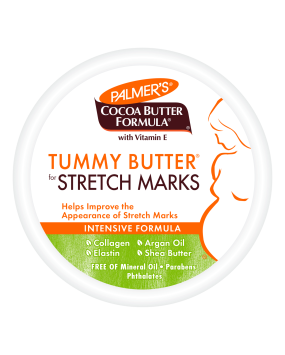
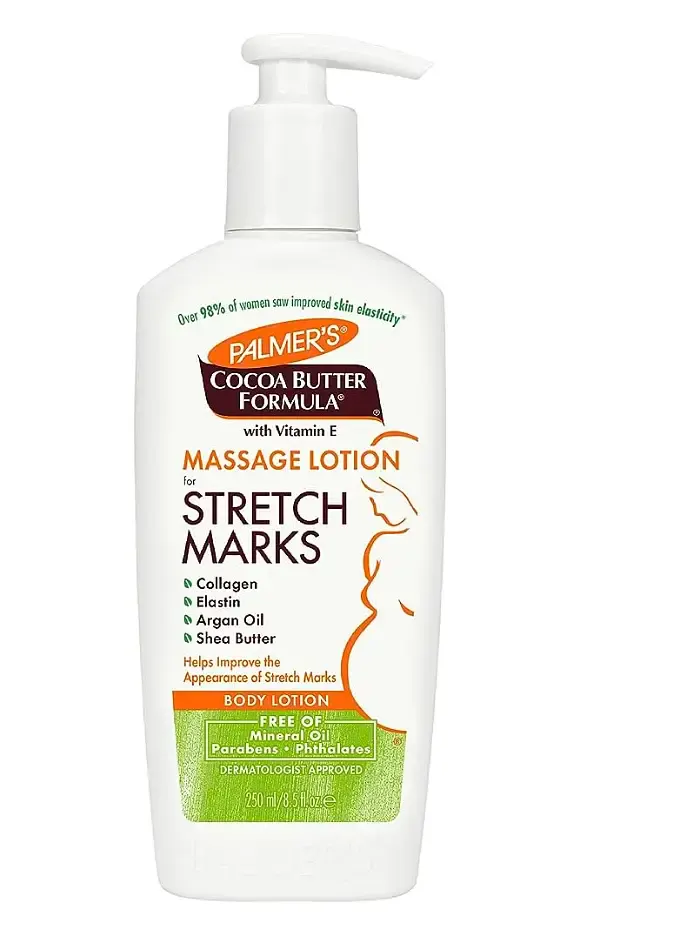
Palmer's Tummy Butter for Stretch Marks
Low risk75/100
Body Lotions
Some ingredients carry a low-risk flag. Read the formulation context before deciding.
44 of 45 ingredients rated1 not assessed
MamaSkin rates the recorded formula for Palmer's Cocoa Butter Massage Lotion for Pregnancy Stretch Marks as Low risk (75/100). Review the ingredient context and any manual-review explanation before deciding.
The recorded formula includes 3 ingredient entries with risk flags: Dimethicone (Low risk), Polygonum Cuspidatum Root Extract (Low risk), Parfum (Low risk). These are ingredient-level flags; they do not replace the stored product assessment or account for every formulation detail.
44 of 45 ingredient entries on this page have a recorded score, evidence summary and source text. 1 entry does not have all of those fields. Unmatched or unrated entries are marked Not assessed in grey; missing evidence does not establish safety.
How we assess productsThe recorded formula, with evidence behind each rating. Unmatched ingredients are marked Not assessed in grey.
Umbrella term for an undisclosed fragrance blend. It’s not usually a pregnancy-specific concern at normal cosmetic use levels, but the exact components and concentrations aren’t fully disclosed on the label, so we score it more conservatively. If you prefer maximum transparency (or you’re sensitive to fragrance compounds), choose fragrance-free/unscented products.
Sources: SCCS: Fragrance allergens in cosmetic products https://health.ec.europa.eu/latest-updates/sccs-new-opinion-fragrance-allergens-cosmetic-products-2012-07-31_en
Dimethicone is a silicone polymer used as a skin protectant and slip/conditioning agent. It is considered inert with minimal dermal absorption; the main practical issues are cosmetic (feel) and occasional irritation in very sensitive users. It is not a pregnancy-specific concern in topical cosmetic use.
Sources: CIR: Amended Safety Assessment of Dimethicone, Methicone, and Substituted-Methicone Polymers as Used in Cosmetics https://cir-safety.org/supplementaldoc/amended-safety-assessment-dimethicone-methicone-and-substituted-methicone-polymers-2
Polygonum cuspidatum root extract, also called Japanese knotweed root extract, is a botanical source of resveratrol, polydatin and related polyphenols. Extract composition and cosmetic concentration vary, and normal topical exposure is expected to be much lower than high-dose oral supplementation. MamaSkin applies a precautionary Low Risk classification for consistency with its existing topical resveratrol policy, not because cosmetic use is a known pregnancy contraindication.
Sources: PubMed: Polygonum cuspidatum root contains resveratrol, polydatin and emodin https://pubmed.ncbi.nlm.nih.gov/23075087/; PubMed: Polygonum cuspidatum as a concentrated resveratrol source https://pubmed.ncbi.nlm.nih.gov/29403824/; PubMed: cautionary pregnancy findings from high-dose oral resveratrol in nonhuman primates https://pubmed.ncbi.nlm.nih.gov/24563374/; PubMed: topical resveratrol delivery and skin disposition https://pubmed.ncbi.nlm.nih.gov/28389713/; existing MamaSkin resveratrol policy.
No matched ingredient rating is available yet. Not assessed does not mean safe or unsafe.
Water (Aqua) is the standard purified water used as a cosmetic solvent. It has no pregnancy-specific risk in normal topical use.
Sources: https://pubchem.ncbi.nlm.nih.gov/compound/Water, https://single-market-economy.ec.europa.eu/sectors/cosmetics/cosmetic-ingredient-database/cosing-glossary-ingredients_en
Glycerin is a widely used humectant that supports hydration and the skin barrier, with a long safety record and no known pregnancy or breastfeeding concerns in topical cosmetic use.
Sources: CIR; EU/UK Cosmetics Regulation
A fruit, seed or food-plant extract used for skin conditioning and antioxidant support. No pregnancy-specific signal was identified for the low topical exposure expected from a finished cosmetic. Direct pregnancy studies are generally unavailable, and botanical allergy remains possible.
Sources: European Commission CosIng ingredient inventory; CIR botanical safety framework and relevant fruit-derived ingredient assessments; peer-reviewed cosmetic and phytochemical literature for the named plants.
Emulsifier and emollient used to stabilise creams and lotions. Not associated with pregnancy-specific concerns at cosmetic exposure.
Sources: Cosmetic Ingredient Review (US); Scientific Committee on Consumer Safety (EU)
Sweet almond-derived emollient oil used for skin conditioning and barrier feel. Normal topical cosmetic use has no known pregnancy- or breastfeeding-specific concern; users with almond or nut sensitivities should follow personal tolerance.
Sources: CIR: Safety Assessment of Plant-Derived Fatty Acid Oils as Used in Cosmetics; EU CosIng / cosmetics regulatory inventory
Highly refined petrolatum (petroleum jelly) is a skin protectant/occlusive with minimal dermal penetration; safety depends on refining/PAH impurity controls and cosmetic/medical grades meet established standards.
Sources: USP White Petrolatum monograph (2021); Petry et al., Food and Chemical Toxicology (2017); PubMed (dermatology review)
Fatty alcohol used to improve texture and skin feel. Considered safe for cosmetic use without pregnancy-specific concerns.
Sources: Cosmetic Ingredient Review (US); Scientific Committee on Consumer Safety (EU)
Propylene glycol is a common solvent and humectant with a long history of use; it is not considered a pregnancy or breastfeeding concern in topical cosmetics, though some individuals may experience irritation in leave-on products.
Sources: CIR; EU/UK Cosmetics Regulation
This plant-derived fatty oil or butter is used as an emollient and skin-conditioning ingredient. The Cosmetic Ingredient Review concluded that assessed plant-derived fatty acid oils are safe as used in cosmetics; individual plant allergy and ingredient purity remain practical considerations.
Sources: CIR: Safety Assessment of Plant-Derived Fatty Acid Oils https://cir-reports.cir-safety.org/view-attachment/?id=ad62ac6b-8e74-ec11-8943-0022482f06a6
A plant-derived fatty oil or butter used mainly as an emollient, conditioning ingredient or texture agent. Cosmetic safety reviewers concluded that the assessed plant-derived fatty acid oils are safe in current practices of use and concentration. This conclusion applies to cosmetic-grade fixed oils rather than similarly named volatile essential oils. Seed or food allergy may still matter for a susceptible person.
Sources: CIR: Safety Assessment of Plant-Derived Fatty Acid Oils as Used in Cosmetics https://cir-reports.cir-safety.org/view-attachment/?id=ad62ac6b-8e74-ec11-8943-0022482f06a6
Coconut-derived emollient oil used to soften skin and support barrier feel. Normal topical cosmetic use has no known pregnancy- or breastfeeding-specific concern; very acne-prone or coconut-allergic users may prefer to avoid it for personal tolerance reasons.
Sources: CIR: Safety Assessment of Plant-Derived Fatty Acid Oils as Used in Cosmetics; EU CosIng / cosmetics regulatory inventory
Butyrospermum parkii (shea) butter is an emollient/occlusive that supports the skin barrier; topical use is considered low concern with no known pregnancy or breastfeeding risks.
Sources: CIR; EU/UK Cosmetics Regulation
Vitamin E antioxidant used to protect oils and support the skin barrier. Not associated with pregnancy-specific concerns at cosmetic exposure.
Sources: Cosmetic Ingredient Review (US); Scientific Committee on Consumer Safety (EU)
Helianthus annuus (sunflower) seed oil is a common emollient rich in fatty acids and is generally well tolerated, with no known pregnancy or breastfeeding concerns in topical cosmetic use.
Sources: CIR; EU/UK Cosmetics Regulation
A collagen preparation used for skin and hair conditioning. Cosmetic safety reviewers concluded that soluble collagen and related connective-tissue proteins are safe in current practices, subject to source and impurity controls that exclude prohibited cattle materials. Protein sensitivity remains possible in susceptible people.
Sources: CIR: Safety Assessment of Skin and Connective Tissue-Derived Proteins and Peptides https://cir-safety.org/sites/default/files/tsupep092017final.pdf
A structural protein or hydrolysed peptide used for skin or hair conditioning. Cosmetic safety reviewers concluded that the assessed skin and connective-tissue-derived proteins are safe in current practices, subject to appropriate animal-source and impurity controls. Protein sensitivity remains possible.
Sources: CIR: Safety Assessment of Skin and Connective Tissue-Derived Proteins and Peptides as Used in Cosmetics https://www.cir-safety.org/sites/default/files/tsupep092017final.pdf
Argan oil is a plant-derived emollient oil used for skin and hair conditioning. Normal topical cosmetic use has no known pregnancy- or breastfeeding-specific concern; users with plant/nut sensitivities should follow personal tolerance.
Sources: CIR: Safety Assessment of Plant-Derived Fatty Acid Oils as Used in Cosmetics; EU CosIng / cosmetics regulatory inventory
Botanical skin-conditioning ingredient used in soothing and barrier-support formulas. Reviewed cosmetic safety sources support current cosmetic use when formulated to be non-sensitising, with no pregnancy- or breastfeeding-specific topical concern identified in the material reviewed.
Sources: CIR: Safety Assessment of Centella asiatica-derived Ingredients as Used in Cosmetics; EU CosIng / cosmetics regulatory inventory
A botanical extract, plant water or plant juice used for conditioning, soothing or antioxidant support. Direct pregnancy studies of this exact cosmetic material were not identified, but no reproductive or developmental hazard was identified for normal topical exposure. Oral herbal or medicinal use is outside this classification.
Sources: European Commission CosIng ingredient inventory; CIR botanical safety framework and relevant plant-derived ingredient assessments; no ingredient-specific human pregnancy study of normal topical cosmetic use was identified.
For ordinary topical cosmetic use, no pregnancy-specific harm has been established for boswellia serrata extract. Nonvolatile/generic frankincense extract; medicinal uncertainty is route-dependent. NCCIH considers topical frankincense possibly safe but lacks pregnancy/lactation evidence; generic extract part and concentration remain unspecified. Direct human gestational studies and finished-product constituent levels are limited; oral, medicinal, and concentrated preparations are not covered.
The sodium salt of ascorbic acid, used as an antioxidant and skin-conditioning ingredient. CIR concluded that Sodium Ascorbate is safe as used, and the assessed reproductive and developmental studies did not identify a concern relevant to normal cosmetic exposure. No pregnancy-specific topical contraindication was identified.
Sources: CIR: Safety Assessment of Ascorbic Acid and Ascorbates as Used in Cosmetics https://www.cir-safety.org/sites/default/files/Ascorbic%20Acid.pdf
Preservative widely used in foods and cosmetics. Considered safe at regulated concentrations with low systemic exposure from topical use.
Sources: Scientific Committee on Consumer Safety (EU); European cosmetics regulatory framework
Hydroxyacetophenone is used as an antioxidant and preservative-support ingredient; it is generally considered low concern in topical cosmetic use with no known pregnancy or breastfeeding risks at typical concentrations.
Sources: CIR; EU/UK Cosmetics Regulation
1,2-Hexanediol is commonly used as a solvent and preservative booster; topical exposure is low and it has no known pregnancy or breastfeeding concerns at cosmetic concentrations, though very sensitive skin may occasionally react.
Sources: CIR; EU/UK Cosmetics Regulation
Humectant and preservative booster used to support product stability. Low systemic exposure expected from topical cosmetic use.
Sources: Scientific Committee on Consumer Safety (EU); Cosmetic Ingredient Review (US)
xanthophylls is a cosmetic formulation or conditioning ingredient. Available identity, use and related safety evidence did not identify a pregnancy-specific concern for normal topical cosmetic exposure. This classification does not remove ordinary irritation or sensitivity precautions.
Sources: CIR ingredient and related-family assessments; European Commission CosIng; ECHA substance information where applicable
Corn starch, a plant-derived polysaccharide used to absorb moisture, reduce greasiness and improve texture. Cosmetic safety reviewers concluded that ingredients derived from Zea mays, including corn starch, are safe in current cosmetic use. No pregnancy-specific concern is identified for normal topical exposure; avoid deliberately inhaling loose powder.
Sources: CIR ingredient review: Zea mays (Corn) Starch https://www.cir-safety.org/ingredient/zea-mays-corn-starch
Simple sugar used as a humectant and skin-conditioning support ingredient. Reviewed cosmetic ingredient references do not identify a pregnancy- or breastfeeding-specific concern for normal topical cosmetic use.
Sources: CIR: Safety Assessment of Monosaccharides, Disaccharides, and Related Ingredients as Used in Cosmetics; EU CosIng / cosmetics regulatory inventory
A filtered radish-root fermentation product used mainly for skin conditioning and formulation support. Cosmetic safety reviewers concluded that the reviewed radish-root-derived ingredients, including Leuconostoc/Radish Root Ferment Filtrate, are safe in current cosmetic use when formulated to be non-irritating. Testing at cosmetic-relevant concentrations did not identify irritation, sensitization, phototoxicity or ocular irritation concerns.
Sources: CIR: Safety Assessment of Radish Root-Derived Ingredients https://cir-safety.org/sites/default/files/FR_RadishRoot_062022.pdf
Cellulose-derived thickener used to build viscosity and improve texture. Reviewed cosmetic safety sources support normal topical use, with no pregnancy- or breastfeeding-specific topical signal identified in the material reviewed.
Sources: CIR Quick Reference Table / ingredient status (Hydroxyethylcellulose, Final Report 03/2009); EU CosIng / cosmetics regulatory inventory
A volatile solvent used to improve drying and dissolve other ingredients. Cosmetic safety reviewers concluded that isopropyl alcohol is safe in current cosmetic practices. The main practical concern is local dryness, stinging or barrier irritation rather than a pregnancy-specific hazard.
Sources: CIR: Safety Assessment of Acetic Acid and Related Simple Alcohols and Esters, IJT 31(Suppl. 1), 2012; December 2025 Quick Reference Table https://cir-safety.org/sites/default/files/QRT-Update-Dec2025.pdf
PEG-8 stearate is a polyethylene-glycol ester of stearic acid. CIR lists this exact ingredient as safe in current cosmetic use; no pregnancy-specific hazard was identified for ordinary topical exposure. Direct human pregnancy studies of this exact ingredient were not identified; the rating applies to normal topical cosmetic use.
Sources: https://cir-safety.org/sites/default/files/QRT-Update-Dec2025.pdf
For ordinary, correctly formulated topical cosmetic use, no pregnancy-specific harm has been identified for ethyl lauroyl arginate hcl. Ethyl lauroyl arginate is assessed only within the cosmetic product categories and concentrations accepted by SCCS; other routes are not covered. Direct pregnancy studies of this exact material are limited; this assessment does not cover ingestion, medicinal-strength use, damaged skin, or aerosol exposure.
A quaternary ammonium conditioning and antistatic ingredient used mainly in hair products. Cosmetic safety reviewers concluded that behentrimonium methosulfate is safe in current practices when formulated to be non-irritating. Concentrated raw material can irritate, but no pregnancy-specific concern was identified for normal use of a finished cosmetic.
Sources: CIR: December 2025 Quick Reference Table, Behentrimonium Methosulfate conclusion, IJT 31(Suppl. 3), 2012 https://cir-safety.org/sites/default/files/QRT-Update-Dec2025.pdf
Solvent and humectant commonly used in leave-on products. Not associated with pregnancy-specific concerns at cosmetic exposure levels.
Sources: Cosmetic Ingredient Review (US); Scientific Committee on Consumer Safety (EU)
A colour additive used in cosmetics. FDA lists caramel and beta-carotene as permitted cosmetic colour additives, including for eye-area and general cosmetic use, subject to applicable identity, purity and manufacturing requirements. No pregnancy-specific concern was identified from normal topical cosmetic exposure.
Sources: FDA: Color Additives Permitted for Use in Cosmetics https://www.fda.gov/cosmetics/cosmetic-ingredient-names/color-additives-permitted-use-cosmetics; 21 CFR Part 73.
This cellulose or modified-cellulose polymer is used as a thickener, film former or stabilizer. Cosmetic Ingredient Review data indicate that cellulose polymers do not appreciably penetrate skin and are safe in current cosmetic use, with at most minimal irritation reported.
Sources: CIR: Amended Safety Assessment of Cellulose and Related Polymers as Used in Cosmetics https://cir-reports.cir-safety.org/view-attachment/?id=2e65c18f-8c74-ec11-8943-0022482f06a6
A small organic acid, salt or ester used as a solvent, pH adjuster or formula aid. Cosmetic safety reviewers concluded that acetic acid and the assessed related simple alcohols and esters are safe in current practices.
Sources: CIR: Acetic Acid and related simple alcohols and esters, IJT 31(Suppl. 1), 2012; December 2025 Quick Reference Table https://cir-safety.org/sites/default/files/QRT-Update-Dec2025.pdf
Fatty alcohol used as an emollient and stabiliser. Not associated with pregnancy-specific concerns at cosmetic exposure.
Sources: Cosmetic Ingredient Review (US); Scientific Committee on Consumer Safety (EU)
A long-chain fatty alcohol used as an emollient, thickener and stabiliser. This is not the same concern profile as volatile drying alcohols; cosmetic safety reviewers concluded that myristyl and related fatty alcohols are safe in current practices. Local irritation is uncommon but possible.
Sources: CIR: Final Report on the Safety Assessment of Cetearyl Alcohol, Cetyl Alcohol, Isostearyl Alcohol, Myristyl Alcohol and Behenyl Alcohol; December 2025 Quick Reference Table https://cir-safety.org/sites/default/files/QRT-Update-Dec2025.pdf
A long-chain fatty alcohol or fatty-alcohol blend used as an emollient, thickener or stabiliser. These are not volatile drying alcohols. CIR safety assessments support use of lauryl, oleyl and related fatty alcohols in current cosmetic practices, and no pregnancy-specific hazard signal was identified for normal topical exposure.
Sources: CIR: Safety Assessment of Fatty Alcohols as Used in Cosmetics; CIR December 2025 Quick Reference Table https://cir-safety.org/sites/default/files/QRT-Update-Dec2025.pdf.
Water, Glycerin, Theobroma Cacao Extract, Glyceryl Stearate, Prunus Amygdalus Dulcis Oil, Petrolatum, Cetyl Alcohol, Propylene Glycol, Theobroma Cacao Seed Butter, Elaeis Guineensis Oil, Cocos Nucifera Oil, Dimethicone, Butyrospermum Parkii Butter, Tocopherol, Helianthus Annuus Seed Oil, Soluble Collagen, Hydrolyzed Elastin, Argania Spinosa Kernel Oil, Centella Asiatica Extract, Betula Alba Bark Extract, Boswellia Serrata Extract, Polygonum Cuspidatum Root Extract, Sodium Ascorbate, Acetylarginyltryptophyl Diphenylglycine, Sodium Benzoate, Hydroxyacetophenone, 1,2-Hexanediol, Caprylyl Glycol, Xanthophylls, Zea Mays Starch, Glucose, Leuconostoc/Radish Root Ferment Filtrate, Hydroxyethylcellulose, Isopropyl Alcohol, PEG-8 Stearate, Ethyl Lauroyl Arginate Hcl, Parfum, Behentrimonium Methosulfate, Butylene Glycol, Caramel, Cellulose, Sodium Acetate, Stearyl Alcohol, Myristyl Alcohol, Lauryl Alcohol
Ingredient ratings refreshed 1 October 2026. Formulas vary by market and can change. Always compare with your packaging.
The recorded formula includes 3 ingredient entries with risk flags: Dimethicone (Low risk), Polygonum Cuspidatum Root Extract (Low risk), Parfum (Low risk). These are ingredient-level flags; they do not replace the stored product assessment or account for every formulation detail. Incomplete ingredient documentation does not establish safety; see the coverage answer and grey entries below.
44 of 45 ingredient entries on this page have a recorded score, evidence summary and source text. 1 entry does not have all of those fields. Unmatched or unrated entries are marked Not assessed in grey; missing evidence does not establish safety.
Only if the ingredient list on your packaging matches the recorded formula shown here. Formulas can differ by market and change over time. Compare the full list, not just the product name; report a mismatch if it differs.
No. This page presents a pregnancy-focused product assessment. Do not infer a breastfeeding conclusion from its score or label; breastfeeding requires a separate assessment of the formula and how it is used.