PURITO
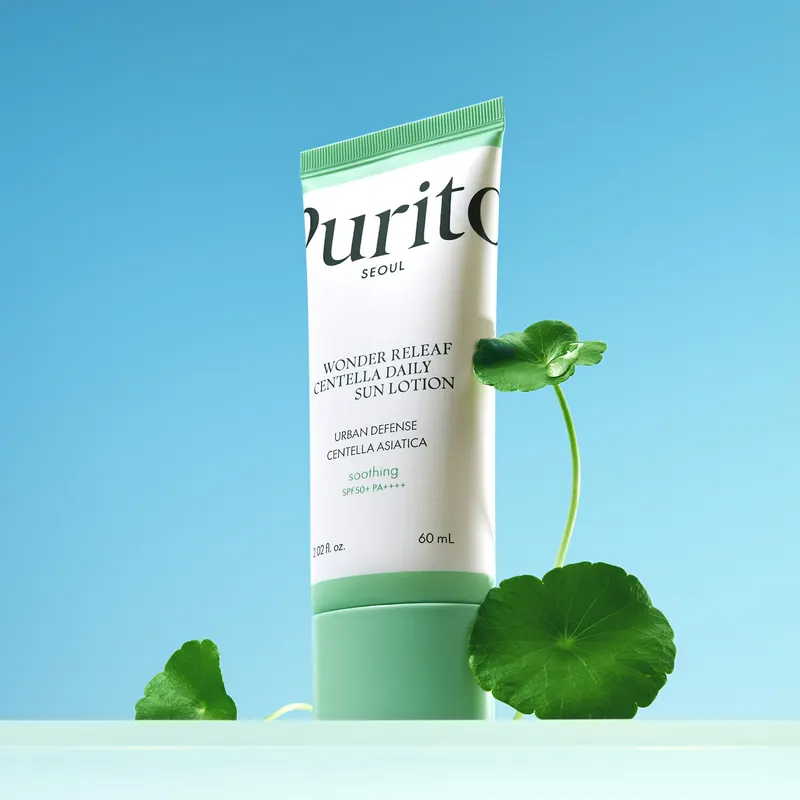
PURITO Seoul Wonder Releaf Centella Daily Sun Lotion SPF50+ PA++++
Low risk79/100

No higher-risk flags in the assessed ingredients. This is a screening result, not a guarantee of pregnancy safety.
38 of 38 ingredients rated
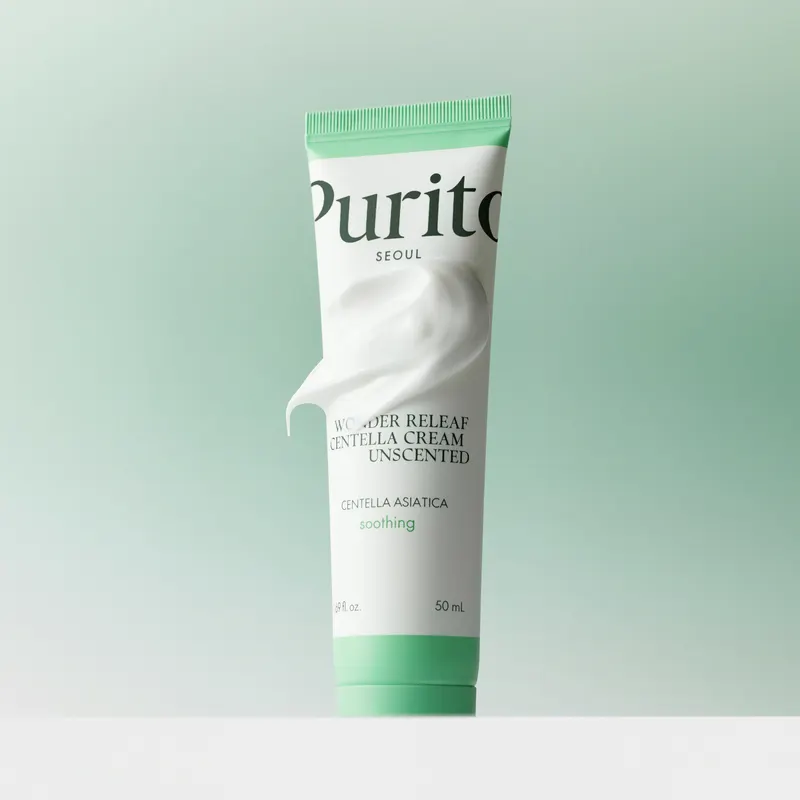
MamaSkin rates the recorded formula for PURITO Seoul Wonder Releaf Centella Cream Unscented as No known risks (99/100). This screening result is not a guarantee of safety for every pregnancy.
No higher-risk ingredient flags are shown in the assessed entries. Ingredients without a matched rating are marked Not assessed, not No known risks.
38 of 38 ingredient entries on this page have a recorded score, evidence summary and source text. That describes documentation coverage, not proof that the finished formula has been clinically tested during pregnancy.
How we assess productsThe recorded formula, with evidence behind each rating. Unmatched ingredients are marked Not assessed in grey.
Water (Aqua) is the standard purified water used as a cosmetic solvent. It has no pregnancy-specific risk in normal topical use.
Sources: https://pubchem.ncbi.nlm.nih.gov/compound/Water, https://single-market-economy.ec.europa.eu/sectors/cosmetics/cosmetic-ingredient-database/cosing-glossary-ingredients_en
Common emollient derived from fatty acids and glycerin. Used to soften skin and improve texture without pregnancy-specific concerns.
Sources: Cosmetic Ingredient Review (US); Scientific Committee on Consumer Safety (EU)
This plant-derived fatty oil or butter is used as an emollient and skin-conditioning ingredient. The Cosmetic Ingredient Review concluded that assessed plant-derived fatty acid oils are safe as used in cosmetics; individual plant allergy and ingredient purity remain practical considerations.
Sources: CIR: Safety Assessment of Plant-Derived Fatty Acid Oils https://cir-reports.cir-safety.org/view-attachment/?id=ad62ac6b-8e74-ec11-8943-0022482f06a6
Lightweight emollient used to support the skin barrier. Not associated with pregnancy-specific concerns at cosmetic exposure levels.
Sources: Cosmetic Ingredient Review (US); Scientific Committee on Consumer Safety (EU)
Solvent and humectant commonly used in leave-on products. Not associated with pregnancy-specific concerns at cosmetic exposure levels.
Sources: Cosmetic Ingredient Review (US); Scientific Committee on Consumer Safety (EU)
Fatty alcohol used as an emollient and thickener. Not the same as drying alcohols and not associated with pregnancy-specific concerns.
Sources: Cosmetic Ingredient Review (US); Scientific Committee on Consumer Safety (EU)
Glycerin is a widely used humectant that supports hydration and the skin barrier, with a long safety record and no known pregnancy or breastfeeding concerns in topical cosmetic use.
Sources: CIR; EU/UK Cosmetics Regulation
Botanical skin-conditioning ingredient used in soothing and barrier-support formulas. Reviewed cosmetic safety sources support current cosmetic use when formulated to be non-sensitising, with no pregnancy- or breastfeeding-specific topical concern identified in the material reviewed.
Sources: CIR: Safety Assessment of Centella asiatica-derived Ingredients as Used in Cosmetics; EU CosIng / cosmetics regulatory inventory
Niacinamide (vitamin B3) is widely used for barrier support and tone/texture benefits, and is generally considered safe in pregnancy and breastfeeding when used topically at cosmetic concentrations.
Sources: CIR; EU/UK Cosmetics Regulation
1,2-Hexanediol is commonly used as a solvent and preservative booster; topical exposure is low and it has no known pregnancy or breastfeeding concerns at cosmetic concentrations, though very sensitive skin may occasionally react.
Sources: CIR; EU/UK Cosmetics Regulation
An alkyl phosphate surfactant and emulsifier used to stabilise creams, sunscreens and makeup. Cosmetic safety reviewers concluded that the assessed alkyl phosphates, including potassium cetyl phosphate, are safe in current practices of use and concentration when formulated to be non-irritating. Dermal penetration is expected to be limited, and no pregnancy-specific concern is identified for normal topical cosmetic exposure.
Sources: CIR: Safety Assessment of Alkyl Phosphates https://www.cir-safety.org/sites/default/files/alkyl%20phosphates_0.pdf
Skin-identical barrier lipid used to support the stratum corneum and reduce dryness. Reviewed cosmetic safety sources support normal topical use, with no pregnancy- or breastfeeding-specific topical signal identified in the material reviewed.
Sources: CIR: Safety Assessment of Ceramides as Used in Cosmetics; EU CosIng / cosmetics regulatory inventory
A triterpene associated with Centella asiatica and used in soothing and skin-conditioning formulas. Pregnancy-specific evidence for isolated topical madecassic acid is limited. Evidence for the related Centella ingredient family supports current cosmetic exposure when products are formulated to avoid sensitisation; no pregnancy-specific topical contraindication was identified in the reviewed material.
Sources: CIR: Safety Assessment of Centella asiatica-Derived Ingredients as Used in Cosmetics https://cir-safety.org/supplementaldoc/safety-assessment-centella-asiatica-derived-ingredients-used-cosmetics-1
A triterpene glycoside associated with Centella asiatica and used in soothing and skin-conditioning formulas. Pregnancy-specific evidence for isolated topical asiaticoside is limited. Cosmetic safety reviewers considered Centella-derived ingredients acceptable at current cosmetic exposure but noted that asiaticoside and related triterpenes may contribute to sensitisation. No pregnancy-specific topical contraindication was identified in the reviewed material.
Sources: CIR: Safety Assessment of Centella asiatica-Derived Ingredients as Used in Cosmetics https://cir-safety.org/supplementaldoc/safety-assessment-centella-asiatica-derived-ingredients-used-cosmetics-1
A triterpene associated with Centella asiatica and used in skin-conditioning formulas. Pregnancy-specific evidence for isolated topical asiatic acid is limited. Cosmetic safety reviewers considered Centella-derived ingredients acceptable at current cosmetic exposure but identified asiatic acid and related constituents as potential contributors to sensitisation. No pregnancy-specific topical contraindication was identified in the reviewed material.
Sources: CIR: Safety Assessment of Centella asiatica-Derived Ingredients as Used in Cosmetics https://cir-safety.org/supplementaldoc/safety-assessment-centella-asiatica-derived-ingredients-used-cosmetics-1
A fatty acid or fatty-acid salt used as an emollient, cleanser, emulsifier or texture agent. Cosmetic safety reviewers concluded that the assessed fatty acids and salts are safe in current practices when formulated to be non-irritating and non-sensitising. No pregnancy-specific concern was identified for normal topical exposure.
Sources: CIR: Safety Assessment of Fatty Acids and Fatty Acid Salts as Used in Cosmetics https://cir-safety.org/supplementaldoc/safety-assessment-fatty-acids-fatty-acid-salts-used-cosmetics
Betaine is a humectant/osmolyte used to support hydration and reduce irritation potential in formulas; it is considered low concern with no known pregnancy or breastfeeding risks in topical cosmetic use.
Sources: CIR; EU/UK Cosmetics Regulation
pH adjuster and buffer used to stabilise formulations. Reviewed cosmetic safety sources support normal topical use, with no pregnancy- or breastfeeding-specific topical signal identified in the material reviewed.
Sources: CIR: Safety Assessment of Tromethamine as Used in Cosmetics; EU CosIng / cosmetics regulatory inventory
Plant-derived emollient widely used to moisturise skin. Long history of cosmetic use without pregnancy-specific safety concerns.
Sources: Cosmetic Ingredient Review (US); dermatology consensus
Hydrogenated emulsifier used to support skin barrier feel. Not associated with pregnancy-specific concerns.
Sources: Cosmetic Ingredient Review (US)
Fatty acid used as an emollient, cleansing-support and texture ingredient. It is not associated with pregnancy- or breastfeeding-specific concerns in normal topical cosmetic use.
Sources: CIR: Safety Assessment of Fatty Acids and Fatty Acid Salts as Used in Cosmetics; EU CosIng / cosmetics regulatory inventory
Stearic acid is a fatty acid used to stabilise emulsions and improve texture; it is considered low concern in topical cosmetics with no known pregnancy or breastfeeding risks at typical concentrations.
Sources: CIR; EU/UK Cosmetics Regulation
Humectant and preservative booster used to support product stability. Low systemic exposure expected from topical cosmetic use.
Sources: Scientific Committee on Consumer Safety (EU); Cosmetic Ingredient Review (US)
A processed cosmetic ferment, extract or fermentation-derived material used for conditioning, moisturising or formula support. It is not equivalent to applying an unspecified live culture. Available cosmetic safety assessments do not identify a pregnancy- or breastfeeding-specific hazard for normal topical use, assuming appropriate identity, preservation and microbial-quality controls.
Sources: CIR safety assessments and strategy documents for Yeast-Derived Ingredients, Lactobacillus Ferment Ingredients and cosmetic microbial fermentation products; European Commission CosIng ingredient inventory.
Polymer thickener used to create gel textures. Large-molecule ingredient with negligible systemic absorption.
Sources: Cosmetic Ingredient Review (US); Scientific Committee on Consumer Safety (EU)
Natural polysaccharide thickener used for stability and texture. Not associated with pregnancy-specific concerns.
Sources: European cosmetics regulatory framework
Cellulose-derived thickener used to build viscosity and improve texture. Reviewed cosmetic safety sources support normal topical use, with no pregnancy- or breastfeeding-specific topical signal identified in the material reviewed.
Sources: CIR Quick Reference Table / ingredient status (Hydroxyethylcellulose, Final Report 03/2009); EU CosIng / cosmetics regulatory inventory
Oryza Sativa (Rice) Germ Oil: A plant-derived fixed fatty oil assessed for cosmetic emollient use, not a volatile essential oil or whole-plant extract. Refining, oxidation control, source allergy and possible residual allergenic proteins remain relevant. This assessment does not establish safety of ingestion or medicinal doses. No pregnancy-specific harm has been identified for ordinary topical cosmetic use; direct human pregnancy data are limited.
Sources: https://pubmed.ncbi.nlm.nih.gov/29243540/,https://cir-safety.org/sites/default/files/118_final_oils_web.pdf,https://www.cir-safety.org/sites/default/files/QRT-Update-Dec2025.pdf
Cocos Nucifera (Coconut) Oil is a label variant for coconut-derived emollient oil used to soften skin and support barrier feel. Normal topical cosmetic use has no known pregnancy- or breastfeeding-specific concern; very acne-prone or coconut-allergic users may prefer to avoid it for personal tolerance reasons.
Sources: CIR: Safety Assessment of Plant-Derived Fatty Acid Oils as Used in Cosmetics; EU CosIng / cosmetics regulatory inventory
A high-molecular-weight polymer used to thicken and stabilise formulas. Cosmetic safety reviewers concluded that sodium carbomer is safe in current practices when formulated to be non-irritating. Dermal absorption of the intact polymer is expected to be limited.
Sources: CIR: Sodium Carbomer final assessment, December 2018; December 2025 Quick Reference Table https://cir-safety.org/sites/default/files/QRT-Update-Dec2025.pdf
Skin-conditioning ingredient commonly used in leave-on skincare. Reviewed cosmetic safety sources support normal topical use, with no pregnancy- or breastfeeding-specific topical signal identified in the material reviewed.
Sources: CIR: Safety Assessment of Adenosine Ingredients as Used in Cosmetics; EU CosIng / cosmetics regulatory inventory
Skin-conditioning lipid used in barrier-support formulas, commonly alongside ceramides and cholesterol. Reviewed cosmetic ingredient references do not identify a pregnancy- or breastfeeding-specific concern for normal topical use.
Sources: CIR cosmetic ingredient safety references for sphingolipids/skin-conditioning lipids; EU CosIng / cosmetics regulatory inventory
This naturally occurring fatty acid is used for emolliency, cleansing support or texture. The Cosmetic Ingredient Review concluded that assessed fatty acids are safe in current cosmetic use when formulated to be non-irritating and non-sensitizing; some can increase penetration of other formula ingredients.
Sources: CIR: Safety Assessment of Fatty Acids and Fatty Acid Salts as Used in Cosmetics https://cir-safety.org/supplementaldoc/safety-assessment-fatty-acids-fatty-acid-salts-used-cosmetic
A long-chain fatty acid used as an emollient, cleanser or emulsifier. Cosmetic safety reviewers concluded that the assessed fatty acids, including arachidic acid, are safe in current practices when formulated to be non-irritating and non-sensitising.
Sources: CIR: Fatty Acids final assessment, April 2019; December 2025 Quick Reference Table https://cir-safety.org/sites/default/files/QRT-Update-Dec2025.pdf
Exact formatting/common-name variant of tremella fuciformis extract; it inherits the canonical scientific assessment. A cosmetic extract from an edible fruit, seed, grain, root or mushroom used for conditioning or antioxidant support. Normal topical cosmetic exposure is much lower than ordinary dietary exposure to the source material, and no pregnancy-specific hazard signal was identified. Exact extract composition varies, so source quality and individual food or plant allergy remain relevant.
Sources: European Commission CosIng ingredient inventory; CIR botanical safety framework and relevant plant-derived ingredient assessments; FDA food ingredient and GRAS inventories where applicable.
Exact seed-derived cosmetic preparations contain non-volatile phenolic acids/flavonoids and are not identical to perilla seed oil or leaf extracts. A published seed-pomace extract cream produced no irritation in 30 healthy volunteers; pregnancy and breastfeeding were excluded. No pregnancy-specific concern is identified for ordinary diluted non-volatile seed-extract cosmetics on intact skin. Seed allergy is documented. Supplier 5-alpha-reductase activity does not establish a fetal effect, and injected purified perilla-ketone pulmonary toxicity is not exact seed-cream exposure. Ketone-rich, isolated hormone-active, oral, inhaled and enhanced-delivery preparations are excluded.
Sources: https://powo.science.kew.org/taxon/urn%3Alsid%3Aipni.org%3Anames%3A1215611-2, https://oryza.co.jp/wp-content/uploads/2025/05/EN-Product-List-2025-ver12-1.pdf, https://ikeda-america.com/product/alleviartm/, https://mdpi-res.com/d_attachment/cosmetics/cosmetics-07-00069/article_deploy/cosmetics-07-00069.pdf, https://www.jiaci.org/revistas/vol33issue1_2.pdf, https://pubmed.ncbi.nlm.nih.gov/3972746/
Sodium hyaluronate (hyaluronic acid salt) is used for hydration and cushioning, with very low systemic absorption from topical use and no known pregnancy or breastfeeding concerns at cosmetic concentrations.
Sources: CIR; EU/UK Cosmetics Regulation
Film-forming polysaccharide used for soothing and hydration support. Reviewed cosmetic safety sources support normal topical use, with no pregnancy- or breastfeeding-specific topical signal identified in the material reviewed.
Sources: CIR: Safety Assessment of Microbial Polysaccharide Gums as Used in Cosmetics; EU CosIng / cosmetics regulatory inventory
Water, Caprylic/Capric Triglyceride, Macadamia Ternifolia Seed Oil, Squalane, Butylene Glycol, Cetearyl Alcohol, Glycerin, Centella Asiatica Extract(29,891ppm), Niacinamide, 1,2- Hexanediol, Potassium Cetyl Phosphate, Ceramide NP, Madecassic Acid, Asiaticoside, Asiatic Acid, Behenic Acid, Betaine, Tromethamine, Butyrospermum Parkii (Shea) Butter, Hydrogenated Lecithin, Palmitic Acid, Stearic Acid, Caprylyl Glycol, Candida Bombicola/Glucose/Methyl Rapeseedate Ferment, Carbomer, Xanthan Gum, Hydroxyethylcellulose, Oryza Sativa (Rice) Germ Oil, Cocos Nucifera (Coconut) Oil, Sodium Carbomer, Adenosine, Phytosphingosine, Myristic Acid, Arachidic Acid, Tremella Fuciformis (Mushroom) Extract, Perilla Ocymoides Seed Extract, Sodium Hyaluronate, Beta-Glucan
Ingredient ratings refreshed 15 October 2026. Formulas vary by market and can change. Always compare with your packaging.
No higher-risk ingredient flags are shown in the assessed entries. Ingredients without a matched rating are marked Not assessed, not No known risks. The product score is a stored assessment, not a clinical safety guarantee.
No. Niacinamide appears in the recorded formula, but its individual rating applies to that ingredient, not automatically to the whole product. Check the other ingredient ratings, any grey Not assessed entries and the stored product assessment. A niacinamide percentage or a product name is not a substitute for checking the full list.
38 of 38 ingredient entries on this page have a recorded score, evidence summary and source text. That describes documentation coverage, not proof that the finished formula has been clinically tested during pregnancy.
Only if the ingredient list on your packaging matches the recorded formula shown here. Formulas can differ by market and change over time. Compare the full list, not just the product name; report a mismatch if it differs.
No. This page presents a pregnancy-focused product assessment. Do not infer a breastfeeding conclusion from its score or label; breastfeeding requires a separate assessment of the formula and how it is used.