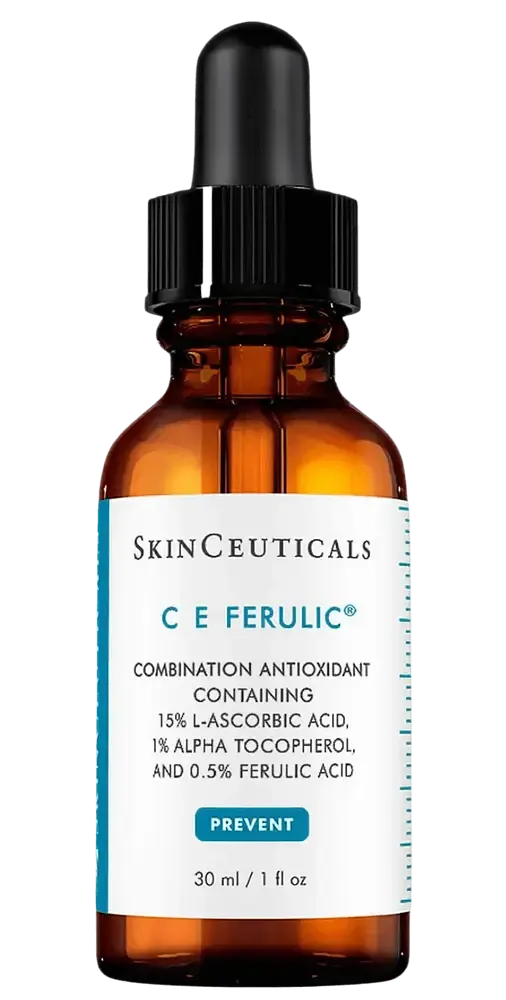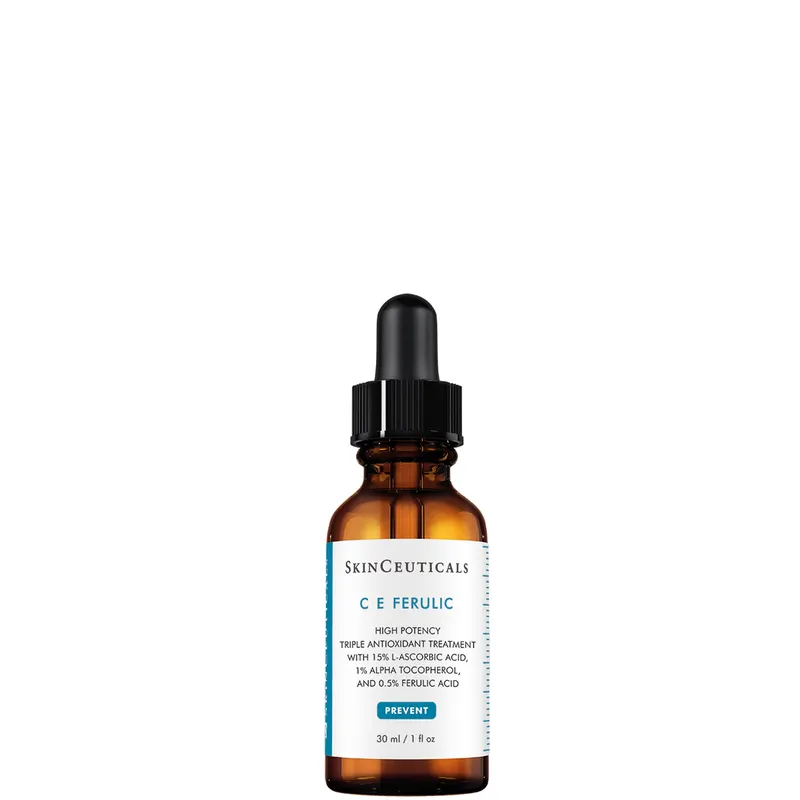
SkinCeuticals
SkinCeuticals C E Ferulic Antioxidant Vitamin C Serum for Normal and Dry Skin
Low risk76/100

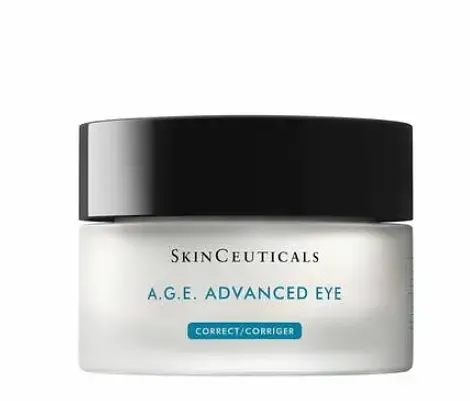
Eye Moisturizers
Some ingredients carry a low-risk flag. Read the formulation context before deciding.
32 of 33 ingredients rated1 not assessed
MamaSkin rates the recorded formula for SkinCeuticals A.G.E. Advanced Eye as Low risk (75/100). Review the ingredient context and any manual-review explanation before deciding.
The recorded formula includes 2 ingredient entries with risk flags: Phenoxyethanol (Low risk), Glycyrrhetinic Acid (Low risk). These are ingredient-level flags; they do not replace the stored product assessment or account for every formulation detail.
32 of 33 ingredient entries on this page have a recorded score, evidence summary and source text. 1 entry does not have all of those fields. Unmatched or unrated entries are marked Not assessed in grey; missing evidence does not establish safety.
How we assess productsThe recorded formula, with evidence behind each rating. Unmatched ingredients are marked Not assessed in grey.
Phenoxyethanol is a preservative permitted in EU cosmetics up to 1.0%. The SCCS concluded it is safe for cosmetic use at that level, including when considering higher cosmetic exposure scenarios in infants and young children. Main practical concern is irritation/stinging on very sensitive or compromised skin rather than a pregnancy- or breastfeeding-specific risk.
Sources: SCCS/1575/16: Phenoxyethanol opinion https://health.ec.europa.eu/publications/phenoxyethanol_en
Glycyrrhetinic Acid is a biologically active licorice-derived constituent used for soothing and skin conditioning. High oral licorice exposure is discouraged during pregnancy, but this does not establish equivalent risk from normal topical cosmetic exposure. MamaSkin applies a precautionary Low Risk classification for consistency with its existing licorice-root and glycyrrhizate policy.
Sources: CIR: Safety Assessment of Glycyrrhetinic Acid and Glycyrrhetinate ingredients https://cir-reports.cir-safety.org/view-attachment/?id=49a63435-8e74-ec11-8943-0022482f06a6; NIH ODS: Dietary Supplements and Life Stages - Pregnancy https://ods.od.nih.gov/factsheets/Pregnancy-HealthProfessional/; existing MamaSkin licorice-family policy.
No matched ingredient rating is available yet. Not assessed does not mean safe or unsafe.
A fatty-acid ester used mainly for emollience, slip and formula texture. Cosmetic safety reviewers concluded that the assessed alkyl esters are safe in current practices when formulated to be non-irritating. No pregnancy-specific concern was identified for normal topical cosmetic exposure.
Sources: CIR: Safety Assessment of Alkyl Esters as Used in Cosmetics https://cir-reports.cir-safety.org/view-attachment/?id=b34bc38f-8e74-ec11-8943-0022482f06a6
This cellulose or modified-cellulose polymer is used as a thickener, film former or stabilizer. Cosmetic Ingredient Review data indicate that cellulose polymers do not appreciably penetrate skin and are safe in current cosmetic use, with at most minimal irritation reported.
Sources: CIR: Amended Safety Assessment of Cellulose and Related Polymers as Used in Cosmetics https://cir-reports.cir-safety.org/view-attachment/?id=2e65c18f-8c74-ec11-8943-0022482f06a6
Inert polymer used as a film former, thickener or texture ingredient in cosmetics. Normal topical use is expected to have low systemic exposure, with no pregnancy- or breastfeeding-specific concern identified in reviewed cosmetic references.
Sources: CIR cosmetic ingredient safety references for polyethylene and related polymers; EU CosIng / cosmetics regulatory inventory
Common emollient derived from fatty acids and glycerin. Used to soften skin and improve texture without pregnancy-specific concerns.
Sources: Cosmetic Ingredient Review (US); Scientific Committee on Consumer Safety (EU)
Fatty alcohol emollient used to improve spreadability and reduce drag. Reviewed cosmetic safety sources support normal topical use, with no pregnancy- or breastfeeding-specific topical signal identified in the material reviewed.
Sources: CIR ingredient status / report data sheet for Octyldodecanol; EU CosIng / cosmetics regulatory inventory
Solvent and humectant commonly used in leave-on products. Not associated with pregnancy-specific concerns at cosmetic exposure levels.
Sources: Cosmetic Ingredient Review (US); Scientific Committee on Consumer Safety (EU)
Methylxanthine used in cosmetics (e.g., de-puffing/firming and antioxidant support). No pregnancy-specific contraindications are identified for topical cosmetic use.
Sources: CIR (Methylxanthines); PubMed (NLM)
A surface-modified silica used to thicken oils and improve texture. Cosmetic safety reviewers concluded that silica silylate is safe in current practices when the final product is not irritating or sensitising to the respiratory tract. Avoid deliberately inhaling loose or airborne powder.
Sources: CIR: Safety Assessment of Silica Silylate, IJT 32(Suppl. 1), 2013; December 2025 Quick Reference Table https://cir-safety.org/sites/default/files/QRT-Update-Dec2025.pdf
Tocopheryl acetate (vitamin E derivative) is used as an antioxidant and skin-conditioning ingredient; it is considered low concern in topical use with no known pregnancy or breastfeeding risks at cosmetic concentrations.
Sources: CIR; EU/UK Cosmetics Regulation
A high-molecular-weight polymer used to thicken and stabilise formulas. Cosmetic safety reviewers concluded that acryloyldimethyltaurate polymers are safe in current cosmetic practices. Absorption of the finished polymer is expected to be limited, with residual monomers controlled during manufacture.
Sources: CIR: Safety Assessment of Acryloyldimethyltaurate Polymers as Used in Cosmetics; final report April 2017 https://cir-safety.org/sites/default/files/QRT-Update-Dec2025.pdf
Buffering and chelating ingredient used to control pH and formulation stability. Reviewed cosmetic safety sources support normal topical use, with no pregnancy- or breastfeeding-specific topical signal identified in the material reviewed.
Sources: CIR: Safety Assessment of Citric Acid, Inorganic Citrate Salts, and Alkyl Citrate Esters as Used in Cosmetics; EU CosIng / cosmetics regulatory inventory
The published CIR assessment includes the exact crosslinked silicone identity in its safe-as-used conclusion.
Sources: https://journals.sagepub.com/doi/pdf/10.1177/1091581814524963
Preservative used to help protect formulas from microbial growth. Reviewed cosmetic safety sources support present cosmetic use; no pregnancy- or breastfeeding-specific topical concern was identified in the material reviewed, although some users may still notice local irritation or sensitivity.
Sources: CIR: Safety Assessment of Chlorphenesin as Used in Cosmetics; EU CosIng / cosmetics regulatory inventory
An inert inorganic powder used to improve slip, texture and soft focus in makeup. Cosmetic safety reviewers concluded that cosmetic-grade boron nitride is safe in current cosmetic use. No pregnancy-specific concern is identified for normal skin application; as with cosmetic powders generally, avoid deliberately inhaling airborne powder or airbrush spray.
Sources: CIR: Safety Assessment of Boron Nitride as Used in Cosmetics https://www.cir-safety.org/supplementaldoc/safety-assessment-boron-nitride-used-cosmetics-0
An insoluble aluminum oxide mineral used as an absorbent, abrasive, bulking agent and surface treatment. The Cosmetic Ingredient Review concluded that alumina is safe in current cosmetic use. Normal topical exposure does not identify a pregnancy-specific concern; avoid deliberately inhaling loose powders or airbrush products.
Sources: CIR: Safety Assessment of Alumina and Aluminum Hydroxide https://www.cir-safety.org/panelbook/safety-assessment-alumina-and-aluminum-hydroxide-used-cosmetics
Colour Index name for titanium dioxide. Used as a pigment and (in some products) a mineral UV filter. For typical topical use in creams, lotions and makeup, systemic absorption is expected to be very low. Most concerns discussed in the literature relate to ingestion (E171) or inhalation from fine powders/sprays, and to nanoparticle characterisation. For routine topical cosmetic use, it is generally considered acceptable in pregnancy and breastfeeding; if you prefer a cautious approach, avoid inhaling loose powders or sprays.
Sources: EFSA opinion on titanium dioxide (E171) ingestion context; SCCS cosmetic opinions (incl. inhalation/nano considerations); general dermatology guidance on mineral sunscreens in pregnancy.
A menthol-related sensory cooling ingredient used at low cosmetic concentrations. Available cosmetic-use and toxicology information does not identify a reproductive or developmental hazard from normal topical exposure. Cooling, stinging or local irritation can occur on sensitive or damaged skin, but this is not a pregnancy-specific risk.
Sources: European Commission CosIng ingredient inventory for Menthoxypropanediol; ECHA substance information; cosmetic ingredient safety and sensory-agent literature.
Sugar alcohol humectant used to help maintain water content at the skin surface. Reviewed cosmetic safety sources support normal topical use, with no pregnancy- or breastfeeding-specific topical signal identified in the material reviewed.
Sources: CIR: Safety Assessment of Mannitol, Sorbitol, and Xylitol as Used in Cosmetics; EU CosIng / cosmetics regulatory inventory
A fruit, seed or food-plant extract used for skin conditioning and antioxidant support. No pregnancy-specific signal was identified for the low topical exposure expected from a finished cosmetic. Direct pregnancy studies are generally unavailable, and botanical allergy remains possible.
Sources: European Commission CosIng ingredient inventory; CIR botanical safety framework and relevant fruit-derived ingredient assessments; peer-reviewed cosmetic and phytochemical literature for the named plants.
Synthetic mica-like mineral used for bulking, optical effect, and texture. CIR concluded it is safe as used in cosmetics; normal topical use is not associated with a pregnancy- or breastfeeding-specific topical signal in the material reviewed.
Sources: CIR: Safety Assessment of Synthetic Fluorphlogopite as Used in Cosmetics; EU CosIng / cosmetics regulatory inventory
Chelating agent used to improve formula stability. Used at low levels and not associated with pregnancy-specific concerns.
Sources: European cosmetics regulatory framework
Polymer thickener used to create gel textures. Large-molecule ingredient with negligible systemic absorption.
Sources: Cosmetic Ingredient Review (US); Scientific Committee on Consumer Safety (EU)
Humectant and buffer that also forms part of the skin's natural moisturising factor. Reviewed cosmetic safety sources support topical cosmetic use; irritation and sun-sensitivity considerations relate more to formula context than to pregnancy-specific risk.
Sources: CIR: Safety Assessment of Alpha Hydroxy Acids as Used in Cosmetics; CIR: PCA and Its Salts as Used in Cosmetics; EU CosIng / cosmetics regulatory inventory
Nonionic surfactant and solubiliser used to disperse oils and fragrance. Reviewed cosmetic safety sources support normal topical use, with no pregnancy- or breastfeeding-specific topical signal identified in the material reviewed.
Sources: CIR: Safety Assessment of Polysorbates as Used in Cosmetics; EU CosIng / cosmetics regulatory inventory
A pomegranate fruit extract used mainly for skin conditioning and antioxidant effects. Cosmetic safety reviewers concluded that Punica granatum fruit extract is safe in current practices when formulated to be non-irritating and non-sensitising. The conclusion is ingredient-specific and does not extend to generic whole-plant pomegranate extract.
Sources: CIR: Safety Assessment of Punica granatum-Derived Ingredients as Used in Cosmetics https://www.cir-safety.org/supplementaldoc/safety-assessment-punica-granatum-pomegranate-derived-ingredients-used-cosmetics
Volatile solvent used in some toners, sprays, and lightweight formulas. Reviewed cosmetic safety sources support current cosmetic use, with no pregnancy- or breastfeeding-specific topical concern identified in the material reviewed; the main practical issue is dryness, stinging, or barrier disruption in some users.
Sources: CIR: Safety Assessment of SD Alcohol 40, Benzyl Alcohol, and Denatured Alcohol in Cosmetic Products; EU CosIng / cosmetics regulatory inventory
Synthetic peptide used as a skin-conditioning ingredient. Reviewed cosmetic safety sources indicate no known pregnancy- or breastfeeding-specific concern in normal topical cosmetic use. Available cosmetic safety assessments conclude this ingredient is safe in the present practices of use and concentration described for cosmetics.
Sources: CIR Expert Panel, Safety Assessment of Tripeptide-1, Hexapeptide-12, their metal salts and fatty acyl derivatives, and Palmitoyl Tetrapeptide-7 as used in cosmetics, final report, 2014
Vitamin E antioxidant used to protect oils and support the skin barrier. Not associated with pregnancy-specific concerns at cosmetic exposure.
Sources: Cosmetic Ingredient Review (US); Scientific Committee on Consumer Safety (EU)
Synthetic signal peptide used in topical cosmetic anti-aging and skin-conditioning formulas. Reviewed topical peptide literature describes palmitoyl tetrapeptide-7 as a cosmetic peptide with anti-inflammatory and extracellular-matrix support activity in topical formulations. No pregnancy- or breastfeeding-specific risk signal was identified for normal topical cosmetic use.
Sources: Schagen SK. Topical Peptide Treatments with Effective Anti-Aging Results. Cosmetics. 2017;4(2):16. doi:10.3390/cosmetics4020016; CIR Expert Panel safety assessment of palmitoyl oligopeptides as used in cosmetics.
Antioxidant and stabilizer used to protect cosmetic formulas from oxidation. Reviewed cosmetic ingredient references do not identify a pregnancy- or breastfeeding-specific concern for normal topical cosmetic use.
Sources: CIR cosmetic ingredient safety references for hindered phenolic antioxidants; EU CosIng / cosmetics regulatory inventory
Hexyl Laurate, Cellulose, Polyethylene, Caprylic/Capric Triglyceride, Octyldodecanol, Phenoxyethanol, Butylene Glycol, Caffeine, Silica Silylate, Tocopheryl Acetate, Ammonium Polyacryloyldimethyl Taurate, Sodium Citrate, Dimethicone/Polyglycerin-3 Crosspolymer, Chlorphenesin, Boron Nitride, Alumina, Glycyrrhetinic Acid, CI 77891, Menthoxypropanediol, Sorbitol, Vaccinium Myrtillus Fruit Extract, Synthetic Fluorphlogopite, Sodium Phytate, Carbomer, Sodium Lactate, Polysorbate 20, Punica Granatum Fruit Extract, Glycol, Alcohol, Palmitoyl Tripeptide-1, Tocopherol, Palmitoyl Tetrapeptide-7, Pentaerythrityl Tetra-Di-T-Butyl Hydroxyhydrocinnamate
Ingredient ratings refreshed 1 October 2026. Formulas vary by market and can change. Always compare with your packaging.
The recorded formula includes 2 ingredient entries with risk flags: Phenoxyethanol (Low risk), Glycyrrhetinic Acid (Low risk). These are ingredient-level flags; they do not replace the stored product assessment or account for every formulation detail. Incomplete ingredient documentation does not establish safety; see the coverage answer and grey entries below.
No. The recorded formula lists a licorice-derived cosmetic ingredient, not an oral licorice product. Different ingredients and routes of exposure should not be treated as interchangeable. Use the exact ingredient's rating and evidence below, together with any manual-review note; this score does not assess teas, supplements or other licorice formulas.
32 of 33 ingredient entries on this page have a recorded score, evidence summary and source text. 1 entry does not have all of those fields. Unmatched or unrated entries are marked Not assessed in grey; missing evidence does not establish safety.
Only if the ingredient list on your packaging matches the recorded formula shown here. Formulas can differ by market and change over time. Compare the full list, not just the product name; report a mismatch if it differs.
No. This page presents a pregnancy-focused product assessment. Do not infer a breastfeeding conclusion from its score or label; breastfeeding requires a separate assessment of the formula and how it is used.