SkinCeuticals
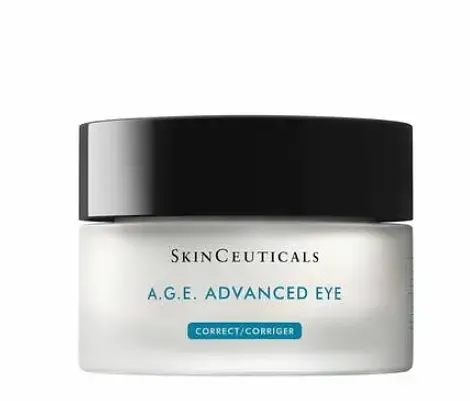
SkinCeuticals A.G.E. Advanced Eye
Low risk75/100

Some ingredients carry a low-risk flag. Read the formulation context before deciding.
12 of 12 ingredients rated
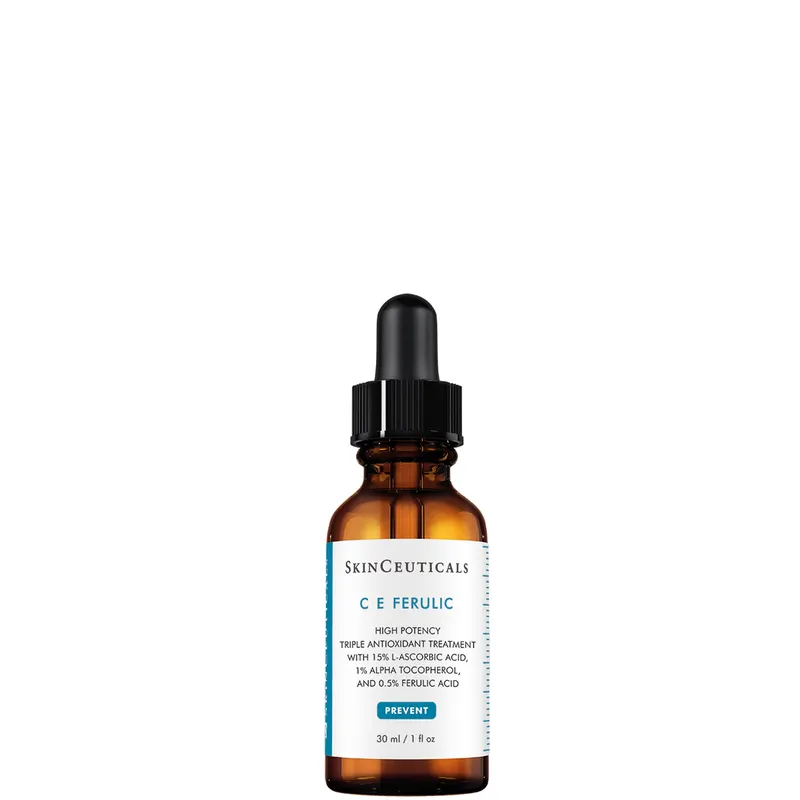
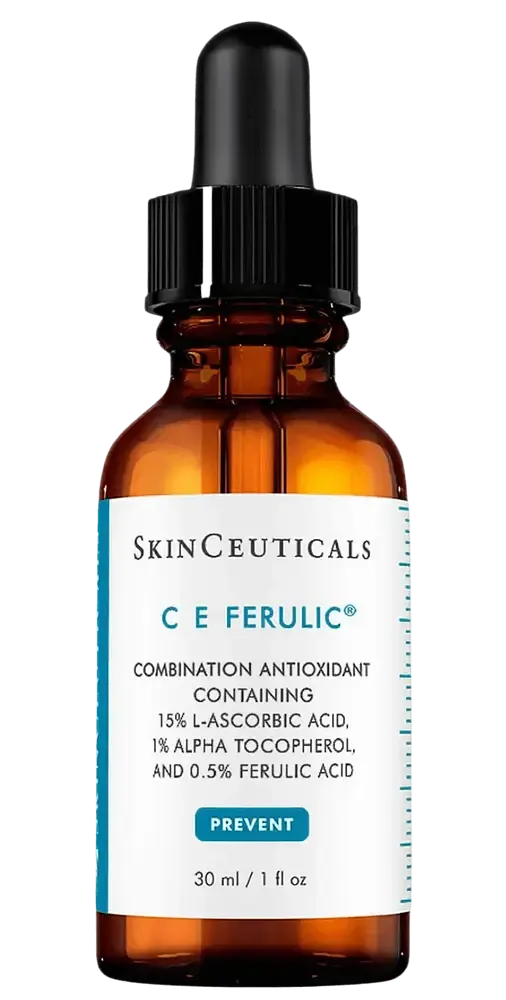
MamaSkin rates the recorded formula for SkinCeuticals C E Ferulic With 15% L-Ascorbic Acid as Low risk (75/100). Review the ingredient context and any manual-review explanation before deciding.
The recorded formula includes 2 ingredient entries with risk flags: Phenoxyethanol (Low risk), Triethanolamine (Low risk). These are ingredient-level flags; they do not replace the stored product assessment or account for every formulation detail.
12 of 12 ingredient entries on this page have a recorded score, evidence summary and source text. That describes documentation coverage, not proof that the finished formula has been clinically tested during pregnancy.
How we assess productsThe recorded formula, with evidence behind each rating. Unmatched ingredients are marked Not assessed in grey.
Phenoxyethanol is a preservative permitted in EU cosmetics up to 1.0%. The SCCS concluded it is safe for cosmetic use at that level, including when considering higher cosmetic exposure scenarios in infants and young children. Main practical concern is irritation/stinging on very sensitive or compromised skin rather than a pregnancy- or breastfeeding-specific risk.
Sources: SCCS/1575/16: Phenoxyethanol opinion https://health.ec.europa.eu/publications/phenoxyethanol_en
Triethanolamine (TEA) is an alkanolamine used as a pH adjuster and surfactant in cosmetics. The main practical concerns are skin/eye irritation at higher concentrations and the potential formation of nitrosamines if formulated with nitrosating agents (a formulation/impurity-control issue). It is not a typical pregnancy-specific concern at cosmetic use levels; overall risk is primarily local irritation/sensitisation in susceptible users.
Sources: CIR: Triethanolamine ingredient safety information https://www.cir-safety.org/ingredient/triethanolamine
Water (Aqua) is the standard purified water used as a cosmetic solvent. It has no pregnancy-specific risk in normal topical use.
Sources: https://pubchem.ncbi.nlm.nih.gov/compound/Water, https://single-market-economy.ec.europa.eu/sectors/cosmetics/cosmetic-ingredient-database/cosing-glossary-ingredients_en
A glycol ether used as a cosmetic solvent and delivery aid. Cosmetic safety reviewers concluded that ethoxydiglycol is safe as used in cosmetics, with low toxicity in the reviewed exposure data. It is distinct from ethoxyethanol, which has a different and less favourable safety assessment.
Sources: CIR: Final Report on Butylene Glycol, Hexylene Glycol, Ethoxydiglycol and Dipropylene Glycol; CIR Quick Reference Table https://cir-safety.org/sites/default/files/qrt-r.pdf
Vitamin C antioxidant used to support brightness and photoprotection; functions as an antioxidant/pH adjuster in cosmetic formulas. No pregnancy-specific contraindications are identified for topical cosmetic use.
Sources: CIR (Ascorbic Acid); PubMed (NLM)
Glycerin is a widely used humectant that supports hydration and the skin barrier, with a long safety record and no known pregnancy or breastfeeding concerns in topical cosmetic use.
Sources: CIR; EU/UK Cosmetics Regulation
Propylene glycol is a common solvent and humectant with a long history of use; it is not considered a pregnancy or breastfeeding concern in topical cosmetics, though some individuals may experience irritation in leave-on products.
Sources: CIR; EU/UK Cosmetics Regulation
An ethoxylated fatty alcohol used as an emulsifier or surfactant. Cosmetic safety reviewers concluded that the assessed alkyl PEG/PPG ethers are safe in current practices when formulated to be non-irritating. Manufacturing should control ethylene oxide and 1,4-dioxane residues.
Sources: CIR: Alkyl PEG/PPG Ethers conclusions; December 2025 Quick Reference Table https://cir-safety.org/sites/default/files/QRT-Update-Dec2025.pdf
Vitamin E antioxidant used to protect oils and support the skin barrier. Not associated with pregnancy-specific concerns at cosmetic exposure.
Sources: Cosmetic Ingredient Review (US); Scientific Committee on Consumer Safety (EU)
A plant-derived phenolic antioxidant used to stabilise formulas and support photoprotection. Ferulic acid is extensively metabolised after dietary exposure, and normal topical cosmetic use is expected to produce far lower systemic exposure. No pregnancy- or breastfeeding-specific hazard signal was identified in the topical and toxicology literature reviewed; irritation remains possible in acidic formulas.
Sources: European Commission CosIng ingredient inventory; PubMed literature on topical ferulic acid, dermal delivery and antioxidant use; ECHA substance information for ferulic acid.
Panthenol (pro-vitamin B5) is used for soothing and barrier support and is generally well tolerated, with no known pregnancy or breastfeeding concerns in topical cosmetic use.
Sources: CIR; EU/UK Cosmetics Regulation
Sodium hyaluronate (hyaluronic acid salt) is used for hydration and cushioning, with very low systemic absorption from topical use and no known pregnancy or breastfeeding concerns at cosmetic concentrations.
Sources: CIR; EU/UK Cosmetics Regulation
Water, Ethoxydiglycol, Ascorbic Acid, Glycerin, Propylene Glycol, Laureth-23, Phenoxyethanol, Tocopherol, Triethanolamine, Ferulic Acid, Panthenol, Sodium Hyaluronate
Ingredient ratings refreshed 1 October 2026. Formulas vary by market and can change. Always compare with your packaging.
The recorded formula includes 2 ingredient entries with risk flags: Phenoxyethanol (Low risk), Triethanolamine (Low risk). These are ingredient-level flags; they do not replace the stored product assessment or account for every formulation detail. The product score is a stored assessment, not a clinical safety guarantee.
No. This recorded formula contains Panthenol or Madecassoside, but a barrier-care claim does not establish the assessment of all its other ingredients. Read the individual ingredient evidence and any manual-review explanation, and compare the recorded list with your packaging.
12 of 12 ingredient entries on this page have a recorded score, evidence summary and source text. That describes documentation coverage, not proof that the finished formula has been clinically tested during pregnancy.
Only if the ingredient list on your packaging matches the recorded formula shown here. Formulas can differ by market and change over time. Compare the full list, not just the product name; report a mismatch if it differs.
No. This page presents a pregnancy-focused product assessment. Do not infer a breastfeeding conclusion from its score or label; breastfeeding requires a separate assessment of the formula and how it is used.