Tatcha
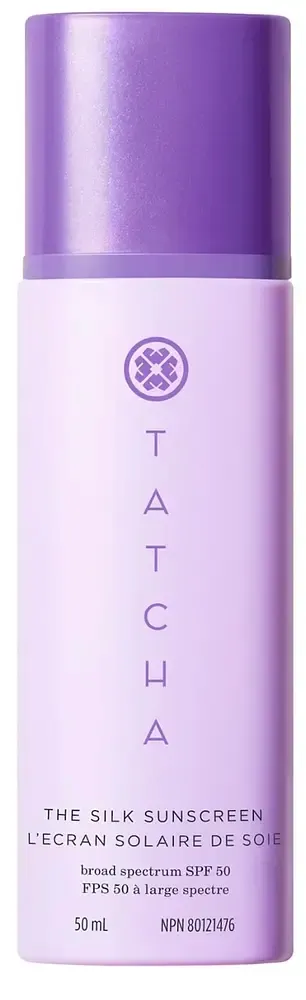
Tatcha The Silk Sunscreen SPF 50 Weightless Mineral Sunscreen
Low risk72/100

Some ingredients carry a low-risk flag. Read the formulation context before deciding.
34 of 35 ingredients rated1 not assessed
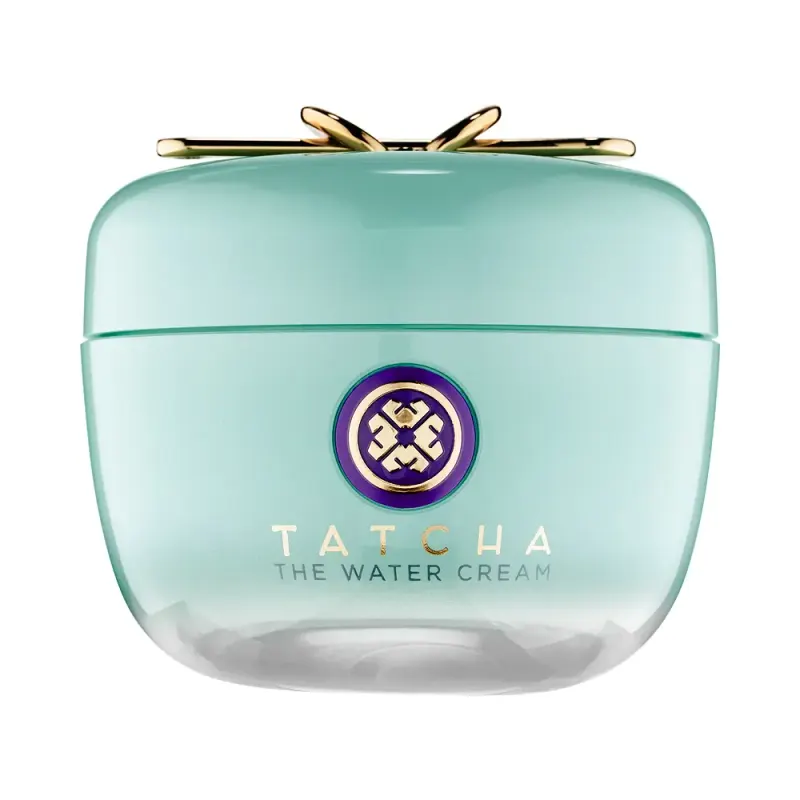
MamaSkin rates the recorded formula for Tatcha The Water Cream as Low risk (71/100). Review the ingredient context and any manual-review explanation before deciding.
The recorded formula includes 5 ingredient entries with risk flags: Dimethicone (Low risk), Diphenylsiloxy Phenyl Trimethicone (Low risk), Dimethicone/PEG-10/15 Crosspolymer (Low risk), plus others listed in the breakdown. These are ingredient-level flags; they do not replace the stored product assessment or account for every formulation detail.
34 of 35 ingredient entries on this page have a recorded score, evidence summary and source text. 1 entry does not have all of those fields. Unmatched or unrated entries are marked Not assessed in grey; missing evidence does not establish safety.
How we assess productsThe recorded formula, with evidence behind each rating. Unmatched ingredients are marked Not assessed in grey.
Umbrella term for an undisclosed fragrance blend. It’s not usually a pregnancy-specific concern at normal cosmetic use levels, but the exact components and concentrations aren’t fully disclosed on the label, so we score it more conservatively. If you prefer maximum transparency (or you’re sensitive to fragrance compounds), choose fragrance-free/unscented products.
Sources: SCCS: Fragrance allergens in cosmetic products https://health.ec.europa.eu/latest-updates/sccs-new-opinion-fragrance-allergens-cosmetic-products-2012-07-31_en
Phenoxyethanol is a preservative permitted in EU cosmetics up to 1.0%. The SCCS concluded it is safe for cosmetic use at that level, including when considering higher cosmetic exposure scenarios in infants and young children. Main practical concern is irritation/stinging on very sensitive or compromised skin rather than a pregnancy- or breastfeeding-specific risk.
Sources: SCCS/1575/16: Phenoxyethanol opinion https://health.ec.europa.eu/publications/phenoxyethanol_en
Dimethicone is a silicone polymer used as a skin protectant and slip/conditioning agent. It is considered inert with minimal dermal absorption; the main practical issues are cosmetic (feel) and occasional irritation in very sensitive users. It is not a pregnancy-specific concern in topical cosmetic use.
Sources: CIR: Amended Safety Assessment of Dimethicone, Methicone, and Substituted-Methicone Polymers as Used in Cosmetics https://cir-safety.org/supplementaldoc/amended-safety-assessment-dimethicone-methicone-and-substituted-methicone-polymers-2
A phenyl-substituted silicone used for shine, conditioning and film formation. Cosmetic safety reviewers concluded it is safe in current cosmetic use but found insufficient evidence for products that may be incidentally inhaled. MamaSkin classifies it as low risk because of that route-specific evidence gap, not because of a known pregnancy-specific concern from ordinary topical use.
Sources: CIR: Safety Assessment of Phenyl-Substituted Methicones (Final Report 2023) https://www.cir-safety.org/sites/default/files/QRT-Update-Dec2025.pdf
A high-molecular-weight silicone polyether used for emulsification, texture and film formation. Cosmetic safety reviewers concluded that dimethicone crosspolymers are safe in current cosmetic use, and absorption of the intact polymer is expected to be limited. MamaSkin classifies this ingredient as low risk for consistency with its established dimethicone-family policy and because cosmetic-grade manufacturing should control residual starting materials, not because of a known pregnancy-specific contraindication.
Sources: CIR: Safety Assessment of Dimethicone Crosspolymers as Used in Cosmetics https://www.cir-safety.org/sites/default/files/dimethcross_blue_092012.pdf; CIR: December 2025 Quick Reference Table https://cir-safety.org/sites/default/files/QRT-Update-Dec2025.pdf
No matched ingredient rating is available yet. Not assessed does not mean safe or unsafe.
Water (Aqua) is the standard purified water used as a cosmetic solvent. It has no pregnancy-specific risk in normal topical use.
Sources: https://pubchem.ncbi.nlm.nih.gov/compound/Water, https://single-market-economy.ec.europa.eu/sectors/cosmetics/cosmetic-ingredient-database/cosing-glossary-ingredients_en
A fermentation-derived cosmetic ingredient used for conditioning or formula support. Composition depends on the organism, substrate and manufacturing controls. No pregnancy-specific reproductive or developmental hazard was identified for normal topical exposure; ingestion is outside this classification.
Sources: European Commission CosIng ingredient inventory; CIR safety framework for microbial, fermentation-derived and biological-source cosmetic ingredients.
Solvent and humectant used to improve texture and ingredient solubility. Low systemic exposure expected from topical cosmetic use.
Sources: Cosmetic Ingredient Review (US); Scientific Committee on Consumer Safety (EU)
Glycerin is a widely used humectant that supports hydration and the skin barrier, with a long safety record and no known pregnancy or breastfeeding concerns in topical cosmetic use.
Sources: CIR; EU/UK Cosmetics Regulation
A glycerin dimer used to attract moisture and improve skin feel. Cosmetic safety reviewers assessed diglycerin with related polyglycerins and concluded that they are safe in current practices of use and concentration. No pregnancy-specific concern was identified for normal topical cosmetic exposure.
Sources: CIR: Safety Assessment of Diglycerin and Polyglycerins as Used in Cosmetics https://www.cir-safety.org/panelbook/safety-assessment-diglycerin-and-polyglycerin-3-6-and-10-used-cosmetics
Camellia sinensis (green tea) leaf extract is used as an antioxidant botanical; topical cosmetic use is considered low concern with no known pregnancy or breastfeeding risks, though rare sensitivities are possible.
Sources: CIR; EU/UK Cosmetics Regulation
The CIR quick-reference record identifies the exact brown-algae extract as safe under its final assessment.
Sources: https://cir-safety.org/sites/default/files/QRT-Update-Dec2025.pdf
A polyether-modified silicone used as an emulsifier and texture aid. Related polyoxyalkylene siloxane copolymers have low dermal absorption and are supported for cosmetic use; no reproductive or developmental concern was identified for normal topical exposure.
Sources: CIR: Safety Assessment of Polyoxyalkylene Siloxane Copolymers, Alkyl-Polyoxyalkylene Siloxane Copolymers, and Related Ingredients https://www.cir-safety.org/supplementaldoc/safety-assessment-polyoxyalkylene-siloxane-copolymers-alkyl-polyoxyalkylene-siloxa-0
An insoluble mineral or elemental particle used for optical effects, absorbency or cosmetic texture. Meaningful systemic exposure through intact skin is expected to be low. No pregnancy- or reproductive-toxicity signal was identified for normal topical cosmetic use. Particle size, source purity, metal impurities and inhalation of airborne powder remain formulation-specific considerations, and local contact allergy is possible with gold.
Sources: European Commission CosIng ingredient inventory; SCCS guidance on the safety assessment of nanomaterials in cosmetics https://health.ec.europa.eu/scientific-committees/scientific-committee-consumer-safety-sccs_en; published cosmetic and dermatology literature for gold, diamond powder and perlite.
rosa multiflora fruit extract is a botanical-derived cosmetic conditioning ingredient. The reviewed identity is not a concentrated essential oil or an oral herbal preparation. Available cosmetic evidence and expected topical exposure did not identify a pregnancy-specific contraindication, although botanical irritation or allergy remains possible.
Sources: CIR ingredient-specific and botanical-family safety assessments; CIR Quick Reference Table https://www.cir-safety.org/supplementaldoc/quick-reference-table-december-2025; European Commission CosIng
A heartleaf extract used for skin conditioning and soothing. No pregnancy- or breastfeeding-specific hazard was identified for normal topical cosmetic exposure. Direct ingredient-specific pregnancy studies were not identified, so this assessment does not extend to oral supplements or medicinal use.
Sources: European Commission CosIng ingredient inventory; Cosmetic Ingredient Review botanical safety-assessment framework and relevant ingredient-family assessments. No ingredient-specific human pregnancy study of normal topical cosmetic use was identified.
A botanical root extract used for conditioning and antioxidant support. Direct pregnancy studies of this exact topical cosmetic extract were not identified. Evidence from different Sophora species, isolated alkaloids or oral medicinal doses cannot establish a hazard for this exact material without composition and exposure data.
Sources: European Commission CosIng ingredient inventory; peer-reviewed literature on Sophora species and quinolizidine alkaloids; no ingredient-specific human pregnancy study of normal topical cosmetic use was identified.
Sodium hyaluronate (hyaluronic acid salt) is used for hydration and cushioning, with very low systemic absorption from topical use and no known pregnancy or breastfeeding concerns at cosmetic concentrations.
Sources: CIR; EU/UK Cosmetics Regulation
Emulsifier and skin-conditioning ingredient composed of phospholipids. Not associated with pregnancy-specific concerns.
Sources: Cosmetic Ingredient Review (US)
The reviewed evidence did not identify a pregnancy-specific hazard from normal topical use. Missing reproductive testing alone does not demonstrate harm; contact allergy and oral medicinal use are separate considerations.
Sources: https://www.ema.europa.eu/en/documents/herbal-monograph/final-european-union-herbal-monograph-pistacia-lentiscus-l-resin-mastic_en.pdf, https://www.ema.europa.eu/en/documents/herbal-report/final-addendum-assessment-report-pistacia-lentiscus-l-resina-mastic_en.pdf, https://pubmed.ncbi.nlm.nih.gov/29288761/, https://pubmed.ncbi.nlm.nih.gov/37580926/, https://pmc.ncbi.nlm.nih.gov/articles/PMC12745950/
Sodium chloride is used to adjust viscosity and texture in formulations; topical cosmetic use is considered low concern with no known pregnancy or breastfeeding risks.
Sources: CIR; EU/UK Cosmetics Regulation
Buffering and chelating ingredient used to control pH and formulation stability. Reviewed cosmetic safety sources support normal topical use, with no pregnancy- or breastfeeding-specific topical signal identified in the material reviewed.
Sources: CIR: Safety Assessment of Citric Acid, Inorganic Citrate Salts, and Alkyl Citrate Esters as Used in Cosmetics; EU CosIng / cosmetics regulatory inventory
Mineral platelet used to add shimmer and improve texture in makeup and skincare. Very low dermal absorption in typical topical use and generally considered acceptable in pregnancy and breastfeeding. If you prefer a cautious approach, avoid inhaling loose powders or sprays.
Sources: General cosmetic ingredient safety references for inert minerals/pigments; exposure route considerations for powders/sprays.
Mineral ingredient used in some cosmetics to enhance shimmer/opacity. For typical topical use, dermal absorption is very low and it is generally considered acceptable in pregnancy and breastfeeding. If you prefer a cautious approach, avoid inhaling loose powders or sprays.
Sources: General cosmetic ingredient safety references for inert minerals; exposure route considerations for powders/sprays.
The published CIR assessment includes the exact crosslinked silicone identity in its safe-as-used conclusion.
Sources: https://journals.sagepub.com/doi/pdf/10.1177/1091581814524963
Vitamin E antioxidant used to protect oils and support the skin barrier. Not associated with pregnancy-specific concerns at cosmetic exposure.
Sources: Cosmetic Ingredient Review (US); Scientific Committee on Consumer Safety (EU)
Solvent and humectant commonly used in leave-on products. Not associated with pregnancy-specific concerns at cosmetic exposure levels.
Sources: Cosmetic Ingredient Review (US); Scientific Committee on Consumer Safety (EU)
Preservative booster and skin-conditioning agent. Considered safe for cosmetic use with low systemic exposure when used as intended.
Sources: Scientific Committee on Consumer Safety (EU); Cosmetic Ingredient Review (US)
Dipropylene glycol is used as a solvent and carrier in cosmetics; topical exposure is low and it has no known pregnancy or breastfeeding concerns at cosmetic concentrations.
Sources: CIR; EU/UK Cosmetics Regulation
Volatile solvent used in some toners, sprays, and lightweight formulas. Reviewed cosmetic safety sources support current cosmetic use, with no pregnancy- or breastfeeding-specific topical concern identified in the material reviewed; the main practical issue is dryness, stinging, or barrier disruption in some users.
Sources: CIR: Safety Assessment of SD Alcohol 40, Benzyl Alcohol, and Denatured Alcohol in Cosmetic Products; EU CosIng / cosmetics regulatory inventory
Limonene is a common fragrance component used at low levels in cosmetics; it is not a pregnancy-specific concern in topical use, but it is a recognised fragrance allergen and may trigger irritation or sensitisation in some people, especially if the product oxidises over time.
Sources: EU/UK cosmetics (fragrance allergen labelling); IFRA; toxicology reviews
Linalool is a common fragrance component used at low levels in cosmetics; it is not a pregnancy-specific concern in topical use, but it is a recognised fragrance allergen and may trigger irritation or sensitisation in some people, especially if the product oxidises over time.
Sources: EU/UK cosmetics (fragrance allergen labelling); IFRA; toxicology reviews
A lemon-scented mixture of the aldehydes geranial and neral used in fragrance. Citral is a recognised skin sensitiser, but current cosmetic concerns relate to allergy and concentration rather than a pregnancy-specific hazard from normal topical use.
Sources: European Commission: Fragrance allergens labelling https://single-market-economy.ec.europa.eu/sectors/cosmetics/cosmetic-products-specific-topics/fragrance-allergens-labelling_en; SCCS fragrance-allergen opinions
Colour Index name for titanium dioxide. Used as a pigment and (in some products) a mineral UV filter. For typical topical use in creams, lotions and makeup, systemic absorption is expected to be very low. Most concerns discussed in the literature relate to ingestion (E171) or inhalation from fine powders/sprays, and to nanoparticle characterisation. For routine topical cosmetic use, it is generally considered acceptable in pregnancy and breastfeeding; if you prefer a cautious approach, avoid inhaling loose powders or sprays.
Sources: EFSA opinion on titanium dioxide (E171) ingestion context; SCCS cosmetic opinions (incl. inhalation/nano considerations); general dermatology guidance on mineral sunscreens in pregnancy.
Water, Saccharomyces/Rice Ferment Filtrate, Dimethicone, Propanediol, Glycerin, Diglycerin, Diphenylsiloxy Phenyl Trimethicone, Camellia Sinensis Leaf Extract, Cladosiphon Okamuranus Extract, PEG-9 Polydimethylsiloxyethyl Dimethicone, Gold, Belamcanda Chinensis Root Extract, Rosa Multiflora Fruit Extract, Houttuynia Cordata Extract, Sophora Angustifolia Root Extract, Sodium Hyaluronate, Lecithin, Pistacia Lentiscus Gum, Sodium Chloride, Sodium Citrate, Mica, Tin Oxide, Dimethicone/PEG-10/15 Crosspolymer, Dimethicone/Phenyl Vinyl Dimethicone Crosspolymer, Tocopherol, Butylene Glycol, Ethylhexylglycerin, Dipropylene Glycol, Parfum, Alcohol, Phenoxyethanol, Limonene, Linalool, Citral, CI 77891
Ingredient ratings refreshed 1 October 2026. Formulas vary by market and can change. Always compare with your packaging.
The recorded formula includes 5 ingredient entries with risk flags: Dimethicone (Low risk), Diphenylsiloxy Phenyl Trimethicone (Low risk), Dimethicone/PEG-10/15 Crosspolymer (Low risk), plus others listed in the breakdown. These are ingredient-level flags; they do not replace the stored product assessment or account for every formulation detail. Incomplete ingredient documentation does not establish safety; see the coverage answer and grey entries below.
34 of 35 ingredient entries on this page have a recorded score, evidence summary and source text. 1 entry does not have all of those fields. Unmatched or unrated entries are marked Not assessed in grey; missing evidence does not establish safety.
Only if the ingredient list on your packaging matches the recorded formula shown here. Formulas can differ by market and change over time. Compare the full list, not just the product name; report a mismatch if it differs.
No. This page presents a pregnancy-focused product assessment. Do not infer a breastfeeding conclusion from its score or label; breastfeeding requires a separate assessment of the formula and how it is used.