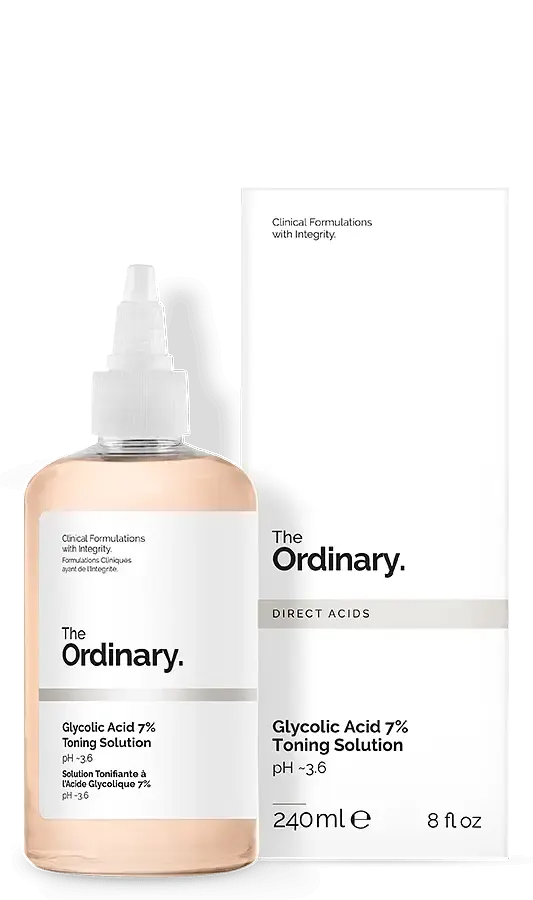
The Ordinary Glycolic Acid 7% Toning Solution by The Ordinary
The Ordinary

The Ordinary Glycolic Acid 7% Toning Solution

Toners

Safety score

Pregnancy-focused assessment

Low Risk75/100
Higher concernLower concern

One or more ingredients have a low-risk flag in MamaSkin's current assessment. Review the notes and your own circumstances.

Ingredient safety review updated 24 November 2025.

Check the current formula in MamaSkin

Copy the product name, download MamaSkin and search it for free. You can also scan the ingredient label on the product you own.

Download MamaSkin on the App StoreGet MamaSkin on Google Play

Ingredient breakdown

See how the listed formula falls across MamaSkin's pregnancy-focused risk bands.

40

No known risks

2

Low risk

0

Medium risk

0

High risk

Ingredients

Ingredients with a higher risk flag appear first, followed by the rest of the formula.

Triethanolamine

Low Risk

Triethanolamine (TEA) is an alkanolamine used as a pH adjuster and surfactant in cosmetics. The main practical concerns are skin/eye irritation at higher concentrations and the potential formation of nitrosamines if formulated with nitrosating agents (a formulation/impurity-control issue). It is not a typical pregnancy-specific concern at cosmetic use levels; overall risk is primarily local irritation/sensitisation in susceptible users.

Sources: CIR: Safety Assessment of Triethanolamine (TEA) and TEA-containing ingredients as used in cosmetics (Fiume et al., 2013); CIR Resource Document: N-Nitrosation and cosmetic ingredient safety; EU CosIng (Triethanolamine).

Glycolic Acid

Low Risk

Alpha-hydroxy acid exfoliant. Listed by MotherToBaby as a common OTC topical acne ingredient used during pregnancy; when used as directed, OTC topical acne treatments are not expected to increase pregnancy complications. For consumer cosmetics, safety guidance commonly frames AHAs as safe at ≤10% (with appropriate pH and daily sun protection). Avoid high-strength/professional peels during pregnancy.

Sources: FDA, MotherTobaby, CIR guidance

Water

No Known Risks
Show all (42)

Rosa Damascena Flower Water

No Known Risks

A rose flower distillate used for fragrance and skin conditioning. Cosmetic safety reviewers concluded that Rosa damascena-derived ingredients, including flower water, are safe in current practices when formulated to be non-irritating and non-sensitising. Natural fragrance allergens can still affect sensitive users.

Sources: CIR: Safety Assessment of Rosa damascena-Derived Ingredients as Used in Cosmetics https://www.cir-safety.org/sites/default/files/FR_RosaDamascena_032022.pdf

Centaurea Cyanus Flower Water

No Known Risks

Aloe Barbadensis Leaf Water

No Known Risks

Propanediol

No Known Risks

Solvent and humectant used to improve texture and ingredient solubility. Low systemic exposure expected from topical cosmetic use.

Sources: Cosmetic Ingredient Review (US); Scientific Committee on Consumer Safety (EU)

Glycerin

No Known Risks

Glycerin is a widely used humectant that supports hydration and the skin barrier, with a long safety record and no known pregnancy or breastfeeding concerns in topical cosmetic use.

Sources: CIR; EU/UK Cosmetics Regulation

Aminomethyl Propanol

No Known Risks

An alkanolamine used mainly to adjust product pH. Cosmetic safety reviewers concluded that aminomethyl propanol is safe in current cosmetic use at the reviewed concentrations. Formulators should control secondary-amine impurities and should not combine it with nitrosating agents. No pregnancy-specific concern is identified for normal use of a properly formulated finished cosmetic.

Sources: CIR: Final Amended Report on the Safety Assessment of Aminomethyl Propanol and Aminomethyl Propanediol https://cir-reports.cir-safety.org/view-attachment/?id=62ee6359-8e74-ec11-8943-0022482f06a6

Panax Ginseng Root Extract

No Known Risks

A botanical root extract used as a skin-conditioning and antioxidant ingredient. Cosmetic safety reviewers concluded that Panax root-derived ingredients are safe in current practices of use and concentration. The assessment considered the biological activity of ginsenosides and available reproductive and developmental information; ordinary topical cosmetic exposure was not identified as a pregnancy-specific concern. Botanical irritation or allergy remains possible.

Sources: CIR: Safety Assessment of Panax spp. Root-Derived Ingredients as Used in Cosmetics https://cir-safety.org/supplementaldoc/safety-assessment-panax-spp-root-derived-ingredients-used-cosmetics

Tasmannia Lanceolata Fruit/Leaf Extract

No Known Risks

Aspartic Acid

No Known Risks

This naturally occurring alpha-amino acid is used for humectancy and skin or hair conditioning. The Cosmetic Ingredient Review found alpha-amino acids safe in current cosmetic use; the low concentrations and limited dermal uptake are not expected to create a pregnancy- or breastfeeding-specific concern.

Sources: CIR: Safety Assessment of alpha-Amino Acids as Used in Cosmetics https://www.cir-safety.org/supplementaldoc/safety-assessment-%CE%B1-amino-acids-used-cosmetics

Alanine

No Known Risks

Amino acid used as a humectant and skin/hair-conditioning support ingredient. Reviewed cosmetic safety sources support normal topical use, with no pregnancy- or breastfeeding-specific topical signal identified.

Sources: CIR: Safety Assessment of alpha-Amino Acids as Used in Cosmetics; EU CosIng / cosmetics regulatory inventory

Glycine

No Known Risks

Amino acid used as a humectant and skin/hair-conditioning support ingredient. Reviewed cosmetic safety sources support normal topical use, with no pregnancy- or breastfeeding-specific topical signal identified.

Sources: CIR: Safety Assessment of alpha-Amino Acids as Used in Cosmetics; EU CosIng / cosmetics regulatory inventory

Serine

No Known Risks

Amino acid used as a humectant and skin/hair-conditioning support ingredient. Reviewed cosmetic safety sources support normal topical use, with no pregnancy- or breastfeeding-specific topical signal identified.

Sources: CIR: Safety Assessment of alpha-Amino Acids as Used in Cosmetics; EU CosIng / cosmetics regulatory inventory

Valine

No Known Risks

This naturally occurring alpha-amino acid is used for humectancy and skin or hair conditioning. The Cosmetic Ingredient Review found alpha-amino acids safe in current cosmetic use; the low concentrations and limited dermal uptake are not expected to create a pregnancy- or breastfeeding-specific concern.

Sources: CIR: Safety Assessment of alpha-Amino Acids as Used in Cosmetics https://www.cir-safety.org/supplementaldoc/safety-assessment-%CE%B1-amino-acids-used-cosmetics

Isoleucine

No Known Risks

This naturally occurring alpha-amino acid is used for humectancy and skin or hair conditioning. The Cosmetic Ingredient Review found alpha-amino acids safe in current cosmetic use; the low concentrations and limited dermal uptake are not expected to create a pregnancy- or breastfeeding-specific concern.

Sources: CIR: Safety Assessment of alpha-Amino Acids as Used in Cosmetics https://www.cir-safety.org/supplementaldoc/safety-assessment-%CE%B1-amino-acids-used-cosmetics

Proline

No Known Risks

Amino acid used as a humectant and skin/hair-conditioning support ingredient. Reviewed cosmetic safety sources support normal topical use, with no pregnancy- or breastfeeding-specific topical signal identified.

Sources: CIR: Safety Assessment of alpha-Amino Acids as Used in Cosmetics; EU CosIng / cosmetics regulatory inventory

Threonine

No Known Risks

Amino acid used as a humectant and skin/hair-conditioning support ingredient. Reviewed cosmetic safety sources support normal topical use, with no pregnancy- or breastfeeding-specific topical signal identified.

Sources: CIR: Safety Assessment of alpha-Amino Acids as Used in Cosmetics; EU CosIng / cosmetics regulatory inventory

Histidine

No Known Risks

This naturally occurring alpha-amino acid is used for humectancy and skin or hair conditioning. The Cosmetic Ingredient Review found alpha-amino acids safe in current cosmetic use; the low concentrations and limited dermal uptake are not expected to create a pregnancy- or breastfeeding-specific concern.

Sources: CIR: Safety Assessment of alpha-Amino Acids as Used in Cosmetics https://www.cir-safety.org/supplementaldoc/safety-assessment-%CE%B1-amino-acids-used-cosmetics

Phenylalanine

No Known Risks

This naturally occurring alpha-amino acid is used for humectancy and skin or hair conditioning. The Cosmetic Ingredient Review found alpha-amino acids safe in current cosmetic use; the low concentrations and limited dermal uptake are not expected to create a pregnancy- or breastfeeding-specific concern.

Sources: CIR: Safety Assessment of alpha-Amino Acids as Used in Cosmetics https://www.cir-safety.org/supplementaldoc/safety-assessment-%CE%B1-amino-acids-used-cosmetics

Glutamic Acid

No Known Risks

This naturally occurring alpha-amino acid is used for humectancy and skin or hair conditioning. The Cosmetic Ingredient Review found alpha-amino acids safe in current cosmetic use; the low concentrations and limited dermal uptake are not expected to create a pregnancy- or breastfeeding-specific concern.

Sources: CIR: Safety Assessment of alpha-Amino Acids as Used in Cosmetics https://www.cir-safety.org/supplementaldoc/safety-assessment-%CE%B1-amino-acids-used-cosmetics

Arginine

No Known Risks

Amino acid used as a humectant, skin-conditioning agent, and pH-adjusting support ingredient. Reviewed cosmetic safety sources support normal topical use, with no pregnancy- or breastfeeding-specific topical signal identified in the material reviewed.

Sources: CIR: Safety Assessment of α-Amino Acids as Used in Cosmetics; EU CosIng / cosmetics regulatory inventory

PCA

No Known Risks

Pyrrolidone carboxylic acid, a natural-moisturising-factor component used as a humectant. Cosmetic safety reviewers concluded that PCA and its salts are safe in current practices, but they should not be used in formulations where N-nitroso compounds can form. No pregnancy-specific concern was identified for compliant topical use.

Sources: CIR: Safety Assessment of PCA and Its Salts as Used in Cosmetics https://www.cir-safety.org/supplementaldoc/safety-assessment-pca-2-pyrrolidone-5-carboxylic-acid-and-its-salts-used-cosmetics-0

Sodium PCA

No Known Risks

Natural-moisturising-factor humectant that helps bind water in the stratum corneum. Reviewed cosmetic safety sources support normal topical use, with no pregnancy- or breastfeeding-specific topical signal identified in the material reviewed.

Sources: CIR: Safety Assessment of PCA and Its Salts as Used in Cosmetics; EU CosIng / cosmetics regulatory inventory

Sodium Lactate

No Known Risks

Humectant and buffer that also forms part of the skin's natural moisturising factor. Reviewed cosmetic safety sources support topical cosmetic use; irritation and sun-sensitivity considerations relate more to formula context than to pregnancy-specific risk.

Sources: CIR: Safety Assessment of Alpha Hydroxy Acids as Used in Cosmetics; CIR: PCA and Its Salts as Used in Cosmetics; EU CosIng / cosmetics regulatory inventory

Fructose

No Known Risks

This sugar or sugar alcohol is used as a humectant and skin-conditioning ingredient. Cosmetic Ingredient Review assessments support these saccharides in current cosmetic use, with no pregnancy- or breastfeeding-specific concern identified for normal topical exposure.

Sources: CIR: Safety Assessment of Monosaccharides Disaccharides and Related Ingredients as Used in Cosmetics https://cir-safety.org/supplementaldoc/safety-assessment-monosaccharides-disaccharides-and-related-ingredients-used-cosmeti

Glucose

No Known Risks

Simple sugar used as a humectant and skin-conditioning support ingredient. Reviewed cosmetic ingredient references do not identify a pregnancy- or breastfeeding-specific concern for normal topical cosmetic use.

Sources: CIR: Safety Assessment of Monosaccharides, Disaccharides, and Related Ingredients as Used in Cosmetics; EU CosIng / cosmetics regulatory inventory

Sucrose

No Known Risks

This sugar or sugar alcohol is used as a humectant and skin-conditioning ingredient. Cosmetic Ingredient Review assessments support these saccharides in current cosmetic use, with no pregnancy- or breastfeeding-specific concern identified for normal topical exposure.

Sources: CIR: Safety Assessment of Monosaccharides Disaccharides and Related Ingredients as Used in Cosmetics https://cir-safety.org/supplementaldoc/safety-assessment-monosaccharides-disaccharides-and-related-ingredients-used-cosmeti

Urea

No Known Risks

A naturally occurring component of skin moisturizing factors, used in cosmetics as a humectant and at higher concentrations as a keratolytic. Ordinary cosmetic use does not identify a pregnancy-specific concern. Higher-strength products may sting or irritate damaged skin. Urea itself is distinct from formaldehyde-releasing preservatives such as imidazolidinyl urea and diazolidinyl urea.

Sources: CIR ingredient record: Urea https://cir-safety.org/ingredient/urea; EU CosIng cosmetic ingredient inventory: Urea

Hexyl Nicotinate

No Known Risks

Dextrin

No Known Risks

Starch-derived polysaccharide used as a binder, film former and texture support ingredient. Reviewed cosmetic ingredient references do not identify a pregnancy- or breastfeeding-specific concern for normal topical use.

Sources: CIR cosmetic ingredient safety references for polysaccharides/starch-derived ingredients; EU CosIng / cosmetics regulatory inventory

Citric Acid

No Known Risks

pH adjuster used in small amounts to maintain product stability. Not associated with pregnancy-specific concerns.

Sources: Scientific Committee on Consumer Safety (EU); European cosmetics regulatory framework

Polysorbate 20

No Known Risks

Nonionic surfactant and solubiliser used to disperse oils and fragrance. Reviewed cosmetic safety sources support normal topical use, with no pregnancy- or breastfeeding-specific topical signal identified in the material reviewed.

Sources: CIR: Safety Assessment of Polysorbates as Used in Cosmetics; EU CosIng / cosmetics regulatory inventory

Gellan Gum

No Known Risks

A high-molecular-weight carbohydrate gum produced by microbial fermentation and used for hydration, texture or film formation. Cosmetic safety reviewers concluded that the assessed microbial polysaccharide gums are safe in current practices of use and concentration. Dermal absorption of the intact polymers is expected to be limited.

Sources: CIR: Safety Assessment of Microbial Polysaccharide Gums as Used in Cosmetics https://cir-reports.cir-safety.org/view-attachment/?id=c052d083-8e74-ec11-8943-0022482f06a6

Trisodium Ethylenediamine Disuccinate

No Known Risks

Chelating ingredient used to improve formula stability by binding trace metals. Reviewed cosmetic ingredient references do not identify a pregnancy- or breastfeeding-specific concern for normal topical use.

Sources: CIR cosmetic ingredient safety references for chelating agents; EU CosIng / cosmetics regulatory inventory

Sodium Chloride

No Known Risks

Sodium chloride is used to adjust viscosity and texture in formulations; topical cosmetic use is considered low concern with no known pregnancy or breastfeeding risks.

Sources: CIR; EU/UK Cosmetics Regulation

Hexylene Glycol

No Known Risks

Solvent and humectant used to improve texture and ingredient solubility in topical cosmetics. Reviewed cosmetic ingredient references do not identify a pregnancy- or breastfeeding-specific concern for normal topical use.

Sources: CIR cosmetic ingredient safety references for alkane diols/glycols; EU CosIng / cosmetics regulatory inventory

Potassium Sorbate

No Known Risks

Preservative widely used in foods and cosmetics. Considered safe at regulated concentrations with low systemic exposure from topical use.

Sources: Scientific Committee on Consumer Safety (EU); European cosmetics regulatory framework

Sodium Benzoate

No Known Risks

Preservative widely used in foods and cosmetics. Considered safe at regulated concentrations with low systemic exposure from topical use.

Sources: Scientific Committee on Consumer Safety (EU); European cosmetics regulatory framework

1,2-Hexanediol

No Known Risks

1,2-Hexanediol is commonly used as a solvent and preservative booster; topical exposure is low and it has no known pregnancy or breastfeeding concerns at cosmetic concentrations, though very sensitive skin may occasionally react.

Sources: CIR; EU/UK Cosmetics Regulation

Caprylyl Glycol

No Known Risks

Humectant and preservative booster used to support product stability. Low systemic exposure expected from topical cosmetic use.

Sources: Scientific Committee on Consumer Safety (EU); Cosmetic Ingredient Review (US)

Formulations can change without notice. For the most accurate result, compare this list with your packaging and scan the exact ingredient label in MamaSkin when you repurchase.

How to use this assessment

The risk band is the primary conclusion. The score adds detail within that band and should not be used to compare products as if a one-point difference were clinically meaningful.

MamaSkin provides pregnancy-focused information, not medical advice. Your midwife, GP, pharmacist or dermatologist should take priority when your circumstances differ from typical cosmetic use.

Read the full methodology