Vaseline
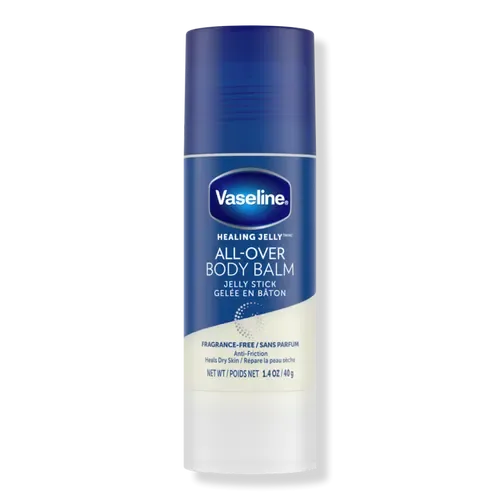
Vaseline Healing Jelly Stick - Unscented
No known risks99/100

Sunscreens
This formula needs extra consideration during pregnancy. Review the flagged ingredients with your healthcare professional.
27 of 27 ingredients rated
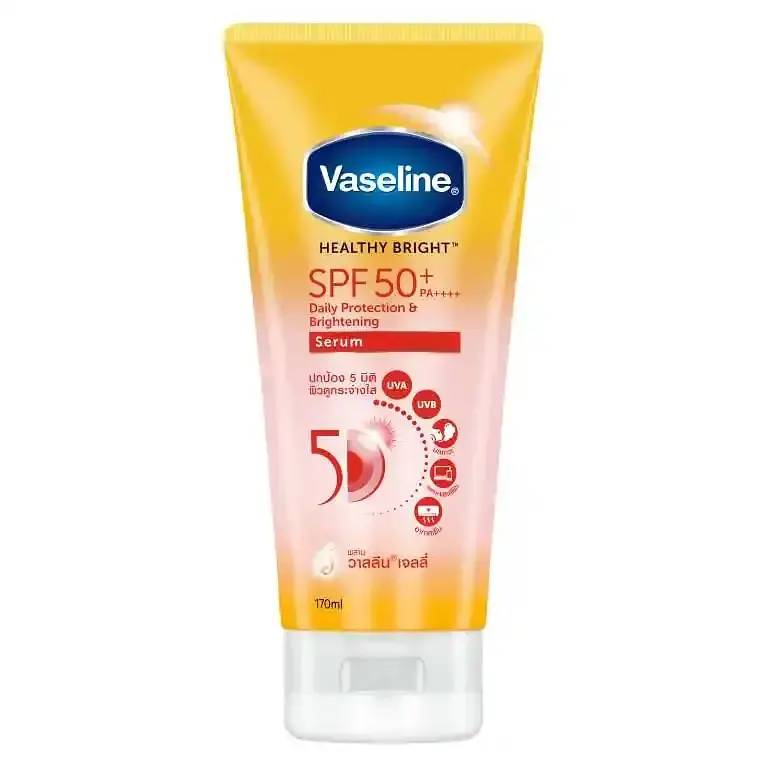
MamaSkin rates the recorded formula for Vaseline Healthy Bright SPF50+ PA++++ Daily Protection & Brightening Serum Sunscreen as Medium risk (51/100). Discuss the flagged ingredients with a qualified healthcare professional before using this formula during pregnancy.
The recorded formula includes 7 ingredient entries with risk flags: Octocrylene (Medium risk), Homosalate (Medium risk), Butyl Methoxydibenzoylmethane (Medium risk), plus others listed in the breakdown. These are ingredient-level flags; they do not replace the stored product assessment or account for every formulation detail.
27 of 27 ingredient entries on this page have a recorded score, evidence summary and source text. That describes documentation coverage, not proof that the finished formula has been clinically tested during pregnancy.
How we assess productsThe recorded formula, with evidence behind each rating. Unmatched ingredients are marked Not assessed in grey.
Octocrylene is a UV filter and photostabiliser used in sunscreens and some daily SPF products. SCCS reviewed endocrine-related evidence and noted some indications of endocrine effects in vivo, but with limitations; systemic exposure is plausible with frequent, large-area use. An additional practical signal is that benzophenone can occur as an impurity/degradation product in some octocrylene-containing products. Pregnancy-specific human outcome data for topical exposure are limited.
Sources: SCCS/1627/21: Octocrylene https://health.ec.europa.eu/publications/octocrylene_en
Homosalate is a UV-B filter. SCCS re-evaluations focused on potential endocrine activity and systemic exposure; while endocrine evidence has been described as inconclusive/equivocal, the ingredient remains under endocrine-disruptor scrutiny and exposure modelling depends on product type and use patterns. Pregnancy-specific human outcome data for topical exposure are limited, so the key signal is endocrine uncertainty plus systemic exposure considerations with frequent, large-area use.
Sources: SCCS: Homosalate safety assessment https://health.ec.europa.eu/publications/scientific-advice-safety-homosalate-cas-no-118-56-9-ec-no-204-260-8-uv-filter-cosmetic-products_en
Butyl methoxydibenzoylmethane (avobenzone) is a UVA filter used in sunscreens. Reviews note potential endocrine-related signals for several organic UV filters, but data are often not sufficient to establish endocrine disruption, and systemic exposure depends on formulation and use pattern. Pregnancy-specific human outcome data for topical exposure are limited; the key signal is uncertainty around systemic/endocrine effects rather than a well-defined pregnancy outcome dataset.
Sources: TGA: Safety review of seven active sunscreen ingredients https://www.tga.gov.au/resources/publication/corporate-reports/safety-review-seven-active-sunscreen-ingredients
Ethylhexyl salicylate (octisalate) is an organic UV-B filter with measurable topical absorption. A CIR review records a rat oral reproductive/developmental study with dose-related post-implantation loss and smaller litters at 80 and 250 mg/kg/day (NOAEL 25 mg/kg/day); those repeated oral doses do not model intact-skin cosmetic exposure. The same review found relatively low human-skin permeability and concluded ethylhexyl salicylate safe in the assessed cosmetic uses. A ToxCast-to-human-exposure comparison found the most sensitive in-vitro endocrine response at about 16.5 micromolar versus about 0.023 micromolar maximal-use human plasma exposure, roughly 700-fold lower. FDA still requests additional sunscreen safety data, and pregnancy-outcome data are limited; MotherToBaby reports no proven increased pregnancy risk. MamaSkin therefore uses Low Risk to surface absorption and the evidence gap without treating remote high-dose animal findings as proof that typical topical use should be avoided.
Sources: CIR 2019 Final Report: Amended Safety Assessment of Salicylic Acid and Salicylates https://www.cir-safety.org/sites/default/files/salicy042019FAR.pdf, Toxicological Sciences 2023: ToxCast/Tox21 endocrine activity compared with human plasma exposure https://academic.oup.com/toxsci/article/196/1/25/7240499, FDA: OTC sunscreen proposed-order Q&A https://www.fda.gov/drugs/understanding-over-counter-medicines/questions-and-answers-fda-posts-deemed-final-order-and-proposed-order-over-counter-sunscreen, Matta et al. JAMA 2020 maximal-use sunscreen absorption trial https://jamanetwork.com/journals/jama/fullarticle/2759002, MotherToBaby: Screening Your Sunscreen During Pregnancy https://mothertobaby.org/baby-blog/screening-your-sunscreen-during-pregnancy/
Phenylbenzimidazole sulfonic acid (ensulizole/PBSA) is a water-soluble UV-B filter used in sunscreens and UV-protective skincare. Key consumer-relevant risks are local irritation and photoreactivity/photosensitisation potential in a small subset of users; systemic toxicity signals are generally low in the cosmetic context. It is not a typical pregnancy-specific concern at topical cosmetic use levels; overall risk is mainly local sensitivity.
Sources: TGA: Sunscreen review including phenylbenzimidazole sulfonic acid https://www.tga.gov.au/resources/publication/corporate-reports/safety-review-seven-active-sunscreen-ingredients
Umbrella term for an undisclosed fragrance blend. It’s not usually a pregnancy-specific concern at normal cosmetic use levels, but the exact components and concentrations aren’t fully disclosed on the label, so we score it more conservatively. If you prefer maximum transparency (or you’re sensitive to fragrance compounds), choose fragrance-free/unscented products.
Sources: SCCS: Fragrance allergens in cosmetic products https://health.ec.europa.eu/latest-updates/sccs-new-opinion-fragrance-allergens-cosmetic-products-2012-07-31_en
Phenoxyethanol is a preservative permitted in EU cosmetics up to 1.0%. The SCCS concluded it is safe for cosmetic use at that level, including when considering higher cosmetic exposure scenarios in infants and young children. Main practical concern is irritation/stinging on very sensitive or compromised skin rather than a pregnancy- or breastfeeding-specific risk.
Sources: SCCS/1575/16: Phenoxyethanol opinion https://health.ec.europa.eu/publications/phenoxyethanol_en
Water (Aqua) is the standard purified water used as a cosmetic solvent. It has no pregnancy-specific risk in normal topical use.
Sources: https://pubchem.ncbi.nlm.nih.gov/compound/Water, https://single-market-economy.ec.europa.eu/sectors/cosmetics/cosmetic-ingredient-database/cosing-glossary-ingredients_en
Alkyl benzoate emollient used in cosmetics; available cosmetic safety assessments do not indicate pregnancy-specific concerns with routine topical use.
Sources: CIR Safety Assessment of Alkyl Benzoates (2012); CIR alkyl benzoates dossier / C12-15 alkyl benzoate data.
Glycerin is a widely used humectant that supports hydration and the skin barrier, with a long safety record and no known pregnancy or breastfeeding concerns in topical cosmetic use.
Sources: CIR; EU/UK Cosmetics Regulation
Stearic acid is a fatty acid used to stabilise emulsions and improve texture; it is considered low concern in topical cosmetics with no known pregnancy or breastfeeding risks at typical concentrations.
Sources: CIR; EU/UK Cosmetics Regulation
A fatty-acid ester used mainly for emollience, slip, cleansing or formula texture. Cosmetic safety reviewers concluded that these named esters are safe in current cosmetic practices, with non-irritating formulation conditions where specified.
Sources: CIR: Glycol Stearate, Ethylhexyl Olivate, Cetearyl Isononanoate, Heptyl Undecylenate, Isostearyl Neopentanoate and Octyldodecyl Myristate conclusions; December 2025 Quick Reference Table https://cir-safety.org/sites/default/files/QRT-Update-Dec2025.pdf
Emulsifier used to stabilize creams and lotions. Reviewed cosmetic safety sources support use of PEG stearates in cosmetics, with no pregnancy- or breastfeeding-specific concern identified for normal topical use.
Sources: CIR: Safety Assessment of PEG Stearates as Used in Cosmetics; EU CosIng / cosmetics regulatory inventory
Tocopheryl acetate (vitamin E derivative) is used as an antioxidant and skin-conditioning ingredient; it is considered low concern in topical use with no known pregnancy or breastfeeding risks at cosmetic concentrations.
Sources: CIR; EU/UK Cosmetics Regulation
A water-soluble vitamin C derivative used as an antioxidant and skin-conditioning ingredient. Cosmetic safety reviewers concluded that sodium ascorbyl phosphate and the reviewed ascorbates are safe in cosmetic use and later reaffirmed that conclusion after reviewing updated use and safety data. No pregnancy-specific concern is identified for normal topical exposure.
Sources: CIR ingredient record: Sodium Ascorbyl Phosphate https://www.cir-safety.org/ingredient/sodium-ascorbyl-phosphate; CIR: Safety Assessment and Re-Review of Ascorbic Acid and Ascorbates https://www.cir-safety.org/sites/default/files/RRSums_2.pdf
Niacinamide (vitamin B3) is widely used for barrier support and tone/texture benefits, and is generally considered safe in pregnancy and breastfeeding when used topically at cosmetic concentrations.
Sources: CIR; EU/UK Cosmetics Regulation
Emulsifier and emollient used to stabilise creams and lotions. Not associated with pregnancy-specific concerns at cosmetic exposure.
Sources: Cosmetic Ingredient Review (US); Scientific Committee on Consumer Safety (EU)
Highly refined petrolatum (petroleum jelly) is a skin protectant/occlusive with minimal dermal penetration; safety depends on refining/PAH impurity controls and cosmetic/medical grades meet established standards.
Sources: USP White Petrolatum monograph (2021); Petry et al., Food and Chemical Toxicology (2017); PubMed (dermatology review)
Fatty alcohol used to improve texture and skin feel. Considered safe for cosmetic use without pregnancy-specific concerns.
Sources: Cosmetic Ingredient Review (US); Scientific Committee on Consumer Safety (EU)
pH adjuster used in very small quantities to balance formulations. Not associated with pregnancy-specific concerns.
Sources: Scientific Committee on Consumer Safety (EU); European cosmetics regulatory framework
Inorganic mineral pigment and, in some products, a mineral UV filter. For typical topical use in creams, lotions and makeup, systemic absorption is expected to be very low. Most concerns discussed in the literature relate to ingestion (food additive E171) or inhalation exposure from fine powders/sprays, and to specific nanoparticle characterisation. For routine topical cosmetic use, it is generally considered acceptable in pregnancy and breastfeeding; if you prefer a cautious approach, avoid inhaling loose powders or sprays.
Sources: EFSA opinion on titanium dioxide as food additive E171 (ingestion context); SCCS opinions on titanium dioxide in cosmetics (including inhalation/nano considerations); general dermatology guidance on mineral sunscreens in pregnancy.
Polymer thickener used to create gel textures. Large-molecule ingredient with negligible systemic absorption.
Sources: Cosmetic Ingredient Review (US); Scientific Committee on Consumer Safety (EU)
Natural polysaccharide thickener used for stability and texture. Not associated with pregnancy-specific concerns.
Sources: European cosmetics regulatory framework
stearamide amp is a cosmetic formulation, mineral, sugar-derived or organic-acid ingredient. Available identity, use and related safety evidence did not identify a pregnancy-specific concern for normal topical cosmetic exposure. Cosmetic-grade purity and ordinary irritation precautions remain applicable.
Sources: CIR ingredient and related-family safety assessments; CIR Quick Reference Table https://www.cir-safety.org/supplementaldoc/quick-reference-table-december-2025; European Commission CosIng
Mineral opacifier, absorbent and pigment-coating ingredient used in makeup, sunscreens and skin care. Low systemic exposure is expected from normal topical cosmetic use, with no pregnancy- or breastfeeding-specific concern identified in reviewed cosmetic references.
Sources: CIR cosmetic ingredient safety references for alumina/aluminum hydroxide ingredients; EU CosIng / cosmetics regulatory inventory
Disodium EDTA is a chelating agent used to improve formula stability and performance; it is considered low concern in topical cosmetic use, with no known pregnancy or breastfeeding risks at typical concentrations.
Sources: CIR; EU/UK Cosmetics Regulation
Humectant and preservative booster used to support product stability. Low systemic exposure expected from topical cosmetic use.
Sources: Scientific Committee on Consumer Safety (EU); Cosmetic Ingredient Review (US)
Water, C12-15 Alkyl Benzoate, Ethylhexyl Salicylate, Octocrylene, Homosalate, Butyl Methoxydibenzoylmethane, Glycerin, Stearic Acid, Phenylbenzimidazole Sulfonic Acid, Glycol Stearate, PEG-100 Stearate, Tocopheryl Acetate, Sodium Ascorbyl Phosphate, Niacinamide, Glyceryl Stearate, Petrolatum, Cetyl Alcohol, Sodium Hydroxide, Titanium Dioxide, Carbomer, Xanthan Gum, Stearamide Amp, Aluminum Hydroxide, Parfum, Disodium EDTA, Caprylyl Glycol, Phenoxyethanol
Ingredient ratings refreshed 1 October 2026. Formulas vary by market and can change. Always compare with your packaging.
The recorded formula includes 7 ingredient entries with risk flags: Octocrylene (Medium risk), Homosalate (Medium risk), Butyl Methoxydibenzoylmethane (Medium risk), plus others listed in the breakdown. These are ingredient-level flags; they do not replace the stored product assessment or account for every formulation detail. The product score is a stored assessment, not a clinical safety guarantee.
No. The score and risk band describe MamaSkin's pregnancy-focused ingredient screening of this recorded formula. They do not measure SPF, UVA protection, water resistance or whether you have applied enough sunscreen. Use the protection and application instructions on your exact packaging, and review the ingredient flags separately.
27 of 27 ingredient entries on this page have a recorded score, evidence summary and source text. That describes documentation coverage, not proof that the finished formula has been clinically tested during pregnancy.
Only if the ingredient list on your packaging matches the recorded formula shown here. Formulas can differ by market and change over time. Compare the full list, not just the product name; report a mismatch if it differs.
No. This page presents a pregnancy-focused product assessment. Do not infer a breastfeeding conclusion from its score or label; breastfeeding requires a separate assessment of the formula and how it is used.