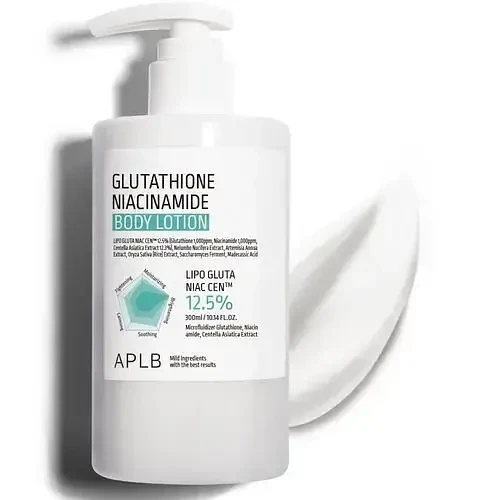
APLB Glutathione Niacinamide Body Lotion by APLB
APLB

APLB Glutathione Niacinamide Body Lotion

Body Lotionsbody care

Safety score

Pregnancy-focused assessment

Low Risk79/100
Higher concernLower concern

One or more ingredients have a low-risk flag in MamaSkin's current assessment. Review the notes and your own circumstances.

Formula and assessment check

Ingredient safety review updated 24 November 2025. Product formulas can change, so compare the ingredients shown here with the packaging you have.

Report a formula mismatch

MamaSkin assessment · 24 November 2025

Is APLB Glutathione Niacinamide Body Lotion suitable during pregnancy?

MamaSkin currently classifies APLB Glutathione Niacinamide Body Lotion as Low risk, with a stored score of 79/100. This is a precautionary classification, not an unqualified pregnancy-safe recommendation. Read the ingredient context and any manual-review explanation below.

What does the ingredient evidence show?

The recorded formula includes 2 ingredient entries with risk flags: Cyclohexasiloxane (Low risk), Dimethicone (Low risk). These are ingredient-level flags; they do not replace the stored product assessment or account for every formulation detail.

41 of 41 ingredient entries on this page have a recorded score, evidence summary and source text. That describes documentation coverage, not proof that the finished formula has been clinically tested during pregnancy.

Ingredient breakdown

See how the listed formula falls across MamaSkin's pregnancy-focused risk bands.

39

No known risks

2

Low risk

0

Medium risk

0

High risk

Ingredients

Ingredients with a higher risk flag appear first, followed by the rest of the formula.

Cyclohexasiloxane

Low Risk

A volatile cyclic silicone also known as D6, used for slip and quick-drying texture. Normal topical exposure is expected to be limited, but exact-ingredient pregnancy evidence is limited and cyclic siloxanes have route-specific toxicology and regulatory considerations. MamaSkin therefore classifies it as low risk rather than a pregnancy contraindication.

Sources: CIR: Safety Assessment of Cyclomethicone https://cir-safety.org/ingredient/cyclomethicone; ECHA: Octamethylcyclotetrasiloxane, Decamethylcyclopentasiloxane and Dodecamethylcyclohexasiloxane restriction https://echa.europa.eu/hot-topics/siloxanes
Dimethicone

Low Risk

Dimethicone is a silicone polymer used as a skin protectant and slip/conditioning agent. It is considered inert with minimal dermal absorption; the main practical issues are cosmetic (feel) and occasional irritation in very sensitive users. It is not a pregnancy-specific concern in topical cosmetic use.

Sources: CIR: Amended Safety Assessment of Dimethicone, Methicone, and Substituted-Methicone Polymers as Used in Cosmetics https://cir-safety.org/supplementaldoc/amended-safety-assessment-dimethicone-methicone-and-substituted-methicone-polymers-2

Water

No Known Risks

Water (Aqua) is the standard purified water used as a cosmetic solvent. It has no pregnancy-specific risk in normal topical use.

Sources: https://pubchem.ncbi.nlm.nih.gov/compound/Water, https://single-market-economy.ec.europa.eu/sectors/cosmetics/cosmetic-ingredient-database/cosing-glossary-ingredients_en

Show all (41)

Centella Asiatica Extract 12.3%

No Known Risks

Botanical skin-conditioning ingredient used in soothing and barrier-support formulas. Reviewed cosmetic safety sources support current cosmetic use when formulated to be non-sensitising, with no pregnancy- or breastfeeding-specific topical concern identified in the material reviewed.

Sources: CIR: Safety Assessment of Centella asiatica-derived Ingredients as Used in Cosmetics; EU CosIng / cosmetics regulatory inventory

Glycerin

No Known Risks

Glycerin is a widely used humectant that supports hydration and the skin barrier, with a long safety record and no known pregnancy or breastfeeding concerns in topical cosmetic use.

Sources: CIR; EU/UK Cosmetics Regulation

Cetyl Ethylhexanoate

No Known Risks

Lightweight emollient ester used to improve slip and skin feel. Reviewed cosmetic ingredient references do not identify a pregnancy- or breastfeeding-specific concern for normal topical cosmetic use.

Sources: CIR cosmetic ingredient safety references for alkyl esters/emollient esters; EU CosIng / cosmetics regulatory inventory

Cetearyl Alcohol

No Known Risks

Fatty alcohol used as an emollient and thickener. Not the same as drying alcohols and not associated with pregnancy-specific concerns.

Sources: Cosmetic Ingredient Review (US); Scientific Committee on Consumer Safety (EU)

Glyceryl Stearate

No Known Risks

Emulsifier and emollient used to stabilise creams and lotions. Not associated with pregnancy-specific concerns at cosmetic exposure.

Sources: Cosmetic Ingredient Review (US); Scientific Committee on Consumer Safety (EU)

Glutathione

No Known Risks

An antioxidant peptide naturally present in the body and used in topical products for skin conditioning and tone. Clinical studies and systematic reviews report generally good tolerance of topical glutathione, although evidence for cosmetic benefits remains limited. No pregnancy-specific topical signal was identified.

Sources: PubMed: Systematic Review of the Efficacy and Safety of Topical Glutathione in Dermatology https://pubmed.ncbi.nlm.nih.gov/41416233/; PubMed: topical oxidized glutathione clinical trial https://pubmed.ncbi.nlm.nih.gov/25378941/

Niacinamide

No Known Risks

Niacinamide (vitamin B3) is widely used for barrier support and tone/texture benefits, and is generally considered safe in pregnancy and breastfeeding when used topically at cosmetic concentrations.

Sources: CIR; EU/UK Cosmetics Regulation

Madecassic Acid

No Known Risks

A triterpene associated with Centella asiatica and used in soothing and skin-conditioning formulas. Pregnancy-specific evidence for isolated topical madecassic acid is limited. Evidence for the related Centella ingredient family supports current cosmetic exposure when products are formulated to avoid sensitisation; no pregnancy-specific topical contraindication was identified in the reviewed material.

Sources: CIR: Safety Assessment of Centella asiatica-Derived Ingredients as Used in Cosmetics https://cir-safety.org/supplementaldoc/safety-assessment-centella-asiatica-derived-ingredients-used-cosmetics-1

Asiaticoside

No Known Risks

A triterpene glycoside associated with Centella asiatica and used in soothing and skin-conditioning formulas. Pregnancy-specific evidence for isolated topical asiaticoside is limited. Cosmetic safety reviewers considered Centella-derived ingredients acceptable at current cosmetic exposure but noted that asiaticoside and related triterpenes may contribute to sensitisation. No pregnancy-specific topical contraindication was identified in the reviewed material.

Sources: CIR: Safety Assessment of Centella asiatica-Derived Ingredients as Used in Cosmetics https://cir-safety.org/supplementaldoc/safety-assessment-centella-asiatica-derived-ingredients-used-cosmetics-1

Asiatic Acid

No Known Risks

A triterpene associated with Centella asiatica and used in skin-conditioning formulas. Pregnancy-specific evidence for isolated topical asiatic acid is limited. Cosmetic safety reviewers considered Centella-derived ingredients acceptable at current cosmetic exposure but identified asiatic acid and related constituents as potential contributors to sensitisation. No pregnancy-specific topical contraindication was identified in the reviewed material.

Sources: CIR: Safety Assessment of Centella asiatica-Derived Ingredients as Used in Cosmetics https://cir-safety.org/supplementaldoc/safety-assessment-centella-asiatica-derived-ingredients-used-cosmetics-1

Solanum Melongena Fruit Extract

No Known Risks

A fruit, seed or food-plant extract used for skin conditioning and antioxidant support. No pregnancy-specific signal was identified for the low topical exposure expected from a finished cosmetic. Direct pregnancy studies are generally unavailable, and botanical allergy remains possible.

Sources: European Commission CosIng ingredient inventory; CIR botanical safety framework and relevant fruit-derived ingredient assessments; peer-reviewed cosmetic and phytochemical literature for the named plants.

Melaleuca Alternifolia Leaf Extract

No Known Risks

A tea-tree leaf extract used for skin conditioning and antimicrobial support. Cosmetic safety reviewers concluded that the assessed Melaleuca alternifolia-derived ingredients are safe in current practices when formulated to be non-sensitising. This leaf extract is distinct from concentrated tea-tree essential oil, although botanical allergy remains possible.

Sources: CIR: Safety Assessment of Melaleuca alternifolia-Derived Ingredients as Used in Cosmetics https://cir-reports.cir-safety.org/view-attachment/?id=e1f5b6e9-8c74-ec11-8943-0022482f06a6

Hydrolyzed Collagen

No Known Risks

Protein-derived skin- and hair-conditioning ingredient used to support feel and hydration at the surface. Reviewed cosmetic ingredient references do not identify a pregnancy- or breastfeeding-specific concern for normal topical use.

Sources: CIR cosmetic ingredient safety references for protein hydrolysates; EU CosIng / cosmetics regulatory inventory

Beta-Glucan

No Known Risks

Film-forming polysaccharide used for soothing and hydration support. Reviewed cosmetic safety sources support normal topical use, with no pregnancy- or breastfeeding-specific topical signal identified in the material reviewed.

Sources: CIR: Safety Assessment of Microbial Polysaccharide Gums as Used in Cosmetics; EU CosIng / cosmetics regulatory inventory

Hippophae Rhamnoides Fruit Extract

No Known Risks

A sea buckthorn fruit extract used for skin conditioning and antioxidant support. Cosmetic safety assessments of Hippophae rhamnoides-derived ingredients support current cosmetic uses, and no pregnancy-specific signal was identified for normal topical exposure. Botanical allergy remains possible.

Sources: CIR: Hippophae Rhamnoides-derived ingredients, IJT 36(Suppl. 3), 2017; CIR December 2025 Quick Reference Table https://cir-safety.org/sites/default/files/QRT-Update-Dec2025.pdf

Nelumbo Nucifera Extract

No Known Risks

The 2025 final CIR assessment explicitly lists the exact identity among the 12 Nelumbo nucifera-derived ingredients concluded safe in current cosmetic practices and concentrations.

Sources: https://www.cir-safety.org/sites/default/files/FR_NelumboNucifera_092025_02_0.pdf

Artemisia Annua Extract

No Known Risks

A botanical extract, juice or water used primarily for skin conditioning, moisturising, soothing or antioxidant support. Direct pregnancy studies of the named cosmetic material were not identified. No reproductive or developmental hazard was identified for normal topical exposure to a compliant finished cosmetic; oral herbal or medicinal use is outside this classification.

Sources: European Commission CosIng ingredient inventory; Cosmetic Ingredient Review botanical safety-assessment framework and relevant plant-family assessments. No ingredient-specific human pregnancy study of normal topical cosmetic use was identified.

Oryza Sativa Extract

No Known Risks

A rice-derived extract or wax used for skin conditioning, absorbency or texture. Cosmetic safety reviewers concluded that the assessed Oryza sativa-derived ingredients are safe in current cosmetic practices. Rice allergy remains possible in a susceptible person.

Sources: CIR: Rice-derived ingredients conclusions, IJT 25(Suppl. 2), 2006; December 2025 Quick Reference Table https://cir-safety.org/sites/default/files/QRT-Update-Dec2025.pdf

Saccharomyces Ferment

No Known Risks

A yeast-derived ferment, filtrate or extract used for skin conditioning. Cosmetic safety reviewers concluded that cosmetic ingredients derived from the reviewed yeast species are safe in current practices; this record applies to the standardized cosmetic INCI material, not an unspecified live culture.

Sources: CIR: Yeast-derived ingredients final assessment, June 2024; Galactomyces Ferment Filtrate conclusion; December 2025 Quick Reference Table https://cir-safety.org/sites/default/files/QRT-Update-Dec2025.pdf

Squalane

No Known Risks

Lightweight emollient used to support the skin barrier. Not associated with pregnancy-specific concerns at cosmetic exposure levels.

Sources: Cosmetic Ingredient Review (US); Scientific Committee on Consumer Safety (EU)

Sodium Hyaluronate

No Known Risks

Sodium hyaluronate (hyaluronic acid salt) is used for hydration and cushioning, with very low systemic absorption from topical use and no known pregnancy or breastfeeding concerns at cosmetic concentrations.

Sources: CIR; EU/UK Cosmetics Regulation

Dipropylene Glycol

No Known Risks

Dipropylene glycol is used as a solvent and carrier in cosmetics; topical exposure is low and it has no known pregnancy or breastfeeding concerns at cosmetic concentrations.

Sources: CIR; EU/UK Cosmetics Regulation

Butylene Glycol

No Known Risks

Solvent and humectant commonly used in leave-on products. Not associated with pregnancy-specific concerns at cosmetic exposure levels.

Sources: Cosmetic Ingredient Review (US); Scientific Committee on Consumer Safety (EU)

Hydrogenated Lecithin

No Known Risks

Hydrogenated emulsifier used to support skin barrier feel. Not associated with pregnancy-specific concerns.

Sources: Cosmetic Ingredient Review (US)

Cholesterol

No Known Risks

Skin-conditioning lipid used in barrier-support formulas, often alongside ceramides and fatty acids. Normal topical cosmetic use has no known pregnancy- or breastfeeding-specific concern identified in reviewed cosmetic references.

Sources: CIR cosmetic ingredient safety references for cholesterol and related sterols; EU CosIng / cosmetics regulatory inventory

Xanthan Gum

No Known Risks

Natural polysaccharide thickener used for stability and texture. Not associated with pregnancy-specific concerns.

Sources: European cosmetics regulatory framework

Potassium Hydroxide

No Known Risks

A strongly alkaline raw material used mainly in small amounts to adjust pH or during soap manufacture. Concentrated potassium hydroxide is corrosive, but that raw-material hazard is not representative of a correctly formulated finished cosmetic. Cosmetic safety reviewers concluded that inorganic hydroxides are safe in current cosmetic uses when products are formulated to be non-irritating, with special handling conditions for depilatories and hair straighteners. No pregnancy-specific concern is identified for normal use of a compliant finished product.

Sources: CIR: Safety Assessment of Inorganic Hydroxides as Used in Cosmetics https://www.cir-safety.org/supplementaldoc/safety-assessment-inorganic-hydroxides-used-cosmetics-0

Disodium EDTA

No Known Risks

Disodium EDTA is a chelating agent used to improve formula stability and performance; it is considered low concern in topical cosmetic use, with no known pregnancy or breastfeeding risks at typical concentrations.

Sources: CIR; EU/UK Cosmetics Regulation

Caprylic/Capric Triglyceride

No Known Risks

Common emollient derived from fatty acids and glycerin. Used to soften skin and improve texture without pregnancy-specific concerns.

Sources: Cosmetic Ingredient Review (US); Scientific Committee on Consumer Safety (EU)

Cyclopentasiloxane

No Known Risks

Silicone emollient and solvent used to improve slip and spreadability. No known pregnancy- or breastfeeding-specific concern in normal topical cosmetic use based on reviewed cosmetic safety sources. Spray or aerosol formats may warrant extra caution because inhalation/local lung exposure concerns have been raised for those uses.

Sources: SCCS: Cyclopentasiloxane (D5) in cosmetic products; EU CosIng / cosmetics regulatory inventory

Saccharide Hydrolysate

No Known Risks

A sugar, polysaccharide or related carbohydrate used for hydration, texture or formula support. No reproductive or developmental concern was identified for normal topical cosmetic exposure.

Sources: European Commission CosIng ingredient inventory; CIR safety assessments of saccharides and naturally derived polymers as used in cosmetics.

Sorbitan Stearate

No Known Risks

This sorbitan fatty-acid ester is an emulsifier that helps oil and water phases remain mixed. The Cosmetic Ingredient Review concluded that sorbitan esters are safe in current cosmetic use; occasional contact reactions remain possible in sensitive users.

Sources: CIR: Safety Assessment of Sorbitan Esters as Used in Cosmetics https://www.cir-safety.org/supplementaldoc/safety-assessment-sorbitan-esters-used-cosmetics

PEG-100 Stearate

No Known Risks

Emulsifier used to stabilize creams and lotions. Reviewed cosmetic safety sources support use of PEG stearates in cosmetics, with no pregnancy- or breastfeeding-specific concern identified for normal topical use.

Sources: CIR: Safety Assessment of PEG Stearates as Used in Cosmetics; EU CosIng / cosmetics regulatory inventory

Stearic Acid

No Known Risks

Stearic acid is a fatty acid used to stabilise emulsions and improve texture; it is considered low concern in topical cosmetics with no known pregnancy or breastfeeding risks at typical concentrations.

Sources: CIR; EU/UK Cosmetics Regulation

1,2-Hexanediol

No Known Risks

1,2-Hexanediol is commonly used as a solvent and preservative booster; topical exposure is low and it has no known pregnancy or breastfeeding concerns at cosmetic concentrations, though very sensitive skin may occasionally react.

Sources: CIR; EU/UK Cosmetics Regulation

Chlorphenesin

No Known Risks

Preservative used to help protect formulas from microbial growth. Reviewed cosmetic safety sources support present cosmetic use; no pregnancy- or breastfeeding-specific topical concern was identified in the material reviewed, although some users may still notice local irritation or sensitivity.

Sources: CIR: Safety Assessment of Chlorphenesin as Used in Cosmetics; EU CosIng / cosmetics regulatory inventory

Carbomer

No Known Risks

Polymer thickener used to create gel textures. Large-molecule ingredient with negligible systemic absorption.

Sources: Cosmetic Ingredient Review (US); Scientific Committee on Consumer Safety (EU)

Caprylyl Glycol

No Known Risks

Humectant and preservative booster used to support product stability. Low systemic exposure expected from topical cosmetic use.

Sources: Scientific Committee on Consumer Safety (EU); Cosmetic Ingredient Review (US)

Formulations can change without notice. For the most accurate result, compare this list with your packaging and scan the exact ingredient label in MamaSkin when you repurchase.

Questions about this assessment

Has every ingredient in APLB Glutathione Niacinamide Body Lotion been assessed?

41 of 41 ingredient entries on this page have a recorded score, evidence summary and source text. That describes documentation coverage, not proof that the finished formula has been clinically tested during pregnancy.

Does this assessment apply to the APLB Glutathione Niacinamide Body Lotion I have?

Only if the ingredient list on your packaging matches the recorded formula shown here. Formulas can differ by market and change over time. Compare the full list, not just the product name; report a mismatch if it differs.

Does this pregnancy assessment also establish breastfeeding suitability?

No. This page presents a pregnancy-focused product assessment. Do not infer a breastfeeding conclusion from its score or label; breastfeeding requires a separate assessment of the formula and how it is used.

How to use this assessment

The risk band is the primary conclusion. The score adds detail within that band and should not be used to compare products as if a one-point difference were clinically meaningful.

MamaSkin provides pregnancy-focused information, not medical advice. Your midwife, GP, pharmacist or dermatologist should take priority when your circumstances differ from typical cosmetic use.

Read the full methodology