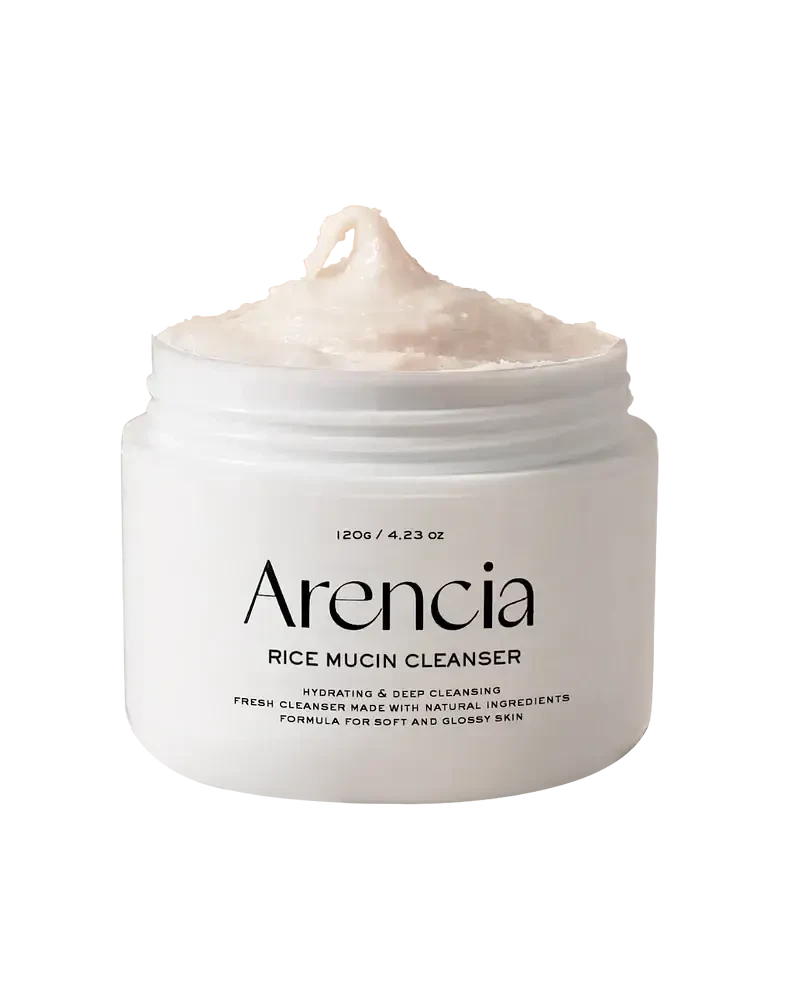
Arencia Rice Mucin Cleanser by Arencia
Arencia

Arencia Rice Mucin Cleanser

Face Cleanserscleansers

Safety score

Pregnancy-focused assessment

Low Risk79/100
Higher concernLower concern

One or more ingredients have a low-risk flag in MamaSkin's current assessment. Review the notes and your own circumstances.

Formula and assessment check

Ingredient safety review updated 22 September 2026. Product formulas can change, so compare the ingredients shown here with the packaging you have.

Report a formula mismatch

MamaSkin assessment · 22 September 2026

Is Arencia Rice Mucin Cleanser suitable during pregnancy?

MamaSkin currently classifies Arencia Rice Mucin Cleanser as Low risk, with a stored score of 79/100. This is a precautionary classification, not an unqualified pregnancy-safe recommendation. Read the ingredient context and any manual-review explanation below.

What does the ingredient evidence show?

The recorded formula includes 1 ingredient entry with a risk flag: Coptis Japonica Extract (Low risk). These are ingredient-level flags; they do not replace the stored product assessment or account for every formulation detail.

24 of 24 ingredient entries on this page have a recorded score, evidence summary and source text. That describes documentation coverage, not proof that the finished formula has been clinically tested during pregnancy.

Ingredient breakdown

See how the listed formula falls across MamaSkin's pregnancy-focused risk bands.

23

No known risks

1

Low risk

0

Medium risk

0

High risk

Ingredients

Ingredients with a higher risk flag appear first, followed by the rest of the formula.

Coptis Japonica Extract

Low Risk

Generic Coptis japonica extract may contain the berberine-bearing root represented by a live Low row, but the catalogue name omits plant part and alkaloid level. Low maintains that close-family policy until supplier composition is known.

Sources: https://pubmed.ncbi.nlm.nih.gov/10552394/, https://www.ncbi.nlm.nih.gov/books/NBK600384/
Glycerin

No Known Risks

Glycerin is a widely used humectant that supports hydration and the skin barrier, with a long safety record and no known pregnancy or breastfeeding concerns in topical cosmetic use.

Sources: CIR; EU/UK Cosmetics Regulation

Water

No Known Risks

Water (Aqua) is the standard purified water used as a cosmetic solvent. It has no pregnancy-specific risk in normal topical use.

Sources: https://pubchem.ncbi.nlm.nih.gov/compound/Water, https://single-market-economy.ec.europa.eu/sectors/cosmetics/cosmetic-ingredient-database/cosing-glossary-ingredients_en

Show all (24)

Sodium Cocoyl Isethionate

No Known Risks

Sodium cocoyl isethionate is a cleansing surfactant. The Cosmetic Ingredient Review concluded that isethionate salts are safe in current cosmetic use when formulated to be non-irritating, and reviewed reproductive and developmental data did not identify a pregnancy-specific signal.

Sources: CIR: Amended Safety Assessment of Isethionate Salts as Used in Cosmetics https://cir-safety.org/supplementaldoc/amended-safety-assessment-isethionate-salts-used-cosmetics-0

Sodium Cocoyl Glycinate

No Known Risks

An amino-acid-derived surfactant or conditioning ingredient. Cosmetic safety reviewers concluded that amino acid alkyl amides are safe in current cosmetic practices when formulated to be non-irritating. Manufacturing and formulation should control nitrosamine formation where relevant.

Sources: CIR: Safety Assessment of Amino Acid Alkyl Amides as Used in Cosmetics https://www.cir-safety.org/supplementaldoc/safety-assessment-amino-acid-alkyl-amides-used-cosmetics-0

Coconut Acid

No Known Risks

A coconut-derived fatty ingredient used for cleansing, emollience or formula texture. Cosmetic safety reviewers concluded that coconut acid, hydrogenated coco-glycerides and the supported coconut-derived group are safe as cosmetic ingredients. Coconut allergy may still matter for a susceptible person.

Sources: CIR: Safety Assessment of Cocos nucifera (Coconut)-Derived Ingredients; December 2025 Quick Reference Table https://cir-safety.org/sites/default/files/QRT-Update-Dec2025.pdf

Sodium Methyl Cocoyl Taurate

No Known Risks

A mild anionic surfactant derived from fatty acids and methyltaurate, used mainly in cleansers and shampoos. Cosmetic safety reviewers concluded that the reviewed taurate surfactants, including sodium methyl cocoyl taurate, are safe in current cosmetic use when formulated to be non-irritating. No pregnancy-specific concern is identified for normal topical exposure.

Sources: CIR: Safety Assessment of Alkyl Taurate Amides and Taurate Salts https://cir-safety.org/sites/default/files/taurat122015FR.pdf

1,2-Hexanediol

No Known Risks

1,2-Hexanediol is commonly used as a solvent and preservative booster; topical exposure is low and it has no known pregnancy or breastfeeding concerns at cosmetic concentrations, though very sensitive skin may occasionally react.

Sources: CIR; EU/UK Cosmetics Regulation

Oryza Sativa Powder

No Known Risks

A cosmetic functional ingredient used for conditioning, texture or formula support. Available cosmetic-use information did not identify a reproductive or developmental hazard from normal topical exposure.

Sources: European Commission CosIng ingredient inventory; relevant CIR cosmetic safety assessments and peer-reviewed cosmetic-use literature.

Sodium Isethionate

No Known Risks

An isethionate salt used for cleansing or formula support. Cosmetic safety reviewers concluded that isethionate salts, including sodium isethionate, are safe in current practices when formulated to be non-irritating.

Sources: CIR: Isethionate Salts conclusion, IJT 36(Suppl. 1), 2017; December 2025 Quick Reference Table https://cir-safety.org/sites/default/files/QRT-Update-Dec2025.pdf

Hydroxypropyl Starch Phosphate

No Known Risks

A modified starch used mainly to thicken and stabilize cosmetic formulas. Cosmetic safety reviewers concluded that starch phosphates, including hydroxypropyl starch phosphate, are safe in current cosmetic use. No pregnancy- or breastfeeding-specific concern is identified for normal topical exposure.

Sources: CIR: Safety Assessment of Starch Phosphates https://cir-safety.org/sites/default/files/FR_StarchPhosphates_092022.pdf

Glyceryl Stearate

No Known Risks

Emulsifier and emollient used to stabilise creams and lotions. Not associated with pregnancy-specific concerns at cosmetic exposure.

Sources: Cosmetic Ingredient Review (US); Scientific Committee on Consumer Safety (EU)

Sodium Chloride

No Known Risks

Sodium chloride is used to adjust viscosity and texture in formulations; topical cosmetic use is considered low concern with no known pregnancy or breastfeeding risks.

Sources: CIR; EU/UK Cosmetics Regulation

Xanthan Gum

No Known Risks

Natural polysaccharide thickener used for stability and texture. Not associated with pregnancy-specific concerns.

Sources: European cosmetics regulatory framework

Polyquaternium-67

No Known Risks

A numbered cationic polymer used for hair conditioning, antistatic effects, film formation or formula texture. The Polyquaternium number identifies a distinct polymer, so evidence from one number is not treated as proof for every other number. For this ingredient, no pregnancy, reproductive or breastfeeding hazard signal was identified in the cosmetic-use and substance information reviewed. Its polymeric size makes meaningful absorption through intact skin unlikely; local irritation and control of residual monomers remain formulation-quality considerations.

Sources: European Commission CosIng ingredient inventory; CIR safety assessments and December 2025 Quick Reference Table for structurally and functionally related polyquaternium cosmetic polymers https://cir-safety.org/sites/default/files/QRT-Update-Dec2025.pdf; publicly available supplier safety data and ECHA substance information where available for the named polymer. No ingredient-specific pregnancy studies were identified.

Propanediol

No Known Risks

Solvent and humectant used to improve texture and ingredient solubility. Low systemic exposure expected from topical cosmetic use.

Sources: Cosmetic Ingredient Review (US); Scientific Committee on Consumer Safety (EU)

Ethylhexylglycerin

No Known Risks

Preservative booster and skin-conditioning agent. Considered safe for cosmetic use with low systemic exposure when used as intended.

Sources: Scientific Committee on Consumer Safety (EU); Cosmetic Ingredient Review (US)

Butylene Glycol

No Known Risks

Solvent and humectant commonly used in leave-on products. Not associated with pregnancy-specific concerns at cosmetic exposure levels.

Sources: Cosmetic Ingredient Review (US); Scientific Committee on Consumer Safety (EU)

Disodium EDTA

No Known Risks

Disodium EDTA is a chelating agent used to improve formula stability and performance; it is considered low concern in topical cosmetic use, with no known pregnancy or breastfeeding risks at typical concentrations.

Sources: CIR; EU/UK Cosmetics Regulation

Theobroma Cacao Seed Extract

No Known Risks

A cosmetic extract from an edible fruit, seed, grain, root or mushroom used for conditioning or antioxidant support. Normal topical cosmetic exposure is much lower than ordinary dietary exposure to the source material, and no pregnancy-specific hazard signal was identified. Exact extract composition varies, so source quality and individual food or plant allergy remain relevant.

Sources: European Commission CosIng ingredient inventory; CIR botanical safety framework and relevant plant-derived ingredient assessments; FDA food ingredient and GRAS inventories where applicable.

Oryza Sativa Extract

No Known Risks

A rice-derived extract or wax used for skin conditioning, absorbency or texture. Cosmetic safety reviewers concluded that the assessed Oryza sativa-derived ingredients are safe in current cosmetic practices. Rice allergy remains possible in a susceptible person.

Sources: CIR: Rice-derived ingredients conclusions, IJT 25(Suppl. 2), 2006; December 2025 Quick Reference Table https://cir-safety.org/sites/default/files/QRT-Update-Dec2025.pdf

Snail Secretion Filtrate

No Known Risks

An animal-derived protein, peptide or secretion filtrate used for hydration and skin conditioning. These large components are expected to have low systemic absorption through intact skin. No pregnancy-specific hazard signal was identified for normal topical cosmetic use. Cosmetic-grade materials should be processed to control microorganisms, infectious agents and source-derived impurities, and protein allergy remains possible.

Sources: CIR: Safety Assessment of Skin and Connective Tissue-Derived Proteins and Peptides https://www.cir-safety.org/sites/default/files/tsupep092017final.pdf; European Commission CosIng ingredient inventory; peer-reviewed cosmetic literature on snail secretion filtrate.

Dextrin

No Known Risks

Starch-derived polysaccharide used as a binder, film former and texture support ingredient. Reviewed cosmetic ingredient references do not identify a pregnancy- or breastfeeding-specific concern for normal topical use.

Sources: CIR cosmetic ingredient safety references for polysaccharides/starch-derived ingredients; EU CosIng / cosmetics regulatory inventory

Oryza Sativa Bran Extract

No Known Risks

A rice-derived extract or wax used for skin conditioning, absorbency or texture. Cosmetic safety reviewers concluded that the assessed Oryza sativa-derived ingredients are safe in current cosmetic practices. Rice allergy remains possible in a susceptible person.

Sources: CIR: Rice-derived ingredients conclusions, IJT 25(Suppl. 2), 2006; December 2025 Quick Reference Table https://cir-safety.org/sites/default/files/QRT-Update-Dec2025.pdf

Formulations can change without notice. For the most accurate result, compare this list with your packaging and scan the exact ingredient label in MamaSkin when you repurchase.

Questions about this assessment

Has every ingredient in Arencia Rice Mucin Cleanser been assessed?

24 of 24 ingredient entries on this page have a recorded score, evidence summary and source text. That describes documentation coverage, not proof that the finished formula has been clinically tested during pregnancy.

Does this assessment apply to the Arencia Rice Mucin Cleanser I have?

Only if the ingredient list on your packaging matches the recorded formula shown here. Formulas can differ by market and change over time. Compare the full list, not just the product name; report a mismatch if it differs.

Does this pregnancy assessment also establish breastfeeding suitability?

No. This page presents a pregnancy-focused product assessment. Do not infer a breastfeeding conclusion from its score or label; breastfeeding requires a separate assessment of the formula and how it is used.

How to use this assessment

The risk band is the primary conclusion. The score adds detail within that band and should not be used to compare products as if a one-point difference were clinically meaningful.

MamaSkin provides pregnancy-focused information, not medical advice. Your midwife, GP, pharmacist or dermatologist should take priority when your circumstances differ from typical cosmetic use.

Read the full methodology