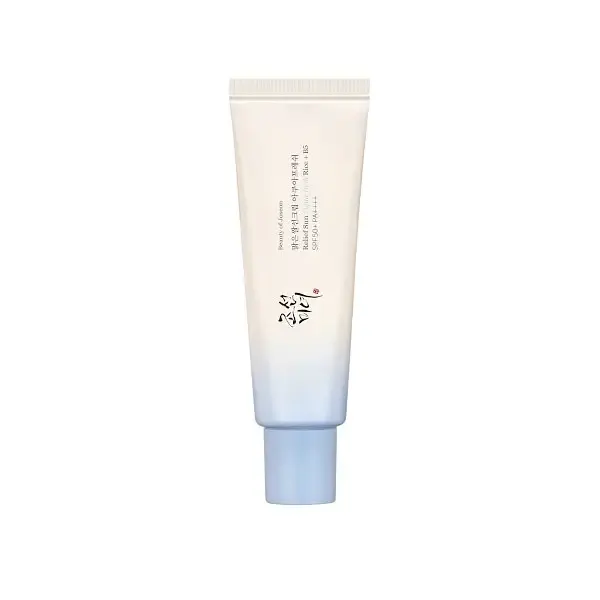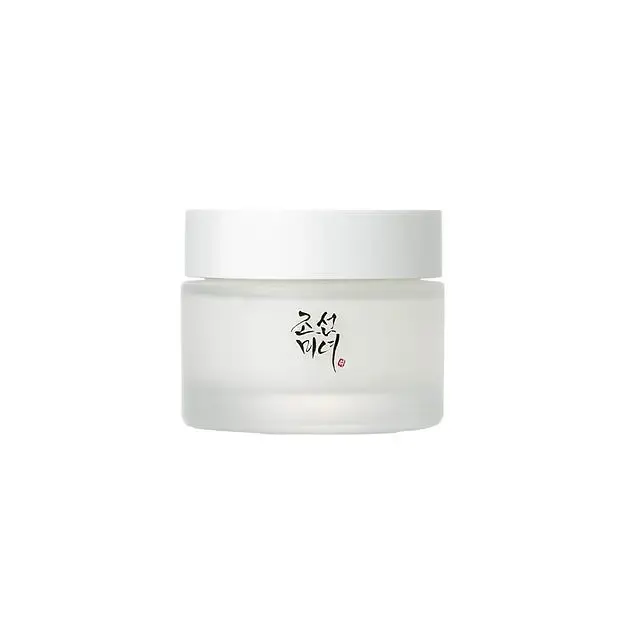
Beauty of Joseon
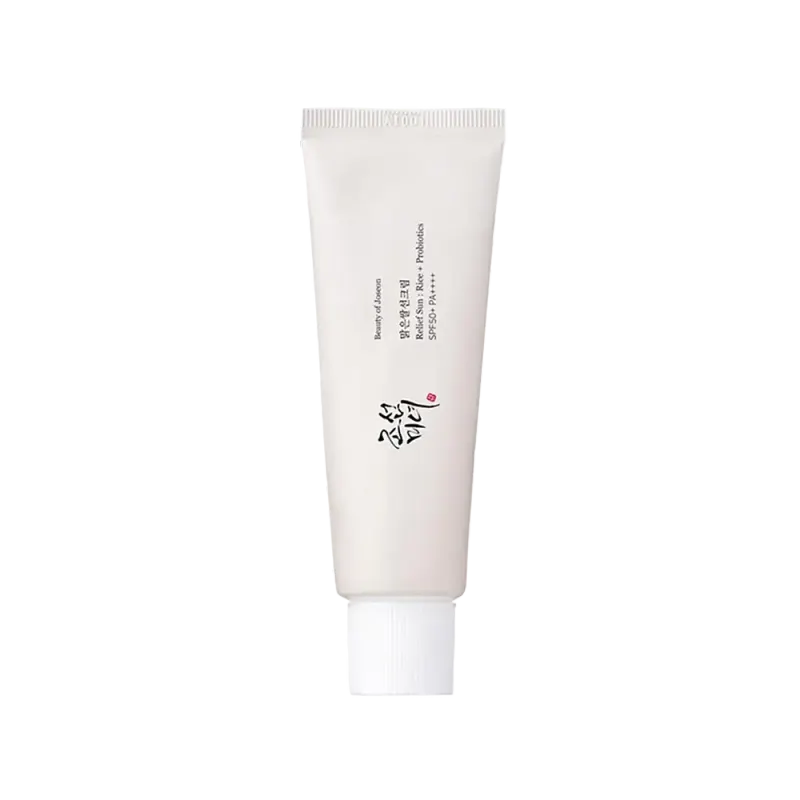
Beauty of Joseon Relief Sun : Rice + Probiotics SPF 50+ PA++++
No known risks99/100

Wash Off Masks
No higher-risk flags in the assessed ingredients. This is a screening result, not a guarantee of pregnancy safety.
35 of 35 ingredients rated
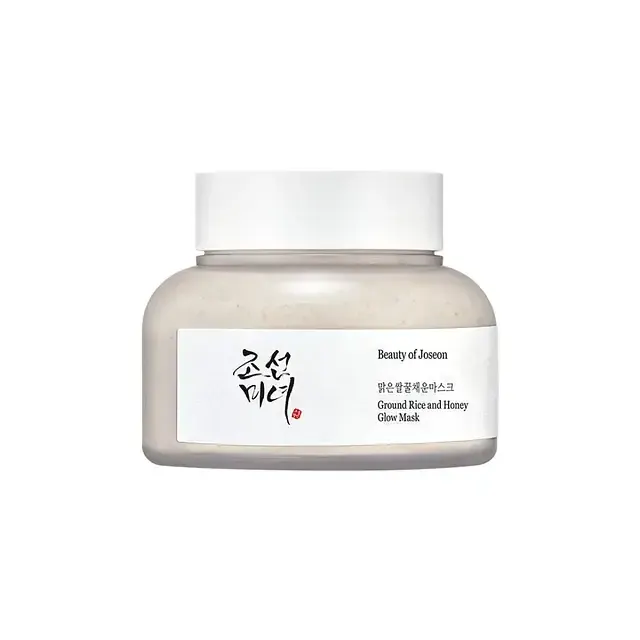
MamaSkin rates the recorded formula for Beauty of Joseon Ground Rice And Honey Glow Mask as No known risks (99/100). This screening result is not a guarantee of safety for every pregnancy.
No higher-risk ingredient flags are shown in the assessed entries. Ingredients without a matched rating are marked Not assessed, not No known risks.
35 of 35 ingredient entries on this page have a recorded score, evidence summary and source text. That describes documentation coverage, not proof that the finished formula has been clinically tested during pregnancy.
How we assess productsThe recorded formula, with evidence behind each rating. Unmatched ingredients are marked Not assessed in grey.
Water (Aqua) is the standard purified water used as a cosmetic solvent. It has no pregnancy-specific risk in normal topical use.
Sources: https://pubchem.ncbi.nlm.nih.gov/compound/Water, https://single-market-economy.ec.europa.eu/sectors/cosmetics/cosmetic-ingredient-database/cosing-glossary-ingredients_en
Naturally sourced clay used for absorbency and oil control. Reviewed cosmetic safety sources support normal topical cosmetic use; this assessment does not cover deliberate inhalation of loose powder.
Sources: CIR: Safety Assessment of Naturally-Sourced Clays as Used in Cosmetics; EU CosIng / cosmetics regulatory inventory
Honey or a honey-derived extract used as a humectant and skin-conditioning ingredient. Cosmetic safety reviewers concluded that the assessed honey-derived ingredients are safe in current practices of use and concentration. Allergy remains possible in a susceptible person.
Sources: CIR: December 2025 Quick Reference Table, Honey and Honey Extract conclusions, IJT 44(Suppl. 2), 2025 https://cir-safety.org/sites/default/files/QRT-Update-Dec2025.pdf
Glycerin is a widely used humectant that supports hydration and the skin barrier, with a long safety record and no known pregnancy or breastfeeding concerns in topical cosmetic use.
Sources: CIR; EU/UK Cosmetics Regulation
Solvent and humectant used to improve texture and ingredient solubility. Low systemic exposure expected from topical cosmetic use.
Sources: Cosmetic Ingredient Review (US); Scientific Committee on Consumer Safety (EU)
Dipropylene glycol is used as a solvent and carrier in cosmetics; topical exposure is low and it has no known pregnancy or breastfeeding concerns at cosmetic concentrations.
Sources: CIR; EU/UK Cosmetics Regulation
The cosmetic manufacturer identifies uniform rice-hull particles for wet exfoliating formulations. Superficial fiber/mineral particle exposure in non-injurious intact-skin use supplies the ordinary-route rationale; no pregnancy-specific concern is identified for this controlled cosmetic preparation. Rice and synthetic amorphous-silica assessments offer only constituent/particle context and do not directly assess every natural hull grade. Crystalline-silica/contaminant controls remain important. This excludes calcined hull ash, inhalable loose dust, engineered nanoparticles, extracts and damaged-skin delivery; stated use levels are not pregnancy-safe ceilings.
Sources: https://aqia.net/produtos/rice-exfoliator-n/, https://aqia.net/en-us/wp-content/uploads/2023/04/RICE-EXFOLIATOR-SN-dashboard-ingles.pdf, https://cir-safety.org/sites/default/files/silica092019FR.pdf, https://journals.sagepub.com/doi/pdf/10.1080/10915810600964626
Emollient ester used for lightweight slip and a dry skin feel in makeup and skin care. Reviewed cosmetic ingredient references do not identify a pregnancy- or breastfeeding-specific concern for normal topical cosmetic use.
Sources: CIR cosmetic ingredient safety references for alkyl esters/emollient esters; EU CosIng / cosmetics regulatory inventory
1,2-Hexanediol is commonly used as a solvent and preservative booster; topical exposure is low and it has no known pregnancy or breastfeeding concerns at cosmetic concentrations, though very sensitive skin may occasionally react.
Sources: CIR; EU/UK Cosmetics Regulation
Fatty alcohol used to improve texture and skin feel. Considered safe for cosmetic use without pregnancy-specific concerns.
Sources: Cosmetic Ingredient Review (US); Scientific Committee on Consumer Safety (EU)
Common emollient derived from fatty acids and glycerin. Used to soften skin and improve texture without pregnancy-specific concerns.
Sources: Cosmetic Ingredient Review (US); Scientific Committee on Consumer Safety (EU)
An emulsifier built from polyglycerin, methyl glucose and stearic-acid components, used to stabilise creams and improve texture. Exact pregnancy-specific data are limited. Cosmetic safety reviewers concluded that related methyl glucose esters and polyglyceryl fatty-acid esters are safe in current cosmetic use when formulated to be non-irritating. No pregnancy-specific topical concern was identified by applying those related-group assessments to ordinary cosmetic exposure.
Sources: CIR: Safety Assessment of Methyl Glucose Polyethers and Esters https://www.cir-safety.org/supplementaldoc/safety-assessment-methyl-glucose-polyethers-and-esters-used-cosmetics; CIR: Safety Assessment of Polyglyceryl Fatty Acid Esters https://cir-safety.org/sites/default/files/PGlyFE092016FR.pdf
Emulsifier and emollient used to stabilise creams and lotions. Not associated with pregnancy-specific concerns at cosmetic exposure.
Sources: Cosmetic Ingredient Review (US); Scientific Committee on Consumer Safety (EU)
Solvent and humectant commonly used in leave-on products. Not associated with pregnancy-specific concerns at cosmetic exposure levels.
Sources: Cosmetic Ingredient Review (US); Scientific Committee on Consumer Safety (EU)
Rice bran is a specifically assessed rice-derived cosmetic ingredient. The published amended review supports the named rice preparations at current uses. No pregnancy-specific harm has been identified from ordinary topical cosmetic exposure; direct human pregnancy studies are limited. This does not clear rice hull powder, every rice water or fermentation product, oral concentrates or raw material with uncontrolled impurities.
oryza sativa lees extract is a botanical-derived cosmetic conditioning ingredient. The reviewed identity is not a concentrated essential oil or an oral herbal preparation. Available cosmetic evidence and expected topical exposure did not identify a pregnancy-specific contraindication, although botanical irritation or allergy remains possible.
Sources: CIR ingredient-specific and botanical-family safety assessments; CIR Quick Reference Table https://www.cir-safety.org/supplementaldoc/quick-reference-table-december-2025; European Commission CosIng
A rice-derived extract or wax used for skin conditioning, absorbency or texture. Cosmetic safety reviewers concluded that the assessed Oryza sativa-derived ingredients are safe in current cosmetic practices. Rice allergy remains possible in a susceptible person.
Sources: CIR: Rice-derived ingredients conclusions, IJT 25(Suppl. 2), 2006; December 2025 Quick Reference Table https://cir-safety.org/sites/default/files/QRT-Update-Dec2025.pdf
Honey or a honey-derived extract used as a humectant and skin-conditioning ingredient. Cosmetic safety reviewers concluded that the assessed honey-derived ingredients are safe in current practices of use and concentration. Allergy remains possible in a susceptible person.
Sources: CIR: December 2025 Quick Reference Table, Honey and Honey Extract conclusions, IJT 44(Suppl. 2), 2025 https://cir-safety.org/sites/default/files/QRT-Update-Dec2025.pdf
An absorbent mineral clay used to thicken formulas and absorb oil. Cosmetic safety reviewers concluded that naturally sourced clays such as bentonite are safe in current topical practices, except that evidence is insufficient for products that may be incidentally inhaled. It is not expected to be meaningfully absorbed through intact skin.
Sources: CIR: Amended Safety Assessment of Naturally-Sourced Clays https://cir-reports.cir-safety.org/view-attachment/?id=d5fd5bfa-685d-6aab-94d5-67acbc8713fb
Fatty acid used as an emollient, cleansing-support and texture ingredient. It is not associated with pregnancy- or breastfeeding-specific concerns in normal topical cosmetic use.
Sources: CIR: Safety Assessment of Fatty Acids and Fatty Acid Salts as Used in Cosmetics; EU CosIng / cosmetics regulatory inventory
Stearic acid is a fatty acid used to stabilise emulsions and improve texture; it is considered low concern in topical cosmetics with no known pregnancy or breastfeeding risks at typical concentrations.
Sources: CIR; EU/UK Cosmetics Regulation
Long-chain fatty alcohol used as an emollient and thickener. This is not the same concern profile as simple drying alcohols; reviewed cosmetic safety sources support normal topical use.
Sources: CIR: Final Report on the Safety Assessment of Cetearyl Alcohol, Cetyl Alcohol, Isostearyl Alcohol, Myristyl Alcohol, and Behenyl Alcohol; EU CosIng / cosmetics regulatory inventory
This cellulose or modified-cellulose polymer is used as a thickener, film former or stabilizer. Cosmetic Ingredient Review data indicate that cellulose polymers do not appreciably penetrate skin and are safe in current cosmetic use, with at most minimal irritation reported.
Sources: CIR: Amended Safety Assessment of Cellulose and Related Polymers as Used in Cosmetics https://cir-reports.cir-safety.org/view-attachment/?id=2e65c18f-8c74-ec11-8943-0022482f06a6
Corn starch, a plant-derived polysaccharide used to absorb moisture, reduce greasiness and improve texture. Cosmetic safety reviewers concluded that ingredients derived from Zea mays, including corn starch, are safe in current cosmetic use. No pregnancy-specific concern is identified for normal topical exposure; avoid deliberately inhaling loose powder.
Sources: CIR ingredient review: Zea mays (Corn) Starch https://www.cir-safety.org/ingredient/zea-mays-corn-starch
Natural polysaccharide thickener used for stability and texture. Not associated with pregnancy-specific concerns.
Sources: European cosmetics regulatory framework
Hydroxyacetophenone is used as an antioxidant and preservative-support ingredient; it is generally considered low concern in topical cosmetic use with no known pregnancy or breastfeeding risks at typical concentrations.
Sources: CIR; EU/UK Cosmetics Regulation
An alkyl phosphate surfactant and emulsifier used to stabilise creams, sunscreens and makeup. Cosmetic safety reviewers concluded that the assessed alkyl phosphates, including potassium cetyl phosphate, are safe in current practices of use and concentration when formulated to be non-irritating. Dermal penetration is expected to be limited, and no pregnancy-specific concern is identified for normal topical cosmetic exposure.
Sources: CIR: Safety Assessment of Alkyl Phosphates https://www.cir-safety.org/sites/default/files/alkyl%20phosphates_0.pdf
Preservative booster and skin-conditioning agent. Considered safe for cosmetic use with low systemic exposure when used as intended.
Sources: Scientific Committee on Consumer Safety (EU); Cosmetic Ingredient Review (US)
A high-molecular-weight acrylic polymer used to thicken, stabilise or form a film. Dermal absorption of the intact polymer is expected to be limited. Cosmetic polymer assessments support normal topical use when residual monomers are appropriately controlled.
Sources: CIR: Safety Assessments of Acrylates Copolymers and Crosspolymers as Used in Cosmetics; European Commission CosIng ingredient inventory.
Inert synthetic emollient used as a glossing and occlusive agent. Reviewed cosmetic safety sources support normal topical use, with no pregnancy- or breastfeeding-specific topical signal identified in the material reviewed.
Sources: CIR: Safety Assessment of Polyene Group as Used in Cosmetics; EU CosIng / cosmetics regulatory inventory
Chelating agent used to improve formula stability. Used at low levels and not associated with pregnancy-specific concerns.
Sources: European cosmetics regulatory framework
Polyglycerin fatty-acid ester used as an emulsifier and solubilizer. Reviewed cosmetic safety references do not identify a pregnancy- or breastfeeding-specific concern for normal topical cosmetic use.
Sources: CIR cosmetic ingredient safety references for polyglyceryl fatty acid esters; EU CosIng / cosmetics regulatory inventory
Lightweight emollient ester used to soften skin and improve glide. Reviewed cosmetic safety sources support normal topical use, with no pregnancy- or breastfeeding-specific topical signal identified in the material reviewed.
Sources: CIR: Amended Safety Assessment of Alkyl Esters as Used in Cosmetics; EU CosIng / cosmetics regulatory inventory
Emulsifier used to help oil and water phases remain mixed. Reviewed cosmetic safety sources support topical use in cosmetics; the main practical issue is irritation potential in some formulas rather than a pregnancy-specific concern.
Sources: CIR: Safety Assessment of Sorbitan Esters as Used in Cosmetics; EU CosIng / cosmetics regulatory inventory
An ester of menthol and lactic acid used to create a cooling skin sensation. Available cosmetic-use information does not identify a pregnancy-specific systemic concern at normal topical concentrations. It can sting eyes, mucosae or irritated skin.
Sources: European Commission CosIng ingredient inventory; European Chemicals Agency substance information; published topical sensory-agent literature for menthyl lactate.
Water, Kaolin, Honey, Glycerin, Propanediol, Dipropylene Glycol, Oryza Sativa Hull Powder, Isononyl Isononanoate, 1,2-Hexanediol, Cetyl Alcohol, Caprylic/Capric Triglyceride, Polyglyceryl-3 Methylglucose Distearate, Glyceryl Stearate, Butylene Glycol, Oryza Sativa Bran, Oryza Sativa Lees Extract, Oryza Sativa Extract, Honey Extract, Bentonite, Palmitic Acid, Stearic Acid, Behenyl Alcohol, Cellulose, Zea Mays Starch, Xanthan Gum, Hydroxyacetophenone, Potassium Cetyl Phosphate, Ethylhexylglycerin, Polyacrylate-13, Hydrogenated Polyisobutene, Sodium Phytate, Polyglyceryl-10 Laurate, Ethylhexyl Palmitate, Sorbitan Isostearate, Menthyl Lactate
Ingredient ratings refreshed 15 October 2026. Formulas vary by market and can change. Always compare with your packaging.
No higher-risk ingredient flags are shown in the assessed entries. Ingredients without a matched rating are marked Not assessed, not No known risks. The product score is a stored assessment, not a clinical safety guarantee.
35 of 35 ingredient entries on this page have a recorded score, evidence summary and source text. That describes documentation coverage, not proof that the finished formula has been clinically tested during pregnancy.
Only if the ingredient list on your packaging matches the recorded formula shown here. Formulas can differ by market and change over time. Compare the full list, not just the product name; report a mismatch if it differs.
No. This page presents a pregnancy-focused product assessment. Do not infer a breastfeeding conclusion from its score or label; breastfeeding requires a separate assessment of the formula and how it is used.