
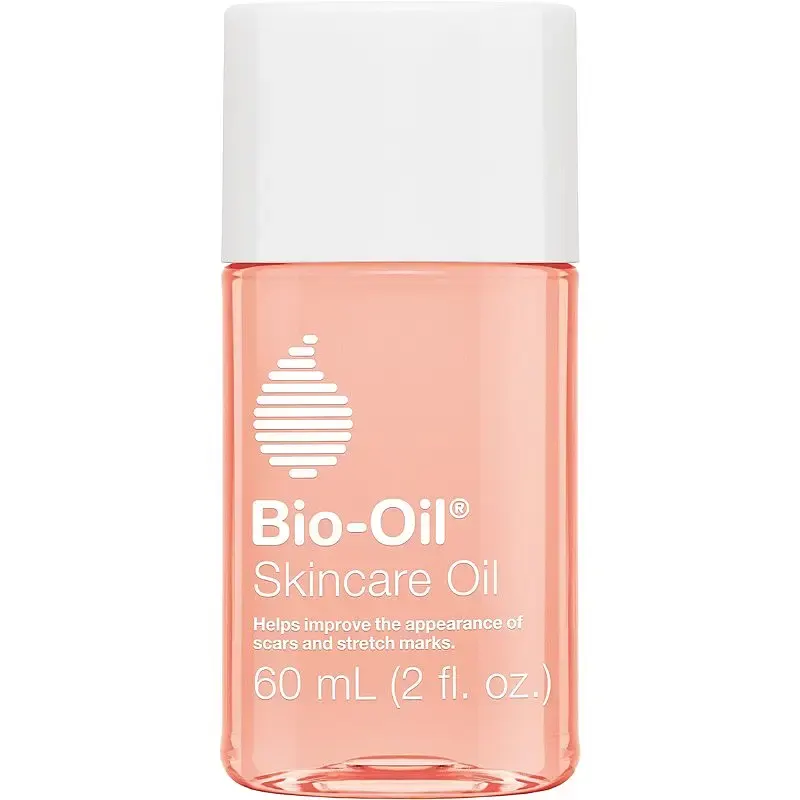
Bio-Oil Skincare Oil by Bio-Oil
Bio-Oil

Bio-Oil Skincare Oil

Oils

Safety score

Pregnancy-focused assessment

High Risk20/100
Higher concernLower concern

This formula contains a higher-risk ingredient in MamaSkin's current pregnancy-focused assessment.

Formula and assessment check

Ingredient safety review updated 9 December 2025. Product formulas can change, so compare the ingredients shown here with the packaging you have.

Report a formula mismatch

Ingredient breakdown

See how the listed formula falls across MamaSkin's pregnancy-focused risk bands.

23

No known risks

1

Low risk

1

Medium risk

2

High risk

Ingredients

Ingredients with a higher risk flag appear first, followed by the rest of the formula.

Retinyl Palmitate

High Risk

Vitamin A derivative. While much weaker than Retinol and often used in low doses as an antioxidant (e.g., in body oils), medical guidelines generally advise avoiding all forms of Vitamin A during pregnancy due to class-wide risks. We flag this as High Risk to align with the strictest safety standards

Sources: EMA: Updated measures for pregnancy prevention during retinoid use https://www.ema.europa.eu/en/news/updated-measures-pregnancy-prevention-during-retinoid-use
Rosmarinus Officinalis Leaf Oil

High Risk

Rosmarinus officinalis (rosemary) leaf oil is a concentrated fragrance essential oil with chemotype-dependent constituents (often including camphor/1,8-cineole). Pregnancy-specific evidence for topical cosmetic exposure is limited, and camphor-rich oils are commonly advised to avoid in pregnancy; combined with irritation/sensitisation potential, this supports a precautionary high-risk classification—especially in leave-on products.

Sources: CIR: Safety Assessment of Rosmarinus officinalis (Rosemary)-Derived Ingredients as Used in Cosmetics https://cir-safety.org/supplementaldoc/safety-assessment-rosmarinus-officinalis-rosemary-derived-ingredients-used-cosmeti-0; Dosoky and Setzer 2021, Maternal Reproductive Toxicity of Some Essential Oils and Their Constituents https://pubmed.ncbi.nlm.nih.gov/33673548/

Benzyl Salicylate

Medium Risk

Benzyl salicylate is a fragrance ingredient that is also evaluated for potential endocrine activity and sensitisation. SCCS notes some indications for endocrine mode of action, and fragrance allergens are relevant for contact allergy risk; pregnancy-specific human outcome data for topical exposure are limited. The medium-risk signal is endocrine-related uncertainty and sensitisation potential rather than a defined pregnancy-specific toxicity dataset.

Sources: SCCS/1656/23: Benzyl salicylate https://health.ec.europa.eu/publications/benzyl-salicylate-cas-no-118-58-1-ec-no-204-262-9_en

Show all (27)

Parfum

Low Risk

Umbrella term for an undisclosed fragrance blend. It’s not usually a pregnancy-specific concern at normal cosmetic use levels, but the exact components and concentrations aren’t fully disclosed on the label, so we score it more conservatively. If you prefer maximum transparency (or you’re sensitive to fragrance compounds), choose fragrance-free/unscented products.

Sources: SCCS: Fragrance allergens in cosmetic products https://health.ec.europa.eu/latest-updates/sccs-new-opinion-fragrance-allergens-cosmetic-products-2012-07-31_en

Paraffinum Liquidum

No Known Risks

Highly refined mineral oil (occlusive emollient). Cosmetic-grade mineral oil has very low skin absorption and is widely considered safe for topical use during pregnancy when used as intended. Concerns raised online typically relate to unrefined/poorly refined mineral oils and dietary mineral oil hydrocarbons, not regulated cosmetic-grade topical use.

Sources: BfR (Federal Institute for Risk Assessment), Highly refined mineral oils in cosmetics: Health risks are not to be expected according to current knowledge (2018). ; Petry et al., Review of data on the dermal penetration of mineral oils and waxes used in cosmetic products (Food and Chemical Toxicology, 2017). ; EFSA, Scientific Opinion on Mineral Oil Hydrocarbons in Food (2012).

Triisononanoin

No Known Risks

Cetearyl Ethylhexanoate

No Known Risks

A branched fatty-acid ester used as a lightweight emollient and texture agent. Cosmetic safety reviewers concluded that alkyl ethylhexanoates, including cetearyl ethylhexanoate, are safe in current practices when formulated to be non-irritating. No pregnancy-specific concern was identified for normal topical use.

Sources: CIR: Amended Safety Assessment of Alkyl Ethylhexanoates as Used in Cosmetics https://www.cir-safety.org/supplementaldoc/amended-safety-assessment-alkyl-ethylhexanoates-used-cosmetics

Isopropyl Myristate

No Known Risks

This emollient ester improves slip and skin feel. Cosmetic Ingredient Review assessments support use in current cosmetic concentrations when formulated to be non-irritating; topical use is not identified as a pregnancy- or breastfeeding-specific concern. Some alkyl esters can increase penetration of other formula ingredients.

Sources: CIR: Safety Assessment of Alkyl Esters as Used in Cosmetics https://cir-safety.org/supplementaldoc/safety-assessment-alkyl-esters-used-cosmetics

Helianthus Annuus Seed Oil

No Known Risks

Helianthus annuus (sunflower) seed oil is a common emollient rich in fatty acids and is generally well tolerated, with no known pregnancy or breastfeeding concerns in topical cosmetic use.

Sources: CIR; EU/UK Cosmetics Regulation

Tocopheryl Acetate

No Known Risks

Tocopheryl acetate (vitamin E derivative) is used as an antioxidant and skin-conditioning ingredient; it is considered low concern in topical use with no known pregnancy or breastfeeding risks at cosmetic concentrations.

Sources: CIR; EU/UK Cosmetics Regulation

Anthemis Nobilis Flower Oil

No Known Risks

A Roman chamomile flower extract or oil used for skin conditioning and fragrance. Cosmetic safety reviewers concluded that Anthemis nobilis-derived ingredients are safe in current practices when formulated to be non-sensitising. People allergic to plants in the daisy family may be more likely to react.

Sources: CIR: Safety Assessment of Anthemis nobilis-Derived Ingredients as Used in Cosmetics https://cir-safety.org/sites/default/files/anthem122013final.pdf

Lavandula Angustifolia Oil

No Known Risks

Lavender oil is used in cosmetics mainly as a fragrance ingredient. For normal diluted topical cosmetic use, current evidence does not establish a pregnancy-specific concern. This assessment does not cover ingestion, concentrated essential-oil use, or aromatherapy-style exposure. The more relevant practical issues in skincare are irritation or sensitisation in some users, so within this methodology it remains in no known risks.

Sources: NCCIH: Lavender: Usefulness and Safety (2025); EMA HMPC: Lavandulae aetheroleum - herbal medicinal product; Bingham et al., Contact allergy and allergic contact dermatitis caused by lavender: A retrospective study from an Australian clinic (Contact Dermatitis, 2019).

Calendula Officinalis Extract

No Known Risks

A botanical extract used for skin conditioning. Cosmetic safety reviewers concluded that these named calendula, yarrow and rose-derived ingredients are safe in current cosmetic practices, with non-sensitising formulation conditions where specified. Botanical allergy remains possible.

Sources: CIR: Calendula Officinalis Extract, Achillea Millefolium Extract and Rosa Centifolia Flower Extract conclusions; December 2025 Quick Reference Table https://cir-safety.org/sites/default/files/QRT-Update-Dec2025.pdf

Glycine Soja Oil

No Known Risks

Plant-derived emollient oil used to soften skin and support formula texture. Reviewed cosmetic safety sources support current cosmetic use, with no pregnancy- or breastfeeding-specific topical concern identified in the material reviewed.

Sources: CIR: Safety Assessment of Soy-Derived Ingredients as Used in Cosmetics; EU CosIng / cosmetics regulatory inventory

Bisabolol

No Known Risks

A terpene alcohol used for skin conditioning and soothing. Cosmetic safety reviewers reaffirmed bisabolol as safe at current cosmetic concentrations, and reproductive and developmental testing did not identify adverse effects. Bisabolol can increase skin penetration, so formulators should consider the safety of other ingredients in the same product.

Sources: CIR: Final Report on the Safety Assessment of Bisabolol https://cir-reports.cir-safety.org/view-attachment/?id=6fcf160b-8e74-ec11-8943-0022482f06a6; CIR re-review material https://www.cir-safety.org/sites/default/files/bisabolol.pdf

Tocopherol

No Known Risks

Vitamin E antioxidant used to protect oils and support the skin barrier. Not associated with pregnancy-specific concerns at cosmetic exposure.

Sources: Cosmetic Ingredient Review (US); Scientific Committee on Consumer Safety (EU)

Alpha-Isomethyl Ionone

No Known Risks

A violet-like fragrance ingredient used in perfumes and fragranced cosmetics. Its principal consumer concern is contact allergy in susceptible users; no pregnancy-specific hazard is identified for normal topical cosmetic exposure.

Sources: European Commission: Fragrance allergens labelling https://single-market-economy.ec.europa.eu/sectors/cosmetics/cosmetic-products-specific-topics/fragrance-allergens-labelling_en; SCCS fragrance-allergen opinions

Amyl Cinnamal

No Known Risks

A fragrance component used at low concentrations in finished products. No pregnancy-specific systemic concern was identified for normal topical cosmetic exposure. Oxidation products or the ingredient itself can cause contact allergy or irritation in a susceptible person.

Sources: European Commission CosIng ingredient inventory; EU Scientific Committee on Consumer Safety fragrance-allergen assessments; peer-reviewed contact-allergy literature.

Citronellol

No Known Risks

A rose-like fragrance ingredient that occurs naturally in many essential oils and may also be manufactured. Its main cosmetic concern is contact allergy in susceptible users; no pregnancy-specific hazard is identified for normal topical cosmetic exposure.

Sources: European Commission: Fragrance allergens labelling https://single-market-economy.ec.europa.eu/sectors/cosmetics/cosmetic-products-specific-topics/fragrance-allergens-labelling_en; SCCS fragrance-allergen opinions

Coumarin

No Known Risks

An aromatic fragrance ingredient found naturally in some plants and also manufactured. It is subject to fragrance-allergen labelling because it can sensitise susceptible users; no pregnancy-specific concern is identified for normal topical cosmetic use.

Sources: European Commission: Fragrance allergens labelling https://single-market-economy.ec.europa.eu/sectors/cosmetics/cosmetic-products-specific-topics/fragrance-allergens-labelling_en; SCCS fragrance-allergen opinions

Eugenol

No Known Risks

A clove-like fragrance ingredient found naturally in several essential oils and also manufactured. It can cause contact allergy in susceptible users, but no pregnancy-specific hazard is identified for normal topical cosmetic exposure at cosmetic concentrations.

Sources: European Commission: Fragrance allergens labelling https://single-market-economy.ec.europa.eu/sectors/cosmetics/cosmetic-products-specific-topics/fragrance-allergens-labelling_en; SCCS fragrance-allergen opinions

Farnesol

No Known Risks

A fragrance ingredient that also functions as a deodorant and occurs naturally in essential oils. It is a recognised contact allergen, but no pregnancy-specific hazard is identified for normal topical cosmetic exposure.

Sources: European Commission: Fragrance allergens labelling https://single-market-economy.ec.europa.eu/sectors/cosmetics/cosmetic-products-specific-topics/fragrance-allergens-labelling_en; SCCS fragrance-allergen opinions

Geraniol

No Known Risks

A floral fragrance ingredient found in several essential oils and also used in manufactured form. It is a recognised contact allergen, but no pregnancy-specific hazard is identified for normal topical cosmetic exposure.

Sources: European Commission: Fragrance allergens labelling https://single-market-economy.ec.europa.eu/sectors/cosmetics/cosmetic-products-specific-topics/fragrance-allergens-labelling_en; SCCS fragrance-allergen opinions

Hydroxycitronellal

No Known Risks

A floral fragrance ingredient and recognised contact allergen. Current safety concerns focus on skin sensitisation and controlled cosmetic concentrations; no pregnancy-specific hazard is identified for normal topical cosmetic exposure.

Sources: European Commission: Fragrance allergens labelling https://single-market-economy.ec.europa.eu/sectors/cosmetics/cosmetic-products-specific-topics/fragrance-allergens-labelling_en; SCCS fragrance-allergen opinions

Limonene

No Known Risks

Limonene is a common fragrance component used at low levels in cosmetics; it is not a pregnancy-specific concern in topical use, but it is a recognised fragrance allergen and may trigger irritation or sensitisation in some people, especially if the product oxidises over time.

Sources: EU/UK cosmetics (fragrance allergen labelling); IFRA; toxicology reviews

Linalool

No Known Risks

Linalool is a common fragrance component used at low levels in cosmetics; it is not a pregnancy-specific concern in topical use, but it is a recognised fragrance allergen and may trigger irritation or sensitisation in some people, especially if the product oxidises over time.

Sources: EU/UK cosmetics (fragrance allergen labelling); IFRA; toxicology reviews

CI 26100

No Known Risks

CI 26100 identifies D&C Red No. 17 (Solvent Red 23). FDA permits it only in externally applied cosmetics; EU use also depends on specified purity criteria. No pregnancy-specific reproductive or developmental concern was identified for normal use in a compliant finished cosmetic. This classification does not remove ordinary allergy, irritation, purity, certification, route or inhalation controls.

Sources: FDA D&C Red No. 17 regulatory status https://hfpappexternal.fda.gov/scripts/fdcc/index.cfm?id=DCRed17&set=ColorAdditives; EU Cosmetics Regulation Annex IV https://eur-lex.europa.eu/legal-content/EN/TXT/?uri=CELEX:02009R1223-20260501

Formulations can change without notice. For the most accurate result, compare this list with your packaging and scan the exact ingredient label in MamaSkin when you repurchase.

How to use this assessment

The risk band is the primary conclusion. The score adds detail within that band and should not be used to compare products as if a one-point difference were clinically meaningful.

MamaSkin provides pregnancy-focused information, not medical advice. Your midwife, GP, pharmacist or dermatologist should take priority when your circumstances differ from typical cosmetic use.

Read the full methodology