Biore
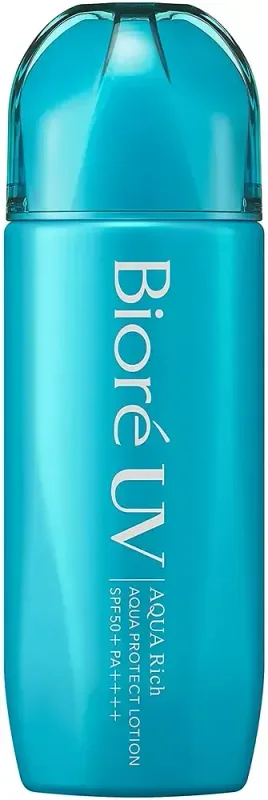
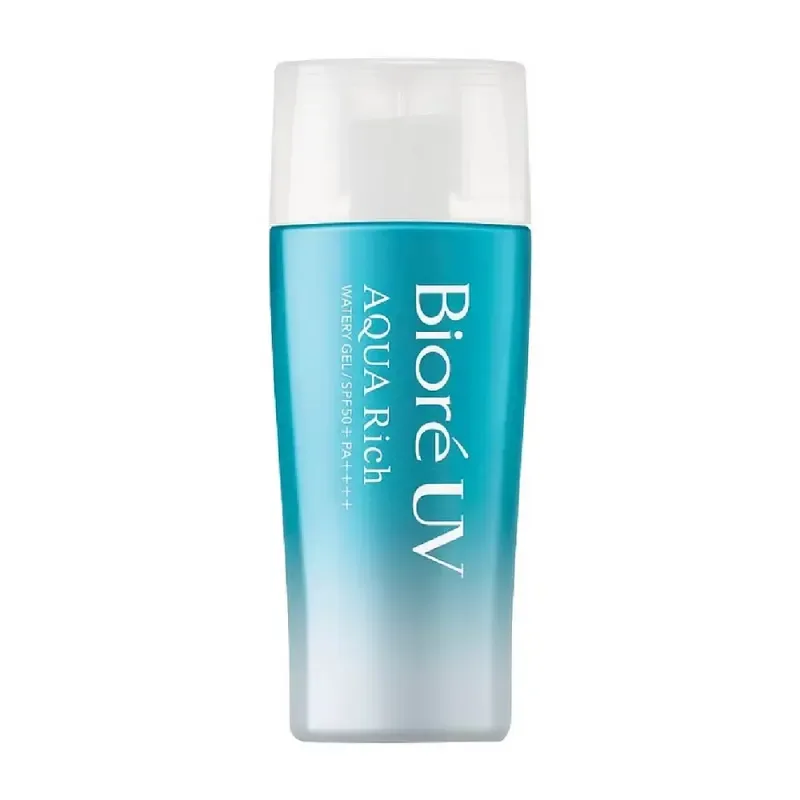
Biore UV Aqua Rich Watery Gel Sunscreen SPF 50+
Medium risk51/100

Sunscreens
This formula needs extra consideration during pregnancy. Review the flagged ingredients with your healthcare professional.
37 of 37 ingredients rated
MamaSkin rates the recorded formula for Biore UV Aqua Rich Watery Essence SPF 50+ PA++++ as Medium risk (53/100). Discuss the flagged ingredients with a qualified healthcare professional before using this formula during pregnancy.
The recorded formula includes 6 ingredient entries with risk flags: Ethylhexyl Methoxycinnamate (Medium risk), BHT (Medium risk), Dimethicone (Low risk), plus others listed in the breakdown. These are ingredient-level flags; they do not replace the stored product assessment or account for every formulation detail.
37 of 37 ingredient entries on this page have a recorded score, evidence summary and source text. That describes documentation coverage, not proof that the finished formula has been clinically tested during pregnancy.
How we assess productsThe recorded formula, with evidence behind each rating. Unmatched ingredients are marked Not assessed in grey.
Ethylhexyl methoxycinnamate (EHMC) is a UV-B filter (also called octinoxate/octyl methoxycinnamate). SCCS characterised EHMC as endocrine-active (oestrogenic activity and weak anti-androgenic activity in vitro and in vivo) and reviewed genotoxicity/reproductive toxicity datasets in its re-evaluation. Pregnancy-specific human outcome data for topical exposure are limited; the medium-risk signal is endocrine activity plus systemic exposure uncertainty with frequent, large-area use.
Sources: SCCS/1671/24: Ethylhexyl methoxycinnamate https://health.ec.europa.eu/publications/sccs-opinion-ethylhexyl-methoxycinnamate-ehmc-cas-no-5466-77-383834-59-7-ec-no-226-775-7629-661-9_en
BHT (butylated hydroxytoluene) is a lipophilic antioxidant used to protect oils from oxidation. Animal studies at high (primarily oral) doses show liver enzyme induction and related biochemical changes; endocrine-screening lines of evidence have also been evaluated in regulatory reviews. Pregnancy-specific human outcome data for topical cosmetic exposure are limited; the key signal is systemic toxicology at higher exposures and uncertainty for pregnancy-specific outcomes.
Sources: SCCS/1636/21: Butylated hydroxytoluene https://health.ec.europa.eu/publications/butylated-hydroxytoluene-bht_en
Phenoxyethanol is a preservative permitted in EU cosmetics up to 1.0%. The SCCS concluded it is safe for cosmetic use at that level, including when considering higher cosmetic exposure scenarios in infants and young children. Main practical concern is irritation/stinging on very sensitive or compromised skin rather than a pregnancy- or breastfeeding-specific risk.
Sources: SCCS/1575/16: Phenoxyethanol opinion https://health.ec.europa.eu/publications/phenoxyethanol_en
Umbrella term for an undisclosed fragrance blend. It’s not usually a pregnancy-specific concern at normal cosmetic use levels, but the exact components and concentrations aren’t fully disclosed on the label, so we score it more conservatively. If you prefer maximum transparency (or you’re sensitive to fragrance compounds), choose fragrance-free/unscented products.
Sources: SCCS: Fragrance allergens in cosmetic products https://health.ec.europa.eu/latest-updates/sccs-new-opinion-fragrance-allergens-cosmetic-products-2012-07-31_en
Dimethicone is a silicone polymer used as a skin protectant and slip/conditioning agent. It is considered inert with minimal dermal absorption; the main practical issues are cosmetic (feel) and occasional irritation in very sensitive users. It is not a pregnancy-specific concern in topical cosmetic use.
Sources: CIR: Amended Safety Assessment of Dimethicone, Methicone, and Substituted-Methicone Polymers as Used in Cosmetics https://cir-safety.org/supplementaldoc/amended-safety-assessment-dimethicone-methicone-and-substituted-methicone-polymers-2
This ingredient is a dimethicone crosspolymer covered by CIR's crosspolymer assessment. CIR concluded the reviewed crosspolymers safe as used in cosmetics. That conclusion is based on polymer chemistry and cosmetic-use safety data, not human pregnancy studies for every named crosspolymer. MamaSkin retains Low Risk; finished-product irritation remains formulation-dependent.
Sources: CIR: Safety assessment of dimethicone crosspolymers https://www.cir-safety.org/supplementaldoc/safety-assessment-dimethicone-crosspolymers-used-cosmetics
Water (Aqua) is the standard purified water used as a cosmetic solvent. It has no pregnancy-specific risk in normal topical use.
Sources: https://pubchem.ncbi.nlm.nih.gov/compound/Water, https://single-market-economy.ec.europa.eu/sectors/cosmetics/cosmetic-ingredient-database/cosing-glossary-ingredients_en
Volatile solvent used to improve texture, drying time, and penetration in some formulas. Reviewed cosmetic safety sources support current cosmetic use, with no pregnancy- or breastfeeding-specific topical concern identified in the material reviewed; the main practical issue is dryness, stinging, or barrier disruption in some users.
Sources: CIR: Safety Assessment of SD Alcohol 40, Benzyl Alcohol, and Denatured Alcohol in Cosmetic Products; EU CosIng / cosmetics regulatory inventory
UV filter used in sunscreens and day products to help absorb UVB radiation. Reviewed cosmetic safety and regulatory sources support current cosmetic use within applicable concentration limits, with no pregnancy- or breastfeeding-specific topical concern identified in the material reviewed.
Sources: EU CosIng Annex VI / UV filters; EU scientific opinion on Ethylhexyl Triazone (Uvinul T 150)
This emollient ester improves slip and skin feel. Cosmetic Ingredient Review assessments support use in current cosmetic concentrations when formulated to be non-irritating; topical use is not identified as a pregnancy- or breastfeeding-specific concern. Some alkyl esters can increase penetration of other formula ingredients.
Sources: CIR: Safety Assessment of Alkyl Esters as Used in Cosmetics https://cir-safety.org/supplementaldoc/safety-assessment-alkyl-esters-used-cosmetics
Lauryl Methacrylate/Sodium Methacrylate Crosspolymer: A polymer included in CIR's amended assessment for non-irritating cosmetics. Large polymer size and control of residual monomers are relevant to exposure. This rating does not apply to free acrylate monomers, uncured nail systems or deliberate inhalation of powder. No pregnancy-specific harm has been identified for ordinary topical cosmetic use; direct human pregnancy data are limited.
Sources: https://cir-reports.cir-safety.org/view-attachment?id=c3a1aad1-8c74-ec11-8943-0022482f06a6,https://www.cir-safety.org/sites/default/files/QRT-Update-Dec2025.pdf
Modern UVA filter (often called Uvinul A+ or DHHB). Regulatory assessments have repeatedly evaluated this filter as safe in cosmetic products at concentrations up to 10%. The most recent SCCS advice focuses on controlling a manufacturing impurity (DnHexP) rather than on new toxicity of DHHB itself. Human biomonitoring data indicate low systemic exposure from normal sunscreen use, and current reviews do not identify specific reproductive or developmental toxicity signals at approved concentrations.
Sources: SCCP opinion referenced in Directive 2008/123/EC: concludes that Diethylamino Hydroxybenzoyl Hexyl Benzoate used at a maximum of 10% in cosmetic (including sunscreen) products does not pose a risk to the consumer. Regulatory summaries (e.g. CosLaw and CIRS Group updates, 2025) reviewing the SCCS DHHB opinion and reiterating that DHHB remains permitted up to 10% in EU cosmetics when impurity limits are respected.
Inert synthetic emollient used as a glossing and occlusive agent. Reviewed cosmetic safety sources support normal topical use, with no pregnancy- or breastfeeding-specific topical signal identified in the material reviewed.
Sources: CIR: Safety Assessment of Polyene Group as Used in Cosmetics; EU CosIng / cosmetics regulatory inventory
Modern broad-spectrum UV filter (often known as Tinosorb S). It has a high molecular weight and is formulated to remain mainly in the outer skin layers, with very low systemic absorption at cosmetic use levels. EU regulatory assessments and independent risk–benefit reviews have evaluated this filter as safe up to 10% in sunscreens, with no specific reproductive or developmental toxicity signals identified in animals or humans at permitted concentrations.
Sources: European Union Cosmetic Products Regulation (Annex VI): Bis-Ethylhexyloxyphenol Methoxyphenyl Triazine listed as an approved UV filter up to 10% in cosmetic products. Mikkelsen SH et al. “Survey and health assessment of UV filters” – Danish EPA, 2015: includes Bis-Ethylhexyloxyphenol Methoxyphenyl Triazine and notes low systemic exposure at approved use levels.
Fatty acid used as an emollient, cleansing-support and texture ingredient. It is not associated with pregnancy- or breastfeeding-specific concerns in normal topical cosmetic use.
Sources: CIR: Safety Assessment of Fatty Acids and Fatty Acid Salts as Used in Cosmetics; EU CosIng / cosmetics regulatory inventory
Starch-derived polysaccharide used as a binder, film former and texture support ingredient. Reviewed cosmetic ingredient references do not identify a pregnancy- or breastfeeding-specific concern for normal topical use.
Sources: CIR cosmetic ingredient safety references for polysaccharides/starch-derived ingredients; EU CosIng / cosmetics regulatory inventory
Solvent and humectant commonly used in leave-on products. Not associated with pregnancy-specific concerns at cosmetic exposure levels.
Sources: Cosmetic Ingredient Review (US); Scientific Committee on Consumer Safety (EU)
Sugar alcohol humectant used to help maintain hydration and improve skin feel. Reviewed cosmetic safety sources support normal topical use, with no pregnancy- or breastfeeding-specific topical signal identified in the material reviewed.
Sources: CIR: Safety Assessment of Mannitol, Sorbitol, and Xylitol as Used in Cosmetics; EU CosIng / cosmetics regulatory inventory
Polymer thickener and stabiliser used in creams and sunscreens. Low systemic exposure expected.
Sources: Cosmetic Ingredient Review (US); Scientific Committee on Consumer Safety (EU)
Alkyl benzoate emollient used in cosmetics; available cosmetic safety assessments do not indicate pregnancy-specific concerns with routine topical use.
Sources: CIR Safety Assessment of Alkyl Benzoates (2012); CIR alkyl benzoates dossier / C12-15 alkyl benzoate data.
Glycerin is a widely used humectant that supports hydration and the skin barrier, with a long safety record and no known pregnancy or breastfeeding concerns in topical cosmetic use.
Sources: CIR; EU/UK Cosmetics Regulation
Emulsifier and emollient used to stabilise creams and lotions. Not associated with pregnancy-specific concerns at cosmetic exposure.
Sources: Cosmetic Ingredient Review (US); Scientific Committee on Consumer Safety (EU)
Solvent and humectant used to improve texture and ingredient solubility. Low systemic exposure expected from topical cosmetic use.
Sources: Cosmetic Ingredient Review (US); Scientific Committee on Consumer Safety (EU)
A glycerin fatty-acid ester used as an emollient, emulsifier or preservative-support ingredient. Cosmetic safety reviewers concluded that the assessed glyceryl esters are safe in current cosmetic practices.
Sources: CIR: Glyceryl ester conclusions; December 2025 Quick Reference Table https://cir-safety.org/sites/default/files/QRT-Update-Dec2025.pdf
Fatty alcohol used as an emollient and thickener. Not the same as drying alcohols and not associated with pregnancy-specific concerns.
Sources: Cosmetic Ingredient Review (US); Scientific Committee on Consumer Safety (EU)
A plant-derived polysaccharide used to thicken and stabilise formulas. Cosmetic safety reviewers concluded that agar is safe in current practices. Loose powder should not be deliberately inhaled.
Sources: CIR: Plant Polysaccharide Gums final assessment, September 2015; December 2025 Quick Reference Table https://cir-safety.org/sites/default/files/QRT-Update-Dec2025.pdf
Sorbitan Distearate: An assessed sorbitan fatty-acid ester. Cosmetic-grade purity and formulation quality matter. This ester is not interchangeable with a polysorbate or a free fatty acid. No pregnancy-specific harm has been identified for ordinary topical cosmetic use; direct human pregnancy data are limited. This assessment excludes ingestion, medicinal doses and deliberate inhalation.
Sources: https://journals.sagepub.com/doi/10.1177/1091581819871877,https://www.cir-safety.org/sites/default/files/QRT-Update-Dec2025.pdf
isoceteth-20 is used as a cosmetic surfactant, emulsifier or conditioning agent. Relevant cosmetic-safety assessments support use when formulated to be non-irritating and with appropriate impurity controls. Local skin or eye irritation is possible at higher concentrations, but no pregnancy-specific concern was identified for normal topical or rinse-off use.
Sources: CIR safety assessments of alkyl PEG ethers, N-acyl taurates, fatty amidopropyl amines and related cosmetic surfactants https://www.cir-safety.org/sites/default/files/taurat122015FR.pdf; CIR Quick Reference Table https://cir-safety.org/sites/default/files/QRT-Update-Dec2025.pdf
A synthetic film-forming polymer used in masks, makeup and hair products. Cosmetic safety reviewers concluded that polyvinyl alcohol is safe in current practices of use and concentration. Dermal absorption of the intact polymer is expected to be limited.
Sources: CIR: Safety Assessment of Polyvinyl Alcohol as Used in Cosmetics, final report December 2013 https://www.cir-safety.org/meeting/129th-cir-expert-panel-meeting
For ordinary, correctly formulated topical cosmetic use, no pregnancy-specific harm has been identified for polyvinylalcohol crosspolymer. The parent polyvinyl alcohol has an established cosmetic safety assessment; crosslinker-related impurities may differ. Direct pregnancy studies of this exact material are limited; this assessment does not cover ingestion, medicinal-strength use, damaged skin, or aerosol exposure.
Sources: https://www.cir-safety.org/sites/default/files/polyvinyl_alcohol.pdf
stearoyl glutamic acid is a cosmetic formulation, mineral, sugar-derived or organic-acid ingredient. Available identity, use and related safety evidence did not identify a pregnancy-specific concern for normal topical cosmetic exposure. Cosmetic-grade purity and ordinary irritation precautions remain applicable.
Sources: CIR ingredient and related-family safety assessments; CIR Quick Reference Table https://www.cir-safety.org/supplementaldoc/quick-reference-table-december-2025; European Commission CosIng
Amino acid used as a humectant, skin-conditioning agent, and pH-adjusting support ingredient. Reviewed cosmetic safety sources support normal topical use, with no pregnancy- or breastfeeding-specific topical signal identified in the material reviewed.
Sources: CIR: Safety Assessment of α-Amino Acids as Used in Cosmetics; EU CosIng / cosmetics regulatory inventory
A strongly alkaline raw material used mainly in small amounts to adjust pH or during soap manufacture. Concentrated potassium hydroxide is corrosive, but that raw-material hazard is not representative of a correctly formulated finished cosmetic. Cosmetic safety reviewers concluded that inorganic hydroxides are safe in current cosmetic uses when products are formulated to be non-irritating, with special handling conditions for depilatories and hair straighteners. No pregnancy-specific concern is identified for normal use of a compliant finished product.
Sources: CIR: Safety Assessment of Inorganic Hydroxides as Used in Cosmetics https://www.cir-safety.org/supplementaldoc/safety-assessment-inorganic-hydroxides-used-cosmetics-0
pH adjuster used in very small quantities to balance formulations. Not associated with pregnancy-specific concerns.
Sources: Scientific Committee on Consumer Safety (EU); European cosmetics regulatory framework
An extract of royal jelly used for skin conditioning; bee-product allergy can cause reactions in susceptible users. Allergy is the principal practical concern. No pregnancy- or breastfeeding-specific systemic hazard was identified for normal topical cosmetic exposure.
Sources: European Commission CosIng ingredient inventory; Cosmetic Ingredient Review botanical safety-assessment framework and relevant ingredient-family assessments. No ingredient-specific human pregnancy study of normal topical cosmetic use was identified.
Sodium hyaluronate (hyaluronic acid salt) is used for hydration and cushioning, with very low systemic absorption from topical use and no known pregnancy or breastfeeding concerns at cosmetic concentrations.
Sources: CIR; EU/UK Cosmetics Regulation
Disodium EDTA is a chelating agent used to improve formula stability and performance; it is considered low concern in topical cosmetic use, with no known pregnancy or breastfeeding risks at typical concentrations.
Sources: CIR; EU/UK Cosmetics Regulation
Water, Alcohol Denat., Ethylhexyl Methoxycinnamate, Ethylhexyl Triazone, Isopropyl Palmitate, Lauryl Methacrylate/Sodium Methacrylate Crosspolymer, Diethylamino Hydroxybenzoyl Hexyl Benzoate, Hydrogenated Polyisobutene, Bis-Ethylhexyloxyphenol Methoxyphenyl Triazine, Palmitic Acid, Dextrin, Butylene Glycol, Xylitol, Acrylates/C10-30 Alkyl Acrylate Crosspolymer, Dimethicone, C12-15 Alkyl Benzoate, Glycerin, Glyceryl Stearate, Propanediol, Glyceryl Behenate, Vinyl Dimethicone/Methicone Silsesquioxane Crosspolymer, Cetearyl Alcohol, Agar, Sorbitan Distearate, Isoceteth-20, Polyvinyl Alcohol, Polyvinylalcohol Crosspolymer, Stearoyl Glutamic Acid, Arginine, Potassium Hydroxide, Sodium Hydroxide, Royal Jelly Extract, Sodium Hyaluronate, Phenoxyethanol, Disodium EDTA, BHT, Parfum
Ingredient ratings refreshed 1 October 2026. Formulas vary by market and can change. Always compare with your packaging.
The recorded formula includes 6 ingredient entries with risk flags: Ethylhexyl Methoxycinnamate (Medium risk), BHT (Medium risk), Dimethicone (Low risk), plus others listed in the breakdown. These are ingredient-level flags; they do not replace the stored product assessment or account for every formulation detail. The product score is a stored assessment, not a clinical safety guarantee.
No. The score and risk band describe MamaSkin's pregnancy-focused ingredient screening of this recorded formula. They do not measure SPF, UVA protection, water resistance or whether you have applied enough sunscreen. Use the protection and application instructions on your exact packaging, and review the ingredient flags separately.
37 of 37 ingredient entries on this page have a recorded score, evidence summary and source text. That describes documentation coverage, not proof that the finished formula has been clinically tested during pregnancy.
Only if the ingredient list on your packaging matches the recorded formula shown here. Formulas can differ by market and change over time. Compare the full list, not just the product name; report a mismatch if it differs.
No. This page presents a pregnancy-focused product assessment. Do not infer a breastfeeding conclusion from its score or label; breastfeeding requires a separate assessment of the formula and how it is used.