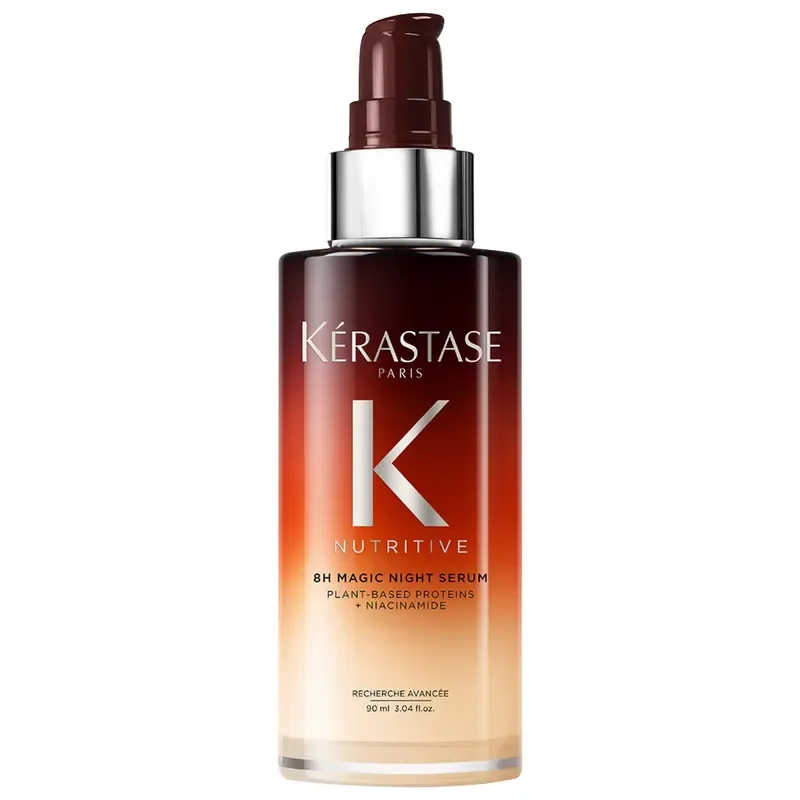
Kérastase Nutritive 8H Magic Night Hair Serum for Dry Hair by Kérastase
Kérastase

Kérastase Nutritive 8H Magic Night Hair Serum for Dry Hair

Hair SerumsHair Care

Safety score

Pregnancy-focused assessment

Medium Risk58/100
Higher concernLower concern

This formula contains an ingredient that needs extra caution in MamaSkin's pregnancy-focused assessment.

Formula and assessment check

Ingredient safety review updated 19 May 2026. Product formulas can change, so compare the ingredients shown here with the packaging you have.

Report a formula mismatch

Ingredient breakdown

See how the listed formula falls across MamaSkin's pregnancy-focused risk bands.

25

No known risks

3

Low risk

1

Medium risk

0

High risk

Ingredients

Ingredients with a higher risk flag appear first, followed by the rest of the formula.

Benzyl Salicylate

Medium Risk

Benzyl salicylate is a fragrance ingredient that is also evaluated for potential endocrine activity and sensitisation. SCCS notes some indications for endocrine mode of action, and fragrance allergens are relevant for contact allergy risk; pregnancy-specific human outcome data for topical exposure are limited. The medium-risk signal is endocrine-related uncertainty and sensitisation potential rather than a defined pregnancy-specific toxicity dataset.

Sources: EU SCCS Final Opinion on Benzyl Salicylate (SCCS/1656/23; sccs_o_277.pdf, 2023); EU fragrance allergen labelling framework (EU Cosmetics Regulation).

Phenoxyethanol

Low Risk

Phenoxyethanol is a preservative permitted in EU cosmetics up to 1.0%. The SCCS concluded it is safe for cosmetic use at that level, including when considering higher cosmetic exposure scenarios in infants and young children. Main practical concern is irritation/stinging on very sensitive or compromised skin rather than a pregnancy- or breastfeeding-specific risk.

Sources: EU SCCS; EU Cosmetics Regulation (Annex V preservative limit), SCCS Opinion on Phenoxyethanol (SCCS/1575/16, 2016)

Dimethicone

Low Risk

Dimethicone is a silicone polymer used as a skin protectant and slip/conditioning agent. It is considered inert with minimal dermal absorption; the main practical issues are cosmetic (feel) and occasional irritation in very sensitive users. It is not a pregnancy-specific concern in topical cosmetic use.

Sources: CIR: Safety Assessment of Dimethicone, Methicone, and related ingredients as used in cosmetics (Methicones report; 2019/2022 update); EU CosIng entry for Dimethicone.

Show all (29)

Polyacrylamide

Low Risk

A high-molecular-weight polymer used as a film former, binder and texture ingredient. Cosmetic-grade polyacrylamide is considered safe when residual acrylamide monomer is tightly controlled. MamaSkin classifies it as low risk because safety depends on manufacturing controls for the hazardous residual monomer, rather than because the finished polymer is a known pregnancy-specific hazard.

Sources: CIR: Safety Assessment and Re-Review of Polyacrylamide https://www.cir-safety.org/sites/default/files/RR_Polyacrylamide.pdf; EU Cosmetics Regulation 1223/2009, Annex III residual acrylamide limits https://eur-lex.europa.eu/legal-content/EN/TXT/?uri=CELEX%3A32009R1223

Aqua / Water

No Known Risks

C13-16 Isoalkane

No Known Risks

Niacinamide

No Known Risks

Niacinamide (vitamin B3) is widely used for barrier support and tone/texture benefits, and is generally considered safe in pregnancy and breastfeeding when used topically at cosmetic concentrations.

Sources: CIR; EU/UK Cosmetics Regulation

Glycerin

No Known Risks

Glycerin is a widely used humectant that supports hydration and the skin barrier, with a long safety record and no known pregnancy or breastfeeding concerns in topical cosmetic use.

Sources: CIR; EU/UK Cosmetics Regulation

C13-14 Isoalkane

No Known Risks

Laureth-7

No Known Risks

An ethoxylated fatty alcohol used mainly as an emulsifier, surfactant or solubiliser. Cosmetic safety reviewers concluded that alkyl PEG/PPG ethers are safe in current practices when formulated to be non-irritating. Manufacturing controls should limit residual ethylene oxide and 1,4-dioxane.

Sources: CIR: Safety Assessment of Alkyl PEG/PPG Ethers as Used in Cosmetics https://cir-safety.org/supplementaldoc/safety-assessment-alkyl-peg/ppg-ethers-used-cosmetics

Panthenol

No Known Risks

Panthenol (pro-vitamin B5) is used for soothing and barrier support and is generally well tolerated, with no known pregnancy or breastfeeding concerns in topical cosmetic use.

Sources: CIR; EU/UK Cosmetics Regulation

Ascorbyl Glucoside

No Known Risks

A stable vitamin C derivative used as an antioxidant and skin-conditioning ingredient. The Cosmetic Ingredient Review concluded that ascorbyl glucoside is safe in current cosmetic use; normal topical exposure does not identify a pregnancy- or breastfeeding-specific concern.

Sources: CIR: Safety Assessment of Ascorbyl Glucoside and Sodium Ascorbyl Glucoside https://www.cir-safety.org/supplementaldoc/safety-assessment-ascorbyl-glucoside-and-sodium-ascorbyl-glucoside-used-cosmetics

Butylene Glycol

No Known Risks

Solvent and humectant commonly used in leave-on products. Not associated with pregnancy-specific concerns at cosmetic exposure levels.

Sources: Cosmetic Ingredient Review (US); Scientific Committee on Consumer Safety (EU)

Linalool

No Known Risks

Linalool is a common fragrance component used at low levels in cosmetics; it is not a pregnancy-specific concern in topical use, but it is a recognised fragrance allergen and may trigger irritation or sensitisation in some people, especially if the product oxidises over time.

Sources: EU/UK cosmetics (fragrance allergen labelling); IFRA; toxicology reviews

Hydroxycitronellal

No Known Risks

A floral fragrance ingredient and recognised contact allergen. Current safety concerns focus on skin sensitisation and controlled cosmetic concentrations; no pregnancy-specific hazard is identified for normal topical cosmetic exposure.

Sources: European Commission: Fragrance allergens labelling https://single-market-economy.ec.europa.eu/sectors/cosmetics/cosmetic-products-specific-topics/fragrance-allergens-labelling_en; SCCS fragrance-allergen opinions

Benzyl Alcohol

No Known Risks

Benzyl alcohol is used as a preservative and fragrance component in cosmetics; it is not a pregnancy-specific concern at typical topical exposure, but it can be irritating or sensitising for some individuals, particularly in leave-on products.

Sources: CIR; EU/UK Cosmetics Regulation; toxicology reviews

Hexyl Cinnamal

No Known Risks

A synthetic floral fragrance ingredient. Its main consumer-relevant concern is skin sensitisation in susceptible users; no pregnancy-specific hazard is identified for normal topical cosmetic exposure.

Sources: European Commission: Fragrance allergens labelling https://single-market-economy.ec.europa.eu/sectors/cosmetics/cosmetic-products-specific-topics/fragrance-allergens-labelling_en; SCCS fragrance-allergen opinions

Citronellol

No Known Risks

A rose-like fragrance ingredient that occurs naturally in many essential oils and may also be manufactured. Its main cosmetic concern is contact allergy in susceptible users; no pregnancy-specific hazard is identified for normal topical cosmetic exposure.

Sources: European Commission: Fragrance allergens labelling https://single-market-economy.ec.europa.eu/sectors/cosmetics/cosmetic-products-specific-topics/fragrance-allergens-labelling_en; SCCS fragrance-allergen opinions

Hydrolyzed Wheat Protein

No Known Risks

A mixture of smaller wheat-protein peptides used for hair and skin conditioning. Cosmetic safety reviewers concluded that hydrolyzed wheat protein is safe when the weight-average peptide molecular weight is 3,500 Da or less, a limit intended to reduce sensitisation risk. This does not imply that a person with a wheat-protein allergy cannot react.

Sources: CIR: Safety Assessment of Hydrolyzed Wheat Protein and Hydrolyzed Wheat Gluten as Used in Cosmetics https://www.cir-safety.org/sites/default/files/plant-derived_proteins.pdf

Alpha-Isomethyl Ionone

No Known Risks

A violet-like fragrance ingredient used in perfumes and fragranced cosmetics. Its principal consumer concern is contact allergy in susceptible users; no pregnancy-specific hazard is identified for normal topical cosmetic exposure.

Sources: European Commission: Fragrance allergens labelling https://single-market-economy.ec.europa.eu/sectors/cosmetics/cosmetic-products-specific-topics/fragrance-allergens-labelling_en; SCCS fragrance-allergen opinions

Coumarin

No Known Risks

An aromatic fragrance ingredient found naturally in some plants and also manufactured. It is subject to fragrance-allergen labelling because it can sensitise susceptible users; no pregnancy-specific concern is identified for normal topical cosmetic use.

Sources: European Commission: Fragrance allergens labelling https://single-market-economy.ec.europa.eu/sectors/cosmetics/cosmetic-products-specific-topics/fragrance-allergens-labelling_en; SCCS fragrance-allergen opinions

Hydrolyzed Corn Protein

No Known Risks

A plant-derived protein or peptide mixture used mainly for hair and skin conditioning. Cosmetic safety reviewers concluded that the assessed plant-derived proteins and peptides are safe in current practices. Protein allergy remains possible in susceptible people.

Sources: CIR: Safety Assessment of Plant-Derived Proteins and Peptides as Used in Cosmetics https://www.cir-safety.org/supplementaldoc/safety-assessment-plant-derived-proteins-and-peptides-used-cosmetics-0

Hydrolyzed Soy Protein

No Known Risks

A mixture of smaller soy-protein peptides used for hair and skin conditioning. Cosmetic safety reviewers concluded that hydrolyzed soy protein is safe in current cosmetic practices. A person with sensitivity to residual soy proteins may still react, but no pregnancy-specific concern was identified for normal topical exposure.

Sources: CIR: Safety Assessment of Plant-Derived Proteins and Peptides as Used in Cosmetics https://www.cir-safety.org/sites/default/files/plant-derived_proteins.pdf

Limonene

No Known Risks

Limonene is a common fragrance component used at low levels in cosmetics; it is not a pregnancy-specific concern in topical use, but it is a recognised fragrance allergen and may trigger irritation or sensitisation in some people, especially if the product oxidises over time.

Sources: EU/UK cosmetics (fragrance allergen labelling); IFRA; toxicology reviews

Iris Florentina Root Extract

No Known Risks

A botanical extract, juice or water used primarily for skin conditioning, moisturising, soothing or antioxidant support. Direct pregnancy studies of the named cosmetic material were not identified. No reproductive or developmental hazard was identified for normal topical exposure to a compliant finished cosmetic; oral herbal or medicinal use is outside this classification.

Sources: European Commission CosIng ingredient inventory; Cosmetic Ingredient Review botanical safety-assessment framework and relevant plant-family assessments. No ingredient-specific human pregnancy study of normal topical cosmetic use was identified.

Citric Acid

No Known Risks

pH adjuster used in small amounts to maintain product stability. Not associated with pregnancy-specific concerns.

Sources: Scientific Committee on Consumer Safety (EU); European cosmetics regulatory framework

Ci 19140 / Yellow 5

No Known Risks

Ci 14700 / Red 4

No Known Risks

Parfum / Fragrance.

No Known Risks

Formulations can change without notice. For the most accurate result, compare this list with your packaging and scan the exact ingredient label in MamaSkin when you repurchase.

How to use this assessment

The risk band is the primary conclusion. The score adds detail within that band and should not be used to compare products as if a one-point difference were clinically meaningful.

MamaSkin provides pregnancy-focused information, not medical advice. Your midwife, GP, pharmacist or dermatologist should take priority when your circumstances differ from typical cosmetic use.

Read the full methodology