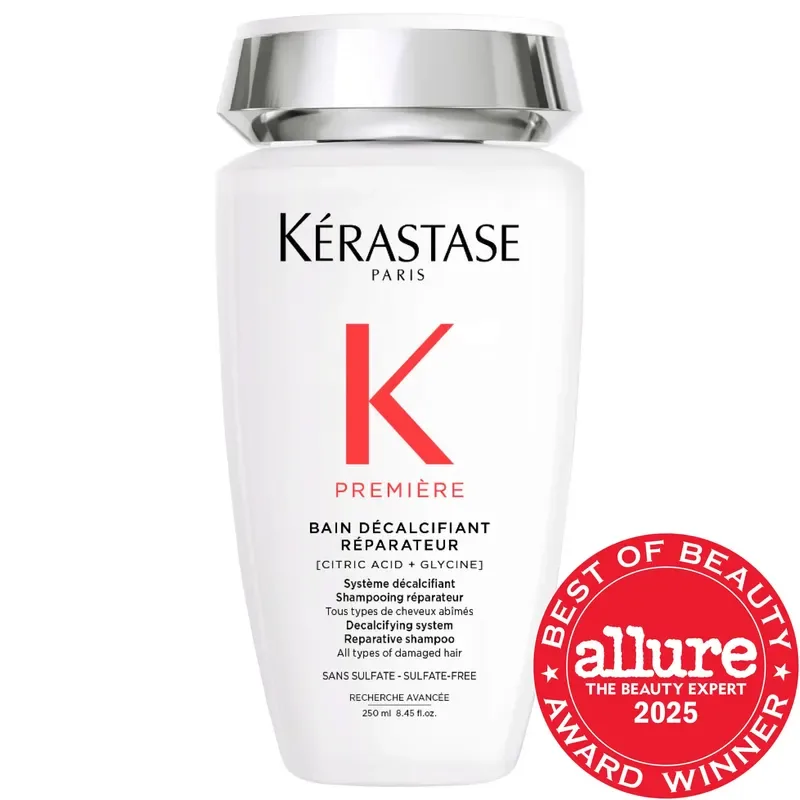
Kérastase Première Repairing Shampoo for Damaged Hair by Kérastase
Kérastase

Kérastase Première Repairing Shampoo for Damaged Hair

ShampoosHair Care

Safety score

Pregnancy-focused assessment

Low Risk72/100
Higher concernLower concern

One or more ingredients have a low-risk flag in MamaSkin's current assessment. Review the notes and your own circumstances.

Formula and assessment check

Ingredient safety review updated 19 May 2026. Product formulas can change, so compare the ingredients shown here with the packaging you have.

Report a formula mismatch

Ingredient breakdown

See how the listed formula falls across MamaSkin's pregnancy-focused risk bands.

34

No known risks

3

Low risk

0

Medium risk

0

High risk

Ingredients

Ingredients with a higher risk flag appear first, followed by the rest of the formula.

Phenoxyethanol

Low Risk

Phenoxyethanol is a preservative permitted in EU cosmetics up to 1.0%. The SCCS concluded it is safe for cosmetic use at that level, including when considering higher cosmetic exposure scenarios in infants and young children. Main practical concern is irritation/stinging on very sensitive or compromised skin rather than a pregnancy- or breastfeeding-specific risk.

Sources: EU SCCS; EU Cosmetics Regulation (Annex V preservative limit), SCCS Opinion on Phenoxyethanol (SCCS/1575/16, 2016)

Amodimethicone

Low Risk

Silicone derivative with negligible systemic absorption in topical cosmetic use; treated as low risk in pregnancy and breastfeeding.

Sources: PubMed, U.S. National Library of Medicine (NLM)

Salicylic Acid

Low Risk

Salicylic acid is a beta hydroxy acid used for exfoliation. Low-strength topical use (up to 2%) on limited areas is generally considered low risk. Higher concentrations, large-area use, or professional peels are avoided during pregnancy due to systemic absorption concerns.

Sources: PubMed, U.S. National Library of Medicine (NLM), NHS, MotherToBaby (OTIS), UKTIS (BUMPS)

Show all (37)

Aqua/Water/Eau

No Known Risks

Sodium Cocoyl Isethionate

No Known Risks

Sodium cocoyl isethionate is a cleansing surfactant. The Cosmetic Ingredient Review concluded that isethionate salts are safe in current cosmetic use when formulated to be non-irritating, and reviewed reproductive and developmental data did not identify a pregnancy-specific signal.

Sources: CIR: Amended Safety Assessment of Isethionate Salts as Used in Cosmetics https://cir-safety.org/supplementaldoc/amended-safety-assessment-isethionate-salts-used-cosmetics-0

Disodium Laureth Sulfosuccinate

No Known Risks

An anionic surfactant used mainly in gentle cleansers and shampoos. Cosmetic safety reviewers concluded that alkyl PEG sulfosuccinates, including disodium laureth sulfosuccinate, are safe in current practices when formulated to be non-irritating and manufactured with appropriate impurity controls.

Sources: CIR: Safety Assessment of Alkyl PEG Sulfosuccinates as Used in Cosmetics https://www.cir-safety.org/ingredient/disodium-laureth-sulfosuccinate

Glycol Distearate

No Known Risks

A fatty-acid ester used for opacifying, emolliency and texture. Cosmetic safety reviewers concluded that glycol distearate is safe as used; available cosmetic exposure does not identify a pregnancy- or breastfeeding-specific concern.

Sources: CIR: Safety Assessment of Monoalkylglycol Dialkyl Acid Esters https://www.cir-safety.org/sites/default/files/glycol%20esters.pdf; CIR ingredient record: Glycol Distearate https://cir-safety.org/ingredient/glycol-distearate

Sodium Lauryl Sulfoacetate

No Known Risks

An anionic surfactant used for cleansing and foam. Cosmetic safety reviewers concluded that sodium lauryl sulfoacetate is safe in current practices. It is distinct from sodium lauryl sulfate, although either surfactant can irritate sensitive skin in a strong cleanser.

Sources: CIR: Sodium Lauryl Sulfoacetate conclusion, IJT 42(Suppl. 3), 2023; CIR December 2025 Quick Reference Table https://cir-safety.org/sites/default/files/QRT-Update-Dec2025.pdf

Sodium Lauroyl Sarcosinate

No Known Risks

An anionic cleansing surfactant. Cosmetic safety reviewers concluded that sodium lauroyl sarcosinate is safe in rinse-off cosmetics and in leave-on products up to 5%, provided it is not used in ways that promote nitrosamine formation or inhalation. No pregnancy-specific concern was identified under those conditions.

Sources: CIR: Final Report on the Safety Assessment of Cocoyl Sarcosine and Related Sarcosinates https://cir-reports.cir-safety.org/view-attachment?id=915a3c2f-8e74-ec11-8943-0022482f06a6

Glycerin

No Known Risks

Glycerin is a widely used humectant that supports hydration and the skin barrier, with a long safety record and no known pregnancy or breastfeeding concerns in topical cosmetic use.

Sources: CIR; EU/UK Cosmetics Regulation

Parfum/Fragrance

No Known Risks

Ppg-5-Ceteth-20

No Known Risks

An ethoxylated fatty alcohol used as an emulsifier or surfactant. Cosmetic safety reviewers concluded that the assessed alkyl PEG/PPG ethers are safe in current practices when formulated to be non-irritating. Manufacturing should control ethylene oxide and 1,4-dioxane residues.

Sources: CIR: Alkyl PEG/PPG Ethers conclusions; December 2025 Quick Reference Table https://cir-safety.org/sites/default/files/QRT-Update-Dec2025.pdf

Decyl Glucoside

No Known Risks

Mild nonionic surfactant used in cleansers and emulsions. Reviewed cosmetic ingredient references support normal topical rinse-off and leave-on use, with no pregnancy- or breastfeeding-specific concern identified; sensitive skin may still react to surfactants.

Sources: CIR: Safety Assessment of Alkyl Glucosides as Used in Cosmetics; EU CosIng / cosmetics regulatory inventory

Cocamidopropyl Betaine

No Known Risks

Mild amphoteric surfactant used in cleansers and shampoos to boost foam and reduce harshness. Reviewed cosmetic safety sources support present cosmetic use, with no pregnancy- or breastfeeding-specific topical signal identified; the main practical caveat is irritation or allergy in some users, sometimes linked to sensitising impurities.

Sources: CIR: Safety Assessment of Cocamidopropyl Betaine and Related Amidopropyl Betaines as Used in Cosmetics; EU CosIng / cosmetics regulatory inventory

Coco-Betaine

No Known Risks

A cleansing and foam-supporting surfactant made from coconut-derived fatty chains. Cosmetic safety reviewers concluded that alkyl betaines, including coco-betaine, are safe in current practices when formulated to be non-irritating. Surfactant-containing products may still sting eyes or irritated skin.

Sources: CIR: Quick Reference Table conclusion for Coco-Betaine and alkyl betaines https://www.cir-safety.org/sites/default/files/sq-fix_2.pdf

Citric Acid

No Known Risks

pH adjuster used in small amounts to maintain product stability. Not associated with pregnancy-specific concerns.

Sources: Scientific Committee on Consumer Safety (EU); European cosmetics regulatory framework

Divinyldimethicone/Dimethicone Copolymer

No Known Risks

Sodium Hydroxide

No Known Risks

pH adjuster used in very small quantities to balance formulations. Not associated with pregnancy-specific concerns.

Sources: Scientific Committee on Consumer Safety (EU); European cosmetics regulatory framework

Polyquaternium-7

No Known Risks

A large conditioning and film-forming polymer used mainly in hair and cleansing products. Cosmetic safety reviewers concluded that Polyquaternium-7 is safe in current cosmetic use at the reviewed concentrations. Its polymeric nature limits systemic exposure, and no pregnancy-specific concern is identified for normal topical use.

Sources: CIR: Safety Assessment of Polyquaternium-7, cited in the CIR Quick Reference Table https://www.cir-safety.org/sites/default/files/safe-092017posted122017.pdf

Polyquaternium-10

No Known Risks

A large cationic cellulose polymer used to condition hair and improve product texture. Cosmetic safety reviewers concluded that Polyquaternium-10 is safe in current cosmetic use; human testing did not indicate irritation or sensitization at reviewed concentrations. No pregnancy-specific concern is identified for normal topical exposure.

Sources: CIR: Safety Assessment of Polyquaternium-10, cited in the CIR Quick Reference Table https://www.cir-safety.org/sites/default/files/safe-092017posted122017.pdf

Carbomer

No Known Risks

Polymer thickener used to create gel textures. Large-molecule ingredient with negligible systemic absorption.

Sources: Cosmetic Ingredient Review (US); Scientific Committee on Consumer Safety (EU)

Sodium Benzoate

No Known Risks

Preservative widely used in foods and cosmetics. Considered safe at regulated concentrations with low systemic exposure from topical use.

Sources: Scientific Committee on Consumer Safety (EU); European cosmetics regulatory framework

Sodium Chloride

No Known Risks

Sodium chloride is used to adjust viscosity and texture in formulations; topical cosmetic use is considered low concern with no known pregnancy or breastfeeding risks.

Sources: CIR; EU/UK Cosmetics Regulation

Limonene

No Known Risks

Limonene is a common fragrance component used at low levels in cosmetics; it is not a pregnancy-specific concern in topical use, but it is a recognised fragrance allergen and may trigger irritation or sensitisation in some people, especially if the product oxidises over time.

Sources: EU/UK cosmetics (fragrance allergen labelling); IFRA; toxicology reviews

Peg-55 Propylene Glycol Oleate

No Known Risks

Propylene Glycol

No Known Risks

Propylene glycol is a common solvent and humectant with a long history of use; it is not considered a pregnancy or breastfeeding concern in topical cosmetics, though some individuals may experience irritation in leave-on products.

Sources: CIR; EU/UK Cosmetics Regulation

Benzoic Acid

No Known Risks

Preservative acid used to help control microbial growth and support formula stability. Reviewed cosmetic safety sources support current cosmetic use, with no pregnancy- or breastfeeding-specific topical concern identified in the material reviewed; some users may still notice local irritation or stinging, especially on compromised skin.

Sources: CIR: Safety Assessment of Benzoic Acid and Sodium Benzoate as Used in Cosmetics; EU CosIng / cosmetics regulatory inventory

Hydrolyzed Vegetable Protein Pg-Propyl Silanetriol

No Known Risks

A hydrolysed plant-protein derivative coupled to a silanetriol group and used mainly for hair conditioning and strengthening. Systemic exposure is expected to be low in rinse-off and hair products. No pregnancy- or reproductive-toxicity signal was identified for normal cosmetic exposure; people with sensitivity to the source protein may still react locally.

Sources: European Commission CosIng ingredient inventory; CIR safety framework for hydrolysed proteins and amino-acid-derived cosmetic ingredients; supplier safety and composition information for Hydrolyzed Vegetable Protein PG-Propyl Silanetriol.

Glycine

No Known Risks

Amino acid used as a humectant and skin/hair-conditioning support ingredient. Reviewed cosmetic safety sources support normal topical use, with no pregnancy- or breastfeeding-specific topical signal identified.

Sources: CIR: Safety Assessment of alpha-Amino Acids as Used in Cosmetics; EU CosIng / cosmetics regulatory inventory

Polysorbate 21

No Known Risks

Trideceth-6

No Known Risks

An ethoxylated fatty alcohol used mainly as an emulsifier, surfactant or solubiliser. Cosmetic safety reviewers concluded that alkyl PEG/PPG ethers are safe in current practices when formulated to be non-irritating. Manufacturing controls should limit residual ethylene oxide and 1,4-dioxane.

Sources: CIR: Safety Assessment of Alkyl PEG/PPG Ethers as Used in Cosmetics https://cir-safety.org/supplementaldoc/safety-assessment-alkyl-peg/ppg-ethers-used-cosmetics

Linalool

No Known Risks

Linalool is a common fragrance component used at low levels in cosmetics; it is not a pregnancy-specific concern in topical use, but it is a recognised fragrance allergen and may trigger irritation or sensitisation in some people, especially if the product oxidises over time.

Sources: EU/UK cosmetics (fragrance allergen labelling); IFRA; toxicology reviews

C12-13 Alketh-23

No Known Risks

C12-13 Alketh-3

No Known Risks

Citral

No Known Risks

A lemon-scented mixture of the aldehydes geranial and neral used in fragrance. Citral is a recognised skin sensitiser, but current cosmetic concerns relate to allergy and concentration rather than a pregnancy-specific hazard from normal topical use.

Sources: European Commission: Fragrance allergens labelling https://single-market-economy.ec.europa.eu/sectors/cosmetics/cosmetic-products-specific-topics/fragrance-allergens-labelling_en; SCCS fragrance-allergen opinions

Cetrimoniumchloride

No Known Risks

Potassium Sorbate.

No Known Risks

Formulations can change without notice. For the most accurate result, compare this list with your packaging and scan the exact ingredient label in MamaSkin when you repurchase.

How to use this assessment

The risk band is the primary conclusion. The score adds detail within that band and should not be used to compare products as if a one-point difference were clinically meaningful.

MamaSkin provides pregnancy-focused information, not medical advice. Your midwife, GP, pharmacist or dermatologist should take priority when your circumstances differ from typical cosmetic use.

Read the full methodology