Kiehl's
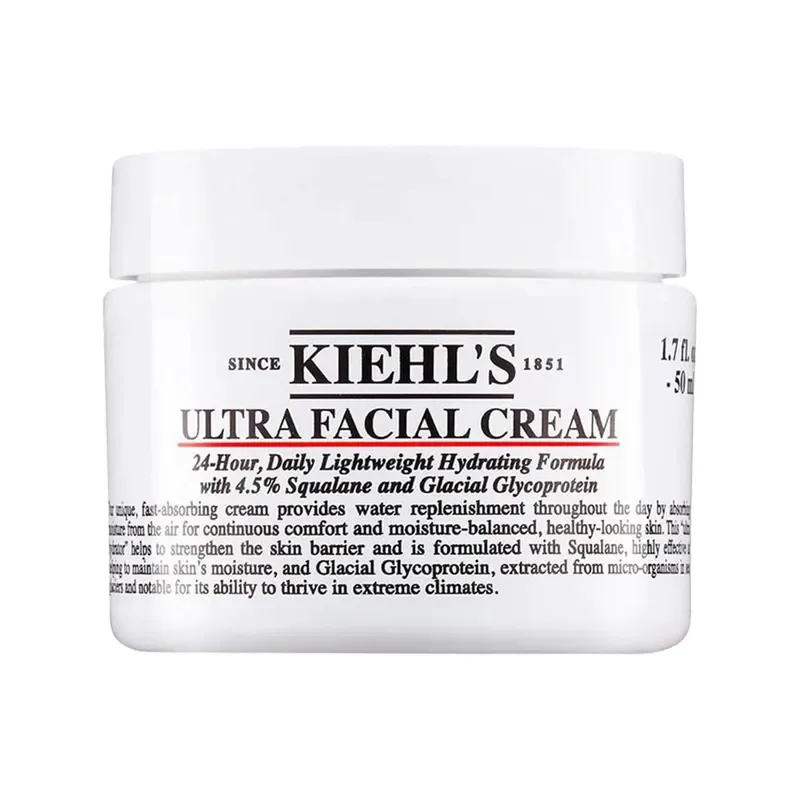
Kiehl's Ultra Facial Moisturizing Cream with Squalane
Low risk74/100

Sunscreens
This formula needs extra consideration during pregnancy. Review the flagged ingredients with your healthcare professional.
29 of 29 ingredients rated
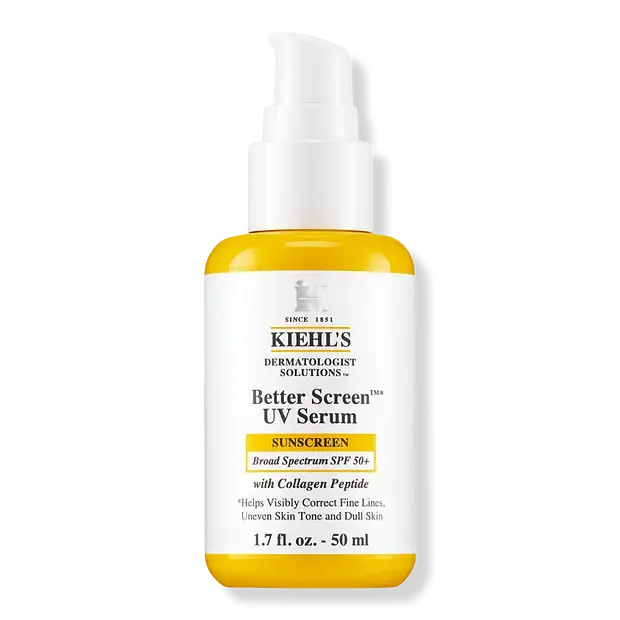
MamaSkin rates the recorded formula for Kiehl's Better Screen UV Serum SPF 50+ Facial Sunscreen With Collagen Peptide as Medium risk (51/100). Discuss the flagged ingredients with a qualified healthcare professional before using this formula during pregnancy.
The recorded formula includes 4 ingredient entries with risk flags: Butyl Methoxydibenzoylmethane 3% (Medium risk), Homosalate 7% (Medium risk), Octocrylene 7% (Medium risk), plus others listed in the breakdown. These are ingredient-level flags; they do not replace the stored product assessment or account for every formulation detail.
29 of 29 ingredient entries on this page have a recorded score, evidence summary and source text. That describes documentation coverage, not proof that the finished formula has been clinically tested during pregnancy.
How we assess productsThe recorded formula, with evidence behind each rating. Unmatched ingredients are marked Not assessed in grey.
Butyl methoxydibenzoylmethane (avobenzone) is a UVA filter used in sunscreens. Reviews note potential endocrine-related signals for several organic UV filters, but data are often not sufficient to establish endocrine disruption, and systemic exposure depends on formulation and use pattern. Pregnancy-specific human outcome data for topical exposure are limited; the key signal is uncertainty around systemic/endocrine effects rather than a well-defined pregnancy outcome dataset.
Sources: TGA: Safety review of seven active sunscreen ingredients https://www.tga.gov.au/resources/publication/corporate-reports/safety-review-seven-active-sunscreen-ingredients
Homosalate is a UV-B filter. SCCS re-evaluations focused on potential endocrine activity and systemic exposure; while endocrine evidence has been described as inconclusive/equivocal, the ingredient remains under endocrine-disruptor scrutiny and exposure modelling depends on product type and use patterns. Pregnancy-specific human outcome data for topical exposure are limited, so the key signal is endocrine uncertainty plus systemic exposure considerations with frequent, large-area use.
Sources: SCCS: Homosalate safety assessment https://health.ec.europa.eu/publications/scientific-advice-safety-homosalate-cas-no-118-56-9-ec-no-204-260-8-uv-filter-cosmetic-products_en
Octocrylene is a UV filter and photostabiliser used in sunscreens and some daily SPF products. SCCS reviewed endocrine-related evidence and noted some indications of endocrine effects in vivo, but with limitations; systemic exposure is plausible with frequent, large-area use. An additional practical signal is that benzophenone can occur as an impurity/degradation product in some octocrylene-containing products. Pregnancy-specific human outcome data for topical exposure are limited.
Sources: SCCS/1627/21: Octocrylene https://health.ec.europa.eu/publications/octocrylene_en
Ethylhexyl salicylate (octisalate) is an organic UV-B filter with measurable topical absorption. A CIR review records a rat oral reproductive/developmental study with dose-related post-implantation loss and smaller litters at 80 and 250 mg/kg/day (NOAEL 25 mg/kg/day); those repeated oral doses do not model intact-skin cosmetic exposure. The same review found relatively low human-skin permeability and concluded ethylhexyl salicylate safe in the assessed cosmetic uses. A ToxCast-to-human-exposure comparison found the most sensitive in-vitro endocrine response at about 16.5 micromolar versus about 0.023 micromolar maximal-use human plasma exposure, roughly 700-fold lower. FDA still requests additional sunscreen safety data, and pregnancy-outcome data are limited; MotherToBaby reports no proven increased pregnancy risk. MamaSkin therefore uses Low Risk to surface absorption and the evidence gap without treating remote high-dose animal findings as proof that typical topical use should be avoided.
Sources: CIR 2019 Final Report: Amended Safety Assessment of Salicylic Acid and Salicylates https://www.cir-safety.org/sites/default/files/salicy042019FAR.pdf, Toxicological Sciences 2023: ToxCast/Tox21 endocrine activity compared with human plasma exposure https://academic.oup.com/toxsci/article/196/1/25/7240499, FDA: OTC sunscreen proposed-order Q&A https://www.fda.gov/drugs/understanding-over-counter-medicines/questions-and-answers-fda-posts-deemed-final-order-and-proposed-order-over-counter-sunscreen, Matta et al. JAMA 2020 maximal-use sunscreen absorption trial https://jamanetwork.com/journals/jama/fullarticle/2759002, MotherToBaby: Screening Your Sunscreen During Pregnancy https://mothertobaby.org/baby-blog/screening-your-sunscreen-during-pregnancy/
Water (Aqua) is the standard purified water used as a cosmetic solvent. It has no pregnancy-specific risk in normal topical use.
Sources: https://pubchem.ncbi.nlm.nih.gov/compound/Water, https://single-market-economy.ec.europa.eu/sectors/cosmetics/cosmetic-ingredient-database/cosing-glossary-ingredients_en
Glycerin is a widely used humectant that supports hydration and the skin barrier, with a long safety record and no known pregnancy or breastfeeding concerns in topical cosmetic use.
Sources: CIR; EU/UK Cosmetics Regulation
A purified hydrocarbon emollient or volatile carrier used for slip and light texture. Related cosmetic hydrocarbon and isoparaffin assessments support use in current practices. Normal dermal exposure is not associated with a pregnancy-specific signal; volatile products should be used with ordinary ventilation.
Sources: CIR: Isoparaffins safety assessment, IJT 31(Suppl. 3), 2012; CIR: hydrocarbon polymers and cosmetic hydrocarbon assessments; CIR December 2025 Quick Reference Table https://cir-safety.org/sites/default/files/QRT-Update-Dec2025.pdf
Solvent and humectant used to improve texture and ingredient solubility. Low systemic exposure expected from topical cosmetic use.
Sources: Cosmetic Ingredient Review (US); Scientific Committee on Consumer Safety (EU)
C12 22 Alkyl Acrylate/hydroxyethylacrylate Copolymer is a cosmetic polymer, film former or high-molecular-weight texture aid. Systemic dermal absorption is expected to be limited when manufactured with appropriate residual-monomer and impurity controls. No pregnancy-specific concern was identified for normal cosmetic use; avoid inhaling airborne powder or spray droplets.
Sources: CIR polymer safety assessments and Quick Reference Table https://www.cir-safety.org/supplementaldoc/quick-reference-table-december-2025; European Commission CosIng ingredient inventory
Vitamin E antioxidant used to protect oils and support the skin barrier. Not associated with pregnancy-specific concerns at cosmetic exposure.
Sources: Cosmetic Ingredient Review (US); Scientific Committee on Consumer Safety (EU)
Amino-acid-derived emulsifier and skin-conditioning support ingredient. Reviewed cosmetic ingredient references do not identify a pregnancy- or breastfeeding-specific concern for normal topical use.
Sources: CIR cosmetic ingredient safety references for amino acid alkyl amides/salts; EU CosIng / cosmetics regulatory inventory
Solvent and humectant commonly used in leave-on products. Not associated with pregnancy-specific concerns at cosmetic exposure levels.
Sources: Cosmetic Ingredient Review (US); Scientific Committee on Consumer Safety (EU)
Fatty alcohol used as an emollient and thickener. Not the same as drying alcohols and not associated with pregnancy-specific concerns.
Sources: Cosmetic Ingredient Review (US); Scientific Committee on Consumer Safety (EU)
Microbial polysaccharide thickener used to build viscosity and form a soft film on skin. Reviewed cosmetic safety sources support normal topical use, with no pregnancy- or breastfeeding-specific topical signal identified in the material reviewed.
Sources: CIR: Safety Assessment of Microbial Polysaccharide Gums as Used in Cosmetics; EU CosIng / cosmetics regulatory inventory
Hydroxyacetophenone is used as an antioxidant and preservative-support ingredient; it is generally considered low concern in topical cosmetic use with no known pregnancy or breastfeeding risks at typical concentrations.
Sources: CIR; EU/UK Cosmetics Regulation
Humectant and preservative booster used to support product stability. Low systemic exposure expected from topical cosmetic use.
Sources: Scientific Committee on Consumer Safety (EU); Cosmetic Ingredient Review (US)
A sugar, starch, inulin or cellulose derivative used for emulsification, film formation, absorbency or formula texture. These carbohydrate-based materials are not expected to produce meaningful systemic exposure through intact skin, and related cosmetic safety assessments do not identify a reproductive or developmental hazard for normal use. Fine dry powder should not be deliberately inhaled.
Sources: CIR safety assessments of Starches and Modified Starches, Cellulose and Cellulose Derivatives, Saccharide Esters and Plant Polysaccharide Gums; CIR December 2025 Quick Reference Table https://cir-safety.org/sites/default/files/QRT-Update-Dec2025.pdf; European Commission CosIng ingredient inventory.
Emulsifier and emollient used to stabilise creams and lotions. Not associated with pregnancy-specific concerns at cosmetic exposure.
Sources: Cosmetic Ingredient Review (US); Scientific Committee on Consumer Safety (EU)
Jojoba-derived wax esters used as emollients, texture agents and skin-conditioning ingredients. Reviewed cosmetic ingredient references do not identify a pregnancy- or breastfeeding-specific concern for normal topical use.
Sources: CIR cosmetic ingredient safety references for jojoba-derived ingredients/wax esters; EU CosIng / cosmetics regulatory inventory
A sunflower-seed-derived wax used to structure and condition cosmetic formulas. Cosmetic safety reviewers concluded that sunflower seed- and flower-derived ingredients are safe as used; lipsticks containing this wax were not irritating or sensitising in reviewed tests. People with sunflower-seed allergy should still use caution.
Sources: CIR: Safety Assessment of Helianthus annuus-Derived Ingredients as Used in Cosmetics https://www.cir-safety.org/sites/default/files/Helianthus%20annuus.pdf
A modified starch used mainly to thicken and stabilize cosmetic formulas. Cosmetic safety reviewers concluded that starch phosphates, including hydroxypropyl starch phosphate, are safe in current cosmetic use. No pregnancy- or breastfeeding-specific concern is identified for normal topical exposure.
Sources: CIR: Safety Assessment of Starch Phosphates https://cir-safety.org/sites/default/files/FR_StarchPhosphates_092022.pdf
Chelating ingredient used to improve formula stability by binding trace metals. Reviewed cosmetic ingredient references do not identify a pregnancy- or breastfeeding-specific concern for normal topical use.
Sources: CIR cosmetic ingredient safety references for chelating agents; EU CosIng / cosmetics regulatory inventory
Polymer thickener used to create gel textures. Large-molecule ingredient with negligible systemic absorption.
Sources: Cosmetic Ingredient Review (US); Scientific Committee on Consumer Safety (EU)
Humectant and buffer that also forms part of the skin's natural moisturising factor. Reviewed cosmetic safety sources support topical cosmetic use; irritation and sun-sensitivity considerations relate more to formula context than to pregnancy-specific risk.
Sources: CIR: Safety Assessment of Alpha Hydroxy Acids as Used in Cosmetics; CIR: PCA and Its Salts as Used in Cosmetics; EU CosIng / cosmetics regulatory inventory
pH adjuster used in very small quantities to balance formulations. Not associated with pregnancy-specific concerns.
Sources: Scientific Committee on Consumer Safety (EU); European cosmetics regulatory framework
Nonionic surfactant and solubiliser used to disperse oils and fragrance. Reviewed cosmetic safety sources support normal topical use, with no pregnancy- or breastfeeding-specific topical signal identified in the material reviewed.
Sources: CIR: Safety Assessment of Polysorbates as Used in Cosmetics; EU CosIng / cosmetics regulatory inventory
A small glycerin polymer used as a humectant and conditioning ingredient. Cosmetic safety reviewers assessed polyglycerin-3 with diglycerin and related polyglycerins and concluded that they are safe in current practices of use and concentration. No pregnancy-specific concern was identified for normal topical use.
Sources: CIR: Safety Assessment of Diglycerin and Polyglycerins as Used in Cosmetics https://www.cir-safety.org/panelbook/safety-assessment-diglycerin-and-polyglycerin-3-6-and-10-used-cosmetics
Synthetic peptide used as a skin-conditioning ingredient. Reviewed cosmetic safety sources indicate no known pregnancy- or breastfeeding-specific concern in normal topical cosmetic use. Available cosmetic safety assessments conclude this ingredient is safe in the present practices of use and concentration described for cosmetics.
Sources: CIR Expert Panel, Safety Assessment of Tripeptide-1, Hexapeptide-12, their metal salts and fatty acyl derivatives, and Palmitoyl Tetrapeptide-7 as used in cosmetics, final report, 2014
Synthetic signal peptide used in topical cosmetic anti-aging and skin-conditioning formulas. Reviewed topical peptide literature describes palmitoyl tetrapeptide-7 as a cosmetic peptide with anti-inflammatory and extracellular-matrix support activity in topical formulations. No pregnancy- or breastfeeding-specific risk signal was identified for normal topical cosmetic use.
Sources: Schagen SK. Topical Peptide Treatments with Effective Anti-Aging Results. Cosmetics. 2017;4(2):16. doi:10.3390/cosmetics4020016; CIR Expert Panel safety assessment of palmitoyl oligopeptides as used in cosmetics.
Butyl Methoxydibenzoylmethane 3%, Homosalate 7%, Ethylhexyl Salicylate 5%, Octocrylene 7%, Water, Glycerin, C15-19 Alkane, Propanediol, C12-22 Alkyl Acrylate/Hydroxyethylacrylate Copolymer, Tocopherol, Sodium Stearoyl Glutamate, Butylene Glycol, Cetearyl Alcohol, Sclerotium Gum, Hydroxyacetophenone, Caprylyl Glycol, Sodium Starch Octenylsuccinate, Glyceryl Stearate, Jojoba Esters, Helianthus Annuus Seed Wax, Hydroxypropyl Starch Phosphate, Trisodium Ethylenediamine Disuccinate, Carbomer, Sodium Lactate, Sodium Hydroxide, Polysorbate 20, Polyglycerin-3, Palmitoyl Tripeptide-1, Palmitoyl Tetrapeptide-7
Ingredient ratings refreshed 1 October 2026. Formulas vary by market and can change. Always compare with your packaging.
The recorded formula includes 4 ingredient entries with risk flags: Butyl Methoxydibenzoylmethane 3% (Medium risk), Homosalate 7% (Medium risk), Octocrylene 7% (Medium risk), plus others listed in the breakdown. These are ingredient-level flags; they do not replace the stored product assessment or account for every formulation detail. The product score is a stored assessment, not a clinical safety guarantee.
No. The score and risk band describe MamaSkin's pregnancy-focused ingredient screening of this recorded formula. They do not measure SPF, UVA protection, water resistance or whether you have applied enough sunscreen. Use the protection and application instructions on your exact packaging, and review the ingredient flags separately.
29 of 29 ingredient entries on this page have a recorded score, evidence summary and source text. That describes documentation coverage, not proof that the finished formula has been clinically tested during pregnancy.
Only if the ingredient list on your packaging matches the recorded formula shown here. Formulas can differ by market and change over time. Compare the full list, not just the product name; report a mismatch if it differs.
No. This page presents a pregnancy-focused product assessment. Do not infer a breastfeeding conclusion from its score or label; breastfeeding requires a separate assessment of the formula and how it is used.