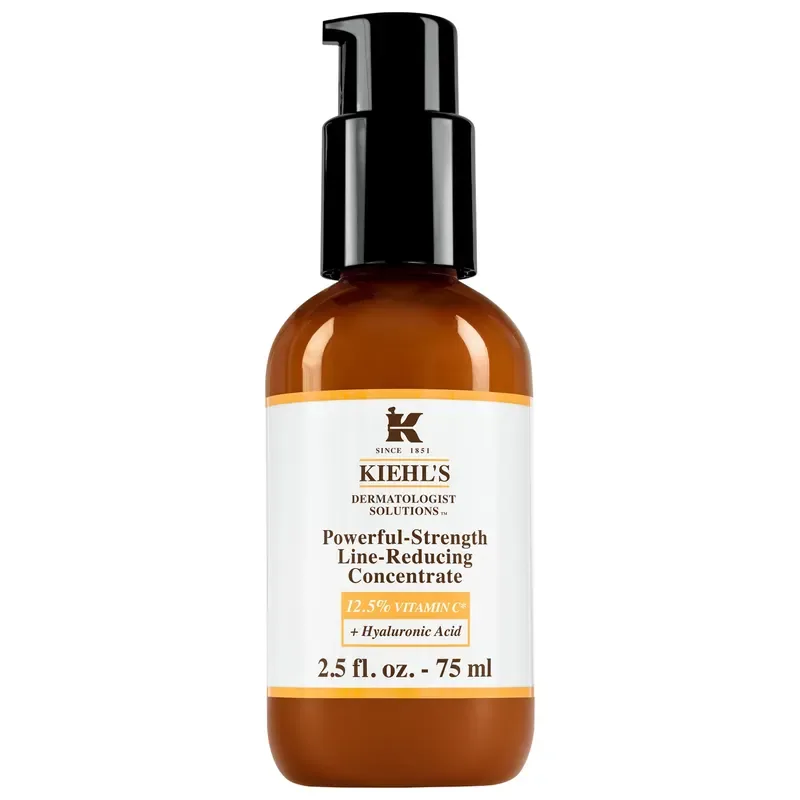
Kiehl's Powerful-Strength Vitamin C Serum by Kiehl's
Kiehl's

Kiehl's Powerful-Strength Vitamin C Serum

SerumsSkin Care

Safety score

Pregnancy-focused assessment

Low Risk78/100
Higher concernLower concern

One or more ingredients have a low-risk flag in MamaSkin's current assessment. Review the notes and your own circumstances.

Formula and assessment check

Ingredient safety review updated 19 May 2026. Product formulas can change, so compare the ingredients shown here with the packaging you have.

Report a formula mismatch

Ingredient breakdown

See how the listed formula falls across MamaSkin's pregnancy-focused risk bands.

15

No known risks

2

Low risk

0

Medium risk

0

High risk

Ingredients

Ingredients with a higher risk flag appear first, followed by the rest of the formula.

Dimethicone

Low Risk

Dimethicone is a silicone polymer used as a skin protectant and slip/conditioning agent. It is considered inert with minimal dermal absorption; the main practical issues are cosmetic (feel) and occasional irritation in very sensitive users. It is not a pregnancy-specific concern in topical cosmetic use.

Sources: CIR: Safety Assessment of Dimethicone, Methicone, and related ingredients as used in cosmetics (Methicones report; 2019/2022 update); EU CosIng entry for Dimethicone.

Dimethicone Crosspolymer

Low Risk

Silicone derivative with negligible systemic absorption in topical cosmetic use; treated as low risk in pregnancy and breastfeeding.

Sources: PubMed, U.S. National Library of Medicine (NLM)

Propylene Glycol

No Known Risks

Propylene glycol is a common solvent and humectant with a long history of use; it is not considered a pregnancy or breastfeeding concern in topical cosmetics, though some individuals may experience irritation in leave-on products.

Sources: CIR; EU/UK Cosmetics Regulation

Show all (17)

Glycerin

No Known Risks

Glycerin is a widely used humectant that supports hydration and the skin barrier, with a long safety record and no known pregnancy or breastfeeding concerns in topical cosmetic use.

Sources: CIR; EU/UK Cosmetics Regulation

Ascorbic Acid

No Known Risks

Vitamin C antioxidant used to support brightness and photoprotection; functions as an antioxidant/pH adjuster in cosmetic formulas. No pregnancy-specific contraindications are identified for topical cosmetic use.

Sources: CIR (Ascorbic Acid); PubMed (NLM)

Cetyl Peg/Ppg-10/1 Dimethicone

No Known Risks

A silicone polyether used mainly as an emulsifier and conditioning ingredient. The Cosmetic Ingredient Review concluded that this ingredient is safe in current cosmetic use. Concentrated-material tests found limited transient irritation, while a finished cosmetic containing 15% was non-irritating in human patch testing; no pregnancy- or breastfeeding-specific concern is identified for normal topical use.

Sources: CIR: Safety Assessment of Polyoxyalkylene Siloxane Copolymers as Used in Cosmetics (Final Report 2014) https://cir-safety.org/sites/default/files/ROPSIL_122014%20_FAR.pdf

Ascorbyl Glucoside

No Known Risks

A stable vitamin C derivative used as an antioxidant and skin-conditioning ingredient. The Cosmetic Ingredient Review concluded that ascorbyl glucoside is safe in current cosmetic use; normal topical exposure does not identify a pregnancy- or breastfeeding-specific concern.

Sources: CIR: Safety Assessment of Ascorbyl Glucoside and Sodium Ascorbyl Glucoside https://www.cir-safety.org/supplementaldoc/safety-assessment-ascorbyl-glucoside-and-sodium-ascorbyl-glucoside-used-cosmetics

Lauroyl Lysine

No Known Risks

Amino-acid-derived conditioning and slip ingredient used especially in powders and colour cosmetics. Reviewed cosmetic safety sources support normal topical use, with no pregnancy- or breastfeeding-specific topical signal identified in the material reviewed.

Sources: CIR: Safety Assessment of Amino Acid Alkyl Amides as Used in Cosmetics; EU CosIng / cosmetics regulatory inventory

Boron Nitride

No Known Risks

An inert inorganic powder used to improve slip, texture and soft focus in makeup. Cosmetic safety reviewers concluded that cosmetic-grade boron nitride is safe in current cosmetic use. No pregnancy-specific concern is identified for normal skin application; as with cosmetic powders generally, avoid deliberately inhaling airborne powder or airbrush spray.

Sources: CIR: Safety Assessment of Boron Nitride as Used in Cosmetics https://www.cir-safety.org/supplementaldoc/safety-assessment-boron-nitride-used-cosmetics-0

Hydroxyethylpiperazine Ethane Sulfonic Acid

No Known Risks

Adenosine

No Known Risks

Skin-conditioning ingredient commonly used in leave-on skincare. Reviewed cosmetic safety sources support normal topical use, with no pregnancy- or breastfeeding-specific topical signal identified in the material reviewed.

Sources: CIR: Safety Assessment of Adenosine Ingredients as Used in Cosmetics; EU CosIng / cosmetics regulatory inventory

Hydrolyzed Hyaluronic Acid

No Known Risks

Humectant and skin-conditioning ingredient in the hyaluronate family. Reviewed cosmetic safety sources support current cosmetic use, with no pregnancy- or breastfeeding-specific topical concern identified in the material reviewed.

Sources: CIR: Safety Assessment of Hyaluronates as Used in Cosmetics; EU CosIng / cosmetics regulatory inventory

Limonene

No Known Risks

Limonene is a common fragrance component used at low levels in cosmetics; it is not a pregnancy-specific concern in topical use, but it is a recognised fragrance allergen and may trigger irritation or sensitisation in some people, especially if the product oxidises over time.

Sources: EU/UK cosmetics (fragrance allergen labelling); IFRA; toxicology reviews

Citrus Aurantium Dulcis Peel Oil/Orange Peel Oil

No Known Risks

Citrus Limon Peel Oil/Lemon Peel Oil

No Known Risks

Citral

No Known Risks

A lemon-scented mixture of the aldehydes geranial and neral used in fragrance. Citral is a recognised skin sensitiser, but current cosmetic concerns relate to allergy and concentration rather than a pregnancy-specific hazard from normal topical use.

Sources: European Commission: Fragrance allergens labelling https://single-market-economy.ec.europa.eu/sectors/cosmetics/cosmetic-products-specific-topics/fragrance-allergens-labelling_en; SCCS fragrance-allergen opinions

Pentaerythrityl Tetra-Di-T-Butyl Hydroxyhydrocinnamate.

No Known Risks

Formulations can change without notice. For the most accurate result, compare this list with your packaging and scan the exact ingredient label in MamaSkin when you repurchase.

How to use this assessment

The risk band is the primary conclusion. The score adds detail within that band and should not be used to compare products as if a one-point difference were clinically meaningful.

MamaSkin provides pregnancy-focused information, not medical advice. Your midwife, GP, pharmacist or dermatologist should take priority when your circumstances differ from typical cosmetic use.

Read the full methodology