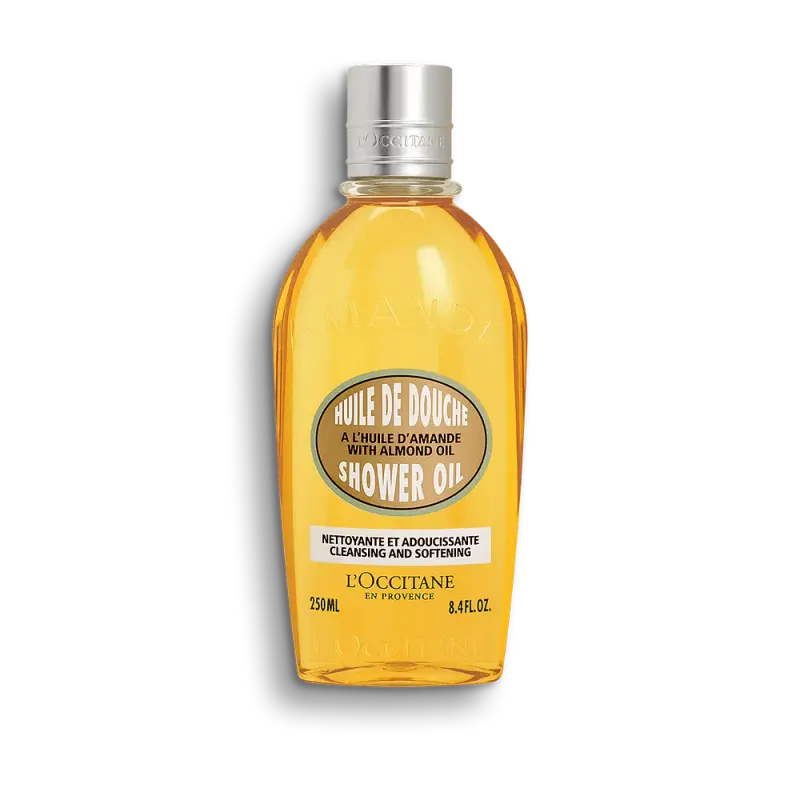
L'Occitane Almond Shower Oil by L'Occitane
L'Occitane

L'Occitane Almond Shower Oil

Body Washesbody care

Safety score

Pregnancy-focused assessment

Low Risk76/100
Higher concernLower concern

One or more ingredients have a low-risk flag in MamaSkin's current assessment. Review the notes and your own circumstances.

Formula and assessment check

Ingredient safety review updated 15 February 2026. Product formulas can change, so compare the ingredients shown here with the packaging you have.

Report a formula mismatch

Ingredient breakdown

See how the listed formula falls across MamaSkin's pregnancy-focused risk bands.

16

No known risks

1

Low risk

0

Medium risk

0

High risk

Ingredients

Ingredients with a higher risk flag appear first, followed by the rest of the formula.

Parfum

Low Risk

Umbrella term for an undisclosed fragrance blend. It’s not usually a pregnancy-specific concern at normal cosmetic use levels, but the exact components and concentrations aren’t fully disclosed on the label, so we score it more conservatively. If you prefer maximum transparency (or you’re sensitive to fragrance compounds), choose fragrance-free/unscented products.

Sources: SCCS: Fragrance allergens in cosmetic products https://health.ec.europa.eu/latest-updates/sccs-new-opinion-fragrance-allergens-cosmetic-products-2012-07-31_en
Vitis Vinifera Seed Oil

No Known Risks

Grape seed-derived emollient oil used for skin conditioning. Normal topical cosmetic use has no known pregnancy- or breastfeeding-specific concern identified in reviewed cosmetic references.

Sources: CIR: Safety Assessment of Plant-Derived Fatty Acid Oils as Used in Cosmetics; EU CosIng / cosmetics regulatory inventory

Tipa-Laureth Sulfate

No Known Risks
Show all (17)

Laureth-3

No Known Risks

A surfactant, emulsifier or conditioning ingredient used at controlled cosmetic concentrations. Local irritation in strong formulas is the practical concern; no pregnancy-specific systemic or developmental hazard was identified for normal topical or rinse-off exposure.

Sources: European Commission CosIng ingredient inventory; relevant CIR assessments of surfactants, ethoxylated ingredients and quaternary conditioning agents.

Caprylic/Capric Triglyceride

No Known Risks

Common emollient derived from fatty acids and glycerin. Used to soften skin and improve texture without pregnancy-specific concerns.

Sources: Cosmetic Ingredient Review (US); Scientific Committee on Consumer Safety (EU)

Cocamide Mea

No Known Risks

A fatty-acid monoethanolamide used mainly to boost foam, condition hair or control viscosity. CIR concluded that the reviewed ethanolamides, including Cocamide MEA, Cocamide Methyl MEA, Acetamide MEA and related MEA amides, are safe in current cosmetic use when formulated to be non-irritating and should not be used where N-nitroso compounds may form. Available systemic, genotoxicity and cosmetic-exposure evidence did not identify a pregnancy-specific concern. This assessment assumes compliant impurity control and is not an assessment of concentrated occupational inhalation exposure.

Sources: CIR: Final Amended Safety Assessment of Ethanolamides https://www.cir-safety.org/sites/default/files/amides032012FAR.pdf; CIR: Cocamide MEA ingredient review https://www.cir-safety.org/ingredient/cocamide-mea; European Commission CosIng and EU cosmetics restrictions concerning nitrosamine formation.

Propylene Glycol

No Known Risks

Propylene glycol is a common solvent and humectant with a long history of use; it is not considered a pregnancy or breastfeeding concern in topical cosmetics, though some individuals may experience irritation in leave-on products.

Sources: CIR; EU/UK Cosmetics Regulation

Sorbitan Oleate

No Known Risks

This sorbitan fatty-acid ester is an emulsifier that helps oil and water phases remain mixed. The Cosmetic Ingredient Review concluded that sorbitan esters are safe in current cosmetic use; occasional contact reactions remain possible in sensitive users.

Sources: CIR: Safety Assessment of Sorbitan Esters as Used in Cosmetics https://www.cir-safety.org/supplementaldoc/safety-assessment-sorbitan-esters-used-cosmetics

Prunus Amygdalus Dulcis Oil

No Known Risks

Sweet almond-derived emollient oil used for skin conditioning and barrier feel. Normal topical cosmetic use has no known pregnancy- or breastfeeding-specific concern; users with almond or nut sensitivities should follow personal tolerance.

Sources: CIR: Safety Assessment of Plant-Derived Fatty Acid Oils as Used in Cosmetics; EU CosIng / cosmetics regulatory inventory

Citrus Aurantium Bergamia Fruit Oil

No Known Risks

Bergamot essential oil used mainly for fragrance. No pregnancy-specific hazard is established for normal topical cosmetic exposure. Expressed bergamot oil can be phototoxic unless furocoumarins are controlled, so sun-exposed use should follow the finished product directions and applicable fragrance standards.

Sources: CIR: Safety Assessment of Citrus-Derived Peel Oils as Used in Cosmetics; IFRA Standard for phototoxicity of bergamot oil

Helianthus Annuus Seed Oil

No Known Risks

Helianthus annuus (sunflower) seed oil is a common emollient rich in fatty acids and is generally well tolerated, with no known pregnancy or breastfeeding concerns in topical cosmetic use.

Sources: CIR; EU/UK Cosmetics Regulation

Rosmarinus Officinalis Leaf Extract

No Known Risks

Plant extract used for antioxidant or soothing properties. Unlike essential oils, cosmetic extracts are not highly concentrated and are used at low levels. Safety concerns associated with essential oil use do not generally apply to cosmetic extracts.

Sources: General cosmetic safety references for botanical extracts and exposure route considerations; essential oil literature discusses concentrated volatile forms rather than dilute extracts.

Tocopherol

No Known Risks

Vitamin E antioxidant used to protect oils and support the skin barrier. Not associated with pregnancy-specific concerns at cosmetic exposure.

Sources: Cosmetic Ingredient Review (US); Scientific Committee on Consumer Safety (EU)

Water

No Known Risks

Limonene

No Known Risks

Limonene is a common fragrance component used at low levels in cosmetics; it is not a pregnancy-specific concern in topical use, but it is a recognised fragrance allergen and may trigger irritation or sensitisation in some people, especially if the product oxidises over time.

Sources: EU/UK cosmetics (fragrance allergen labelling); IFRA; toxicology reviews

Coumarin

No Known Risks

An aromatic fragrance ingredient found naturally in some plants and also manufactured. It is subject to fragrance-allergen labelling because it can sensitise susceptible users; no pregnancy-specific concern is identified for normal topical cosmetic use.

Sources: European Commission: Fragrance allergens labelling https://single-market-economy.ec.europa.eu/sectors/cosmetics/cosmetic-products-specific-topics/fragrance-allergens-labelling_en; SCCS fragrance-allergen opinions

Linalool

No Known Risks

Linalool is a common fragrance component used at low levels in cosmetics; it is not a pregnancy-specific concern in topical use, but it is a recognised fragrance allergen and may trigger irritation or sensitisation in some people, especially if the product oxidises over time.

Sources: EU/UK cosmetics (fragrance allergen labelling); IFRA; toxicology reviews

Formulations can change without notice. For the most accurate result, compare this list with your packaging and scan the exact ingredient label in MamaSkin when you repurchase.

How to use this assessment

The risk band is the primary conclusion. The score adds detail within that band and should not be used to compare products as if a one-point difference were clinically meaningful.

MamaSkin provides pregnancy-focused information, not medical advice. Your midwife, GP, pharmacist or dermatologist should take priority when your circumstances differ from typical cosmetic use.

Read the full methodology