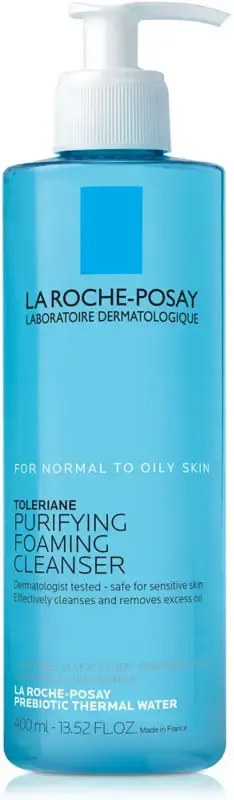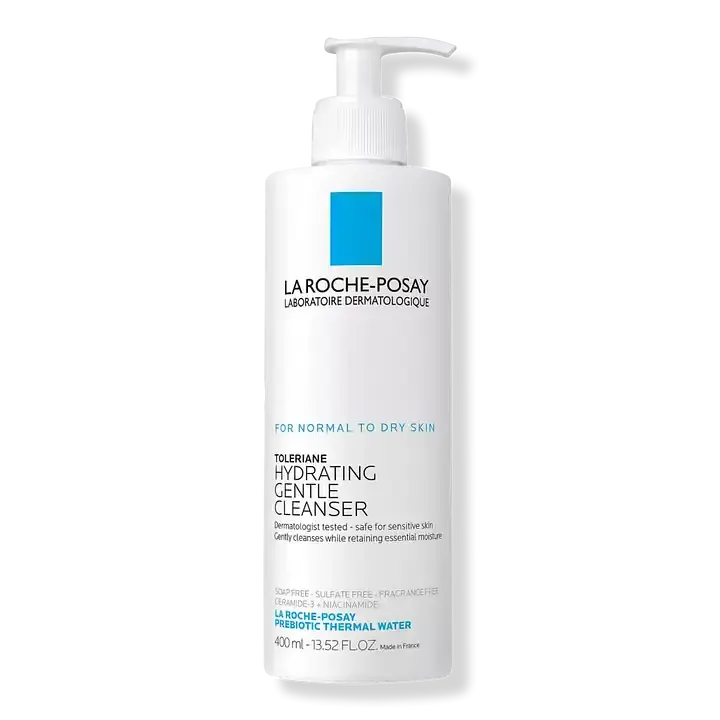
La Roche-Posay
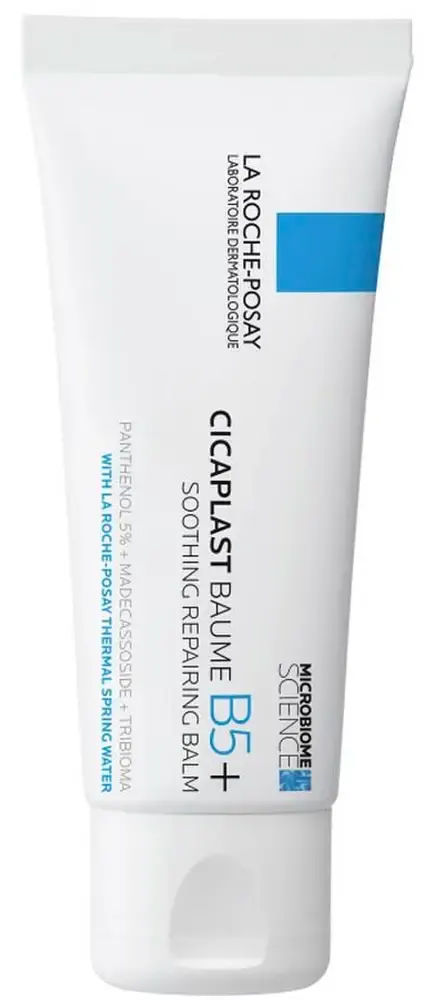
La Roche-Posay Cicaplast Baume B5+
Low risk75/100
Facial Treatments
Some ingredients carry a low-risk flag. Read the formulation context before deciding.
15 of 15 ingredients rated
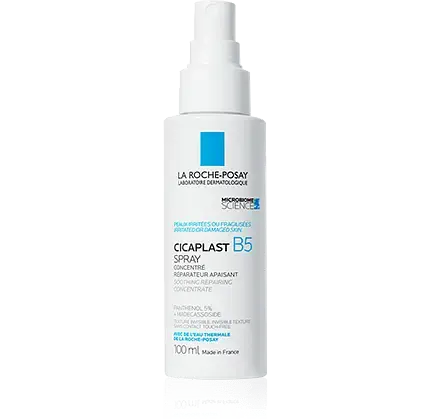
MamaSkin rates the recorded formula for La Roche-Posay Cicaplast B5 Spray as Low risk (76/100). Review the ingredient context and any manual-review explanation before deciding.
Newly reviewed ingredient guidance supports a Low Risk precaution for this listed formula. Manganese Gluconate: A soluble manganese salt. Low Risk is a dose-and-use precaution: a Health Canada draft assessment models concern for some manganese-containing cosmetics, not demonstrated fetal harm from trace cosmetic use. It uses absorption data from another soluble salt, not a direct gluconate measurement. Concentration, area and frequency matter; direct topical pregnancy studies and a validated pregnancy-safe percentage are lacking. Use finished products as directed; seek advice for concentrated, large-area or damaged-skin use and avoid inhaling sprays or powder.
15 of 15 ingredient entries on this page have a recorded score, evidence summary and source text. That describes documentation coverage, not proof that the finished formula has been clinically tested during pregnancy.
How we assess productsThe recorded formula, with evidence behind each rating. Unmatched ingredients are marked Not assessed in grey.
A soluble manganese salt. Low Risk is a dose-and-use precaution: a Health Canada draft assessment models concern for some manganese-containing cosmetics, not demonstrated fetal harm from trace cosmetic use. It uses absorption data from another soluble salt, not a direct gluconate measurement. Concentration, area and frequency matter; direct topical pregnancy studies and a validated pregnancy-safe percentage are lacking. Use finished products as directed; seek advice for concentrated, large-area or damaged-skin use and avoid inhaling sprays or powder.
Sources: https://www.canada.ca/en/environment-climate-change/services/evaluating-existing-substances/draft-assessment-manganese-and-its-compounds.html, https://pubmed.ncbi.nlm.nih.gov/21622944/, https://hfpappexternal.fda.gov/Scripts/Fdcc/index.cfm?id=MANGANESEGLUCONATE&set=FoodSubstances
Water (Aqua) is the standard purified water used as a cosmetic solvent. It has no pregnancy-specific risk in normal topical use.
Sources: https://pubchem.ncbi.nlm.nih.gov/compound/Water, https://single-market-economy.ec.europa.eu/sectors/cosmetics/cosmetic-ingredient-database/cosing-glossary-ingredients_en
Glycerin is a widely used humectant that supports hydration and the skin barrier, with a long safety record and no known pregnancy or breastfeeding concerns in topical cosmetic use.
Sources: CIR; EU/UK Cosmetics Regulation
Solvent and humectant used to improve texture and ingredient solubility. Low systemic exposure expected from topical cosmetic use.
Sources: Cosmetic Ingredient Review (US); Scientific Committee on Consumer Safety (EU)
Panthenol (pro-vitamin B5) is used for soothing and barrier support and is generally well tolerated, with no known pregnancy or breastfeeding concerns in topical cosmetic use.
Sources: CIR; EU/UK Cosmetics Regulation
Humectant and preservative booster. Considered safe for cosmetic use with low systemic exposure.
Sources: Cosmetic Ingredient Review (US); Scientific Committee on Consumer Safety (EU)
Buffering and chelating ingredient used to control pH and formulation stability. Reviewed cosmetic safety sources support normal topical use, with no pregnancy- or breastfeeding-specific topical signal identified in the material reviewed.
Sources: CIR: Safety Assessment of Citric Acid, Inorganic Citrate Salts, and Alkyl Citrate Esters as Used in Cosmetics; EU CosIng / cosmetics regulatory inventory
A sugar, polysaccharide or related carbohydrate used for hydration, texture or formula support. No reproductive or developmental concern was identified for normal topical cosmetic exposure.
Sources: European Commission CosIng ingredient inventory; CIR safety assessments of saccharides and naturally derived polymers as used in cosmetics.
A triterpene glycoside associated with Centella asiatica and used in soothing and skin-conditioning formulas. Pregnancy-specific evidence for isolated topical madecassoside is limited. Cosmetic safety reviewers considered Centella-derived ingredients acceptable at current cosmetic exposure but noted that madecassoside and related triterpenes may contribute to sensitisation, so products should be formulated to avoid sensitising concentrations. No pregnancy-specific topical contraindication was identified in the reviewed material.
Sources: CIR: Safety Assessment of Centella asiatica-Derived Ingredients as Used in Cosmetics https://cir-safety.org/supplementaldoc/safety-assessment-centella-asiatica-derived-ingredients-used-cosmetics-1
Sodium chloride is used to adjust viscosity and texture in formulations; topical cosmetic use is considered low concern with no known pregnancy or breastfeeding risks.
Sources: CIR; EU/UK Cosmetics Regulation
A cleansing and foam-supporting surfactant made from coconut-derived fatty chains. Cosmetic safety reviewers concluded that alkyl betaines, including coco-betaine, are safe in current practices when formulated to be non-irritating. Surfactant-containing products may still sting eyes or irritated skin.
Sources: CIR: Quick Reference Table conclusion for Coco-Betaine and alkyl betaines https://www.cir-safety.org/sites/default/files/sq-fix_2.pdf
A mineral salt of gluconic acid used for skin conditioning or formula support. Cosmetic safety reviewers concluded that the assessed gluconate salts are safe in current practices when formulated to be non-irritating.
Sources: CIR: Zinc Gluconate final assessment, March 2018; Copper Gluconate final assessment, March 2025; December 2025 Quick Reference Table https://cir-safety.org/sites/default/files/QRT-Update-Dec2025.pdf
Humectant and preservative booster used to support product stability. Low systemic exposure expected from topical cosmetic use.
Sources: Scientific Committee on Consumer Safety (EU); Cosmetic Ingredient Review (US)
pH adjuster used in small amounts to maintain product stability. Not associated with pregnancy-specific concerns.
Sources: Scientific Committee on Consumer Safety (EU); European cosmetics regulatory framework
Chelating ingredient used to improve formula stability by binding trace metals. Reviewed cosmetic ingredient references do not identify a pregnancy- or breastfeeding-specific concern for normal topical use.
Sources: CIR cosmetic ingredient safety references for chelating agents; EU CosIng / cosmetics regulatory inventory
Water, Glycerin, Propanediol, Panthenol, Pentylene Glycol, Sodium Citrate, Mannose, Madecassoside, Manganese Gluconate, Sodium Chloride, Coco-Betaine, Copper Gluconate, Caprylyl Glycol, Citric Acid, Trisodium Ethylenediamine Disuccinate
Ingredient ratings refreshed 13 October 2026. Formulas vary by market and can change. Always compare with your packaging.
Newly reviewed ingredient guidance supports a Low Risk precaution for this listed formula. Manganese Gluconate: A soluble manganese salt. Low Risk is a dose-and-use precaution: a Health Canada draft assessment models concern for some manganese-containing cosmetics, not demonstrated fetal harm from trace cosmetic use. It uses absorption data from another soluble salt, not a direct gluconate measurement. Concentration, area and frequency matter; direct topical pregnancy studies and a validated pregnancy-safe percentage are lacking. Use finished products as directed; seek advice for concentrated, large-area or damaged-skin use and avoid inhaling sprays or powder. The product score is a stored assessment, not a clinical safety guarantee.
No. This recorded formula contains Panthenol or Madecassoside, but a barrier-care claim does not establish the assessment of all its other ingredients. Read the individual ingredient evidence and any manual-review explanation, and compare the recorded list with your packaging.
15 of 15 ingredient entries on this page have a recorded score, evidence summary and source text. That describes documentation coverage, not proof that the finished formula has been clinically tested during pregnancy.
Only if the ingredient list on your packaging matches the recorded formula shown here. Formulas can differ by market and change over time. Compare the full list, not just the product name; report a mismatch if it differs.
No. This page presents a pregnancy-focused product assessment. Do not infer a breastfeeding conclusion from its score or label; breastfeeding requires a separate assessment of the formula and how it is used.