La Roche-Posay
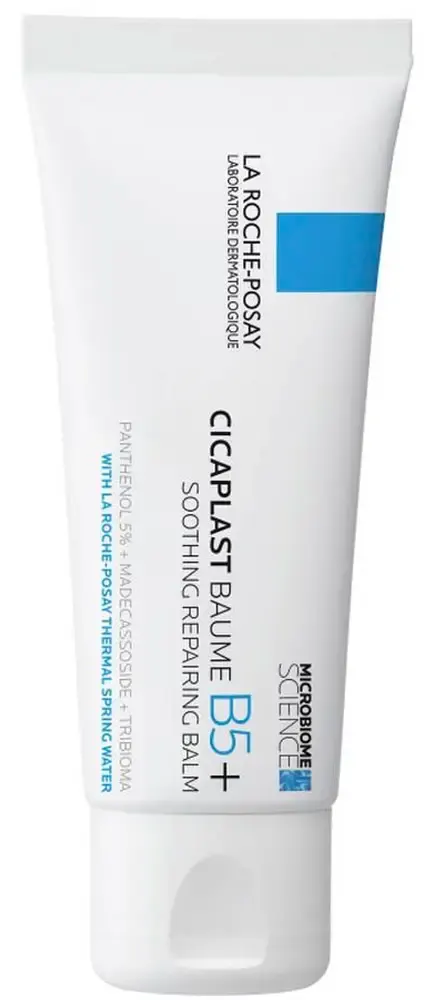
La Roche-Posay Cicaplast Baume B5+
Low risk79/100

Facial Treatments
Some ingredients carry a low-risk flag. Read the formulation context before deciding.
18 of 19 ingredients rated1 not assessed
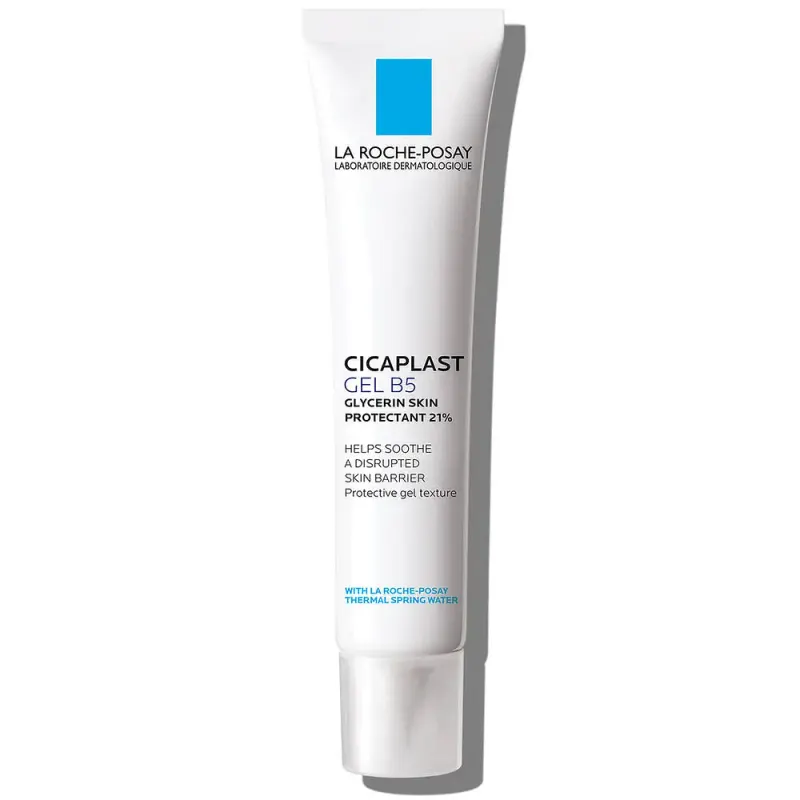
MamaSkin rates the recorded formula for La Roche-Posay Cicaplast Gel B5 as Low risk (78/100). Review the ingredient context and any manual-review explanation before deciding.
The recorded formula includes 2 ingredient entries with risk flags: Dimethicone (Low risk), PEG/PPG-18/18 Dimethicone (Low risk). These are ingredient-level flags; they do not replace the stored product assessment or account for every formulation detail.
18 of 19 ingredient entries on this page have a recorded score, evidence summary and source text. 1 entry does not have all of those fields. Unmatched or unrated entries are marked Not assessed in grey; missing evidence does not establish safety.
How we assess productsThe recorded formula, with evidence behind each rating. Unmatched ingredients are marked Not assessed in grey.
Dimethicone is a silicone polymer used as a skin protectant and slip/conditioning agent. It is considered inert with minimal dermal absorption; the main practical issues are cosmetic (feel) and occasional irritation in very sensitive users. It is not a pregnancy-specific concern in topical cosmetic use.
Sources: CIR: Amended Safety Assessment of Dimethicone, Methicone, and Substituted-Methicone Polymers as Used in Cosmetics https://cir-safety.org/supplementaldoc/amended-safety-assessment-dimethicone-methicone-and-substituted-methicone-polymers-2
This ingredient is a silicone polymer documented within CIR's broader dimethicone and substituted-methicone family assessment. CIR concluded the reviewed ingredients safe as used when formulated to be non-irritating to skin and eyes. This is family-level cosmetic evidence, not ingredient-specific human pregnancy evidence for every derivative. MamaSkin therefore retains Low Risk without claiming negligible absorption for this individual ingredient.
Sources: CIR: Dimethicone and substituted-methicone polymer assessment https://cir-safety.org/supplementaldoc/safety-assessment-dimethicone-methicone-and-substituted-methicone-polymers-used-cosm
No matched ingredient rating is available yet. Not assessed does not mean safe or unsafe.
Glycerin is a widely used humectant that supports hydration and the skin barrier, with a long safety record and no known pregnancy or breastfeeding concerns in topical cosmetic use.
Sources: CIR; EU/UK Cosmetics Regulation
Water (Aqua) is the standard purified water used as a cosmetic solvent. It has no pregnancy-specific risk in normal topical use.
Sources: https://pubchem.ncbi.nlm.nih.gov/compound/Water, https://single-market-economy.ec.europa.eu/sectors/cosmetics/cosmetic-ingredient-database/cosing-glossary-ingredients_en
Panthenol (pro-vitamin B5) is used for soothing and barrier support and is generally well tolerated, with no known pregnancy or breastfeeding concerns in topical cosmetic use.
Sources: CIR; EU/UK Cosmetics Regulation
Humectant and preservative booster. Considered safe for cosmetic use with low systemic exposure.
Sources: Cosmetic Ingredient Review (US); Scientific Committee on Consumer Safety (EU)
The CIR alkyl siloxane assessment includes the exact identity in its safe conclusion.
Sources: https://cir-safety.org/sites/default/files/alkylm062002final.pdf
A large, mostly insoluble polymer used as a binder, film former and texture ingredient. Cosmetic safety reviewers reaffirmed polybutene as safe in current cosmetic use, and a multigeneration reproductive study did not identify adverse effects. Normal topical exposure is not expected to create a pregnancy- or breastfeeding-specific concern.
Sources: CIR: Final Report on Polyisobutene and Hydrogenated Polyisobutene https://www.cir-safety.org/sites/default/files/polyene.pdf; CIR ingredient record: Polybutene https://cir-safety.org/ingredient/polybutene
Buffering and chelating ingredient used to control pH and formulation stability. Reviewed cosmetic safety sources support normal topical use, with no pregnancy- or breastfeeding-specific topical signal identified in the material reviewed.
Sources: CIR: Safety Assessment of Citric Acid, Inorganic Citrate Salts, and Alkyl Citrate Esters as Used in Cosmetics; EU CosIng / cosmetics regulatory inventory
pH adjuster used in small amounts to maintain product stability. Not associated with pregnancy-specific concerns.
Sources: Scientific Committee on Consumer Safety (EU); European cosmetics regulatory framework
A high-molecular-weight silicone polymer used for film forming, smoothing and skin or hair conditioning. The Cosmetic Ingredient Review concluded that Dimethiconol and its assessed derivatives are safe in current cosmetic use. Its polymeric nature limits skin penetration, and available evidence does not identify a pregnancy- or breastfeeding-specific concern for normal topical exposure.
Sources: CIR: Safety Assessment of Dimethiconol and its Esters and Reaction Products; International Journal of Toxicology 36(Suppl. 3):31-50 (2017) https://cir-safety.org/ingredient/dimethiconol
Nonionic surfactant and solubiliser used to disperse oils and fragrance. Reviewed cosmetic safety sources support normal topical use, with no pregnancy- or breastfeeding-specific topical signal identified in the material reviewed.
Sources: CIR: Safety Assessment of Polysorbates as Used in Cosmetics; EU CosIng / cosmetics regulatory inventory
A triterpene glycoside associated with Centella asiatica and used in soothing and skin-conditioning formulas. Pregnancy-specific evidence for isolated topical madecassoside is limited. Cosmetic safety reviewers considered Centella-derived ingredients acceptable at current cosmetic exposure but noted that madecassoside and related triterpenes may contribute to sensitisation, so products should be formulated to avoid sensitising concentrations. No pregnancy-specific topical contraindication was identified in the reviewed material.
Sources: CIR: Safety Assessment of Centella asiatica-Derived Ingredients as Used in Cosmetics https://cir-safety.org/supplementaldoc/safety-assessment-centella-asiatica-derived-ingredients-used-cosmetics-1
Humectant and preservative booster used to support product stability. Low systemic exposure expected from topical cosmetic use.
Sources: Scientific Committee on Consumer Safety (EU); Cosmetic Ingredient Review (US)
Sodium hyaluronate (hyaluronic acid salt) is used for hydration and cushioning, with very low systemic absorption from topical use and no known pregnancy or breastfeeding concerns at cosmetic concentrations.
Sources: CIR; EU/UK Cosmetics Regulation
A mineral salt of gluconic acid used for skin conditioning or formula support. Cosmetic safety reviewers concluded that the assessed gluconate salts are safe in current practices when formulated to be non-irritating.
Sources: CIR: Zinc Gluconate final assessment, March 2018; Copper Gluconate final assessment, March 2025; December 2025 Quick Reference Table https://cir-safety.org/sites/default/files/QRT-Update-Dec2025.pdf
A mineral salt of gluconic acid used for skin conditioning or formula support. Cosmetic safety reviewers concluded that the assessed gluconate salts are safe in current practices when formulated to be non-irritating.
Sources: CIR: Zinc Gluconate final assessment, March 2018; Copper Gluconate final assessment, March 2025; December 2025 Quick Reference Table https://cir-safety.org/sites/default/files/QRT-Update-Dec2025.pdf
Vitamin E antioxidant used to protect oils and support the skin barrier. Not associated with pregnancy-specific concerns at cosmetic exposure.
Sources: Cosmetic Ingredient Review (US); Scientific Committee on Consumer Safety (EU)
Glycerin 21%, Water, Dimethicone, Panthenol, Pentylene Glycol, C30-45 Alkyl Dimethicone, Polybutene, Sodium Citrate, PEG/PPG-18/18 Dimethicone, Citric Acid, Dimethiconol, Polysorbate 20, Madecassoside, Caprylyl Glycol, Sodium Hyaluronate, Zinc Gluconate, Copper Gluconate, Manganese Gluconate, Tocopherol
Ingredient ratings refreshed 1 October 2026. Formulas vary by market and can change. Always compare with your packaging.
The recorded formula includes 2 ingredient entries with risk flags: Dimethicone (Low risk), PEG/PPG-18/18 Dimethicone (Low risk). These are ingredient-level flags; they do not replace the stored product assessment or account for every formulation detail. Incomplete ingredient documentation does not establish safety; see the coverage answer and grey entries below.
The Dimethicone entry is rated Low risk in the current ingredient table. Its recorded explanation says: Dimethicone is a silicone polymer used as a skin protectant and slip/conditioning agent. It is considered inert with minimal dermal absorption; the main practical issues are cosmetic (feel) and occasional irritation in very sensitive users. It is not a pregnancy-specific concern in topical cosmetic use. Read its source in the ingredient breakdown; the ingredient flag and the finished product assessment are separate records.
18 of 19 ingredient entries on this page have a recorded score, evidence summary and source text. 1 entry does not have all of those fields. Unmatched or unrated entries are marked Not assessed in grey; missing evidence does not establish safety.
Only if the ingredient list on your packaging matches the recorded formula shown here. Formulas can differ by market and change over time. Compare the full list, not just the product name; report a mismatch if it differs.
No. This page presents a pregnancy-focused product assessment. Do not infer a breastfeeding conclusion from its score or label; breastfeeding requires a separate assessment of the formula and how it is used.