La Roche-Posay
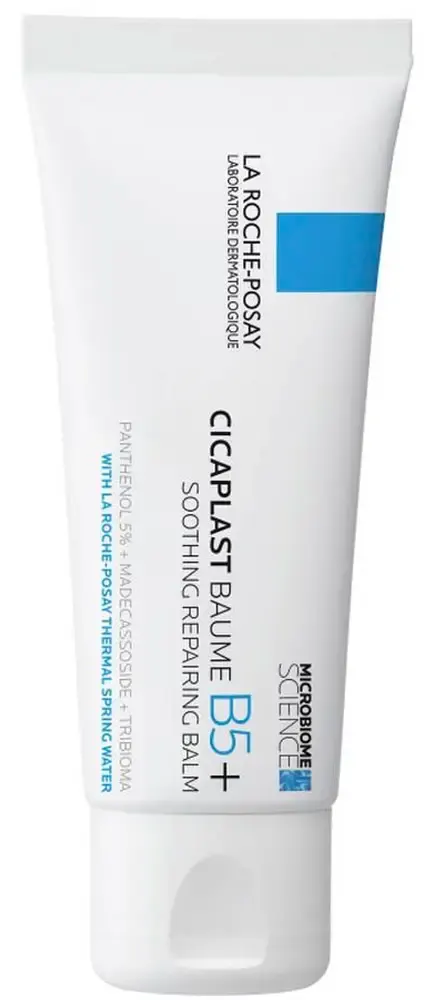
La Roche-Posay Cicaplast Baume B5+
Low risk75/100

Lip Moisturizers
No higher-risk flags in the assessed ingredients. This is a screening result, not a guarantee of pregnancy safety.
14 of 15 ingredients rated1 not assessed
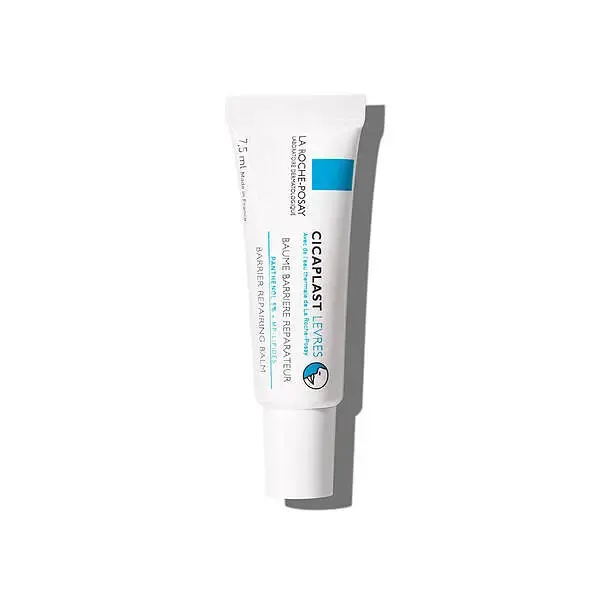
MamaSkin rates the recorded formula for La Roche-Posay Cicaplast Lips as No known risks (99/100). This screening result is not a guarantee of safety for every pregnancy.
No higher-risk ingredient flags are shown in the assessed entries. Ingredients without a matched rating are marked Not assessed, not No known risks.
14 of 15 ingredient entries on this page have a recorded score, evidence summary and source text. 1 entry does not have all of those fields. Unmatched or unrated entries are marked Not assessed in grey; missing evidence does not establish safety.
How we assess productsThe recorded formula, with evidence behind each rating. Unmatched ingredients are marked Not assessed in grey.
No matched ingredient rating is available yet. Not assessed does not mean safe or unsafe.
Common emollient derived from fatty acids and glycerin. Used to soften skin and improve texture without pregnancy-specific concerns.
Sources: Cosmetic Ingredient Review (US); Scientific Committee on Consumer Safety (EU)
This defined propoxylated polyol is used in a conventional cosmetic emollient preparation. Specific component and nonionic ether evidence support ordinary topical use. Direct pregnancy studies are limited; low-molecular-weight uptake and concentrated irritation are not assumed absent.
Sources: https://www.oepm.es/pdf/ES/0000/000/02/59/04/ES-2590494_T3.pdf, https://lexicon.vevy.com/storage/pdf/Lexicon2005Vol2.pdf, https://hpvchemicals.oecd.org/UI/handler.axd?id=612aeade-0c0d-4fb7-ab3d-c1b117780e7e, https://journals.sagepub.com/doi/full/10.1177/1091581816650626
This defined short-chain polyol ether is used in a conventional cosmetic emollient preparation. Component toxicology and the specific nonionic ether structure support ordinary topical use. Direct pregnancy studies are limited; ethoxylation impurities and skin irritation remain relevant.
Sources: https://www.oepm.es/pdf/ES/0000/000/02/59/04/ES-2590494_T3.pdf, https://lexicon.vevy.com/storage/pdf/Lexicon2005Vol2.pdf, https://hpvchemicals.oecd.org/UI/handler.axd?id=612aeade-0c0d-4fb7-ab3d-c1b117780e7e, https://journals.sagepub.com/doi/full/10.1177/1091581816650626
Butyrospermum parkii (shea) butter is an emollient/occlusive that supports the skin barrier; topical use is considered low concern with no known pregnancy or breastfeeding risks.
Sources: CIR; EU/UK Cosmetics Regulation
This wax is used as an emollient and structuring ingredient. Cosmetic Ingredient Review assessments support current cosmetic use, with no pregnancy- or breastfeeding-specific concern identified; uncommon contact allergy can occur, particularly with natural wax components.
Sources: CIR: Safety Assessment of Beeswax Carnauba Wax and Candelilla Wax https://www.cir-safety.org/sites/default/files/RR_Waxes.pdf
Panthenol (pro-vitamin B5) is used for soothing and barrier support and is generally well tolerated, with no known pregnancy or breastfeeding concerns in topical cosmetic use.
Sources: CIR; EU/UK Cosmetics Regulation
A plant-derived fatty oil or butter used mainly as an emollient, conditioning ingredient or texture agent. Cosmetic safety reviewers concluded that the assessed plant-derived fatty acid oils are safe in current practices of use and concentration. This conclusion applies to cosmetic-grade fixed oils rather than similarly named volatile essential oils. Seed or food allergy may still matter for a susceptible person.
Sources: CIR: Safety Assessment of Plant-Derived Fatty Acid Oils as Used in Cosmetics https://cir-reports.cir-safety.org/view-attachment/?id=ad62ac6b-8e74-ec11-8943-0022482f06a6
Lightweight emollient ester used to soften skin and improve glide. Reviewed cosmetic safety sources support normal topical use, with no pregnancy- or breastfeeding-specific topical signal identified in the material reviewed.
Sources: CIR: Amended Safety Assessment of Alkyl Esters as Used in Cosmetics; EU CosIng / cosmetics regulatory inventory
A surface-modified silica used to thicken oils and improve texture. Cosmetic safety reviewers concluded that silica silylate is safe in current practices when the final product is not irritating or sensitising to the respiratory tract. Avoid deliberately inhaling loose or airborne powder.
Sources: CIR: Safety Assessment of Silica Silylate, IJT 32(Suppl. 1), 2013; December 2025 Quick Reference Table https://cir-safety.org/sites/default/files/QRT-Update-Dec2025.pdf
A large, mostly insoluble polymer used as a binder, film former and texture ingredient. Cosmetic safety reviewers reaffirmed polybutene as safe in current cosmetic use, and a multigeneration reproductive study did not identify adverse effects. Normal topical exposure is not expected to create a pregnancy- or breastfeeding-specific concern.
Sources: CIR: Final Report on Polyisobutene and Hydrogenated Polyisobutene https://www.cir-safety.org/sites/default/files/polyene.pdf; CIR ingredient record: Polybutene https://cir-safety.org/ingredient/polybutene
A soybean-derived sterol mixture used as an emollient and skin-conditioning ingredient. Cosmetic safety reviewers concluded that Glycine soja sterols are safe in current practices. Soy sensitivity remains possible.
Sources: CIR: Phytosterols final assessment, December 2013; December 2025 Quick Reference Table https://cir-safety.org/sites/default/files/QRT-Update-Dec2025.pdf
Water (Aqua) is the standard purified water used as a cosmetic solvent. It has no pregnancy-specific risk in normal topical use.
Sources: https://pubchem.ncbi.nlm.nih.gov/compound/Water, https://single-market-economy.ec.europa.eu/sectors/cosmetics/cosmetic-ingredient-database/cosing-glossary-ingredients_en
A functional cosmetic ingredient used for preservation support, pH control, chelation, solvent action or formula stability. Concentrated material may irritate skin or eyes, but no pregnancy-specific reproductive or developmental hazard was identified for normal use in a compliant finished cosmetic.
Sources: European Commission CosIng ingredient inventory and applicable cosmetic restrictions; relevant CIR ingredient and functional-family safety assessments.
Antioxidant and stabilizer used to protect cosmetic formulas from oxidation. Reviewed cosmetic ingredient references do not identify a pregnancy- or breastfeeding-specific concern for normal topical cosmetic use.
Sources: CIR cosmetic ingredient safety references for hindered phenolic antioxidants; EU CosIng / cosmetics regulatory inventory
Caprylic/Capric Triglyceride, PPG-5 Pentaerythrityl Ether, PEG-5 Pentaerythrityl Ether, Butyrospermum Parkii Butter, Cera Alba, Panthenol, Hydrogenated Vegetable Oil, Ethylhexyl Palmitate, Silica Silylate, Polybutene, Glycine Soja Sterols, Water, Sodium Saccharin, Myristyl Malate Phosphonic Acid, Pentaerythrityl Tetra-Di-T-Butyl Hydroxyhydrocinnamate
Ingredient ratings refreshed 15 October 2026. Formulas vary by market and can change. Always compare with your packaging.
No higher-risk ingredient flags are shown in the assessed entries. Ingredients without a matched rating are marked Not assessed, not No known risks. Incomplete ingredient documentation does not establish safety; see the coverage answer and grey entries below.
No. This recorded formula contains Panthenol or Madecassoside, but a barrier-care claim does not establish the assessment of all its other ingredients. Read the individual ingredient evidence and any manual-review explanation, and compare the recorded list with your packaging.
14 of 15 ingredient entries on this page have a recorded score, evidence summary and source text. 1 entry does not have all of those fields. Unmatched or unrated entries are marked Not assessed in grey; missing evidence does not establish safety.
Only if the ingredient list on your packaging matches the recorded formula shown here. Formulas can differ by market and change over time. Compare the full list, not just the product name; report a mismatch if it differs.
No. This page presents a pregnancy-focused product assessment. Do not infer a breastfeeding conclusion from its score or label; breastfeeding requires a separate assessment of the formula and how it is used.