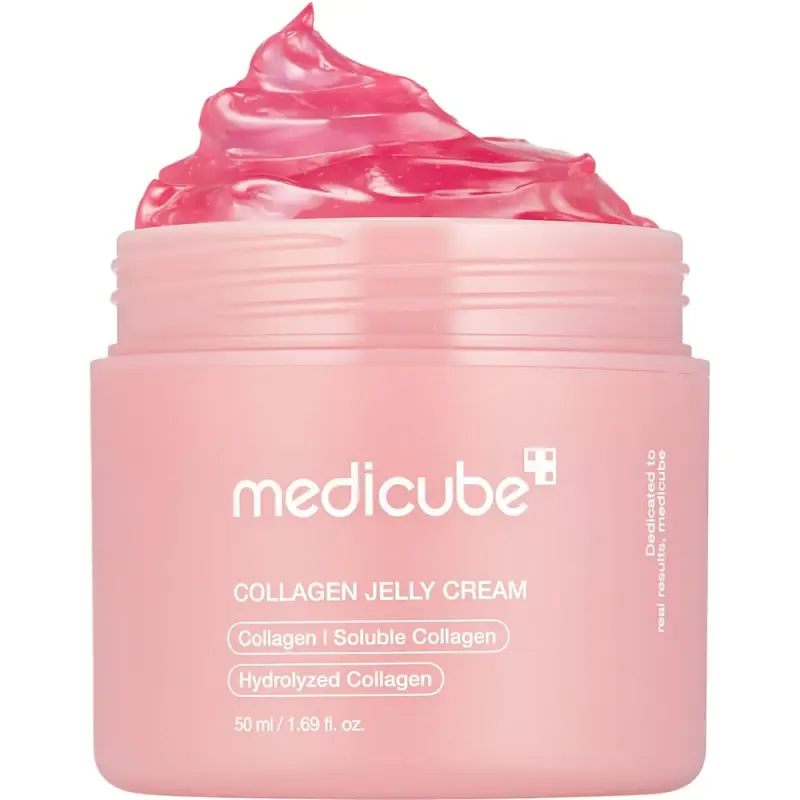
MediCube Collagen Jelly Cream by MediCube
MediCube

MediCube Collagen Jelly Cream

General Moisturizersmoisturisers

Safety score

Pregnancy-focused assessment

Low Risk76/100
Higher concernLower concern

One or more ingredients have a low-risk flag in MamaSkin's current assessment. Review the notes and your own circumstances.

Ingredient safety review updated 24 November 2025.

Check the current formula in MamaSkin

Copy the product name, download MamaSkin and search it for free. You can also scan the ingredient label on the product you own.

Download MamaSkin on the App StoreGet MamaSkin on Google Play

Ingredient breakdown

See how the listed formula falls across MamaSkin's pregnancy-focused risk bands.

46

No known risks

2

Low risk

0

Medium risk

0

High risk

Ingredients

Ingredients with a higher risk flag appear first, followed by the rest of the formula.

Parfum

Low Risk

Umbrella term for an undisclosed fragrance blend. It’s not usually a pregnancy-specific concern at normal cosmetic use levels, but the exact components and concentrations aren’t fully disclosed on the label, so we score it more conservatively. If you prefer maximum transparency (or you’re sensitive to fragrance compounds), choose fragrance-free/unscented products.

Sources: EU/UK cosmetics (fragrance allergen labelling); IFRA

Sodium Dna

Low Risk

DNA-derived cosmetic ingredient/label term used in topical PDRN or polynucleotide-style skincare. Topical cosmetic use is not currently treated as a known pregnancy-restricted concern, but pregnancy-specific clinical data remain limited. MamaSkin scores this conservatively as low risk to reflect the evidence gap. This assessment applies to topical cosmetic products only and does not apply to injectable or in-clinic PDRN/polynucleotide treatments. Always review co-ingredients such as retinoids, hydroquinone, high-strength acids or other pregnancy-restricted actives separately.

Sources: EU/UK cosmetics regulatory framework; EU CosIng / INCI-style cosmetic ingredient references; cosmetic supplier information for Sodium DNA / PDRN / Polydeoxyribonucleotide; peer-reviewed reviews on topical/aesthetic PDRN and polynucleotides; brand pregnancy-safety statements where available.

Water

No Known Risks
Show all (48)

Propanediol

No Known Risks

Solvent and humectant used to improve texture and ingredient solubility. Low systemic exposure expected from topical cosmetic use.

Sources: Cosmetic Ingredient Review (US); Scientific Committee on Consumer Safety (EU)

Dipropylene Glycol

No Known Risks

Dipropylene glycol is used as a solvent and carrier in cosmetics; topical exposure is low and it has no known pregnancy or breastfeeding concerns at cosmetic concentrations.

Sources: CIR; EU/UK Cosmetics Regulation

Butylene Glycol

No Known Risks

Solvent and humectant commonly used in leave-on products. Not associated with pregnancy-specific concerns at cosmetic exposure levels.

Sources: Cosmetic Ingredient Review (US); Scientific Committee on Consumer Safety (EU)

Methylpropanediol

No Known Risks

Solvent and humectant used to improve texture and ingredient delivery in topical cosmetic formulas. Reviewed cosmetic ingredient references do not identify a pregnancy- or breastfeeding-specific concern for normal topical use.

Sources: CIR cosmetic ingredient safety references for alkane diols; EU CosIng / cosmetics regulatory inventory

Diethoxyethyl Succinate

No Known Risks

Ethoxydiglycol

No Known Risks

A glycol ether used as a cosmetic solvent and delivery aid. Cosmetic safety reviewers concluded that ethoxydiglycol is safe as used in cosmetics, with low toxicity in the reviewed exposure data. It is distinct from ethoxyethanol, which has a different and less favourable safety assessment.

Sources: CIR: Final Report on Butylene Glycol, Hexylene Glycol, Ethoxydiglycol and Dipropylene Glycol; CIR Quick Reference Table https://cir-safety.org/sites/default/files/qrt-r.pdf

Ammonium Acryloyldimethyltaurate/Beheneth-25 Methacrylate Crosspolymer

No Known Risks

Niacinamide

No Known Risks

Niacinamide (vitamin B3) is widely used for barrier support and tone/texture benefits, and is generally considered safe in pregnancy and breastfeeding when used topically at cosmetic concentrations.

Sources: CIR; EU/UK Cosmetics Regulation

Trehalose

No Known Risks

Sugar-derived humectant used to help bind water and improve skin feel. Reviewed cosmetic ingredient references do not identify a pregnancy- or breastfeeding-specific concern for normal topical cosmetic use.

Sources: CIR: Safety Assessment of Monosaccharides, Disaccharides, and Related Ingredients as Used in Cosmetics; EU CosIng / cosmetics regulatory inventory

1,2-Hexanediol

No Known Risks

1,2-Hexanediol is commonly used as a solvent and preservative booster; topical exposure is low and it has no known pregnancy or breastfeeding concerns at cosmetic concentrations, though very sensitive skin may occasionally react.

Sources: CIR; EU/UK Cosmetics Regulation

Chlorella Vulgaris Extract

No Known Risks

Collagen

No Known Risks

A structural protein or hydrolysed peptide used for skin or hair conditioning. Cosmetic safety reviewers concluded that the assessed skin and connective-tissue-derived proteins are safe in current practices, subject to appropriate animal-source and impurity controls. Protein sensitivity remains possible.

Sources: CIR: Safety Assessment of Skin and Connective Tissue-Derived Proteins and Peptides as Used in Cosmetics https://www.cir-safety.org/sites/default/files/tsupep092017final.pdf

Hydrolyzed Collagen

No Known Risks

Protein-derived skin- and hair-conditioning ingredient used to support feel and hydration at the surface. Reviewed cosmetic ingredient references do not identify a pregnancy- or breastfeeding-specific concern for normal topical use.

Sources: CIR cosmetic ingredient safety references for protein hydrolysates; EU CosIng / cosmetics regulatory inventory

Cynanchum Atratum Extract

No Known Risks

Althaea Rosea Flower Extract

No Known Risks

Soluble Collagen

No Known Risks

A collagen preparation used for skin and hair conditioning. Cosmetic safety reviewers concluded that soluble collagen and related connective-tissue proteins are safe in current practices, subject to source and impurity controls that exclude prohibited cattle materials. Protein sensitivity remains possible in susceptible people.

Sources: CIR: Safety Assessment of Skin and Connective Tissue-Derived Proteins and Peptides https://cir-safety.org/sites/default/files/tsupep092017final.pdf

Allium Sativum Bulb Extract

No Known Risks

Avena Sativa Kernel Extract

No Known Risks

An oat kernel extract used for skin conditioning and soothing. Cosmetic safety reviewers concluded that Avena sativa kernel extract and most assessed oat-derived ingredients are safe in current practices of use and concentration when formulated to be non-sensitising and manufactured with appropriate impurity controls. Oat allergy or contact sensitivity can occur in susceptible people, but no pregnancy-specific concern was identified for normal topical cosmetic exposure.

Sources: CIR: Safety Assessment of Avena sativa (Oat)-Derived Ingredients as Used in Cosmetics https://cir-reports.cir-safety.org/view-attachment/?id=947dbaa1-8e74-ec11-8943-0022482f06a6

Bertholletia Excelsa Seed Extract

No Known Risks

Brassica Oleracea Italica Extract

No Known Risks

Camellia Sinensis Seed Extract

No Known Risks

Salmon Egg Extract

No Known Risks

Solanum Lycopersicum Fruit Extract

No Known Risks

Spinacia Oleracea Leaf Extract

No Known Risks

Vaccinium Angustifolium Fruit Extract

No Known Risks

Wine Extract

No Known Risks

Polyglyceryl-10 Isostearate

No Known Risks

Tromethamine

No Known Risks

pH adjuster and buffer used to stabilise formulations. Reviewed cosmetic safety sources support normal topical use, with no pregnancy- or breastfeeding-specific topical signal identified in the material reviewed.

Sources: CIR: Safety Assessment of Tromethamine as Used in Cosmetics; EU CosIng / cosmetics regulatory inventory

Glucose

No Known Risks

Simple sugar used as a humectant and skin-conditioning support ingredient. Reviewed cosmetic ingredient references do not identify a pregnancy- or breastfeeding-specific concern for normal topical cosmetic use.

Sources: CIR: Safety Assessment of Monosaccharides, Disaccharides, and Related Ingredients as Used in Cosmetics; EU CosIng / cosmetics regulatory inventory

Polyglyceryl-10 Oleate

No Known Risks

A polyglycerin fatty-acid ester used as an emulsifier, dispersant or emollient. Cosmetic safety reviewers concluded that the assessed family of 274 polyglyceryl fatty acid esters is safe in current practices when formulated to be non-irritating. No pregnancy-specific concern was identified for normal topical cosmetic exposure.

Sources: CIR: Safety Assessment of Polyglyceryl Fatty Acid Esters as Used in Cosmetics https://www.cir-safety.org/supplementaldoc/safety-assessment-polyglyceryl-fatty-acid-esters-used-cosmetics-1

Ethylhexylglycerin

No Known Risks

Preservative booster and skin-conditioning agent. Considered safe for cosmetic use with low systemic exposure when used as intended.

Sources: Scientific Committee on Consumer Safety (EU); Cosmetic Ingredient Review (US)

Fructooligosaccharides

No Known Risks

Short plant-derived carbohydrate chains used for skin conditioning and formula support. Cosmetic safety reviewers assessed fructooligosaccharides with plant polysaccharide gums and concluded that the group is safe in current practices. No pregnancy-specific concern was identified for normal topical cosmetic exposure.

Sources: CIR: Safety Assessment of Plant Polysaccharide Gums as Used in Cosmetics https://www.cir-safety.org/sites/default/files/plpogu092014slr.pdf

Fructose

No Known Risks

This sugar or sugar alcohol is used as a humectant and skin-conditioning ingredient. Cosmetic Ingredient Review assessments support these saccharides in current cosmetic use, with no pregnancy- or breastfeeding-specific concern identified for normal topical exposure.

Sources: CIR: Safety Assessment of Monosaccharides Disaccharides and Related Ingredients as Used in Cosmetics https://cir-safety.org/supplementaldoc/safety-assessment-monosaccharides-disaccharides-and-related-ingredients-used-cosmeti

Adenosine

No Known Risks

Skin-conditioning ingredient commonly used in leave-on skincare. Reviewed cosmetic safety sources support normal topical use, with no pregnancy- or breastfeeding-specific topical signal identified in the material reviewed.

Sources: CIR: Safety Assessment of Adenosine Ingredients as Used in Cosmetics; EU CosIng / cosmetics regulatory inventory

Sodium Phytate

No Known Risks

Chelating agent used to improve formula stability. Used at low levels and not associated with pregnancy-specific concerns.

Sources: European cosmetics regulatory framework

Cyanocobalamin

No Known Risks

Tocopherol

No Known Risks

Vitamin E antioxidant used to protect oils and support the skin barrier. Not associated with pregnancy-specific concerns at cosmetic exposure.

Sources: Cosmetic Ingredient Review (US); Scientific Committee on Consumer Safety (EU)

Pullulan

No Known Risks

A large polysaccharide produced by fermentation and used as a film former, binder and texture ingredient. Cosmetic safety reviewers concluded that microbial polysaccharide gums, including pullulan, are safe in current cosmetic use. Its large molecular size limits skin penetration, and no pregnancy-specific concern is identified for normal topical exposure.

Sources: CIR: Safety Assessment of Microbial Polysaccharide Gums https://cir-safety.org/supplementaldoc/safety-assessment-microbial-polysaccharide-gums-used-cosmetics

Glycerin

No Known Risks

Glycerin is a widely used humectant that supports hydration and the skin barrier, with a long safety record and no known pregnancy or breastfeeding concerns in topical cosmetic use.

Sources: CIR; EU/UK Cosmetics Regulation

Hydroxypropyltrimonium Hyaluronate

No Known Risks

Cationic hyaluronate derivative used as a humectant and conditioning ingredient. Reviewed topical hyaluronate safety sources support cosmetic use, with no pregnancy- or breastfeeding-specific concern identified.

Sources: CIR: Safety Assessment of Hyaluronates as Used in Cosmetics; EU CosIng / cosmetics regulatory inventory

Squalane

No Known Risks

Lightweight emollient used to support the skin barrier. Not associated with pregnancy-specific concerns at cosmetic exposure levels.

Sources: Cosmetic Ingredient Review (US); Scientific Committee on Consumer Safety (EU)

Soluble Proteoglycan

No Known Risks

Hydrolyzed Elastin

No Known Risks

A structural protein or hydrolysed peptide used for skin or hair conditioning. Cosmetic safety reviewers concluded that the assessed skin and connective-tissue-derived proteins are safe in current practices, subject to appropriate animal-source and impurity controls. Protein sensitivity remains possible.

Sources: CIR: Safety Assessment of Skin and Connective Tissue-Derived Proteins and Peptides as Used in Cosmetics https://www.cir-safety.org/sites/default/files/tsupep092017final.pdf

Carbomer

No Known Risks

Polymer thickener used to create gel textures. Large-molecule ingredient with negligible systemic absorption.

Sources: Cosmetic Ingredient Review (US); Scientific Committee on Consumer Safety (EU)

Xanthan Gum

No Known Risks

Natural polysaccharide thickener used for stability and texture. Not associated with pregnancy-specific concerns.

Sources: European cosmetics regulatory framework

Formulations can change without notice. For the most accurate result, compare this list with your packaging and scan the exact ingredient label in MamaSkin when you repurchase.

How to use this assessment

The risk band is the primary conclusion. The score adds detail within that band and should not be used to compare products as if a one-point difference were clinically meaningful.

MamaSkin provides pregnancy-focused information, not medical advice. Your midwife, GP, pharmacist or dermatologist should take priority when your circumstances differ from typical cosmetic use.

Read the full methodology