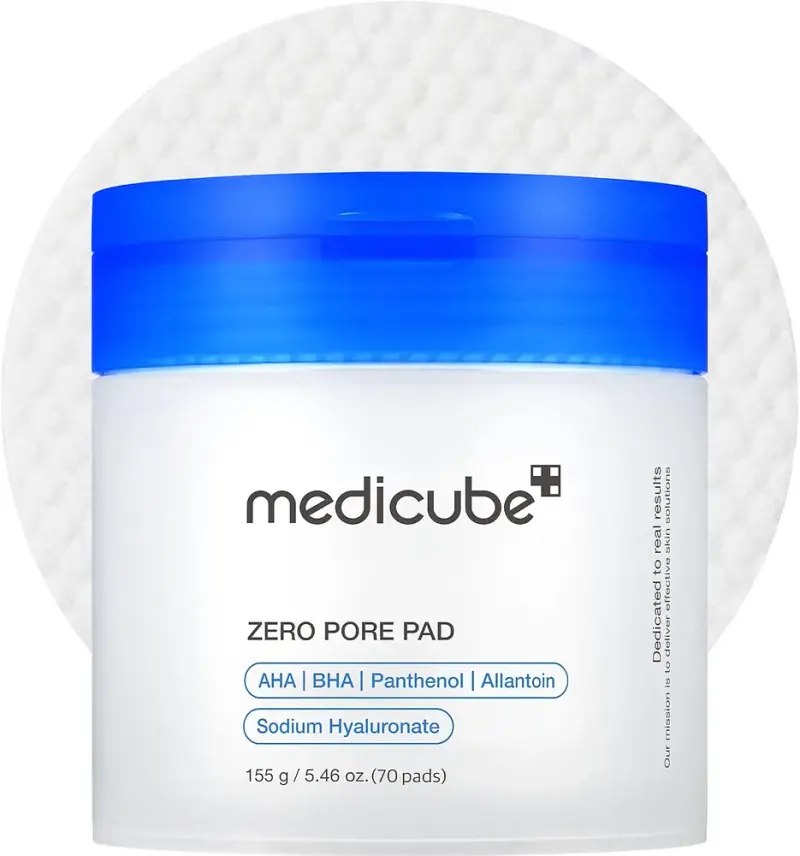
MediCube Zero Pore Pad by MediCube
MediCube

MediCube Zero Pore Pad

Toners

Safety score

Pregnancy-focused assessment

High Risk26/100
Higher concernLower concern

This formula contains a higher-risk ingredient in MamaSkin's current pregnancy-focused assessment.

Ingredient safety review updated 9 December 2025.

Check the current formula in MamaSkin

Copy the product name, download MamaSkin and search it for free. You can also scan the ingredient label on the product you own.

Download MamaSkin on the App StoreGet MamaSkin on Google Play

Ingredient breakdown

See how the listed formula falls across MamaSkin's pregnancy-focused risk bands.

41

No known risks

5

Low risk

0

Medium risk

1

High risk

Ingredients

Ingredients with a higher risk flag appear first, followed by the rest of the formula.

Rosmarinus Officinalis Leaf Oil

High Risk

Rosmarinus officinalis (rosemary) leaf oil is a concentrated fragrance essential oil with chemotype-dependent constituents (often including camphor/1,8-cineole). Pregnancy-specific evidence for topical cosmetic exposure is limited, and camphor-rich oils are commonly advised to avoid in pregnancy; combined with irritation/sensitisation potential, this supports a precautionary high-risk classification—especially in leave-on products.

Sources: CIR: Safety Assessment of Rosmarinus officinalis (Rosemary)-Derived Ingredients as Used in Cosmetics (rosmarinus.pdf / supporting reports, 2013); Dosoky & Setzer (Int J Mol Sci, 2021) review of essential oils and pregnancy/reproductive toxicity.

Lactic Acid

Low Risk

Endogenous alpha-hydroxy acid and humectant; at modest cosmetic concentrations (≈5% and below, and generally <10%) topical lactic acid is considered compatible with pregnancy. Main risks are local irritation and increased photosensitivity rather than systemic toxicity or fetal effects.

Sources: PubMed, U.S. National Library of Medicine (NLM); dermatology pregnancy skincare reviews

Salicylic Acid

Low Risk

Salicylic acid is a beta hydroxy acid used for exfoliation. Low-strength topical use (up to 2%) on limited areas is generally considered low risk. Higher concentrations, large-area use, or professional peels are avoided during pregnancy due to systemic absorption concerns.

Sources: PubMed, U.S. National Library of Medicine (NLM), NHS, MotherToBaby (OTIS), UKTIS (BUMPS)

Show all (47)

Betaine Salicylate

Low Risk

Ester form of salicylic acid; hydrolyses to SA, low-strength topical use shows negligible systemic absorption - chemical peels ≥30 % should be avoided.

Sources: PubMed, U.S. National Library of Medicine (NLM), NHS, MotherToBaby (OTIS), UKTIS (BUMPS)

Ethyl Hexanediol

Low Risk

Ethyl Hexanediol is an aliphatic alcohol used mainly as a cosmetic solvent. It can be absorbed through skin. Animal studies reported developmental effects after high oral and dermal doses, but those effects occurred at doses that also caused substantial maternal toxicity. CIR concluded that the ingredient is safe as cosmetically used and later reaffirmed that conclusion. MamaSkin nevertheless classifies it as low risk under its precautionary pregnancy-screening policy; this is not a known human pregnancy contraindication at normal cosmetic exposure.

Sources: CIR: Final Report on the Safety Assessment of Ethyl Hexanediol https://cir-reports.cir-safety.org/view-attachment/?id=acd818db-8d74-ec11-8943-0022482f06a6; CIR: Annual Review of Cosmetic Ingredient Safety Assessments 2007-2010 https://journals.sagepub.com/doi/10.1177/1091581811412618; Australian TGA: Final decisions on Ethyl Hexanediol, June 2017 https://www.tga.gov.au/sites/default/files/scheduling-delegates-final-decisions-june-2017.pdf

Salix Alba Bark Extract

Low Risk

Plant extract used for antioxidant or soothing properties. Unlike essential oils, cosmetic extracts are not highly concentrated and are used at low levels. Safety concerns associated with essential oil use do not generally apply to cosmetic extracts.

Sources: PubMed, U.S. National Library of Medicine (NLM), NHS, MotherToBaby (OTIS), UKTIS (BUMPS)

Water

No Known Risks

Methylpropanediol

No Known Risks

Solvent and humectant used to improve texture and ingredient delivery in topical cosmetic formulas. Reviewed cosmetic ingredient references do not identify a pregnancy- or breastfeeding-specific concern for normal topical use.

Sources: CIR cosmetic ingredient safety references for alkane diols; EU CosIng / cosmetics regulatory inventory

Tromethamine

No Known Risks

pH adjuster and buffer used to stabilise formulations. Reviewed cosmetic safety sources support normal topical use, with no pregnancy- or breastfeeding-specific topical signal identified in the material reviewed.

Sources: CIR: Safety Assessment of Tromethamine as Used in Cosmetics; EU CosIng / cosmetics regulatory inventory

Alcohol Denat.

No Known Risks

Volatile solvent used to improve texture, drying time, and penetration in some formulas. Reviewed cosmetic safety sources support current cosmetic use, with no pregnancy- or breastfeeding-specific topical concern identified in the material reviewed; the main practical issue is dryness, stinging, or barrier disruption in some users.

Sources: CIR: Safety Assessment of SD Alcohol 40, Benzyl Alcohol, and Denatured Alcohol in Cosmetic Products; EU CosIng / cosmetics regulatory inventory

1,2-Hexanediol

No Known Risks

1,2-Hexanediol is commonly used as a solvent and preservative booster; topical exposure is low and it has no known pregnancy or breastfeeding concerns at cosmetic concentrations, though very sensitive skin may occasionally react.

Sources: CIR; EU/UK Cosmetics Regulation

Panthenol

No Known Risks

Panthenol (pro-vitamin B5) is used for soothing and barrier support and is generally well tolerated, with no known pregnancy or breastfeeding concerns in topical cosmetic use.

Sources: CIR; EU/UK Cosmetics Regulation

Glycereth-26

No Known Risks

An ethoxylated glycerin humectant used to retain moisture and improve product texture. The Cosmetic Ingredient Review assessed glycerin ethoxylates including Glycereth-26 for current cosmetic use; available evidence does not identify a pregnancy- or breastfeeding-specific concern from normal topical exposure.

Sources: CIR: Safety Assessment of Glycerin Ethoxylates https://cir-safety.org/supplementaldoc/safety-assessment-glycerin-ethoxylates-used-cosmetics

Ammonium Acryloyldimethyltaurate/Vp Copolymer

No Known Risks

Polymer thickener used to stabilise emulsions. Large-molecule ingredient with low systemic absorption.

Sources: Cosmetic Ingredient Review (US); Scientific Committee on Consumer Safety (EU)

Betaine

No Known Risks

Betaine is a humectant/osmolyte used to support hydration and reduce irritation potential in formulas; it is considered low concern with no known pregnancy or breastfeeding risks in topical cosmetic use.

Sources: CIR; EU/UK Cosmetics Regulation

Trehalose

No Known Risks

Sugar-derived humectant used to help bind water and improve skin feel. Reviewed cosmetic ingredient references do not identify a pregnancy- or breastfeeding-specific concern for normal topical cosmetic use.

Sources: CIR: Safety Assessment of Monosaccharides, Disaccharides, and Related Ingredients as Used in Cosmetics; EU CosIng / cosmetics regulatory inventory

Polyglyceryl-10 Laurate

No Known Risks

Polyglycerin fatty-acid ester used as an emulsifier and solubilizer. Reviewed cosmetic safety references do not identify a pregnancy- or breastfeeding-specific concern for normal topical cosmetic use.

Sources: CIR cosmetic ingredient safety references for polyglyceryl fatty acid esters; EU CosIng / cosmetics regulatory inventory

Ethylhexylglycerin

No Known Risks

Preservative booster and skin-conditioning agent. Considered safe for cosmetic use with low systemic exposure when used as intended.

Sources: Scientific Committee on Consumer Safety (EU); Cosmetic Ingredient Review (US)

Glycerin

No Known Risks

Glycerin is a widely used humectant that supports hydration and the skin barrier, with a long safety record and no known pregnancy or breastfeeding concerns in topical cosmetic use.

Sources: CIR; EU/UK Cosmetics Regulation

Allantoin

No Known Risks

Allantoin is a soothing skin protectant commonly used to help reduce irritation and support comfort, with no known pregnancy or breastfeeding concerns in topical cosmetic use.

Sources: CIR; EU/UK Cosmetics Regulation

Polyglyceryl-10 Myristate

No Known Risks

A polyglycerin fatty-acid ester used as an emulsifier, dispersant or emollient. Cosmetic safety reviewers concluded that the assessed family of 274 polyglyceryl fatty acid esters is safe in current practices when formulated to be non-irritating. No pregnancy-specific concern was identified for normal topical cosmetic exposure.

Sources: CIR: Safety Assessment of Polyglyceryl Fatty Acid Esters as Used in Cosmetics https://www.cir-safety.org/supplementaldoc/safety-assessment-polyglyceryl-fatty-acid-esters-used-cosmetics-1

Disodium EDTA

No Known Risks

Disodium EDTA is a chelating agent used to improve formula stability and performance; it is considered low concern in topical cosmetic use, with no known pregnancy or breastfeeding risks at typical concentrations.

Sources: CIR; EU/UK Cosmetics Regulation

Butylene Glycol

No Known Risks

Solvent and humectant commonly used in leave-on products. Not associated with pregnancy-specific concerns at cosmetic exposure levels.

Sources: Cosmetic Ingredient Review (US); Scientific Committee on Consumer Safety (EU)

Sodium Hyaluronate

No Known Risks

Sodium hyaluronate (hyaluronic acid salt) is used for hydration and cushioning, with very low systemic absorption from topical use and no known pregnancy or breastfeeding concerns at cosmetic concentrations.

Sources: CIR; EU/UK Cosmetics Regulation

Citrus Aurantium Dulcis Peel Oil

No Known Risks

Orange peel essential oil used mainly for fragrance. Normal topical cosmetic use has no established pregnancy-specific concern. The practical concerns are oxidation, irritation, sensitisation and, depending on composition and processing, light-related skin reactions.

Sources: CIR: Safety Assessment of Citrus-Derived Peel Oils as Used in Cosmetics; IFRA Standards for citrus oils

Citrus Limon Peel Oil

No Known Risks

An exact label variant for lemon peel oil used mainly as a fragrance ingredient. At typical cosmetic concentrations there is no established pregnancy-specific concern. The main issues are oxidation, sensitisation and possible phototoxicity depending on composition, processing and use level.

Sources: CIR: Safety Assessment of Citrus-Derived Peel Oils as Used in Cosmetics; IFRA Standards for citrus oils

Citrus Grandis Peel Oil

No Known Risks

Citrus Aurantium Bergamia Fruit Oil

No Known Risks

Bergamot essential oil used mainly for fragrance. No pregnancy-specific hazard is established for normal topical cosmetic exposure. Expressed bergamot oil can be phototoxic unless furocoumarins are controlled, so sun-exposed use should follow the finished product directions and applicable fragrance standards.

Sources: CIR: Safety Assessment of Citrus-Derived Peel Oils as Used in Cosmetics; IFRA Standard for phototoxicity of bergamot oil

Eucalyptus Globulus Leaf Oil

No Known Risks

A volatile oil from eucalyptus leaves used mainly for fragrance and skin conditioning. Cosmetic safety reviewers concluded that Eucalyptus globulus-derived ingredients are safe in current practices when formulated to be non-sensitising. Essential oils can irritate sensitive skin and should not be swallowed or used undiluted.

Sources: CIR: Safety Assessment of Eucalyptus globulus-Derived Ingredients as Used in Cosmetics https://www.cir-safety.org/supplementaldoc/safety-assessment-eucalyptus-globulus-derived-ingredients-used-cosmetics

Lavandula Angustifolia Oil

No Known Risks

Lavender oil is used in cosmetics mainly as a fragrance ingredient. For normal diluted topical cosmetic use, current evidence does not establish a pregnancy-specific concern. This assessment does not cover ingestion, concentrated essential-oil use, or aromatherapy-style exposure. The more relevant practical issues in skincare are irritation or sensitisation in some users, so within this methodology it remains in no known risks.

Sources: NCCIH: Lavender: Usefulness and Safety (2025); EMA HMPC: Lavandulae aetheroleum - herbal medicinal product; Bingham et al., Contact allergy and allergic contact dermatitis caused by lavender: A retrospective study from an Australian clinic (Contact Dermatitis, 2019).

Vitis Vinifera Fruit Extract

No Known Risks

A grape fruit or seed extract used for skin conditioning and antioxidant support. Cosmetic safety reviewers concluded that the assessed Vitis vinifera-derived ingredients are safe in current practices when formulated to be non-irritating and non-sensitising. Botanical sensitivity remains possible.

Sources: CIR: Safety Assessment of Vitis vinifera (Grape)-Derived Ingredients as Used in Cosmetics https://www.cir-safety.org/supplementaldoc/safety-assessment-vitis-vinifera-grape-derived-ingredients-used-cosmetics

Citrus Aurantifolia Fruit Extract

No Known Risks

Citrus Limon Fruit Extract

No Known Risks

A citrus fruit extract used mainly for skin conditioning. Cosmetic safety reviewers concluded that the assessed citrus fruit-derived ingredients are safe in current practices when formulated to be non-irritating and non-sensitising. Fruit extracts are distinct from concentrated peel essential oils, and botanical sensitivity remains possible.

Sources: CIR: Safety Assessment of Citrus-Derived Fruit Ingredients as Used in Cosmetics https://www.cir-safety.org/supplementaldoc/safety-assessment-citrus-derived-fruit-ingredients-used-cosmetics-0

Pyrus Malus Fruit Extract

No Known Risks

An apple fruit extract used mainly for skin conditioning. Cosmetic safety reviewers concluded that Pyrus malus fruit extract and the other supported apple-derived ingredients are safe in current cosmetic practices of use and concentration. The conclusion does not extend to several separately identified root, stem, callus or oil ingredients for which evidence was insufficient. No pregnancy-specific concern was identified for normal topical use of the fruit extract.

Sources: CIR: Safety Assessment of Apple-Derived Ingredients as Used in Cosmetics https://cir-reports.cir-safety.org/view-attachment/?id=6376dcde-b1aa-f075-b67c-6f6773d065ce

Citrus Aurantium Dulcis Fruit Extract

No Known Risks

A citrus fruit extract used mainly for skin conditioning. Cosmetic safety reviewers concluded that the assessed citrus fruit-derived ingredients are safe in current practices when formulated to be non-irritating and non-sensitising. Fruit extracts are distinct from concentrated peel essential oils, and botanical sensitivity remains possible.

Sources: CIR: Safety Assessment of Citrus-Derived Fruit Ingredients as Used in Cosmetics https://www.cir-safety.org/supplementaldoc/safety-assessment-citrus-derived-fruit-ingredients-used-cosmetics-0

Centella Asiatica Extract

No Known Risks

Botanical skin-conditioning ingredient used in soothing and barrier-support formulas. Reviewed cosmetic safety sources support current cosmetic use when formulated to be non-sensitising, with no pregnancy- or breastfeeding-specific topical concern identified in the material reviewed.

Sources: CIR: Safety Assessment of Centella asiatica-derived Ingredients as Used in Cosmetics; EU CosIng / cosmetics regulatory inventory

Origanum Vulgare Leaf Extract

No Known Risks

Chamaecyparis Obtusa Leaf Extract

No Known Risks

Lactobacillus/Soybean Ferment Extract

No Known Risks

Cinnamomum Cassia Bark Extract

No Known Risks

Scutellaria Baicalensis Root Extract

No Known Risks

A Chinese skullcap root extract used for skin conditioning and antioxidant effects. Cosmetic safety reviewers concluded that the root extract is safe in current practices of use and concentration; this conclusion does not extend to the generic whole-plant or sprout extracts, for which evidence was insufficient. No pregnancy-specific concern was identified for normal topical cosmetic exposure.

Sources: CIR: Safety Assessment of Scutellaria baicalensis-Derived Ingredients as Used in Cosmetics https://cir-reports.cir-safety.org/view-attachment/?id=12155820-bce2-80f8-bd06-353ba20e5877

Portulaca Oleracea Extract

No Known Risks

A purslane extract used mainly for skin conditioning. Cosmetic safety reviewers concluded that Portulaca oleracea extract is safe in current cosmetic practices when formulated to be non-sensitising. Botanical irritation or allergy remains possible, but no pregnancy-specific concern was identified for normal topical use.

Sources: CIR: Safety Assessment of Portulaca oleracea-Derived Ingredients as Used in Cosmetics https://cir-reports.cir-safety.org/view-attachment/?id=5c0d093e-6947-f945-8d16-43dd820a5e63

Oenothera Biennis Flower Extract

No Known Risks

Pinus Palustris Leaf Extract

No Known Risks

Ulmus Davidiana Root Extract

No Known Risks

Pueraria Lobata Root Extract

No Known Risks

Limonene

No Known Risks

Limonene is a common fragrance component used at low levels in cosmetics; it is not a pregnancy-specific concern in topical use, but it is a recognised fragrance allergen and may trigger irritation or sensitisation in some people, especially if the product oxidises over time.

Sources: EU/UK cosmetics (fragrance allergen labelling); IFRA; toxicology reviews

Formulations can change without notice. For the most accurate result, compare this list with your packaging and scan the exact ingredient label in MamaSkin when you repurchase.

How to use this assessment

The risk band is the primary conclusion. The score adds detail within that band and should not be used to compare products as if a one-point difference were clinically meaningful.

MamaSkin provides pregnancy-focused information, not medical advice. Your midwife, GP, pharmacist or dermatologist should take priority when your circumstances differ from typical cosmetic use.

Read the full methodology