MediCube
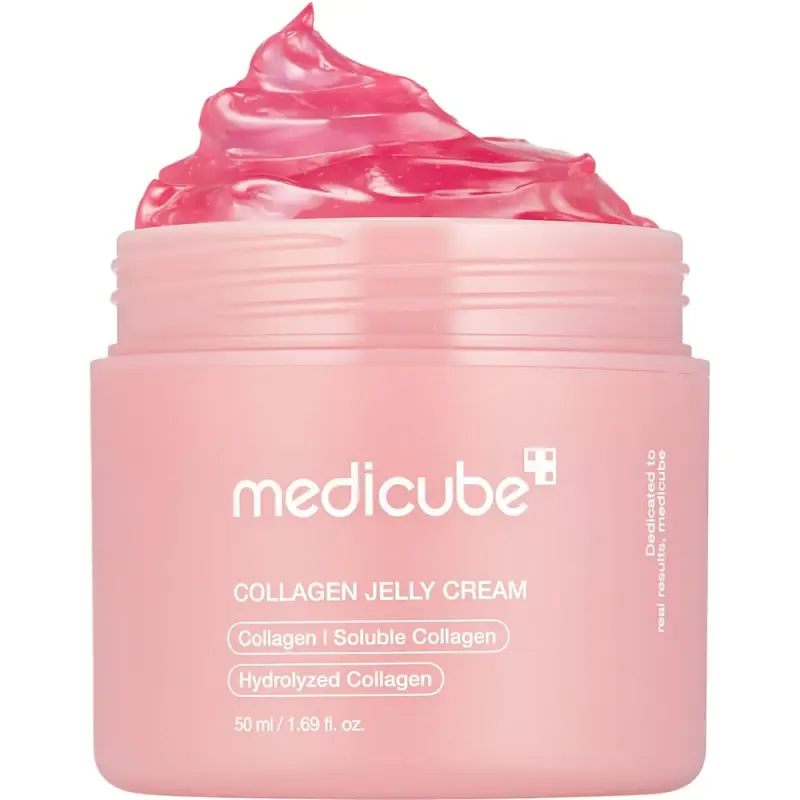
MediCube Collagen Jelly Cream
Low risk76/100

Toners
Some ingredients carry a low-risk flag. Read the formulation context before deciding.
47 of 48 ingredients rated1 not assessed
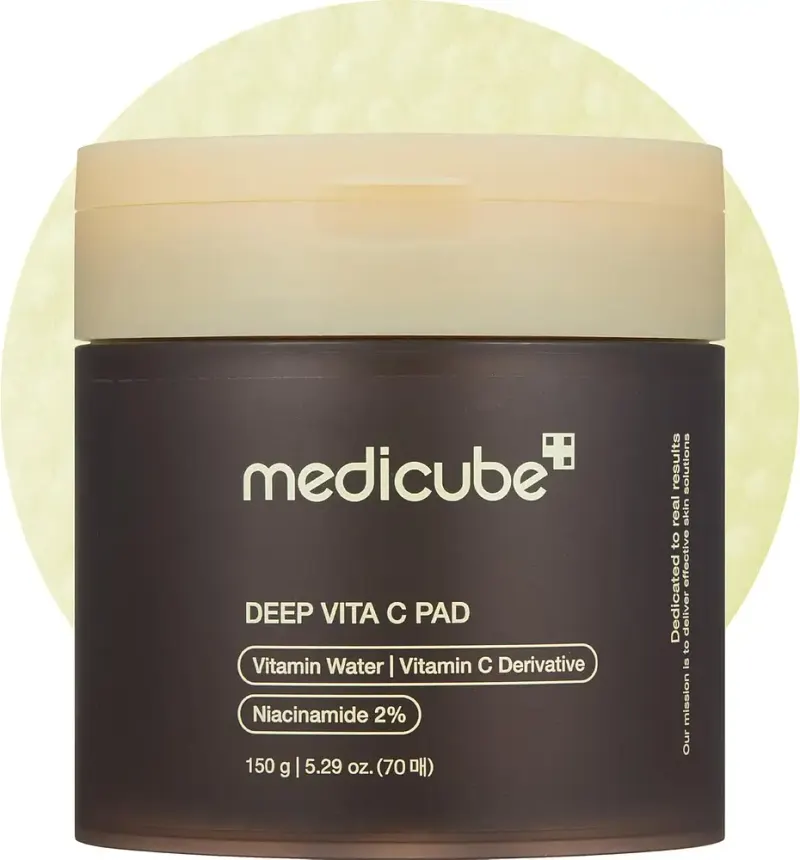
MamaSkin rates the recorded formula for MediCube Deep Vita C Pad as Low risk (78/100). Review the ingredient context and any manual-review explanation before deciding.
The recorded formula includes 4 ingredient entries with risk flags: Gluconolactone (Low risk), Coptis Japonica Extract (Low risk), Dipotassium Glycyrrhizate (Low risk), plus others listed in the breakdown. These are ingredient-level flags; they do not replace the stored product assessment or account for every formulation detail.
47 of 48 ingredient entries on this page have a recorded score, evidence summary and source text. 1 entry does not have all of those fields. Unmatched or unrated entries are marked Not assessed in grey; missing evidence does not establish safety.
How we assess productsThe recorded formula, with evidence behind each rating. Unmatched ingredients are marked Not assessed in grey.
Polyhydroxy acid (PHA) used as a gentle exfoliant/humectant; generally less irritating than AHAs due to lower penetration. Considered safe as used in cosmetics, with no pregnancy-specific contraindications identified at topical cosmetic concentrations.
Sources: MotherToBaby: Topical acne treatments in pregnancy and breastfeeding https://www.ncbi.nlm.nih.gov/books/NBK582985/
Generic Coptis japonica extract may contain the berberine-bearing root represented by a live Low row, but the catalogue name omits plant part and alkaloid level. Low maintains that close-family policy until supplier composition is known.
Sources: https://pubmed.ncbi.nlm.nih.gov/10552394/, https://www.ncbi.nlm.nih.gov/books/NBK600384/
A purified glycyrrhizic-acid salt used as a soothing and skin-conditioning ingredient. Cosmetic safety reviewers concluded that dipotassium glycyrrhizate is safe in current cosmetic use and noted poor dermal absorption. MamaSkin nevertheless applies a cautious low-risk classification for consistency with the existing licorice family because high oral glycyrrhizin exposure has pregnancy-related concerns; this is not a topical contraindication.
Sources: CIR: Safety Assessment of Glycyrrhizic Acid and Derivatives https://cir-reports.cir-safety.org/view-attachment/?id=49a63435-8e74-ec11-8943-0022482f06a6
Endogenous alpha-hydroxy acid and humectant; at modest cosmetic concentrations (≈5% and below, and generally <10%) topical lactic acid is considered compatible with pregnancy. Main risks are local irritation and increased photosensitivity rather than systemic toxicity or fetal effects.
Sources: MotherToBaby: Topical acne treatments in pregnancy and breastfeeding https://www.ncbi.nlm.nih.gov/books/NBK582985/
No matched ingredient rating is available yet. Not assessed does not mean safe or unsafe.
hippophae rhamnoides water is a botanical-derived cosmetic conditioning ingredient. The reviewed identity is not a concentrated essential oil or an oral herbal preparation. Available cosmetic evidence and expected topical exposure did not identify a pregnancy-specific contraindication, although botanical irritation or allergy remains possible.
Sources: CIR ingredient-specific and botanical-family safety assessments; CIR Quick Reference Table https://www.cir-safety.org/supplementaldoc/quick-reference-table-december-2025; European Commission CosIng
Water (Aqua) is the standard purified water used as a cosmetic solvent. It has no pregnancy-specific risk in normal topical use.
Sources: https://pubchem.ncbi.nlm.nih.gov/compound/Water, https://single-market-economy.ec.europa.eu/sectors/cosmetics/cosmetic-ingredient-database/cosing-glossary-ingredients_en
A glucose-derived humectant and conditioning ingredient. Cosmetic safety reviewers concluded that methyl gluceth-20 is safe as used in cosmetics; reviewed skin testing did not indicate sensitisation. No pregnancy-specific concern was identified for normal topical cosmetic exposure.
Sources: CIR: Final Report on the Safety Assessment of Methyl Gluceth-10 and Methyl Gluceth-20 https://cir-reports.cir-safety.org/view-attachment?id=fb9dc889-8e74-ec11-8943-0022482f06a6
Solvent and humectant used to improve texture and ingredient delivery in topical cosmetic formulas. Reviewed cosmetic ingredient references do not identify a pregnancy- or breastfeeding-specific concern for normal topical use.
Sources: CIR cosmetic ingredient safety references for alkane diols; EU CosIng / cosmetics regulatory inventory
Niacinamide (vitamin B3) is widely used for barrier support and tone/texture benefits, and is generally considered safe in pregnancy and breastfeeding when used topically at cosmetic concentrations.
Sources: CIR; EU/UK Cosmetics Regulation
An ethoxylated glycerin humectant used to retain moisture and improve product texture. The Cosmetic Ingredient Review assessed glycerin ethoxylates including Glycereth-26 for current cosmetic use; available evidence does not identify a pregnancy- or breastfeeding-specific concern from normal topical exposure.
Sources: CIR: Safety Assessment of Glycerin Ethoxylates https://cir-safety.org/supplementaldoc/safety-assessment-glycerin-ethoxylates-used-cosmetics
A cosmetic functional ingredient used for conditioning, texture or formula support. Available cosmetic-use information did not identify a reproductive or developmental hazard from normal topical exposure.
Sources: European Commission CosIng ingredient inventory; relevant CIR cosmetic safety assessments and peer-reviewed cosmetic-use literature.
A small glycerin polymer used as a humectant and conditioning ingredient. Cosmetic safety reviewers assessed polyglycerin-3 with diglycerin and related polyglycerins and concluded that they are safe in current practices of use and concentration. No pregnancy-specific concern was identified for normal topical use.
Sources: CIR: Safety Assessment of Diglycerin and Polyglycerins as Used in Cosmetics https://www.cir-safety.org/panelbook/safety-assessment-diglycerin-and-polyglycerin-3-6-and-10-used-cosmetics
1,2-Hexanediol is commonly used as a solvent and preservative booster; topical exposure is low and it has no known pregnancy or breastfeeding concerns at cosmetic concentrations, though very sensitive skin may occasionally react.
Sources: CIR; EU/UK Cosmetics Regulation
A stable ether derivative of vitamin C used as an antioxidant and brightening ingredient. Pregnancy-specific topical studies are limited, but no pregnancy-specific contraindication was identified in the reviewed literature. Published case reports describe allergic contact dermatitis, so local sensitivity remains possible and this classification should not be read as proof that irritation cannot occur.
Sources: CIR: Safety Assessment of Ethers of Ascorbic Acid https://www.cir-safety.org/sites/default/files/ethers_of_ascorbate.pdf; PubMed: 3-O-ethyl-L-ascorbic acid topical delivery https://pubmed.ncbi.nlm.nih.gov/31517290/; PubMed: allergic contact dermatitis case report https://pubmed.ncbi.nlm.nih.gov/24846587/
Preservative booster and skin-conditioning agent. Considered safe for cosmetic use with low systemic exposure when used as intended.
Sources: Scientific Committee on Consumer Safety (EU); Cosmetic Ingredient Review (US)
A volatile botanical oil used mainly for fragrance and skin conditioning. The relevant cosmetic concerns are irritation, sensitisation and constituent quality. No pregnancy-specific systemic hazard was identified for normal topical exposure to a compliant finished cosmetic.
Sources: European Commission CosIng ingredient inventory; IFRA ingredient and fragrance-safety resources; relevant CIR botanical safety assessments. No ingredient-specific human pregnancy study of topical cosmetic use was identified.
For ordinary, correctly formulated topical cosmetic use, no pregnancy-specific harm has been identified for cymbopogon nardus oil. Diluted citronella fragrance/repellent oil; no identified pregnancy-specific topical signal. Avoid neat oil and sensitizing concentration. Direct pregnancy studies of this exact material are limited; this assessment does not cover ingestion, medicinal-strength use, damaged skin, or aerosol exposure.
Skin-conditioning ingredient commonly used in leave-on skincare. Reviewed cosmetic safety sources support normal topical use, with no pregnancy- or breastfeeding-specific topical signal identified in the material reviewed.
Sources: CIR: Safety Assessment of Adenosine Ingredients as Used in Cosmetics; EU CosIng / cosmetics regulatory inventory
Solvent and humectant commonly used in leave-on products. Not associated with pregnancy-specific concerns at cosmetic exposure levels.
Sources: Cosmetic Ingredient Review (US); Scientific Committee on Consumer Safety (EU)
Disodium EDTA is a chelating agent used to improve formula stability and performance; it is considered low concern in topical cosmetic use, with no known pregnancy or breastfeeding risks at typical concentrations.
Sources: CIR; EU/UK Cosmetics Regulation
For ordinary topical cosmetic use, no pregnancy-specific harm has been established for mentha viridis extract. Spearmint extract not leaf oil; no established topical fetal harm. Spearmint extract is not leaf oil. SCCS botanical fragrance listing identifies it, not a pregnancy-safe dose; Direct human gestational studies and finished-product constituent levels are limited; oral, medicinal, and concentrated preparations are not covered.
Sources: https://health.ec.europa.eu/system/files/2016-11/sccs_o_073_annex1_0.pdf
A floral fragrance ingredient found in several essential oils and also used in manufactured form. It is a recognised contact allergen, but no pregnancy-specific hazard is identified for normal topical cosmetic exposure.
Sources: European Commission: Fragrance allergens labelling https://single-market-economy.ec.europa.eu/sectors/cosmetics/cosmetic-products-specific-topics/fragrance-allergens-labelling_en; SCCS fragrance-allergen opinions
A rose-like fragrance ingredient that occurs naturally in many essential oils and may also be manufactured. Its main cosmetic concern is contact allergy in susceptible users; no pregnancy-specific hazard is identified for normal topical cosmetic exposure.
Sources: European Commission: Fragrance allergens labelling https://single-market-economy.ec.europa.eu/sectors/cosmetics/cosmetic-products-specific-topics/fragrance-allergens-labelling_en; SCCS fragrance-allergen opinions
No pregnancy-specific concern is identified for ordinary intact-skin use of a conventional, diluted Cucumis melo seed extract in a finished cosmetic. This is a melon-seed preparation, not seed oil or a different cucumber species. Concentrated oral ethanol extracts produced behavioral effects in animals; dose inconsistencies and absent reproductive endpoints prevent treating that work as a cosmetic pregnancy study. Direct pregnancy and milk-transfer data are unavailable. Bitter, cucurbitacin-enriched, medicinal or absorption-enhanced preparations are excluded.
Sources: https://cosmileeurope.eu/inci/detail/3935/cucumis-melo-seed-extract/, https://kcia.or.kr/cid/search/ingd_list.php?page=329&skind=INGD_PURPOSE&sword=%ED%94%BC%EB%B6%80%EC%BB%A8%EB%94%94%EC%85%94%EB%8B%9D%EC%A0%9C, https://www.pjps.pk/uploads/pdfs/33/3/Paper%2018.pdf
Litsea cubeba fruit oil, a citral-rich volatile fragrance oil that may irritate or sensitise susceptible skin. Available cosmetic and fragrance information focuses on irritation, sensitisation and constituent quality. No pregnancy-specific hazard was identified for normal topical exposure to a compliant finished cosmetic.
Sources: European Commission CosIng ingredient inventory; Cosmetic Ingredient Review botanical safety-assessment framework and relevant ingredient-family assessments. No ingredient-specific human pregnancy study of normal topical cosmetic use was identified.
For ordinary topical cosmetic use, no pregnancy-specific harm has been established for pelargonium graveolens extract. Extract differs from concentrated geranium oil; sensitisation caveat. CIR's priorities lists this extract but is not a final safety report; Health Canada discusses related geranium oils/extracts. Direct human gestational studies and finished-product constituent levels are limited; oral, medicinal, and concentrated preparations are not covered.
Sources: https://cir-safety.org/sites/default/files/2023_Final_Priorities_Groupings.pdf, https://www.canada.ca/en/environment-climate-change/services/evaluating-existing-substances/draft-screening-assessment-terpene-terpenoids-acyclic-monocyclic-bicyclic-monoterpenes-group.html
Allantoin is a soothing skin protectant commonly used to help reduce irritation and support comfort, with no known pregnancy or breastfeeding concerns in topical cosmetic use.
Sources: CIR; EU/UK Cosmetics Regulation
Panthenol (pro-vitamin B5) is used for soothing and barrier support and is generally well tolerated, with no known pregnancy or breastfeeding concerns in topical cosmetic use.
Sources: CIR; EU/UK Cosmetics Regulation
Sodium hyaluronate (hyaluronic acid salt) is used for hydration and cushioning, with very low systemic absorption from topical use and no known pregnancy or breastfeeding concerns at cosmetic concentrations.
Sources: CIR; EU/UK Cosmetics Regulation
Simple sugar used as a humectant and skin-conditioning support ingredient. Reviewed cosmetic ingredient references do not identify a pregnancy- or breastfeeding-specific concern for normal topical cosmetic use.
Sources: CIR: Safety Assessment of Monosaccharides, Disaccharides, and Related Ingredients as Used in Cosmetics; EU CosIng / cosmetics regulatory inventory
Film-forming polysaccharide used for soothing and hydration support. Reviewed cosmetic safety sources support normal topical use, with no pregnancy- or breastfeeding-specific topical signal identified in the material reviewed.
Sources: CIR: Safety Assessment of Microbial Polysaccharide Gums as Used in Cosmetics; EU CosIng / cosmetics regulatory inventory
Linalool is a common fragrance component used at low levels in cosmetics; it is not a pregnancy-specific concern in topical use, but it is a recognised fragrance allergen and may trigger irritation or sensitisation in some people, especially if the product oxidises over time.
Sources: EU/UK cosmetics (fragrance allergen labelling); IFRA; toxicology reviews
High-water-binding humectant used to support hydration at the skin surface. Reviewed cosmetic safety sources support normal topical use, with no pregnancy- or breastfeeding-specific topical signal identified in the material reviewed.
Sources: CIR: Safety Assessment of Hyaluronates as Used in Cosmetics; EU CosIng / cosmetics regulatory inventory
Glycerin is a widely used humectant that supports hydration and the skin barrier, with a long safety record and no known pregnancy or breastfeeding concerns in topical cosmetic use.
Sources: CIR; EU/UK Cosmetics Regulation
Common emollient derived from fatty acids and glycerin. Used to soften skin and improve texture without pregnancy-specific concerns.
Sources: Cosmetic Ingredient Review (US); Scientific Committee on Consumer Safety (EU)
Vitamin E antioxidant used to protect oils and support the skin barrier. Not associated with pregnancy-specific concerns at cosmetic exposure.
Sources: Cosmetic Ingredient Review (US); Scientific Committee on Consumer Safety (EU)
A waxy fatty-acid ester used as an emollient and texture agent. Cosmetic safety reviewers concluded that cetyl palmitate and the wider alkyl-ester group are safe in current practices of use; finished formulas should be non-irritating. No pregnancy-specific concern was identified for normal topical cosmetic exposure.
Sources: CIR: Safety Assessment of Alkyl Esters as Used in Cosmetics https://cir-reports.cir-safety.org/view-attachment/?id=b34bc38f-8e74-ec11-8943-0022482f06a6
Ubiquinone, also called coenzyme Q10, is an antioxidant and skin-conditioning ingredient. The Cosmetic Ingredient Review concluded that ubiquinone ingredients are safe in current cosmetic use; no pregnancy- or breastfeeding-specific concern is identified for normal topical exposure.
Sources: CIR: Safety Assessment of Ubiquinone Ingredients https://www.cir-safety.org/supplementaldoc/safety-assessment-ubiquinone-ingredients-used-cosmetics-0
Nonionic emulsifier and solubilizer used to disperse oils in cosmetic formulas. Reviewed cosmetic safety sources support normal topical use, with no pregnancy- or breastfeeding-specific topical signal identified.
Sources: CIR: Safety Assessment of Polysorbates as Used in Cosmetics; EU CosIng / cosmetics regulatory inventory
This sorbitan fatty-acid ester is an emulsifier that helps oil and water phases remain mixed. The Cosmetic Ingredient Review concluded that sorbitan esters are safe in current cosmetic use; occasional contact reactions remain possible in sensitive users.
Sources: CIR: Safety Assessment of Sorbitan Esters as Used in Cosmetics https://www.cir-safety.org/supplementaldoc/safety-assessment-sorbitan-esters-used-cosmetics
Preservative widely used in foods and cosmetics. Considered safe at regulated concentrations with low systemic exposure from topical use.
Sources: Scientific Committee on Consumer Safety (EU); European cosmetics regulatory framework
pH adjuster used in small amounts to maintain product stability. Not associated with pregnancy-specific concerns.
Sources: Scientific Committee on Consumer Safety (EU); European cosmetics regulatory framework
Hydrogenated emulsifier used to support skin barrier feel. Not associated with pregnancy-specific concerns.
Sources: Cosmetic Ingredient Review (US)
Synthetic signal peptide used in topical cosmetic anti-aging and skin-conditioning formulas. Reviewed cosmetic peptide literature lists palmitoyl tripeptide-5 among topically used matricin-style peptides. No pregnancy- or breastfeeding-specific risk signal was identified for normal topical cosmetic use.
Sources: Schagen SK. Topical Peptide Treatments with Effective Anti-Aging Results. Cosmetics. 2017;4(2):16. doi:10.3390/cosmetics4020016; EU CosIng / INCI cosmetic ingredient references.
A naturally occurring small molecule used for antioxidant, conditioning or cellular-energy support in cosmetics. Creatine and ergothioneine occur in human or dietary biology, and no pregnancy-specific hazard signal was identified for the much smaller exposure expected from normal topical cosmetic use. This classification does not assess concentrated oral supplements.
Sources: European Commission CosIng ingredient inventory; PubMed literature on topical Creatine and Ergothioneine, dermal delivery and cosmetic use; ECHA substance information where available.
Hesperidin is a citrus flavonoid used for skin conditioning. The Norwegian scientific assessment found no exposure-related adverse events at assessed oral supplement intakes. Together with the smaller exposure expected from ordinary topical cosmetics, this supports No Known Risks; direct topical pregnancy studies remain limited. This guidance does not assess concentrated supplements, medicinal dosing or absorption-enhancing delivery systems.
palmitoyl tetrapeptide-10 is an amino acid, peptide, protein-related or glycosaminoglycan cosmetic conditioning ingredient. Expected systemic exposure from normal topical use is low, and relevant cosmetic-family assessments did not identify a pregnancy-specific concern. Manufacturing quality and residual allergenic proteins remain relevant where applicable.
Sources: CIR assessments of alpha-amino acids, plant-derived amino acids, proteins and peptides https://www.cir-safety.org/supplementaldoc/safety-assessment-%CE%B1-amino-acids-used-cosmetics; European Commission CosIng
Hippophae Rhamnoides Water, Water, Methyl Gluceth-20, Methylpropanediol, Niacinamide, Glycereth-26, Methyl Gluceth-10, Polyglycerin-3, 1,2-Hexanediol, Gluconolactone, 3-O-Ethyl Ascorbic Acid, Ethylhexylglycerin, Cymbopogon Martini Oil, Cymbopogon Nardus Oil, Adenosine, Butylene Glycol, Disodium EDTA, Mentha Viridis Extract, Lactobacillus/Lemon Peel Ferment Extract, Geraniol, Citronellol, Coptis Japonica Extract, Cucumis Melo Seed Extract, Litsea Cubeba Fruit Oil, Pelargonium Graveolens Extract, Allantoin, Dipotassium Glycyrrhizate, Panthenol, Sodium Hyaluronate, Lactic Acid, Glucose, Beta-Glucan, Linalool, Hyaluronic Acid, Glycerin, Caprylic/Capric Triglyceride, Tocopherol, Cetyl Palmitate, Ubiquinone, Polysorbate 80, Sorbitan Stearate, Sodium Benzoate, Citric Acid, Hydrogenated Lecithin, Palmitoyl Tripeptide-5, Ergothioneine, Hesperidin, Palmitoyl Tetrapeptide-10
Ingredient ratings refreshed 15 October 2026. Formulas vary by market and can change. Always compare with your packaging.
The recorded formula includes 4 ingredient entries with risk flags: Gluconolactone (Low risk), Coptis Japonica Extract (Low risk), Dipotassium Glycyrrhizate (Low risk), plus others listed in the breakdown. These are ingredient-level flags; they do not replace the stored product assessment or account for every formulation detail. Incomplete ingredient documentation does not establish safety; see the coverage answer and grey entries below.
No. The recorded formula lists a licorice-derived cosmetic ingredient, not an oral licorice product. Different ingredients and routes of exposure should not be treated as interchangeable. Use the exact ingredient's rating and evidence below, together with any manual-review note; this score does not assess teas, supplements or other licorice formulas.
47 of 48 ingredient entries on this page have a recorded score, evidence summary and source text. 1 entry does not have all of those fields. Unmatched or unrated entries are marked Not assessed in grey; missing evidence does not establish safety.
Only if the ingredient list on your packaging matches the recorded formula shown here. Formulas can differ by market and change over time. Compare the full list, not just the product name; report a mismatch if it differs.
No. This page presents a pregnancy-focused product assessment. Do not infer a breastfeeding conclusion from its score or label; breastfeeding requires a separate assessment of the formula and how it is used.